
Acts 23:12-15 is about an assassination plot against the apostle Paul, orchestrated by a group of Jews who conspired to kill him but was ultimately thwarted by Paul’s nephew who overheard the plan and warned the Roman authorities.
12 When it was day, the Jews made a plot and bound themselves by an oath neither to eat nor drink till they had killed Paul.
13 There were more than forty who made this conspiracy.
14 They went to the chief priests and elders and said, “We have strictly bound ourselves by an oath to taste no food till we have killed Paul.
15 Now therefore you, along with the council, give notice to the tribune to bring him down to you, as though you were going to determine his case more exactly.
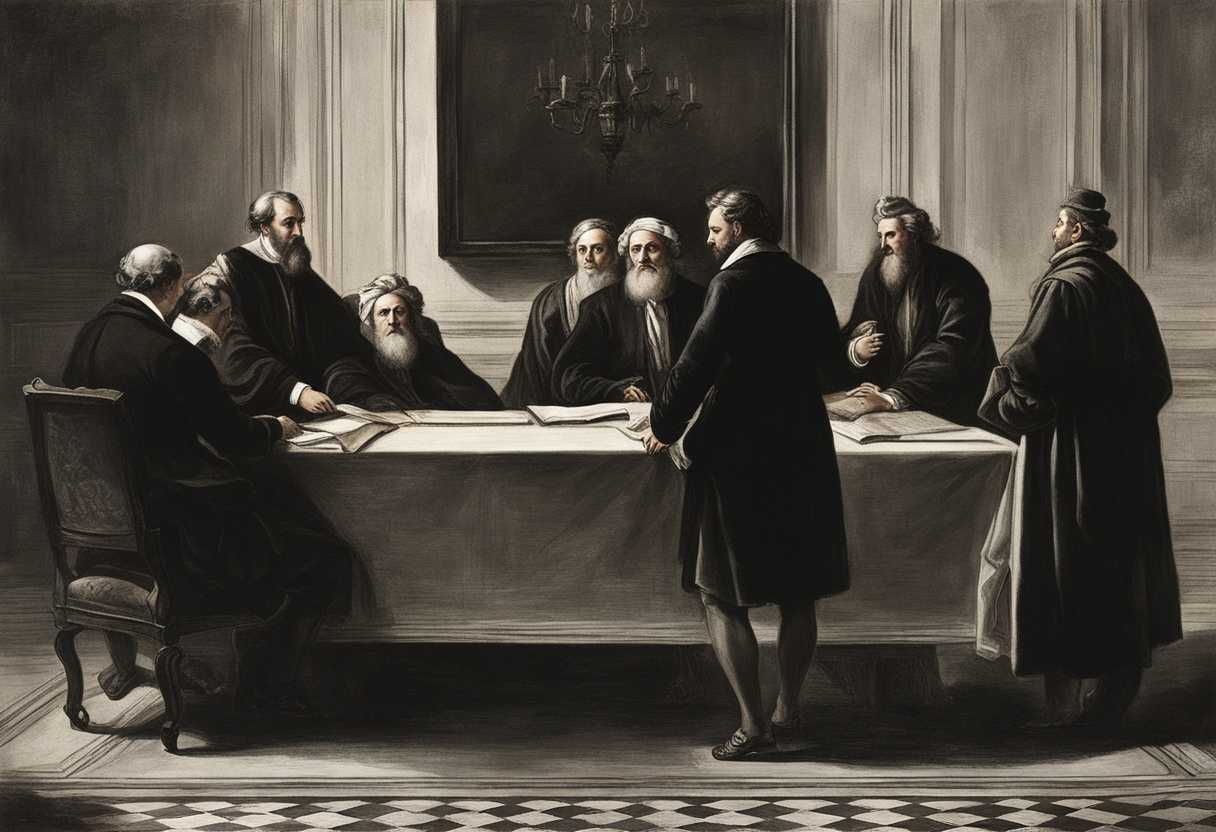
Setting the Scene for Acts 23:12-15
In Acts chapter 23, we find the apostle Paul in a precarious situation. A group of more than forty Jews have banded together and made a vow not to eat or drink until they have killed Paul. This intense scene takes place in Jerusalem, where Paul has been brought before the Sanhedrin for trial. The high priest Ananias presides over the proceedings, with the Pharisees and Sadducees present to hear Paul’s defense.
The atmosphere is tense as Paul stands before the council, knowing that his life is in danger. The conspirators, fueled by their hatred for Paul and his teachings, are determined to carry out their plan. The scene is set in a large, dimly lit chamber with stone walls and pillars, echoing with the murmurs of the council members and the shuffling of feet. Paul, a figure of calm resolve amidst the chaos, stands firm in his faith, ready to face whatever may come his way. The stage is set for a dramatic confrontation between Paul and those who seek his demise.
What is Acts 23:12-15 about?
Isn’t it amazing how sometimes even the smallest and most unexpected things can play a crucial role in changing the course of events? This verse serves as a powerful reminder of how divine intervention can work in mysterious ways to protect and safeguard those who are meant to fulfill their purpose in this world. Despite the danger that surrounded him, Paul was spared from harm thanks to the timely intervention of his nephew. It goes to show that help can come from unexpected sources when we least expect it.
This verse also teaches us about the importance of remaining vigilant and relying on the support of others in times of need. Just like Paul’s nephew came forward to warn the authorities and prevent the plot against Paul, we too can make a difference by speaking up and alerting others to potential dangers or threats. It’s a powerful example of how unity and cooperation can triumph over evil intentions. So, let’s remember that we are never truly alone, and that there is always someone looking out for us, even in the most challenging of circumstances.
Understanding what Acts 23:12-15 really means
In Acts 23:12-15, we are confronted with a chilling conspiracy against the apostle Paul, revealing the depths of animosity he faced for spreading the Gospel. More than forty Jews bound themselves with an oath to kill Paul, demonstrating the extreme measures taken to silence him. This event unfolds amidst Paul’s imprisonment in Jerusalem, showcasing the intense opposition he encountered throughout his ministry.
This passage echoes a recurring theme in Paul’s life, where plots against him are thwarted through divine intervention. Acts 9:23-25 recounts a similar assassination attempt in Damascus, emphasizing the pattern of opposition and God’s deliverance in Paul’s journey. Paul’s own account in 2 Corinthians 11:23-27 further illustrates the dangers he endured, highlighting his unwavering faith amidst persecution.
The relevance of this narrative extends to contemporary believers who may face adversity for their faith. Just as Paul persevered through threats on his life, Christians today are encouraged to stand firm in the face of opposition, trusting in God’s protection. The conspirators’ oath serves as a stark reminder of the lengths to which individuals may go to suppress righteousness, urging believers to uphold moral integrity in all circumstances.
Drawing parallels to modern scenarios, envision a whistleblower challenging corruption within a powerful institution. Despite facing threats and isolation, their commitment to truth and justice, supported by allies and faith, sustains them through adversity. Similarly, Paul’s resilience and the solidarity of fellow believers were instrumental in navigating life-threatening situations.
The phrase “bound themselves with an oath” underscores the gravity of the conspirators’ determination, shedding light on the fervor with which they pursued Paul’s demise. Their vow not to eat or drink until Paul’s death symbolizes the depth of their animosity and the spiritual warfare at play. Moreover, involving chief priests and elders in the plot unveils the intricate dynamics between religious authority and political agendas, cautioning against the misuse of power for personal gain.
Reflecting on Acts 23:12-15, believers are urged to emulate Paul’s steadfastness, rely on God’s protection in times of trial, and uphold moral principles in the face of opposition. This passage serves as a poignant reminder that, just as God intervened on Paul’s behalf, He remains vigilant over His faithful followers, guiding them through challenges with unwavering grace and providence.
How can we discern God’s divine protection in danger?
God’s divine protection is evident in the midst of danger for Paul in this passage. Despite a plot by a group of Jews to kill him, Paul is warned of the conspiracy by his nephew. This warning allows Paul to take immediate action to ensure his safety, ultimately leading to his protection and deliverance from the imminent danger. The timely revelation of the threat and the practical steps taken by Paul not only show how God can intervene and shield His servants from harm but also demonstrate the importance of being alert to the guidance and warnings we receive in times of danger.
The unfolding events in Acts 23 emphasize God’s sovereignty and presence in the midst of perilous situations. God intervenes to safeguard His plans and protect His people from harm by orchestrating circumstances and providing vital information. God’s divine protection operates through both supernatural intervention and human agency, allowing Paul to navigate the dangerous plot against him and continue his mission unscathed. We, as believers, can trust that God is actively involved in our lives, watching over us even in the face of threats and danger.
The divine protection displayed in Acts 23 serves as a reminder of God’s faithfulness and promise to shield His children from harm. We can navigate through perilous circumstances with the assurance that God is our protector and defender by being attuned to the leading of the Holy Spirit and receptive to warnings or signs of impending danger. We can have confidence that God’s hand of protection will be upon us, enabling us to overcome dangers and threats that come our way by walking in obedience and remaining sensitive to His guidance.
Application
Just as the early Christians fearlessly spread the gospel despite adversity, we are called to stand strong in our faith and share the message of Jesus with unwavering determination. Let’s take inspiration from their courage and carry the torch of love and hope into our modern-day world. Will you rise to the challenge and boldly illuminate the path for others to find solace and salvation in Christ?

Reverend Michael Johnson is an experienced Church Minister with a profound expertise in spirituality and guidance. With a serene presence and a compassionate heart, he has faithfully served his congregation for over 20 years, leading them on a spiritual journey towards inner peace and enlightenment. Reverend Johnson’s extensive knowledge of religious philosophies and profound understanding of human nature have made him a trusted confidant and mentor to many, as he seamlessly weaves his profound wisdom into life teachings. Reverend Johnson’s calming demeanor and empathetic nature continue to uplift and heal souls, nurturing a sense of unity and tranquility within his community.