
Acts 24:15 is about the Apostle Paul articulating his belief in the resurrection of the dead, emphasizing hope in God’s promise of a future resurrection for both the righteous and the unrighteous.
15 having a hope in God, which these men themselves accept, that there will be a resurrection of both the just and the unjust.
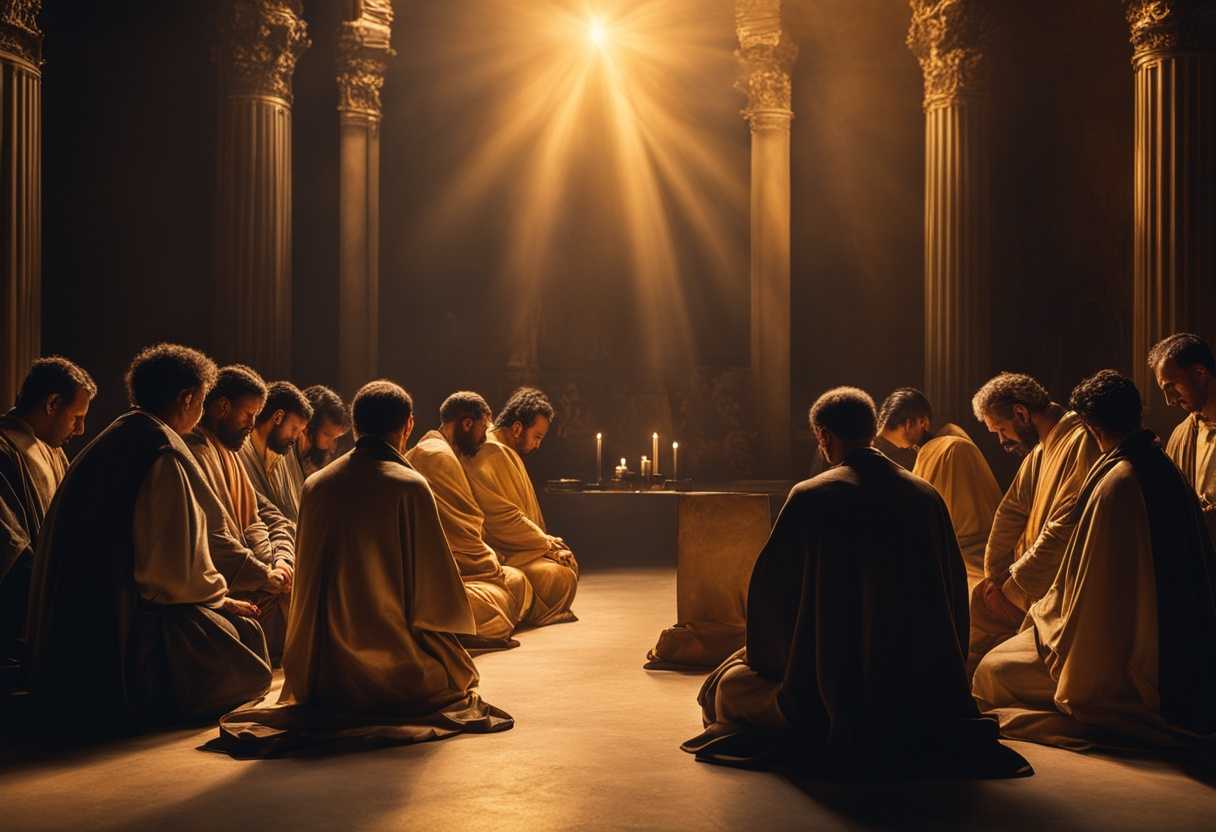
Setting the Scene for Acts 24:15
In Acts chapter 24, we find the apostle Paul standing before Felix, the Roman governor of Judea. The scene is set in Caesarea, a coastal city that served as the administrative center of the Roman province. Paul, accompanied by his accusers, the high priest Ananias, and a group of elders, is brought before Felix to present his case.
The room is filled with tension as Paul defends himself against the accusations brought forth by the Jewish leaders. Felix, a shrewd and experienced ruler, listens intently as Paul eloquently speaks about his faith in Jesus Christ and the reason for his actions. The atmosphere is charged with emotion as Paul passionately argues his innocence and the validity of his beliefs.
Surrounded by guards and court officials, the room is a mix of Roman authority and Jewish religious fervor. The clash of cultures and beliefs is palpable as Paul’s fate hangs in the balance. The outcome of this trial will not only determine Paul’s future but also have far-reaching implications for the spread of Christianity in the Roman world.
What is Acts 24:15 about?
This verse from Acts 24:15 speaks about the belief in a future resurrection of all people, both the righteous and the wicked. It is a powerful reminder of the concept of judgment and accountability in many religious traditions, signifying that there will come a time when everyone will be raised from the dead and held accountable for their actions during their lives. This belief serves as a moral compass, guiding individuals to live their lives with the awareness that their actions have consequences that will be judged in the afterlife. We reflect on this verse, prompting us to ponder questions about our own actions and choices. Are we striving to live a righteous life, guided by principles of kindness, compassion, and justice? How can we ensure that our actions align with our values and beliefs, knowing that they will be scrutinized in the resurrection? This verse calls us to consider the ultimate justice that will be carried out in the resurrection, where the righteous will be rewarded and the wicked will face the consequences of their deeds. We encourage you to act with integrity and righteousness in all aspects of your life by understanding and internalizing this verse. It serves as a reminder that our actions have eternal significance and that we should strive to make choices that reflect our values and beliefs. The belief in the resurrection of both the righteous and the wicked challenges us to live with purpose and accountability, knowing that we will be judged based on how we have lived our lives.
Understanding what Acts 24:15 really means
Commentary Structure:
- Introduction and Context
- Analysis of Key Phrases
- Cross-References to Other Biblical Passages
- Relevance to Modern Life
- Anecdote for Practical Understanding
- The Apostle Paul is standing trial before Governor Felix in Acts 24:15, defending his faith and beliefs. He speaks about the hope he has in God, specifically the resurrection of both the righteous and the wicked. This verse is a cornerstone for understanding Christian eschatology—the study of the end times and the final destiny of souls.
Analysis of Key Phrases
Paul mentions his “hope in God,” a phrase loaded with theological significance. Hope, in this context, is not mere wishful thinking but a confident expectation based on God’s promises. This hope is anchored in the resurrection, a foundational Christian belief. The resurrection of “both the righteous and the wicked” underscores the universal scope of God’s judgment, affirming that everyone will face accountability.
Cross-References to Other Biblical Passages
The theme of resurrection is elaborated upon in several other parts of the Bible. For instance, in 1 Corinthians 15:22, Paul writes, “For as in Adam all die, so in Christ all will be made alive.” This passage emphasizes that resurrection is a universal event facilitated through Christ. Additionally, Daniel 12:2 speaks of a time when “multitudes who sleep in the dust of the earth will awake: some to everlasting life, others to shame and everlasting contempt.” These references provide a broader biblical context to Paul’s declaration in Acts.
Relevance to Modern Life
Why is this relevant today? The hope of resurrection provides a profound sense of purpose and assurance in a world rife with uncertainty. It challenges us to live ethically, knowing that our actions have eternal consequences. This eternal perspective can be both comforting and motivating in a society increasingly focused on the here and now. It reminds us that life is not just a series of random events but part of a divine narrative. John, a man who faced severe illness, provides a practical understanding through his story. Despite his physical suffering, John remained hopeful and at peace. When asked about his calm demeanor, he would often speak of his hope in resurrection, citing Paul’s words. His unwavering faith inspired many around him, demonstrating how deeply the belief in resurrection can affect one’s outlook on life and death. Acts 24:15 is a powerful reminder of the hope that underpins Christian faith—the hope in God’s promise of resurrection for both the righteous and the wicked. This belief is not only a cornerstone of Christian doctrine but also a source of immense comfort and ethical guidance. Let us reflect on this verse and consider how we can shape our lives, inspire our actions, and offer peace in times of uncertainty. What does this hope mean to you? How can it guide your daily life? Reflect on these questions and let the promise of resurrection enrich your faith journey.
What happens to the righteous and the wicked?
According to the verse, the righteous will be resurrected to eternal life while the wicked will face judgment and condemnation. This indicates that those who have lived their lives in accordance with God’s ways will be rewarded with the gift of eternal life in His presence. On the other hand, those who have chosen to reject God and live in sin will face the consequences of their actions and be judged accordingly.
The promise of resurrection to eternal life for the righteous emphasizes the importance of living a righteous and faithful life. It serves as a source of hope and encouragement for those who seek to live uprightly in the eyes of God. However, it also serves as a warning to the wicked that their choices and actions will have eternal consequences. The verse ultimately stresses the importance of living a righteous life in accordance with God’s will to receive the reward of eternal life. It underscores the ultimate justice that will be carried out in the afterlife, with the righteous being separated from the wicked based on their deeds and faith.
Application
Consider your career goals and how driven you are to achieve them. Acts 24:15 is like a promise of a promotion – the ultimate one. It’s a call to live righteously and share hope with others. Just as you’d mentor a colleague or support your family, why not extend this hope of eternal life and transformation to others? How ready are you to embrace this mission and make a lasting impact?

Reverend Michael Johnson is an experienced Church Minister with a profound expertise in spirituality and guidance. With a serene presence and a compassionate heart, he has faithfully served his congregation for over 20 years, leading them on a spiritual journey towards inner peace and enlightenment. Reverend Johnson’s extensive knowledge of religious philosophies and profound understanding of human nature have made him a trusted confidant and mentor to many, as he seamlessly weaves his profound wisdom into life teachings. Reverend Johnson’s calming demeanor and empathetic nature continue to uplift and heal souls, nurturing a sense of unity and tranquility within his community.