
Acts 2:1-7 is about the fulfillment of the promise of the Holy Spirit at Pentecost, evidenced by the disciples speaking in various languages, symbolizing the universal nature of the gospel message.
1 When the day of Pentecost arrived, they were all together in one place.
2 And suddenly there came from heaven a sound like a mighty rushing wind, and it filled the entire house where they were sitting.
3 And divided tongues as of fire appeared to them and rested on each one of them.
4 And they were all filled with the Holy Spirit and began to speak in other tongues as the Spirit gave them utterance.
5 Now there were dwelling in Jerusalem Jews, devout men from every nation under heaven.
6 And at this sound the multitude came together, and they were bewildered, because each one was hearing them speak in his own language.
7 And they were amazed and astonished, saying, “Are not all these who are speaking Galileans?
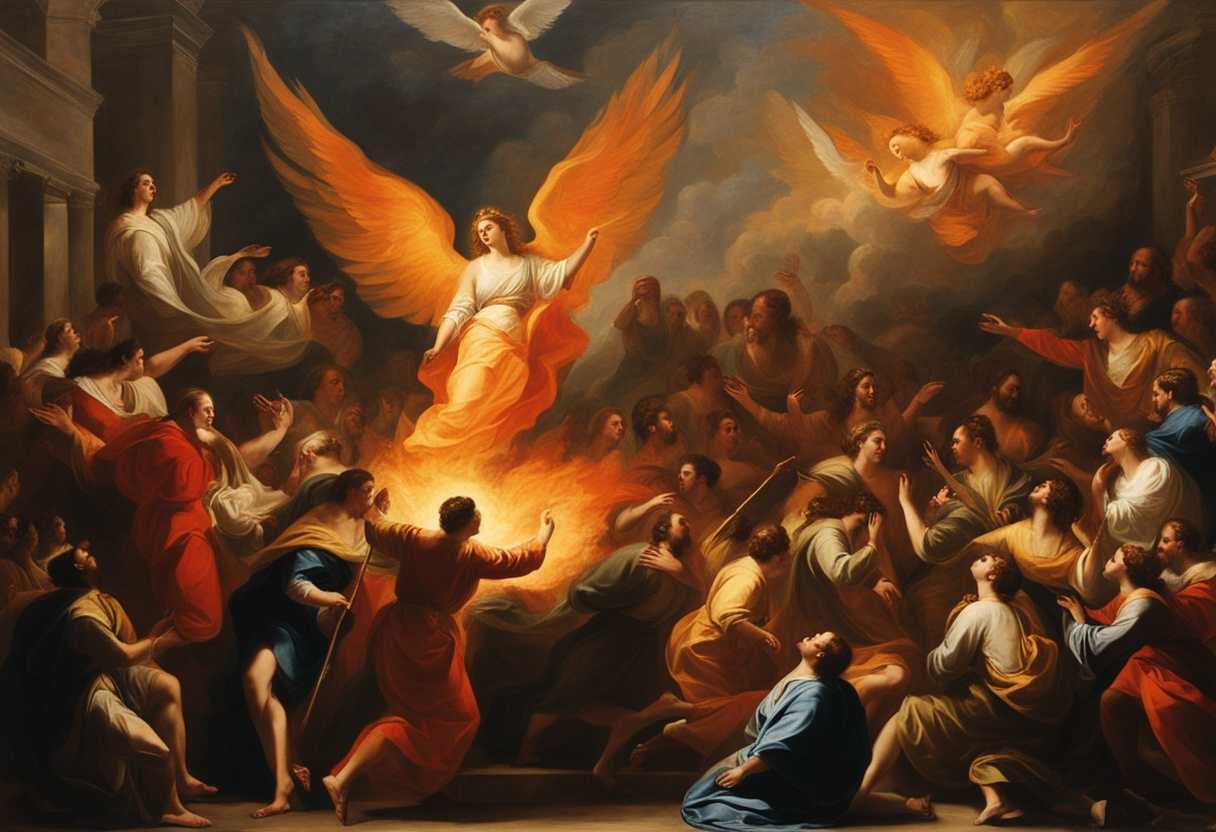
Setting the Scene for Acts 2:1-7
The scene described in Acts 2:1-7 takes place in Jerusalem, specifically in a house where the disciples of Jesus had gathered. The disciples included Peter, John, James, and the other apostles, along with Mary the mother of Jesus and other women who had been following Jesus during his ministry. They had come together for the Jewish festival of Pentecost, which was a significant celebration commemorating the giving of the Law to Moses on Mount Sinai.
As they were all gathered in one place, suddenly a sound like a mighty rushing wind filled the house, and what seemed like tongues of fire appeared and rested on each of them. They were all filled with the Holy Spirit and began to speak in different languages, as the Spirit enabled them. This miraculous event drew a crowd of devout Jews from every nation under heaven who were in Jerusalem for the festival. The disciples, now speaking in languages they had not known before, were able to communicate the wonders of God to each person in their own native tongue, causing great amazement and confusion among the onlookers.
The atmosphere in the house was charged with the power of the Holy Spirit, and the disciples were emboldened to proclaim the message of Jesus Christ to all who were present. This event marked the beginning of the early church and the spread of the gospel to people of all nations, as the disciples were empowered by the Spirit to fulfill the mission that Jesus had given them before his ascension.
What is Acts 2:1-7 about?
The descent of the Holy Spirit upon the apostles in this verse is a pivotal moment in the Christian faith. This event, known as Pentecost, symbolizes the empowerment and guidance of the Holy Spirit in the lives of believers. The ability of the apostles to speak in different languages represents the universal nature of the message of Jesus Christ, transcending cultural and linguistic barriers. It highlights the idea that through the Holy Spirit, all people can be united in their understanding and acceptance of the Gospel.
Have you ever experienced a moment where you felt a strong sense of guidance or empowerment? This verse reminds us of the continuous presence of the Holy Spirit in our lives, guiding us and equipping us to spread the message of love and salvation to all, just as the apostles were filled with the Holy Spirit at Pentecost. It challenges us to reflect on how we can allow the Holy Spirit to work through us, breaking down barriers and reaching out to those who may be different from us. This verse ultimately invites us to embrace the diversity and unity that come from being filled with the Holy Spirit, enabling us to communicate the message of God’s love to the world in a powerful and inclusive way.
Understanding what Acts 2:1-7 really means
Introduction
To understand the significance of Acts 2:1-7, we must first place it in context. This passage describes the coming of the Holy Spirit during Pentecost, a pivotal event in Christian history. It marks the birth of the Church and the beginning of the apostles’ ministry. We’ll break down the passage step by step, examining its key phrases and exploring its relevance both in biblical times and today.
The Event of Pentecost
The passage begins by describing the apostles gathered together on the day of Pentecost. Pentecost, originally a Jewish festival, commemorated the giving of the Law at Sinai. Here, it takes on new meaning as the day the Holy Spirit descended upon the apostles. The phrase “they were all together in one place” indicates unity and anticipation. This unity is crucial; it sets the stage for the collective experience that follows.
The Holy Spirit’s Arrival
The description of a “sound like the blowing of a violent wind” and “tongues of fire” signifies the powerful and divine nature of the Holy Spirit’s arrival. Wind and fire are symbolic of God’s presence throughout Scripture. For instance, in Exodus 3:2, God appears to Moses in a burning bush. These symbols remind us of God’s purifying and transformative power. The Holy Spirit’s descent is not a quiet or passive event; it is dynamic and life-changing.
Speaking in Tongues
The apostles begin to speak in different languages, enabled by the Holy Spirit. This miraculous ability to communicate in various tongues symbolizes the universal nature of the Gospel. It breaks down barriers and signifies that God’s message is for everyone. This moment fulfills Jesus’ promise in Acts 1:8 that the apostles would be His witnesses “to the ends of the earth.” The act of speaking in different languages underscores the inclusivity and expansiveness of God’s love.
The Reaction of the Crowd
The crowd’s reaction is one of bewilderment and amazement. People from different nations hear their own languages being spoken. This diversity in the crowd highlights the global scope of the Church’s mission. It’s a vivid illustration of the unity in diversity that the Holy Spirit brings. The initial confusion gives way to curiosity, setting the stage for Peter’s powerful sermon that follows in Acts 2:14-36.
Relevance Today
The passage is profoundly relevant today. We live in a world that often feels fragmented and divided. The Holy Spirit’s ability to unite diverse people into one body offers a powerful message of hope and reconciliation. It reminds us that God’s love transcends cultural, linguistic, and social barriers. We can strive to be instruments of unity in our own lives, bringing people together through acts of love and understanding. Everyone brings a dish from their own culture to a community potluck. Initially, the variety might seem overwhelming, but as people start to share and explain their dishes, a beautiful tapestry of culture and tradition unfolds. Similarly, the Holy Spirit enables us to bring our unique gifts and backgrounds into the Church, enriching the community as a whole. We too can use our diverse talents to serve and uplift one another, just as the apostles spoke in diverse tongues.
Conclusion
Acts 2:1-7 is a powerful testament to the unifying and transformative power of the Holy Spirit. It calls us to embrace our differences while recognizing our fundamental unity in Christ. We should reflect on this passage and seek to embody the spirit of Pentecost in our daily lives, striving to be agents of unity and love in a fragmented world.
How can we be filled with the Holy Spirit?
We can be filled with the Holy Spirit by earnestly seeking God in prayer, worship, and meditation on His word. By humbling ourselves before God and surrendering our hearts and minds to Him, we create an environment in which the Holy Spirit can fill us.
We create an environment in which the Holy Spirit can fill us by humbling ourselves before God and surrendering our hearts and minds to Him. We too can experience the outpouring of the Holy Spirit by seeking God with fervent hearts, just as the early disciples gathered in one accord and devoted themselves to prayer.
Additionally, being filled with the Holy Spirit requires a willingness to yield control of our lives to Him. It involves allowing the Holy Spirit to work in our hearts, transforming us from the inside out and empowering us to live a life that is pleasing to God. We can experience His fullness in our lives by submitting ourselves to the leading of the Holy Spirit and allowing Him to guide our thoughts, words, and actions. It is a continual process of surrender and obedience that allows the Holy Spirit to fill us and use us for His glory. God ultimately gives the gift of being filled with the Holy Spirit to those who believe in Him and seek Him wholeheartedly. It is a manifestation of God’s grace and love for His children, empowering them to live out their faith in a way that brings honor and glory to Him. We open ourselves up to receive the fullness of the Holy Spirit in our lives and allow Him to work in and through us for the advancement of His kingdom as we cultivate a relationship with God through prayer, worship, and obedience.
Application
Imagine the power of a strong WiFi signal reaching every corner of your home, enabling seamless connection. Acts 2:1-7 is like that signal, showing how the Holy Spirit energized the disciples at Pentecost. Today, pause and ask for this divine ‘signal boost’ in your life, empowering you to share God’s love and truth with your family, friends, and colleagues. Will you step up and spread this life-changing connection to those around you?

Reverend Michael Johnson is an experienced Church Minister with a profound expertise in spirituality and guidance. With a serene presence and a compassionate heart, he has faithfully served his congregation for over 20 years, leading them on a spiritual journey towards inner peace and enlightenment. Reverend Johnson’s extensive knowledge of religious philosophies and profound understanding of human nature have made him a trusted confidant and mentor to many, as he seamlessly weaves his profound wisdom into life teachings. Reverend Johnson’s calming demeanor and empathetic nature continue to uplift and heal souls, nurturing a sense of unity and tranquility within his community.