
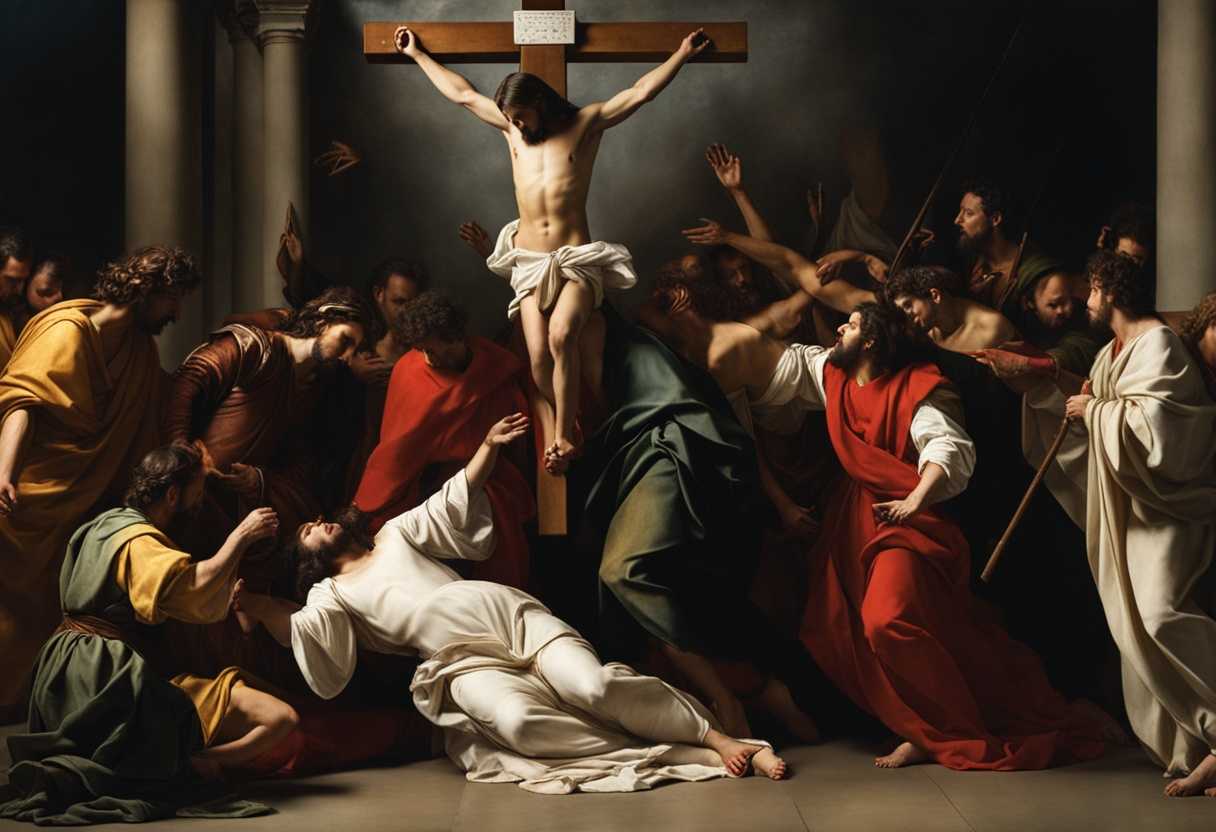
Acts 2:23-24 is about the fulfillment of God’s plan for Jesus’ crucifixion, highlighting how despite being handed over, condemned, and killed by human hands, Jesus was raised to life by God, overcoming death and offering redemption to all who believe in Him.
23 this Jesus, delivered up according to the definite plan and foreknowledge of God, you crucified and killed by the hands of lawless men.
24 God raised him up, loosing the pangs of death, because it was not possible for him to be held by it.
Setting the Scene for Acts 2:23-24
The scene in Acts chapter 2:23-24 takes place in Jerusalem during the Jewish festival of Pentecost. The disciples of Jesus, including Peter, John, James, and others, are gathered together in a room. They had been instructed by Jesus to wait in Jerusalem for the Holy Spirit to come upon them. As they are praying and waiting, suddenly a sound like a rushing wind fills the room, and tongues of fire appear and rest on each of them. They are filled with the Holy Spirit and begin to speak in different languages.
The disciples then leave the room and go out into the streets of Jerusalem, where a large crowd has gathered due to the commotion. Peter, filled with boldness and the Holy Spirit, begins to preach to the crowd about Jesus, explaining how Jesus was crucified according to God’s plan but was raised from the dead by the power of God. He proclaims that Jesus is the Messiah and the Savior of the world. The crowd is amazed and bewildered by what they are witnessing, as they hear the disciples speaking in their own languages about the wonders of God.
The scene is filled with excitement, wonder, and awe as the disciples boldly proclaim the message of Jesus to the people of Jerusalem. The surroundings are bustling with activity, as people from different regions and backgrounds are gathered together, hearing the message of salvation in their own languages. The disciples, empowered by the Holy Spirit, are fulfilling the mission that Jesus had given them to be His witnesses to the ends of the earth.
What is Acts 2:23-24 about?
When reflecting on this powerful verse, it is essential to grasp the profound message it carries. Jesus’ crucifixion was a pivotal moment in the salvation story, demonstrating God’s ultimate plan for redemption. Despite facing the agony of the cross, Jesus’ triumph over death and resurrection showcased His divine power and victory over sin. This verse encapsulates the cornerstone of Christian faith, reminding us of the unparalleled love and sacrifice Jesus made for humanity.
Think about the significance of Jesus’ resurrection in the face of death – it symbolizes hope, renewal, and the promise of eternal life. The phrase “but death could not hold Him” underscores the indomitable nature of Jesus’ spirit and the fulfillment of God’s divine plan. It challenges us to contemplate the depth of God’s love and the profound impact of Jesus’ sacrifice on our lives. We invite you to renew your faith, find solace in the victory of the resurrection, and draw strength from the assurance that death has been conquered through Christ as we meditate on this verse.
Understanding what Acts 2:23-24 really means
Introduction
In Acts 2:23-24, we find ourselves in the midst of Peter’s sermon on the day of Pentecost, a pivotal moment where he addresses the crowd about the profound significance of Jesus’ crucifixion and resurrection. This passage delves into the intricate interplay between God’s divine plan and human responsibility, shedding light on the complexities of these foundational events in Christian faith.
Key Phrases and Their Meanings
“This man was handed over to you by God’s deliberate plan and foreknowledge” underscores the sovereignty of God and the meticulous fulfillment of His divine purpose. It echoes the prophetic words of Isaiah 53:10, emphasizing that even in the darkest hour of Jesus’ crucifixion, it was all within the scope of God’s overarching plan.
“And you, with the help of wicked men, put him to death by nailing him to the cross” highlights the sobering reality of human culpability in the crucifixion of Jesus. This phrase draws attention to the role of sin and the profound sacrifice made by Christ, as seen in Luke 23:33-34 where Jesus prays for forgiveness for those who crucified Him.
“But God raised him from the dead” stands as the cornerstone of Christian faith, affirming the triumph of God over death itself. This resurrection power is echoed in 1 Corinthians 15:20, underscoring the transformative significance of Christ’s victory over the grave.
“Freeing him from the agony of death, because it was impossible for death to keep its hold on him” symbolizes the ultimate victory over death and the assurance of eternal life for believers. This victory is beautifully articulated in Romans 6:9, emphasizing that death no longer has dominion over Christ or those who are united with Him.
Relevance to People Today
Understanding the divine sovereignty portrayed in these verses offers solace and certainty in the midst of life’s uncertainties. It prompts us to trust in God’s overarching plan, even when circumstances seem bewildering. Simultaneously, recognizing our human responsibility in the crucifixion of Jesus calls for introspection and repentance, leading us to a deeper understanding of the gravity of sin and the magnitude of God’s grace.
Anecdote
Consider a person grappling with profound despair and hopelessness in the face of overwhelming circumstances. In such moments of darkness, the realization that God’s plan encompassed even the darkest hour of Jesus’ crucifixion can bring a glimmer of hope. Just as God orchestrated redemption through Christ’s resurrection, there is a profound assurance that God’s redemptive plan extends to each individual, offering hope and purpose even in the bleakest of situations.
Conclusion
Acts 2:23-24 serves as a poignant reminder of the intricate dance between divine sovereignty and human responsibility. It beckons us to trust in God’s unfailing plan, to acknowledge our role in the narrative of redemption, and to find unwavering hope in the resurrection of Jesus. This passage invites us to live with the assurance that God is in control, that repentance leads to restoration, and that through Christ, we have conquered death, embracing the promise of eternal life.
Why did Jesus have to suffer and die?
Jesus had to suffer and die because it was part of God’s plan for redemption. His death was not an accident or a result of human error, but a deliberate act ordained by God. Through Jesus’ suffering and death, he bore the punishment for the sins of humanity, offering salvation to all who believe in him. This sacrifice was necessary to fulfill the prophecies and promises of the Old Testament regarding the Messiah’s mission to save mankind from sin and death.
Furthermore, Jesus’ sufferings and death served as a demonstration of God’s love for humanity. Jesus showed the depths of God’s sacrificial love and his willingness to make the ultimate sacrifice for the sake of mankind by willingly laying down his life. Through his suffering, Jesus also identified with human suffering, offering comfort and hope to all who experience pain and hardship in this world. Jesus’ suffering and death ultimately paved the way for his resurrection, demonstrating his victory over sin and death, and offering the promise of eternal life to all who follow him.
Application
Let’s embrace the sacrifice of Jesus as a reminder to live our faith boldly. Like a beacon in the digital world, let’s spread love and salvation in our circles. Time to turn those passive words into active deeds. How will you shape your life to reflect the teachings of Christ?

Reverend Michael Johnson is an experienced Church Minister with a profound expertise in spirituality and guidance. With a serene presence and a compassionate heart, he has faithfully served his congregation for over 20 years, leading them on a spiritual journey towards inner peace and enlightenment. Reverend Johnson’s extensive knowledge of religious philosophies and profound understanding of human nature have made him a trusted confidant and mentor to many, as he seamlessly weaves his profound wisdom into life teachings. Reverend Johnson’s calming demeanor and empathetic nature continue to uplift and heal souls, nurturing a sense of unity and tranquility within his community.