
Acts 3:1-4 is about Peter and John encountering a man who was lame from birth at the temple gate, illustrating the power of faith and the transformative potential of encountering God’s grace through acts of compassion and healing.
1 Now Peter and John were going up to the temple at the hour of prayer, the ninth hour.
2 And a man lame from birth was being carried, whom they laid daily at the gate of the temple that is called the Beautiful Gate to ask alms of those entering the temple.
3 Seeing Peter and John about to go into the temple, he asked to receive alms.
4 And Peter directed his gaze at him, as did John, and said, “Look at us.”
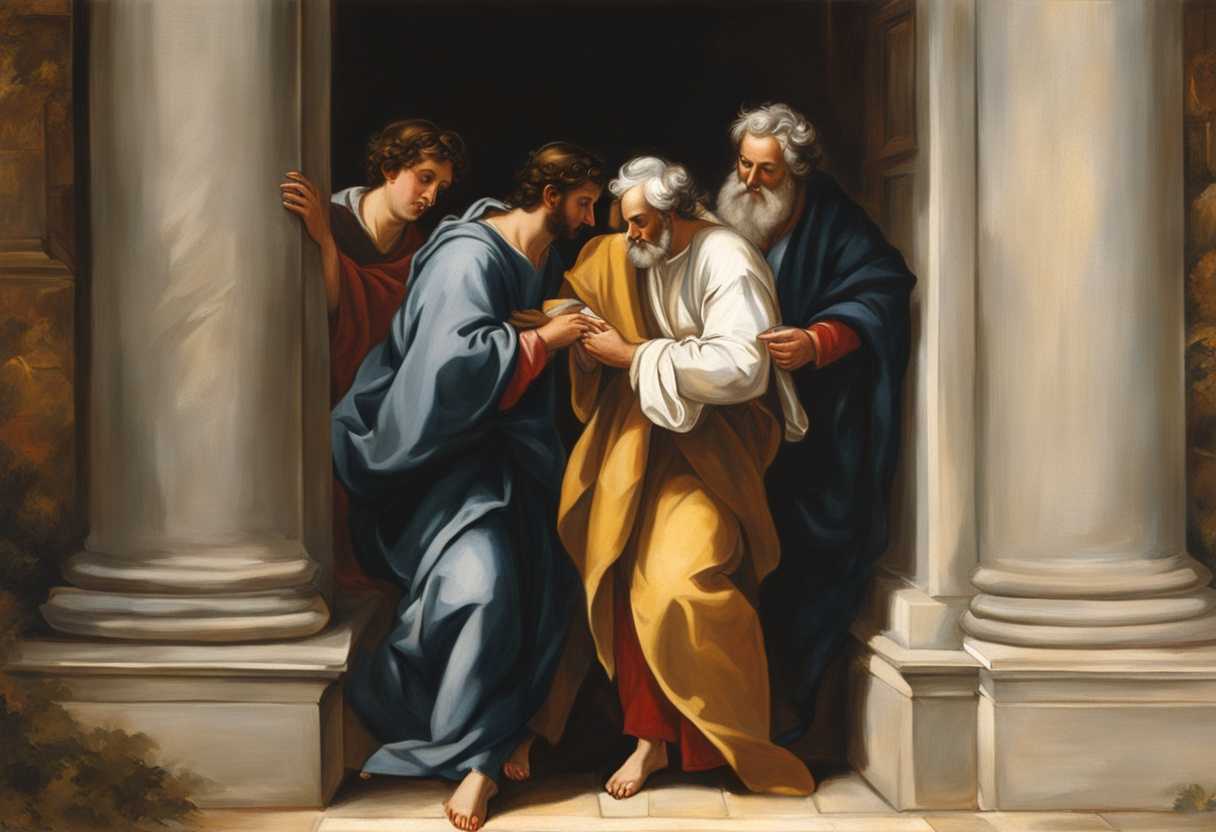
Setting the Scene for Acts 3:1-4
In Acts chapter 3, we find Peter and John heading to the temple in Jerusalem for the afternoon prayer. The scene is bustling with people coming and going, offering sacrifices, and engaging in prayer and worship. As they approach the temple gate called Beautiful, they encounter a man who has been lame from birth. This man is being carried daily to the gate to beg for alms from those entering the temple.
Peter and John stop in front of the man, and as he asks them for alms, Peter fixes his gaze on him. The man looks up at them, expecting to receive something from them. The sun is shining brightly, casting a warm glow over the scene as the crowd continues to move around them. The air is filled with the sounds of prayers being offered and the occasional clinking of coins being dropped into the beggar’s cup. It is in this setting that Peter utters the famous words, “Silver or gold I do not have, but what I do have I give you. In the name of Jesus Christ of Nazareth, walk.”
What is Acts 3:1-4 about?
Wow, what a powerful moment this verse captures! Peter, filled with the spirit of God, performs a miraculous healing for a man who has been disabled since birth. This act of compassion and faith not only restores physical health to the beggar but also demonstrates the transformative power of belief in Jesus Christ. The setting of the temple gate Beautiful adds another layer of symbolism, highlighting how God’s love and grace can bring beauty and restoration to the most broken areas of our lives.
Have you ever felt weighed down by a burden or challenge that seems impossible to overcome? This verse reminds us that through faith and the guidance of the Holy Spirit, we can find healing and renewal in unexpected places. We are called to show kindness and love to those in need around us, just as Peter extended a helping hand to the beggar. We can experience transformation in our own lives and be agents of healing in the world by embracing the teachings of Jesus and trusting in his divine power.
So, the next time you encounter someone who is struggling or suffering, remember the example of Peter and the beggar at the temple gate Beautiful. Allow yourself to be a vessel of God’s love and mercy, knowing that even the most unlikely circumstances can be the setting for miraculous acts of healing and restoration.
Understanding what Acts 3:1-4 really means
In Acts 3:1-4, we witness a poignant encounter between Peter, John, and a man who had been lame from birth, positioned at the temple gate called Beautiful. This passage serves as a profound reflection on the themes of prayer, compassion, and the transformative power of faith that resonate deeply in our contemporary lives.
As Peter and John ascended to the temple for prayer at the appointed hour of three in the afternoon, we are immediately struck by their unwavering commitment to worship and communion with God. This dedication to regular prayer is a poignant reminder of the significance of maintaining a consistent spiritual practice in our daily routines. Just as the psalmist cried out in distress at various times of the day, and Daniel faithfully prayed thrice daily, we are encouraged to prioritize prayer and worship as integral aspects of our lives.
The introduction of the man who was lame from birth, positioned daily at the temple gate to beg, paints a vivid picture of his desperate circumstances and his reliance on the goodwill of others for sustenance. This portrayal echoes the narrative of the man born blind in John 9:1-3, illustrating how individuals facing challenges can become vessels for God’s work to be manifested. It prompts us to consider the struggles of those around us and the call to extend compassion and support to those in need within our communities.
When the lame man asked Peter and John for money, his immediate plea for material assistance unveiled a deeper yearning for healing and restoration. This moment underscores the importance of looking beyond surface-level needs and seeking spiritual solutions, as emphasized in Jesus’ teachings about prioritizing the kingdom of God. It challenges us to approach situations with a holistic perspective, addressing not only the tangible needs but also the spiritual and emotional well-being of those we encounter.
The pivotal moment when Peter and John locked eyes with the man, urging him to look at them, symbolizes the profound impact of truly seeing and acknowledging individuals. This act of direct attention mirrors the compassion displayed by the Good Samaritan in Luke 10:33-34, highlighting the transformative power of recognizing and valuing others in a world where many feel unseen. It serves as a poignant reminder of the significance of genuine human connection and empathy in fostering meaningful relationships and offering support to those in need.
In applying the lessons from Acts 3:1-4 to modern life, we are called to embody the virtues of compassion, attentiveness, and faith in our interactions with others. By taking the time to truly see and listen to those around us, offering not just material aid but also emotional and spiritual support, we can make a profound difference in the lives of individuals facing various challenges. Let this passage inspire us to be more prayerful, compassionate, and attentive in our daily encounters, recognizing the potential for God’s transformative work in every interaction.
How can we recognize those in need around us?
We can recognize those in need around us by paying attention to our surroundings and being observant of those who may be in a difficult situation. We can look out for signs of need in others, just as Peter and John noticed the man who was crippled from birth as they were entering the temple. This requires being present in the moment, having a heart of compassion, and being willing to take action to help.
Sometimes those in need may not directly ask for help, but their circumstances or body language may indicate that they could use assistance. It is important for us to be sensitive to the needs of others and to offer our help and support when we can. We can follow the example set by Peter and John in recognizing and reaching out to those in need by being aware of our surroundings and being open to helping those around us.
Application
Let’s harness the power of Acts 3:1-4 as a call to action in our own lives. Let’s dive deep into prayer and faith, like a worker tirelessly perfecting their craft or a parent nurturing their family. Let’s believe in miracles and reach out to those in need, just as Peter and John did. Together, can we courageously walk in faith and prayer, becoming agents of change in the world around us?

Reverend Michael Johnson is an experienced Church Minister with a profound expertise in spirituality and guidance. With a serene presence and a compassionate heart, he has faithfully served his congregation for over 20 years, leading them on a spiritual journey towards inner peace and enlightenment. Reverend Johnson’s extensive knowledge of religious philosophies and profound understanding of human nature have made him a trusted confidant and mentor to many, as he seamlessly weaves his profound wisdom into life teachings. Reverend Johnson’s calming demeanor and empathetic nature continue to uplift and heal souls, nurturing a sense of unity and tranquility within his community.