
Acts 3:9 is about Peter and John performing a miraculous healing on a man who had been lame from birth, showcasing the power of faith and the authority of Christ.
And all the people saw him walking and praising God,
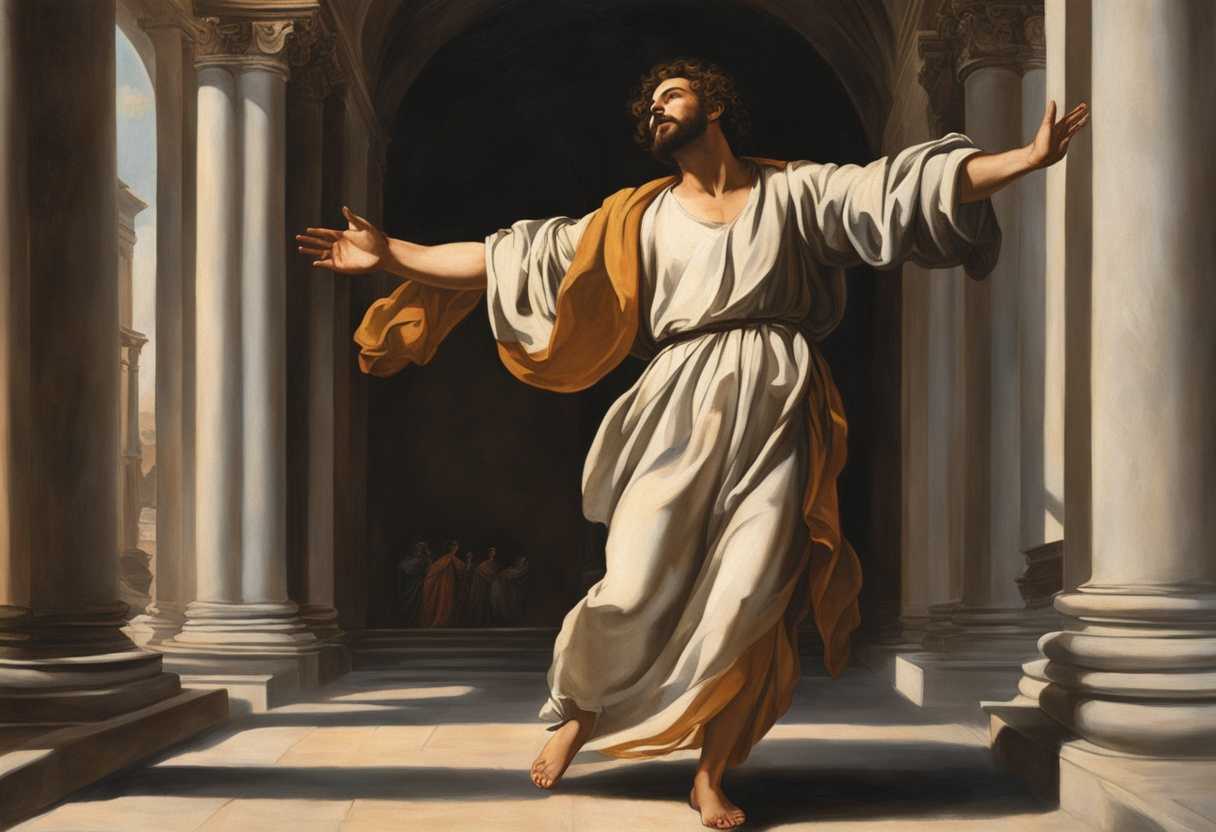
Setting the Scene for Acts 3:9
In Acts chapter 3, we find Peter and John heading to the temple in Jerusalem for the afternoon prayer. As they approach the temple gate called Beautiful, they encounter a man who was lame from birth being carried there daily to beg for alms. This man had been placed at the gate as it was a busy entrance where many people passed by, making it a prime location for seeking help.
The scene is bustling with activity as people come and go, offering prayers and sacrifices at the temple. The man, who had never walked a day in his life, looks up at Peter and John, expecting to receive some coins. However, Peter, filled with the power of the Holy Spirit, fixes his gaze on the man and declares, “Look at us!” The man’s attention is immediately captured, and he eagerly turns his gaze towards them, anticipating some form of assistance. It is at this moment that Peter utters the famous words, “Silver or gold I do not have, but what I do have I give you. In the name of Jesus Christ of Nazareth, walk.” The miraculous healing that follows leaves the man leaping and praising God, causing a stir among all those present at the temple gate.
What is Acts 3:9 about?
Peter and John perform a miraculous healing at the temple gate called Beautiful in Acts 3:9. This verse showcases the compassion, faith, and divine power that the apostles possessed. Peter and John demonstrate the tangible impact of their faith in action by healing the lame beggar. The physical healing symbolizes the spiritual transformation that can occur when we encounter the power of God in our lives.
Imagine being in the presence of such a miraculous event; witnessing a person who was once unable to walk, now leaping with joy and praising God. This verse serves as a reminder of the transformative power of believing in something greater than ourselves and acting in faith. It prompts us to reflect on our own encounters with the divine and inspires us to trust in the possibility of miracles in our own lives. Peter and John’s actions in Acts 3:9 challenge us to consider how we can be vessels of healing and hope in a world that is often in need of both.
Understanding what Acts 3:9 really means
In Acts 3:9, we witness a powerful moment where a man, who had been lame from birth, is healed by Peter in the name of Jesus Christ. The scene unfolds at the temple gate called Beautiful, a place where the man had been asking for alms. Instead of receiving money, he receives something far greater – a miraculous healing that transforms his life in an instant. As he enters the temple with Peter and John, he is no longer the same man – he is walking, leaping, and praising God. This miraculous event is not hidden but unfolds in full view of all the people present, emphasizing the public nature of the miracle and the undeniable transformation that has taken place.
The phrase “All the people saw him walking and praising God” encapsulates the essence of this moment. It signifies not just a physical healing but a spiritual awakening and a deep sense of gratitude towards God. The healed man’s actions speak volumes, serving as a testimony to the power of God at work in his life. This public display of God’s miraculous intervention is a reminder that our lives, too, can be a testament to the transformative power of faith.
Drawing parallels with other biblical passages such as John 9:1-12 and Luke 5:25, we see a common thread of Jesus’ ability to heal the broken and the marginalized, leading to public declarations of His power. The fulfillment of prophecies like Isaiah 35:6 in Acts 3:9 underscores the continuity of God’s promises throughout history, showcasing His faithfulness in bringing about restoration and wholeness.
The relevance of Acts 3:9 extends beyond the historical narrative, speaking directly to us today. Just as the healed man’s life impacted those around him, our own stories of transformation can serve as beacons of hope and inspiration to others. This verse challenges us to consider the ways in which God’s power can bring about healing, both spiritually and physically, in our lives and communities.
Imagine a scenario where a profound transformation occurs in someone’s life, sparking conversations and curiosity among those who witness it. This anecdote mirrors the impact of Acts 3:9, where the healed man’s newfound vitality becomes a catalyst for communal reflection and awe. Our lives, too, have the potential to ignite curiosity and point others towards the source of our transformation – God’s unwavering love and grace.
As we reflect on Acts 3:9, we are prompted to examine our own journey of faith. How can our personal testimonies become instruments of God’s grace and power in the world? How can our communities be spaces where God’s healing touch is not just spoken of but tangibly experienced? Let us echo the healed man’s response by offering our gratitude and praise to God for the miracles, big and small, that shape our lives. In doing so, we become living testimonies of God’s transformative power, impacting those around us in profound and lasting ways.
How can our faith bring healing to others?
Our faith can bring healing to others by imparting hope and encouragement. When we believe in the power of God and His ability to bring about miracles, we can share that belief with others who may be struggling with sickness, hardships, or challenges. We can help others see the possibilities of healing and restoration by standing firm in our faith and sharing it with them.
Furthermore, our faith can bring healing to others through prayer. When we pray for someone in faith, we are demonstrating our trust in God’s ability to intervene in their situation and bring about positive change. Our prayers can serve as a source of comfort and strength for those who are suffering, knowing that they are not alone and that they are being lifted up in prayer by others who care for them. Our faith can ultimately bring healing to others by being a living testament to the power of God’s love and grace. When we live out our faith in a genuine and compassionate manner, others can see God’s love reflected through us. Our actions, words, and attitudes can be a source of comfort, hope, and healing for those around us, pointing them towards the ultimate healer – Jesus Christ.
Application
Let’s be the Peter or John in someone’s story, lifting them up when they need it most. Your chance to make a difference awaits, grasp it with courage and kindness. Be the light in someone’s darkness, the hope in their despair. Will you answer the call to be a beacon of kindness and compassion today?

Reverend Michael Johnson is an experienced Church Minister with a profound expertise in spirituality and guidance. With a serene presence and a compassionate heart, he has faithfully served his congregation for over 20 years, leading them on a spiritual journey towards inner peace and enlightenment. Reverend Johnson’s extensive knowledge of religious philosophies and profound understanding of human nature have made him a trusted confidant and mentor to many, as he seamlessly weaves his profound wisdom into life teachings. Reverend Johnson’s calming demeanor and empathetic nature continue to uplift and heal souls, nurturing a sense of unity and tranquility within his community.