
Acts 4:16-17 is about the religious leaders acknowledging the miracle performed by Peter and John in healing a man, yet feeling threatened by their teachings and trying to find a way to silence them.
16 saying, “What shall we do with these men? For that a notable sign has been performed through them is evident to all the inhabitants of Jerusalem, and we cannot deny it.
17 But in order that it may spread no further among the people, let us warn them to speak no more to anyone in this name.
Setting the Scene for Acts 4:16-17
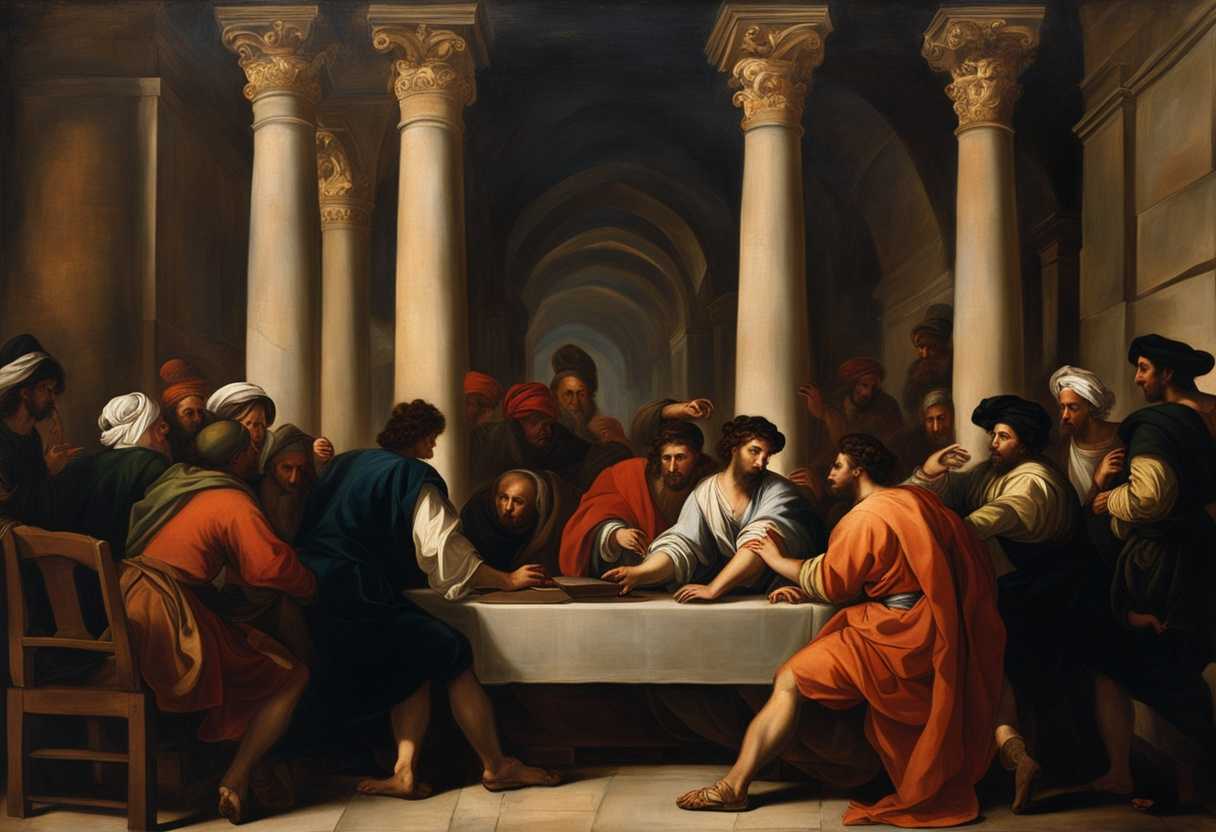
In Acts chapter 4, we find Peter and John, two of Jesus’ disciples, standing before the high priest, Caiaphas, and other religious leaders in Jerusalem. The scene is set in the grand and imposing halls of the temple, where the religious authorities have gathered to question Peter and John about their teachings and the miraculous healing of a man who had been lame from birth.
Peter and John had been preaching boldly about Jesus and performing miracles in His name, which had attracted a large following. The religious leaders, feeling threatened by their message and popularity, sought to silence them and maintain their authority over the people. However, Peter and John, filled with the Holy Spirit, fearlessly proclaimed the gospel and refused to back down in the face of opposition.
The tension in the room is palpable as Peter and John stand firm in their faith, challenging the religious leaders to consider the power of Jesus and the truth of His resurrection. The religious leaders, unable to deny the miraculous signs that had been done, are left in a difficult position as they try to suppress the growing movement of Christianity. The stage is set for a dramatic confrontation between the forces of religious tradition and the unstoppable spread of the gospel message.
What is Acts 4:16-17 about?
Individuals challenging established authorities and structures can create tension, as seen in this verse. Peter and John, two disciples of Jesus, dared to defy societal norms by healing a man in need. The religious leaders, who held positions of power and influence, felt threatened by this display of authority and compassion that did not align with their control. They conspired against Peter and John, seeking to undermine their credibility and disrupt their message.
Have you ever experienced a situation where your actions or beliefs clashed with those of authority figures or established institutions? How did you navigate that conflict and stand firm in your convictions? This verse serves as a reminder that speaking truth to power can come with consequences, but it also highlights the importance of staying true to one’s beliefs and values, even in the face of opposition. Peter and John’s unwavering commitment to helping others and spreading love and healing ultimately prevailed, demonstrating the enduring power of faith and compassion in the face of adversity.
Understanding what Acts 4:16-17 really means
In Acts 4:16-17, we witness a pivotal moment where Peter and John, after performing a miraculous healing and preaching about Jesus’ resurrection, are brought before the Sanhedrin, the Jewish ruling council. The Sanhedrin grapples with the undeniable nature of the miracle, acknowledging that it has been witnessed by all the inhabitants of Jerusalem. Despite this recognition, their primary concern lies in maintaining their authority and control over the people. The phrase “What shall we do with these men?” encapsulates their dilemma, torn between acknowledging the power of God at work and safeguarding their position of influence.
The Sanhedrin’s response reveals a common human struggle – the tension between acknowledging the truth and yielding to the fear of losing control. Their decision to warn Peter and John against speaking in Jesus’ name reflects their attempt to suppress the spread of the Gospel, driven by a desire to prevent any further disruption to their established order. This narrative prompts us to consider how we, too, may grapple with similar conflicts in our lives, where the call to stand for truth clashes with the desire to maintain comfort and control.
Drawing parallels to contemporary contexts, we are reminded of the importance of courage in faith. Just as Peter and John boldly proclaimed the Gospel despite opposition, believers today are called to stand firm in their convictions, even in the face of societal pressures or challenges to their beliefs. The undeniable works of God, as seen in the miraculous healing, serve as a testament to the power and authenticity of God’s intervention in our lives, often visible to others even when skeptics abound.
Reflecting on related Bible passages such as Acts 5:28-29, Matthew 10:28, and John 12:42-43, we see a recurring theme of choosing obedience to God over human authority and fear. The apostles’ unwavering commitment to proclaiming the Gospel, despite threats and opposition, sets a powerful example for believers today. Their courage in the face of adversity challenges us to examine our own responses to God’s undeniable work in our lives and to consider where we may need to demonstrate similar steadfastness in our faith.
In a modern-day scenario, envision a student in a secular university bravely standing up for their faith in a classroom discussion, facing skepticism and opposition from peers and professors. Through their calm and reasoned defense, coupled with a life that reflects the truth they proclaim, this student mirrors the apostles’ unwavering witness in the face of adversity. Their example serves as a reminder that the impact of God’s work in our lives can be undeniable, even in the midst of doubt and opposition.
As we ponder the narrative in Acts 4:16-17, let us be challenged to emulate the courage and conviction of Peter and John, standing firm in our faith and trusting in the power of God’s undeniable works. May we find inspiration in their unwavering commitment to truth and their willingness to face opposition for the sake of proclaiming the Gospel.
How can we faithfully respond to God’s miracles?
God used Peter and John to perform a miraculous healing in Acts 4:16-17. The religious leaders were unable to deny the reality of this miracle, and they could not refute the power of God at work through His disciples. The religious leaders acknowledged the undeniable nature of the miracle but then attempted to suppress and control this display of God’s power in response to witnessing such a profound miracle.
When faced with God’s miracles, we are called to respond with faith and humility. We should also recognize and acknowledge God’s power and presence in our lives, just as the religious leaders in this passage were unable to deny the reality of the miracle. Our response should not be one of fear or opposition, but rather one of reverence and surrender. We can experience a deeper level of faith and intimacy with God by acknowledging His miracles and submitting to His will.
Application
In a world where challenges constantly knock on your door, will you choose to stand tall and spread the message of Christ with unwavering bravery, just like the early apostles did? The time is now to embrace your faith and share the beacon of hope with those who need it most. Let your voice echo with the strength of your beliefs, illuminating the path for others in the darkness of the unknown. Will you rise up and be a guiding light for those seeking salvation and truth?

Reverend Michael Johnson is an experienced Church Minister with a profound expertise in spirituality and guidance. With a serene presence and a compassionate heart, he has faithfully served his congregation for over 20 years, leading them on a spiritual journey towards inner peace and enlightenment. Reverend Johnson’s extensive knowledge of religious philosophies and profound understanding of human nature have made him a trusted confidant and mentor to many, as he seamlessly weaves his profound wisdom into life teachings. Reverend Johnson’s calming demeanor and empathetic nature continue to uplift and heal souls, nurturing a sense of unity and tranquility within his community.