
Acts 5:1-21 is about the early Christian church facing the deception and consequences of Ananias and Sapphira’s dishonesty and the miraculous power and persecution faced by the apostles for their unwavering faith and dedication to spreading the Gospel.
2 and with his wife’s knowledge he kept back for himself some of the proceeds and brought only a part of it and laid it at the apostles’ feet.
2 and with his wife’s knowledge he kept back for himself some of the proceeds and brought only a part of it and laid it at the apostles’ feet.
3 But Peter said, “Ananias, why has Satan filled your heart to lie to the Holy Spirit and to keep back for yourself part of the proceeds of the land?
4 While it remained unsold, did it not remain your own? And after it was sold, was it not at your disposal? Why is it that you have contrived this deed in your heart? You have not lied to man but to God.
5 When Ananias heard these words, he fell down and breathed his last. And great fear came upon all who heard of it.
6 The young men rose and wrapped him up and carried him out and buried him.
7 After an interval of about three hours his wife came in, not knowing what had happened.
8 And Peter said to her, “Tell me whether you sold the land for so much.” And she said, “Yes, for so much.”
9 But Peter said to her, “How is it that you have agreed together to test the Spirit of the Lord? Behold, the feet of those who have buried your husband are at the door, and they will carry you out.”
10 Immediately she fell down at his feet and breathed her last. When the young men came in they found her dead, and they carried her out and buried her beside her husband.
11 And great fear came upon the whole church and upon all who heard of these things.
12 Now many signs and wonders were regularly done among the people by the hands of the apostles. And they were all together in Solomon’s Portico.
13 None of the rest dared join them, but the people held them in high esteem.
14 And more than ever believers were added to the Lord, multitudes of both men and women,
15 so that they even carried out the sick into the streets and laid them on cots and mats, that as Peter came by at least his shadow might fall on some of them.
16 The people also gathered from the towns around Jerusalem, bringing the sick and those afflicted with unclean spirits, and they were all healed.
17 But the high priest rose up, and all who were with him (that is, the party of the Sadducees), and filled with jealousy,
18 they arrested the apostles and put them in the public prison.
19 But during the night an angel of the Lord opened the prison doors and brought them out, and said,
20 “Go and stand in the temple and speak to the people all the words of this Life.”
21 And when they heard this, they entered the temple at daybreak and began to teach.
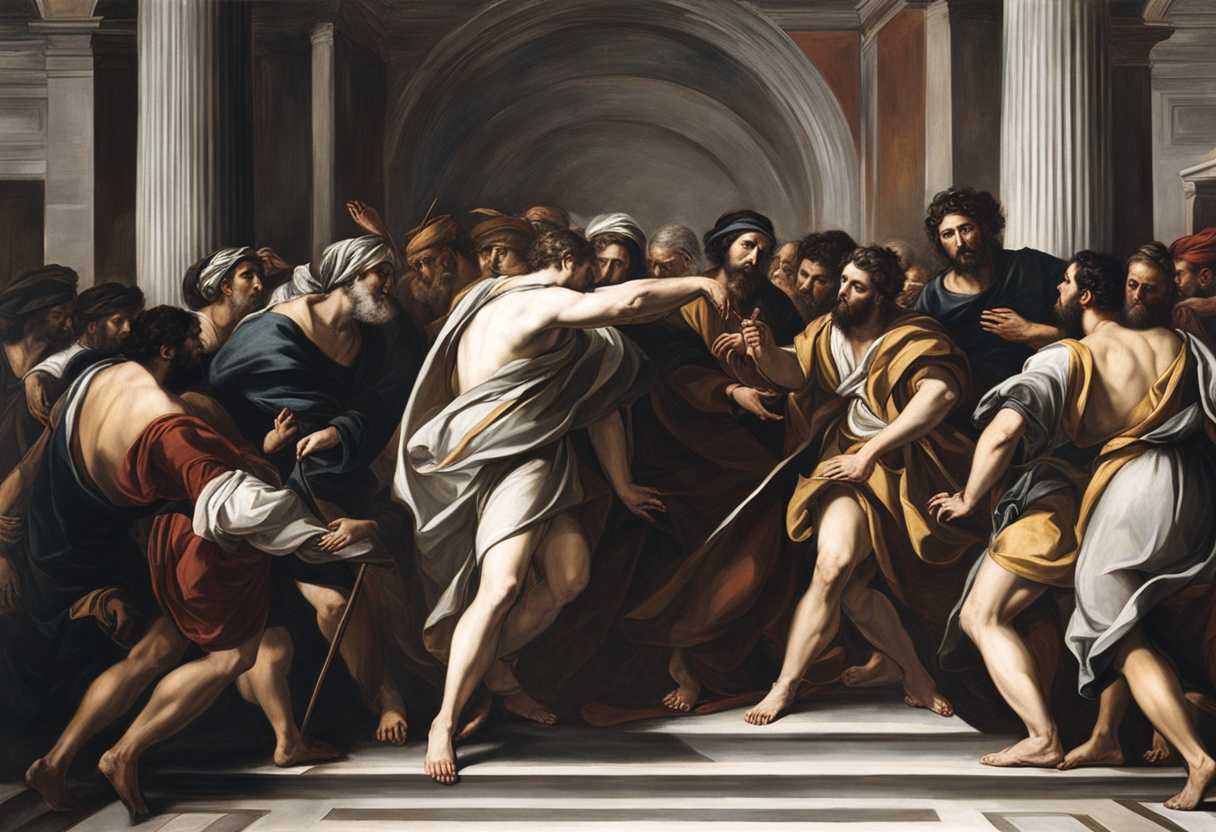
Setting the Scene for Acts 5:1-21
In Acts chapter 5, we find a significant scene unfolding in the early Christian community. The setting is in Jerusalem, where the apostles Peter and John, along with other believers, have been preaching and performing miracles in the name of Jesus. Ananias and his wife Sapphira are part of this community and have recently sold a piece of property. However, they conspire together to withhold a portion of the proceeds for themselves while pretending to give the full amount to the apostles.
As the scene progresses, Ananias presents the partial proceeds to Peter, claiming it is the full amount. Peter, filled with the Holy Spirit, sees through the deception and confronts Ananias, who falls dead upon hearing Peter’s words. Later, Sapphira arrives separately and is also questioned by Peter. When she continues the lie, she too falls dead. This dramatic event serves as a powerful lesson about the seriousness of deceit and the importance of honesty within the early Christian community.
The atmosphere is tense and charged with the presence of God’s power and judgment. The believers are in awe and fear of the Lord, witnessing firsthand the consequences of lying to the Holy Spirit. This event solidifies the authority of the apostles and underscores the purity and integrity required within the growing Christian community. The scene serves as a sobering reminder of the holiness of God and the importance of sincerity and truthfulness in all aspects of life.
What is Acts 5:1-21 about?
This verse serves as a sobering reminder of the importance of honesty and integrity. Ananias and Sapphira’s decision to lie about their offering highlights the danger of deceit and the consequences that can arise from dishonesty. Their actions not only affected their relationship with God but also impacted their standing within the early Christian community. The severe repercussions they faced from God and the apostles demonstrate the seriousness with which God views dishonesty and hypocrisy. We challenge ourselves to examine our own hearts and actions as we reflect on this verse. Are we being truthful in all aspects of our lives, or are we trying to deceive others for personal gain or recognition? Do we understand the gravity of lying and its potential consequences, not only in our relationships with others but also in our relationship with God? This story serves as a poignant reminder that our words and deeds should align with our values and beliefs, and that integrity is a foundational aspect of our faith. We should strive to emulate honesty and transparency in all areas of our lives, knowing that God values sincerity and truthfulness above all else.
Understanding what Acts 5:1-21 really means
Acts 5:1-21 recounts the story of Ananias and Sapphira, a couple who sold a piece of property but deceitfully withheld part of the proceeds while claiming to donate the entire amount to the apostles. This passage highlights themes of honesty, integrity, and the seriousness of sin within the early Christian community. “Kept back part of the money for himself” signifies the act of deceit and the intention to mislead the apostles and the community. “You have not lied just to human beings but to God” underscores the gravity of their sin, emphasizing that deceit within the community is ultimately an offense against God. “Great fear seized the whole church” indicates the profound impact of the event on the early Christian community, instilling a deep sense of reverence and caution.
In Proverbs 12:22, “The Lord detests lying lips, but he delights in people who are trustworthy,” reinforces the importance of honesty and integrity. Ephesians 4:25 emphasizes the need for truthfulness within the Christian community, stating, “Therefore each of you must put off falsehood and speak truthfully to your neighbor, for we are all members of one body.” Colossians 3:9-10 highlights the transformation expected in believers, moving away from deceit, “Do not lie to each other, since you have taken off your old self with its practices and have put on the new self, which is being renewed in knowledge in the image of its Creator.”
The story of Ananias and Sapphira serves as a powerful reminder of the importance of honesty and integrity in our personal and communal lives. In a world where deceit and dishonesty can often seem commonplace, this passage calls believers to a higher standard of truthfulness and transparency. It also serves as a warning about the consequences of sin and the importance of living a life that is pleasing to God. Consider a modern-day scenario where a person in a workplace claims credit for a project they only partially contributed to. Initially, they might receive praise and recognition, but if the truth comes out, the consequences can be severe, including loss of trust and respect from colleagues. Similarly, in our personal lives, small acts of deceit can erode trust and damage relationships. The story of Ananias and Sapphira reminds us that integrity is foundational to building and maintaining trust within any community.
Acts 5:1-21 is a sobering passage that challenges us to examine our own lives for areas where we might be tempted to deceive or withhold the truth. It calls us to live with integrity, recognizing that our actions have consequences not only for ourselves but for the broader community and our relationship with God. By striving to live honestly and transparently, we honor God and build stronger, more trustworthy relationships with those around us.
How can we maintain honesty and integrity in our actions?
Honesty and integrity in our actions can be maintained by being truthful and transparent in all that we do. It is important to always communicate openly and honestly with others, exhibiting integrity in our words and actions. Living honestly and authentically upholds our moral integrity and gains the trust and respect of those around us.
Choosing to do what is right even when faced with temptation or challenging situations is essential in maintaining honesty and integrity in our actions. It is important to resist the urge to deceive or manipulate others for personal gain and instead, strive to act with sincerity and truthfulness at all times. When we maintain a commitment to honesty and integrity, we uphold our moral principles and demonstrate our trustworthiness to others.
Application
Harness honesty and obedience as the compass guiding your spiritual journey. Just as in the story of Ananias and Sapphira, the cost of deception can be heavy. Embrace authenticity and integrity in all aspects of your life, both at work and with your loved ones. Are you willing to be a beacon of truth and faith in a world full of shadows and doubts?

Reverend Michael Johnson is an experienced Church Minister with a profound expertise in spirituality and guidance. With a serene presence and a compassionate heart, he has faithfully served his congregation for over 20 years, leading them on a spiritual journey towards inner peace and enlightenment. Reverend Johnson’s extensive knowledge of religious philosophies and profound understanding of human nature have made him a trusted confidant and mentor to many, as he seamlessly weaves his profound wisdom into life teachings. Reverend Johnson’s calming demeanor and empathetic nature continue to uplift and heal souls, nurturing a sense of unity and tranquility within his community.