
Acts 5:3-4 is about the consequences of lying to the Holy Spirit and pretending to give all when only part is given, demonstrating the importance of honesty and sincerity in one’s relationship with God.
3 But Peter said, “Ananias, why has Satan filled your heart to lie to the Holy Spirit and to keep back for yourself part of the proceeds of the land?
4 While it remained unsold, did it not remain your own? And after it was sold, was it not at your disposal? Why is it that you have contrived this deed in your heart? You have not lied to man but to God.
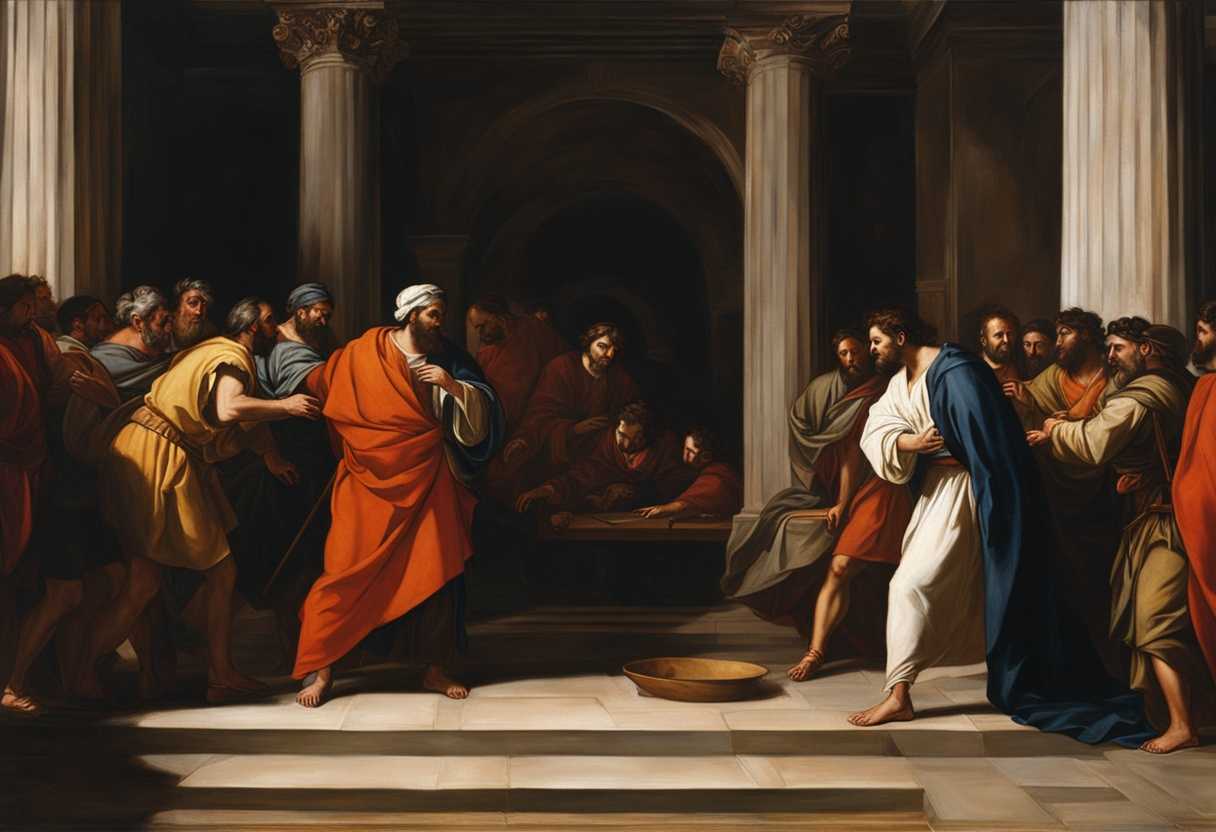
Setting the Scene for Acts 5:3-4
In Acts chapter 5, we find Ananias and his wife Sapphira in a tense and pivotal scene. The couple had recently sold a piece of property and decided to keep a portion of the proceeds for themselves while pretending to give the full amount to the apostles. They had conspired together to deceive the early Christian community and God himself.
The scene takes place in a crowded area where the believers had gathered to bring their offerings and share with one another. Ananias and Sapphira, motivated by greed and a desire for recognition, approached Peter with the money they had withheld. As they presented their gift, Peter, filled with the Holy Spirit, saw through their deception and confronted Ananias about his lie. The atmosphere in the crowd shifted as the gravity of the situation became apparent, leading to a moment of divine judgment as Ananias fell dead at Peter’s feet.
The surroundings were likely filled with a mix of emotions – from the joy of generosity and community to the shock and fear that accompanied the sudden and severe consequences of deceit. This event served as a powerful lesson to the early church about the importance of honesty, integrity, and the fear of the Lord.
What is Acts 5:3-4 about?
The consequences of Ananias and Sapphira’s deceitful actions are seen in this verse. Ananias and Sapphira had sold property and had pledged to give the proceeds to the community of believers, but they kept a portion of the money for themselves and lied about it. When confronted by the apostle Peter, they were struck down and faced severe consequences for their dishonesty. This story serves as a powerful reminder of the importance of honesty and integrity, especially within a community of faith. We, as teachers and guides in our own communities, can use this story to spark discussions about the importance of truthfulness and the consequences of deceit. We can ask our students to reflect on times when they may have been tempted to lie or deceive others, and challenge them to consider the potential harm that dishonesty can cause. We can encourage our students to cultivate a culture of honesty, trust, and accountability within their own lives and communities by sharing this story.
Understanding what Acts 5:3-4 really means
We should structure our commentary to delve deeply into Acts 5:3-4. We’ll break it down into these sections: Context, Key Phrases and Their Meanings, Cross-Referencing Other Scriptures, Relevance Today, and a Reflective Anecdote. Ananias and Sapphira are the characters in the story found in Acts 5:3-4. This passage is part of a larger narrative where the early Christian community is sharing all their possessions in common. Ananias and Sapphira sold a piece of property but kept back part of the money, lying about it to the apostles. This act is immediately condemned by Peter, who reveals that their deception is not just against men, but against God.
Key Phrases and Their Meanings
Peter’s words, “Why has Satan filled your heart to lie to the Holy Spirit” are crucial. This reveals that the deceit isn’t merely a human failing but is influenced by a darker spiritual force. The phrase “lie to the Holy Spirit” underscores that their sin is not just a social transgression but a profound spiritual breach.
Another critical phrase is “You have not lied to men but to God.” This indicates that any actions within the Christian community are not just interpersonal but have a divine dimension. It reinforces the belief that God is omnipresent and omniscient, aware of our innermost intentions.
Cross-Referencing Other Scriptures
To deepen our understanding, let’s look at Proverbs 12:22, which states, “Lying lips are an abomination to the Lord, but those who act faithfully are his delight.” This underscores the severity of lying in God’s eyes. Additionally, Ephesians 4:25 instructs us to “put away falsehood, let each one of you speak the truth with his neighbor, for we are members one of another.” This further highlights the communal aspect of truthfulness. This passage reminds us of the importance of honesty, particularly within our communities, in today’s world where integrity can sometimes seem scarce. The idea that deceit can have spiritual consequences might seem abstract, but it’s a powerful reminder that our actions often have broader implications than we realize. A trusted friend deceived me in a small matter. The betrayal likely hurt because it disrupted the trust and harmony in your relationship. Now, imagine this on a communal level, where deceit can erode the very foundation of trust that binds a community together. This is akin to what Ananias and Sapphira did. Their actions were not just personal failings but had the potential to fracture the unity and trust of the early Christian community. Acts 5:3-4 serves as a poignant reminder of the importance of integrity and the spiritual dimension of our actions. It calls us to reflect on how we can foster honesty and trust in our own lives and communities. What steps can you take today to ensure that your actions align with these values?
Do we give our full honesty to God?
Ananias and Sapphira were dishonest with God in Acts 5:3-4. They pretended to give the full proceeds from the sale of their property when they actually kept some for themselves. Their deception was ultimately exposed by Peter, highlighting the importance of being fully honest with God. This passage serves as a reminder that God knows our hearts and intentions, and we cannot hide anything from Him. We, as followers of Christ, must be completely transparent with God in all aspects of our lives. This includes being honest about our actions, thoughts, and motivations. God desires authenticity from His children, and He values integrity and truthfulness. We demonstrate humility and a willingness to seek forgiveness and restoration by acknowledging our sins and shortcomings openly before God. Let us strive to give our full honesty to God, holding nothing back in our confession and repentance. We should be vigilant in guarding against deceitfulness and hypocrisy in our relationship with God, just as Ananias and Sapphira faced consequences for their dishonesty. May we approach the throne of grace with sincerity and integrity, trusting in God’s mercy and grace to cleanse us from all unrighteousness.
Application
Think of life as a balancing act between work demands and family commitments. Just like you can’t fake your way through a tough project at work or mislead your family about your time, you shouldn’t deceive God or others. Ananias and Sapphira’s story warns us against cutting corners and hiding the truth. Embrace authenticity and honesty in every part of your life. Will you be true to yourself and stand up for what’s right?

Reverend Michael Johnson is an experienced Church Minister with a profound expertise in spirituality and guidance. With a serene presence and a compassionate heart, he has faithfully served his congregation for over 20 years, leading them on a spiritual journey towards inner peace and enlightenment. Reverend Johnson’s extensive knowledge of religious philosophies and profound understanding of human nature have made him a trusted confidant and mentor to many, as he seamlessly weaves his profound wisdom into life teachings. Reverend Johnson’s calming demeanor and empathetic nature continue to uplift and heal souls, nurturing a sense of unity and tranquility within his community.