
Acts 5:4-6 is about the consequences of lying to the Holy Spirit and attempting to deceive God, which ultimately leads to the judgment and punishment of those who engage in such dishonesty.
4 While it remained unsold, did it not remain your own? And after it was sold, was it not at your disposal? Why is it that you have contrived this deed in your heart? You have not lied to man but to God.
5 When Ananias heard these words, he fell down and breathed his last. And great fear came upon all who heard of it.
6 The young men rose and wrapped him up and carried him out and buried him.
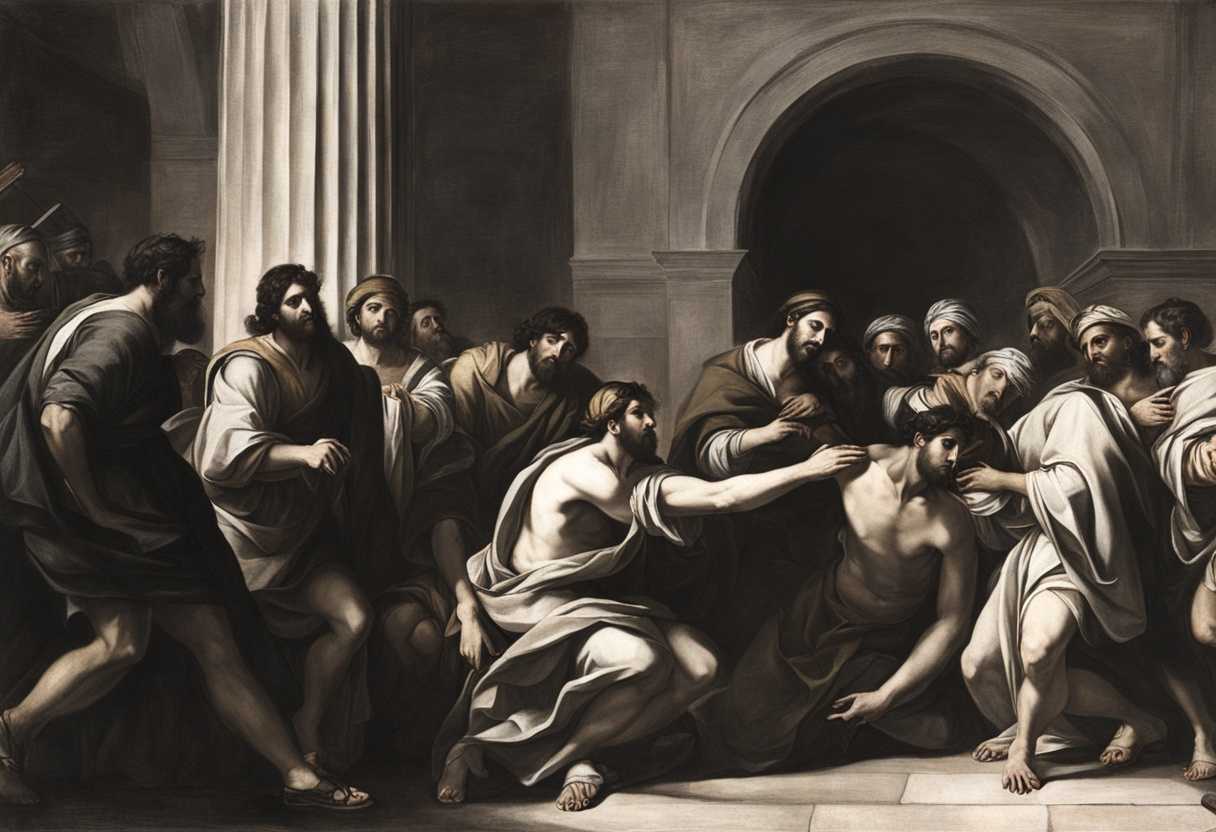
Setting the Scene for Acts 5:4-6
In Acts chapter 5, we find Ananias and his wife Sapphira in a tense and dramatic scene. The couple had decided to sell a piece of property and donate the proceeds to the early Christian community. However, they conspired together to keep back a portion of the money for themselves while pretending to give the full amount. As they stood before the apostle Peter, they were confronted about their deception.
The scene is set in a crowded gathering of believers, likely in Jerusalem. The room is filled with a mix of excitement and reverence as the early Christians come together to support one another and share resources. Ananias and Sapphira, motivated by greed and a desire for recognition, had joined in the spirit of generosity but harbored deceit in their hearts. As Peter questions Ananias about the money withheld, a heavy silence falls over the room, and all eyes are on the couple as their deception is exposed.
The atmosphere is charged with a mix of shock and fear as the consequences of their actions become apparent. The gravity of their sin is made evident as Ananias falls dead upon hearing Peter’s words, and shortly after, Sapphira meets the same fate. This sobering event serves as a powerful lesson about the importance of honesty and integrity in the early Christian community.
What is Acts 5:4-6 about?
Let’s uncover the profound meaning of this powerful verse by delving into it. “Ananias and Sapphira lie to the Holy Spirit and face consequences” serves as a stern reminder of the importance of honesty and integrity in our relationship with God and our fellow believers. Ananias and Sapphira show a lack of faith and trust in God’s provision and sovereignty by attempting to deceive the Holy Spirit and their community about their actions and intentions. This verse prompts us to reflect on our own actions and motivations—are we living authentically and transparently before God and others, or are we succumbing to the temptation of deception and dishonesty?
Furthermore, the consequences faced by Ananias and Sapphira underscore the seriousness of their actions. We, as believers, are called to walk in truth and righteousness, honoring God with our words and deeds. The story of Ananias and Sapphira serves as a cautionary tale, reminding us that God sees all and holds us accountable for our choices. It challenges us to examine our own hearts and ensure that we are living in alignment with God’s principles of honesty, integrity, and faithfulness. May this verse prompt us to strive for genuine and sincere relationships with God and others, rooted in truth and grace.
Understanding what Acts 5:4-6 really means
Structure of the Commentary:
- Context and Overview
- Key Phrases Explained
- Cross-Referencing Other Passages
- Relevance Today
- Anecdotal Illustration
- Ananias and Sapphira deceitfully withheld part of the proceeds while pretending to donate the entire amount after selling a piece of property in this passage from Acts. This act of deceit was not merely against the community but against God. It highlights the severity of lying to the Holy Spirit and the importance of integrity within the Christian community.
Key Phrases Explained
The phrase “You have not lied just to human beings but to God” underscores the gravity of Ananias’ sin. It wasn’t merely a social faux pas; it was a spiritual betrayal. Similarly, the phrase “great fear seized all who heard what had happened” emphasizes the profound impact of this event on the early church. It wasn’t just fear of punishment but a deep reverence and awareness of God’s holiness and justice.
Cross-Referencing Other Passages
James 4:17 says, “If anyone, then, knows the good they ought to do and doesn’t do it, it is sin for them.” This aligns with the actions of Ananias and Sapphira, who knew the right thing to do but chose deception. Additionally, Proverbs 12:22 states, “The Lord detests lying lips, but he delights in people who are trustworthy.” These passages together highlight the biblical theme of honesty and integrity.
Relevance Today
Integrity and honesty are timeless values. Whether in our personal lives, workplaces, or church communities, the call to be truthful remains crucial. This passage serves as a powerful reminder that God always sees our actions, even in a world where deceit can often seem normalized. It prompts us to reflect on our own lives and consider where we might be falling short in honesty.
Anecdotal Illustration
A few years ago, a friend of mine was part of a community project. They were responsible for handling finances and decided to skim a little off the top, thinking no one would notice. However, the discrepancy was discovered, and their reputation was significantly damaged. This situation brought to life the principle found in this passage: deceit, no matter how small or seemingly inconsequential, can have far-reaching consequences. Let’s ask ourselves as we reflect on this passage: Are there areas in our lives where we are not being fully transparent? Do we sometimes justify small deceits, thinking they don’t matter? God’s call to integrity is not just about avoiding punishment but about living in a way that honors Him and builds trust within our communities. May we strive to be people of integrity, both in the eyes of others and before God.
Do we truly give our whole selves to God?
Ananias and Sapphira lie about their contribution to the church in Acts 5:4-6, claiming to have given all of the proceeds of a sale when they had kept back some for themselves. This passage serves as a warning for believers against pretending to give their whole selves to God while secretly holding back. It reveals that true devotion to God requires honesty, transparency, and a genuine surrender of all aspects of our lives. We are called to examine our hearts and our actions to ensure that we are truly giving our whole selves to God, just as Ananias and Sapphira were held accountable for their deception. It is not enough to simply go through the motions of religious practices or proclaim our devotion with words if our actions do not align with our internal commitments. God desires authentic worship and complete surrender from His followers, not just outward appearances or empty gestures.
Reflecting on this passage challenges us to consider whether we are holding back any part of ourselves from God and to reevaluate our motives and intentions in our relationship with Him. It reminds us that God sees not only our outward expressions of faith but also our inner thoughts and intentions, and calls us to wholeheartedly devote ourselves to Him in truth and in spirit.
Application
In the hustle of work and the embrace of family, honesty is your compass. Align your actions with truth, letting transparency light your path. Step away from shortcuts and half-truths—stand tall in integrity. Look in the mirror: are your words and deeds true reflections of your values? How will you uphold honesty today?

Reverend Michael Johnson is an experienced Church Minister with a profound expertise in spirituality and guidance. With a serene presence and a compassionate heart, he has faithfully served his congregation for over 20 years, leading them on a spiritual journey towards inner peace and enlightenment. Reverend Johnson’s extensive knowledge of religious philosophies and profound understanding of human nature have made him a trusted confidant and mentor to many, as he seamlessly weaves his profound wisdom into life teachings. Reverend Johnson’s calming demeanor and empathetic nature continue to uplift and heal souls, nurturing a sense of unity and tranquility within his community.