
Acts 7:30-35 is about the story of Moses encountering God in the burning bush, highlighting the call to deliver the Israelites from slavery and emphasizing the importance of obedience and humility in fulfilling God’s purpose.
30 “Now when forty years had passed, an angel appeared to him in the wilderness of Mount Sinai, in a flame of fire in a bush.”
31 When Moses saw it, he marveled at the sight, and as he drew near to look, there came the voice of the Lord:
32 ‘I am the God of your fathers, the God of Abraham and of Isaac and of Jacob.’ And Moses trembled and did not dare to look.
33 Then the Lord said to him, ‘Take off the sandals from your feet, for the place where you are standing is holy ground.
34 I have surely seen the affliction of my people who are in Egypt, and have heard their groaning, and I have come down to deliver them. And now come, I will send you to Egypt.’”
35 “This Moses, whom they rejected, saying, ‘Who made you a ruler and a judge?’—this man God sent as both ruler and redeemer by the hand of the angel who appeared to him in the bush.
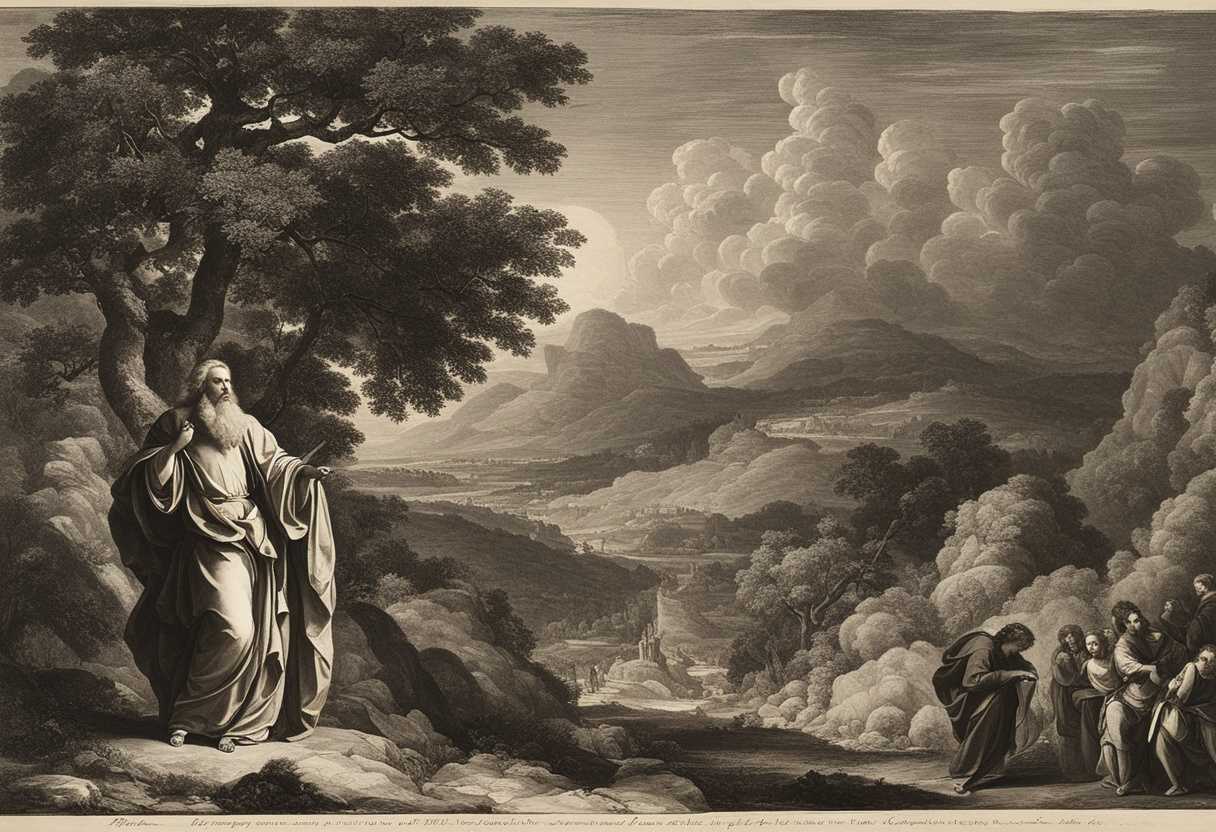
Setting the Scene for Acts 7:30-35
In Acts chapter 7, we find Stephen, one of the early Christian disciples, recounting the history of the Israelites to the Jewish religious leaders. As Stephen speaks, he transports his audience back to the time when Moses encountered God at the burning bush. The scene is set in the wilderness of Midian, a vast and desolate land with rugged terrain and sparse vegetation. The air is dry and filled with the sound of the wind blowing through the desert.
Moses, a former prince of Egypt turned shepherd, is tending to his father-in-law Jethro’s flock when he sees a bush engulfed in flames but not consumed by the fire. Intrigued by this miraculous sight, Moses approaches the bush, and it is there that he encounters the presence of God. The ground around the bush is sacred, and Moses removes his sandals as a sign of reverence for the holy ground he stands on. In this divine moment, God commissions Moses to go back to Egypt and lead the Israelites out of slavery.
As Stephen narrates this pivotal moment in Israel’s history, the listeners are drawn into the scene, imagining the awe and wonder that Moses must have felt in the presence of the Almighty. The burning bush becomes a symbol of God’s power and presence, a reminder that even in the most ordinary places, God can reveal Himself in extraordinary ways.
What is Acts 7:30-35 about?
A powerful example of divine purpose and leadership is seen in this verse. Moses, a humble shepherd, is chosen by God to embark on a monumental mission – freeing the Israelites from slavery in Egypt. This moment showcases the transcendence of personal limitations when one is called to serve a greater cause. It symbolizes the idea that each of us, regardless of our background or circumstances, has the potential to be chosen for a significant purpose.
Imagine being in Moses’ shoes – called by a higher power to lead a nation to freedom. How would you feel? This verse challenges us to reflect on our own potential for leadership and courage in the face of adversity. It reminds us that sometimes the most unexpected individuals are chosen for extraordinary tasks. Through Moses, we learn that when we trust in our calling and have faith in our abilities, we can overcome even the most daunting challenges. This verse serves as a timeless reminder that with God’s guidance, we can rise above our limitations and fulfill our true potential.
Understanding what Acts 7:30-35 really means
In Acts 7:30-35, we delve into Stephen’s speech before the Sanhedrin, where he recounts the history of Israel and their repeated rejection of God’s messengers. Stephen’s address to the religious leaders serves to highlight how their ancestors resisted God’s plans and how they are continuing this pattern by rejecting Jesus. The passage specifically mentions Moses’ encounter with an angel in the flames of a burning bush near Mount Sinai, symbolizing divine intervention and calling. This pivotal moment in Moses’ life signifies God’s presence and holiness, emphasizing the theme of God using individuals for His purposes.
God’s acknowledgment of the oppression of the Israelites in Egypt showcases His awareness and compassion towards His people’s suffering. This phrase underscores God’s active role in delivering His people from bondage, highlighting His redemptive nature. When God commissions Moses to return to Egypt as a leader and deliverer, it reinforces the theme of redemption and God’s plan to utilize individuals for His divine purposes. The passage not only provides historical context but also offers profound insights into God’s character and His interactions with humanity.
Drawing parallels to other biblical passages such as Exodus 3:1-10, Hebrews 11:24-27, and Jeremiah 1:4-10, we see a consistent pattern of God choosing unlikely individuals for His work. These related passages further emphasize the themes of divine calling, faith, and God’s redemptive power. By reflecting on these narratives, we can glean valuable lessons for our own spiritual journey and understand the significance of responding to God’s call with faith and obedience.
The relevance of Acts 7:30-35 extends to contemporary life, reminding us that just as Moses had a specific calling, each person has a unique purpose ordained by God. Understanding and embracing this calling can lead to a fulfilling and impactful life. Moreover, the passage reassures us of God’s awareness of our struggles and His active involvement in our deliverance, offering comfort and hope in times of hardship. By trusting in God’s redemptive power and not allowing past failures to define us, we can find encouragement to press forward in faith.
Anecdotes of modern-day individuals who have heeded a strong calling, akin to Moses, can serve as powerful illustrations of divine calling, God’s compassion towards suffering, and the transformative power of redemption. These stories mirror the timeless truths encapsulated in Acts 7:30-35, making the ancient text relevant and inspiring for contemporary readers. Ultimately, this passage serves as a poignant reminder of God’s presence, calling, and redemptive work in our lives, urging us to be attentive to His voice, trust in His providence, and embrace His redemptive plan for our lives.
How can we recognize God’s call in our lives?
God’s call in our lives can often come in unexpected ways and through various circumstances. It may not always be a loud voice or a clear direction, but rather a stirring in our hearts, a feeling of conviction, or a sense of peace about a certain path. We too can recognize God’s call by the ways in which it aligns with his will and purpose for our lives, just as God called Moses through a burning bush.
When we feel a deep inner conviction or a strong urge to move in a certain direction that is in line with God’s teachings and principles, it may be a sign of God’s call. It is important to be attentive to these nudges and to seek guidance through prayer and reflection. God’s call may also be confirmed through the wise counsel of others, the opening of doors, or a sense of confirmation and peace that surpasses understanding. We can continuously seek to discern God’s call in our lives by staying connected to him through prayer, studying his Word, and being in community with other believers as we navigate our journey of faith. We can better recognize and respond to God’s call in our lives by being open and attentive to the prompting of the Holy Spirit and aligning our desires with God’s will.
Application
Reflect on your own journey and how God is urging you to embrace faith. Similar to Moses leading the Israelites, trust in God’s path and follow His voice, especially in uncertain times. Embrace courage as you walk in His direction, leaving comfort behind for His divine plan. Are you prepared to act upon God’s calling right now?

Reverend Michael Johnson is an experienced Church Minister with a profound expertise in spirituality and guidance. With a serene presence and a compassionate heart, he has faithfully served his congregation for over 20 years, leading them on a spiritual journey towards inner peace and enlightenment. Reverend Johnson’s extensive knowledge of religious philosophies and profound understanding of human nature have made him a trusted confidant and mentor to many, as he seamlessly weaves his profound wisdom into life teachings. Reverend Johnson’s calming demeanor and empathetic nature continue to uplift and heal souls, nurturing a sense of unity and tranquility within his community.