
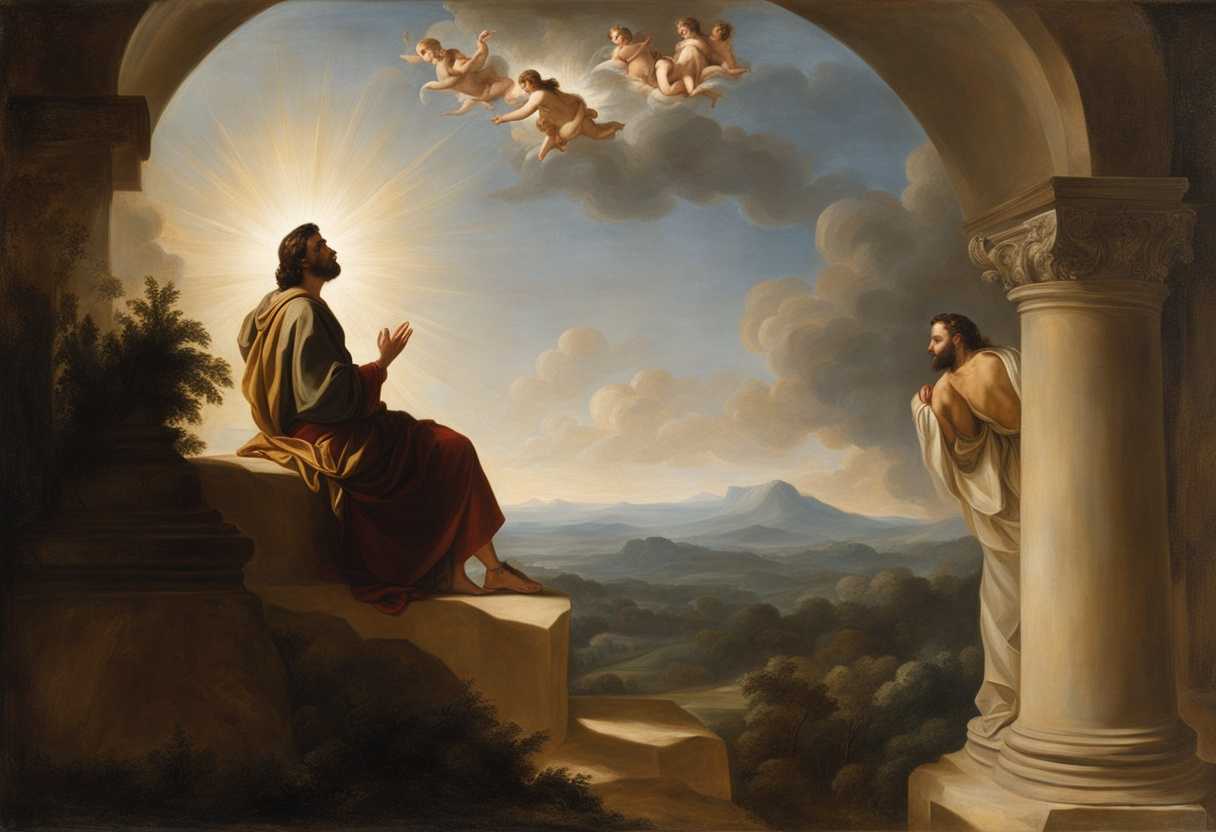
Acts 7:55-56 is about Stephen, filled with the Holy Spirit, being granted a vision of heaven and seeing Jesus standing at the right hand of God, symbolizing his acceptance, vindication, and authority as the Son of God.
55 But he, full of the Holy Spirit, gazed into heaven and saw the glory of God, and Jesus standing at the right hand of God.
56 And he said, “Behold, I see the heavens opened, and the Son of Man standing at the right hand of God.”
Setting the Scene for Acts 7:55-56
In Acts chapter 7, we find Stephen, a devout follower of Jesus, standing before the Sanhedrin, the Jewish high court in Jerusalem. The scene is tense as Stephen is being accused of blasphemy and speaking against the temple and the law of Moses. The high priest and other religious leaders are present, along with a crowd of onlookers.
Stephen, filled with the Holy Spirit, boldly proclaims the truth about Jesus as the Messiah, recounting the history of the Israelites and their repeated rejection of God’s chosen messengers. As he speaks, his face becomes radiant, reflecting the glory of God. This enrages the religious leaders, who cover their ears and shout at the top of their voices to drown out his words.
The setting is in a grand hall, with the Sanhedrin seated in a semicircle, looking down at Stephen as he stands in the center. The room is filled with tension and emotion as Stephen fearlessly confronts the religious authorities, knowing the potential consequences of his words. It is a pivotal moment in the early Christian church, as Stephen becomes the first martyr for his faith in Jesus Christ.
What is Acts 7:55-56 about?
Stephen’s vision of seeing Jesus standing at the right hand of God right before his martyrdom carries deep symbolic significance in this verse. It symbolizes Stephen’s unwavering faith and devotion to Jesus, even in the face of death. The image of Jesus standing, rather than sitting as mentioned in various other parts of the Bible, could signify Jesus being ready to receive Stephen into the heavenly realm, showing his approval and welcome of Stephen’s sacrifice for his faith.
This moment captures Stephen’s deep connection with God and Jesus, portraying his courage and conviction in his belief, even in the face of persecution and death. This vision offers solace and assurance to Stephen, knowing that his ultimate reward and destiny lie in the presence of God and Jesus. The image of Jesus standing at the right hand of God conveys the divine support and approval of Stephen’s actions, serving as a source of strength and comfort as he faces his martyrdom.
Imagine the immense faith and spiritual clarity Stephen must have possessed to see such a powerful vision before his martyrdom. Reflecting on this verse prompts us to consider our own faith and devotion to God in times of trial and challenge. It reminds us of the enduring presence of God and Jesus in our lives, offering us strength and comfort in the face of adversity. Just like Stephen, may we hold steadfast to our faith and belief, trusting in the divine guidance and support that accompanies us on our spiritual journey.
Understanding what Acts 7:55-56 really means
In Acts 7:55-56, we witness a pivotal moment in the life of Stephen, the first Christian martyr. Filled with the Holy Spirit, Stephen is granted a vision of Jesus standing at the right hand of God. This vision occurs as Stephen addresses the Sanhedrin, recounting Israel’s history and accusing the Jewish leaders of resisting the Holy Spirit. The phrase “full of the Holy Spirit” signifies Stephen’s complete submission and empowerment by the Holy Spirit, enabling him to boldly speak and see divine revelations. It is a testament to the transformative power of the Holy Spirit in the life of a believer.
The imagery of “heaven open” symbolizes a direct connection between the divine realm and the earthly domain, emphasizing God’s active involvement in human affairs. Seeing the “Son of Man standing at the right hand of God” portrays Jesus in a position of authority and honor. His stance may indicate readiness to welcome Stephen into His presence or His active role in interceding for believers. This depiction underscores Jesus’ sovereignty and His ongoing advocacy for those who follow Him.
Drawing parallels with related biblical passages enriches our understanding of the significance of Jesus’ position. In Daniel 7:13-14, a vision of the “Son of Man” receiving authority and glory aligns with the portrayal of Jesus in Acts. Matthew 26:64 reinforces Jesus’ divine authority and future return, while Hebrews 12:2 highlights His exalted position and role as the pioneer of faith. These connections deepen our appreciation of Jesus’ divine identity and His continuous work on behalf of believers.
The relevance of Acts 7:55-56 extends to contemporary believers, offering assurance of Jesus’ authority and active presence in their lives. In times of persecution or hardship, this passage serves as a source of comfort and strength, reminding Christians of Jesus’ unwavering support and the promise of eternal reward. By remaining steadfast in faith and fixing their gaze on Jesus, believers can find solace and encouragement in the midst of trials.
Consider a modern-day believer enduring severe persecution for their faith. Like Stephen, they may feel isolated and overwhelmed by opposition. Yet, reflecting on the vision of Jesus standing at God’s right hand can bring profound comfort and hope. Knowing that Jesus advocates for them and awaits their arrival in heaven can inspire resilience and perseverance in the face of adversity. This anecdote illustrates the enduring relevance and transformative power of Acts 7:55-56 in the lives of believers today.
In conclusion, Acts 7:55-56 offers a poignant reminder of Jesus’ divine authority and His active involvement in the lives of His followers. It calls believers to stand firm in faith, empowered by the Holy Spirit, and to anticipate the eternal reward awaiting them in God’s presence. This passage resonates across time, inspiring believers to trust in Jesus’ sovereignty and find strength in His abiding presence amidst life’s challenges.
How can we experience God’s glory and presence?
We can experience God’s glory and presence by fixing our eyes on Jesus, the ultimate manifestation of God’s glory. We too can experience God’s presence by keeping our focus on Jesus, just as Stephen saw Jesus standing at the right hand of God in Acts 7:55-56. When we center our thoughts and actions on following Christ, we open ourselves up to experiencing the fullness of God’s glory in our lives.
Furthermore, prayer and meditation can help us draw closer to God and perceive His presence and glory. We create a space for God to reveal Himself to us and make His presence known by spending time in prayer and reflecting on His Word. We position ourselves to encounter His glory and feel His presence with us in a profound way as we seek God earnestly through prayer and meditation.
Finally, participating in communal worship with other believers can also be a powerful way to experience God’s glory. When we come together as a body of believers to worship God, we create an environment where His presence can manifest itself among us. Through the collective praise and adoration of the community, we can tangibly sense God’s glory filling the space and our hearts, drawing us into a deeper experience of His presence.
Application
Think about your busiest workday, managing tasks, and balancing family life. Amid the chaos, there’s a constant presence that offers strength—God. Just as you tackle challenges head-on, carry that same boldness in your faith. Like Stephen, stand firm and share that unwavering belief. Are you ready to make a powerful impact with your faith?

Reverend Michael Johnson is an experienced Church Minister with a profound expertise in spirituality and guidance. With a serene presence and a compassionate heart, he has faithfully served his congregation for over 20 years, leading them on a spiritual journey towards inner peace and enlightenment. Reverend Johnson’s extensive knowledge of religious philosophies and profound understanding of human nature have made him a trusted confidant and mentor to many, as he seamlessly weaves his profound wisdom into life teachings. Reverend Johnson’s calming demeanor and empathetic nature continue to uplift and heal souls, nurturing a sense of unity and tranquility within his community.