
Acts 7:59-60 is about the martyrdom of Stephen, who, like Jesus, prayed for forgiveness for his persecutors as he was being stoned to death, symbolizing the Christian teaching of forgiveness and turning the other cheek in the face of violence.
59 And as they were stoning Stephen, he called out, “Lord Jesus, receive my spirit.”
60 Then falling to his knees he cried out with a loud voice, “Lord, do not hold this sin against them.” And when he had said this, he fell asleep.
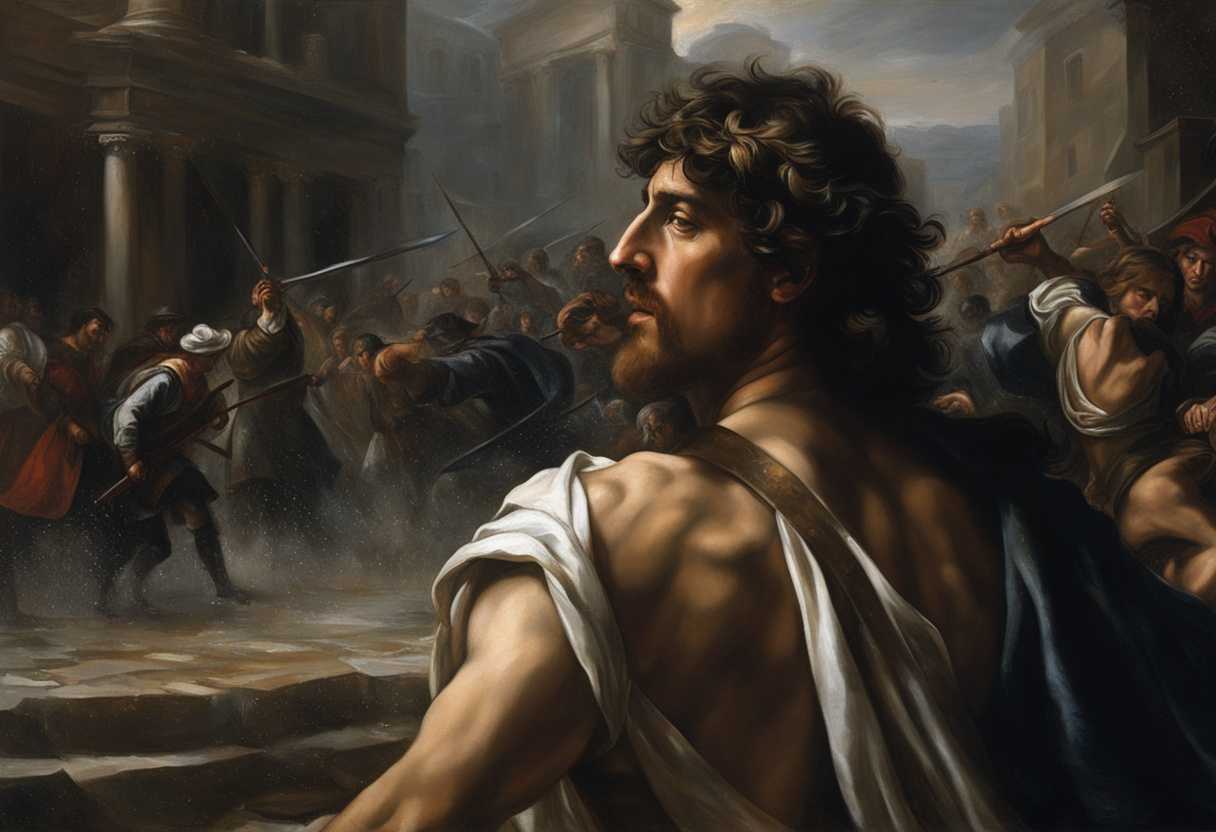
Setting the Scene for Acts 7:59-60
In Acts chapter 7, we find Stephen, a devout follower of Jesus, standing before the Sanhedrin, the Jewish high court in Jerusalem. The scene is tense as Stephen is being accused of blasphemy for preaching about Jesus as the Messiah. The high priest and other religious leaders are present, along with a crowd of onlookers who have gathered to witness the trial.
Stephen, filled with the Holy Spirit, boldly defends his faith and recounts the history of the Jewish people, highlighting their rejection of God’s prophets throughout the ages. As he speaks, his words cut deep, challenging the religious leaders and exposing their hypocrisy. The atmosphere is charged with emotion as Stephen fearlessly proclaims the truth, knowing the consequences of his words.
As the tension escalates, Stephen’s accusers become enraged and ultimately drag him outside the city to stone him to death. In a moment of incredible faith and forgiveness, Stephen looks up to heaven and prays for his persecutors, echoing the words of Jesus on the cross. The scene is a powerful testament to Stephen’s unwavering faith and his willingness to suffer and die for the sake of the gospel.
What is Acts 7:59-60 about?
This powerful verse showcases Stephen’s incredible act of forgiveness even as he faces a cruel and unjust death. Stephen demonstrates the ultimate display of love, humility, and righteousness by following Jesus’ example on the cross. Stephen shows unwavering faith and commitment to his beliefs by forgiving his persecutors in his final moments, despite the grave consequences he faces. This act of forgiveness not only reflects Stephen’s deep connection to his faith but also challenges us to reflect on the power of forgiveness in our own lives.
Have you ever struggled with forgiving someone who has wronged you? Stephen’s actions in this verse serve as a poignant reminder of the transformative impact of forgiveness. Through his remarkable act, Stephen not only releases the burden of anger and resentment but also embodies the resilience and strength that come from extending grace to others. Stephen’s example invites us to consider the liberating power of forgiveness and the healing it can bring to our hearts and souls as we navigate our own experiences of hurt and betrayal. We too can draw inspiration from Stephen’s actions in forgiving his persecutors and strive to cultivate forgiveness in our own lives.
Understanding what Acts 7:59-60 really means
In Acts 7:59-60, we witness the poignant moment of Stephen’s martyrdom, a testament to his unwavering faith and Christ-like forgiveness. Stephen, empowered by the Holy Spirit, boldly proclaimed the message of Jesus before the Sanhedrin, ultimately facing death by stoning for his beliefs. His final words, “Lord Jesus, receive my spirit” and “Lord, do not hold this sin against them,” encapsulate the essence of his faith and forgiveness, echoing Jesus’ own words on the cross. Through these phrases, Stephen exemplifies profound trust in Jesus and a remarkable capacity for forgiveness, even towards his persecutors.
The parallel between Stephen’s words and Jesus’ teachings on forgiveness and love is striking. Just as Jesus prayed for forgiveness for those who crucified Him, Stephen extends the same grace to his own executioners. This act of forgiveness amidst suffering serves as a powerful reminder of the transformative power of love and mercy. It challenges us to reflect on our own responses to adversity and injustice, urging us to embody the same spirit of forgiveness and love that Jesus and Stephen demonstrated.
The timeless themes of faith, forgiveness, and trust in God depicted in Stephen’s final moments resonate with believers across generations. In a world marked by persecution and suffering, Stephen’s example calls us to respond with faith and forgiveness, mirroring the teachings of Jesus. His unwavering commitment to his beliefs, even in the face of death, inspires us to trust in God’s sovereignty and to extend forgiveness to those who wrong us.
Drawing parallels to modern-day examples, such as the story of Corrie ten Boom, who forgave a former Nazi guard, illustrates the enduring relevance of Stephen’s actions. Like Stephen, Corrie’s choice to forgive in the midst of immense pain and injustice reflects a deep-seated faith and commitment to Christ-like love. These anecdotes serve as tangible reminders of the transformative power of forgiveness and the enduring impact of living out one’s faith in challenging circumstances.
In conclusion, Stephen’s final words stand as a testament to his unshakeable faith and Christ-like love. They challenge us to trust in God’s plan, even in the face of adversity, and to extend forgiveness to those who wrong us. By reflecting on Stephen’s example and the related passages on forgiveness and love, we are encouraged to embody these virtues in our daily lives, striving to emulate the teachings of Jesus in our interactions with others.
How can we forgive those who hurt us deeply?
Forgiving those who have deeply hurt us can be a challenging and painful process. However, when we look to the example of Stephen in Acts 7:59-60, we see a powerful demonstration of forgiveness in the face of extreme persecution. Despite being stoned to death by his enemies, Stephen’s final words were a prayer for forgiveness for those who were harming him. This demonstrates a profound level of compassion and love that goes beyond what is humanly comprehensible. We can look to Stephen’s example as a source of inspiration when we are confronted with the task of forgiving those who have wronged us. We release ourselves from the burden of holding onto resentment and anger by choosing to forgive, allowing us to heal and move forward with compassion and grace. Forgiveness is not always easy, but through prayer and reflection on the teachings of Scripture, we can find the strength and courage to extend forgiveness to others, as Stephen did, even in the midst of great suffering. Forgiving those who have hurt us deeply ultimately requires an act of faith and obedience to God’s command to love our enemies and pray for those who persecute us. It is a way to demonstrate the transformative power of God’s love and mercy in our own lives, and to live out the message of reconciliation and forgiveness that is at the heart of the Gospel. We not only free ourselves from the chains of bitterness and resentment but also open the door to healing, redemption, and reconciliation in our relationships by following Stephen’s example and choosing to forgive.
Application
Just like Stephen stood strong in the face of adversity, let’s not falter in our faith. Be unshakeable, unwavering in your beliefs, no matter what hurdles come your way. Channel the courage of Stephen in your daily battles. Will you take up the mantle of unwavering faith, just like Stephen did?

Reverend Michael Johnson is an experienced Church Minister with a profound expertise in spirituality and guidance. With a serene presence and a compassionate heart, he has faithfully served his congregation for over 20 years, leading them on a spiritual journey towards inner peace and enlightenment. Reverend Johnson’s extensive knowledge of religious philosophies and profound understanding of human nature have made him a trusted confidant and mentor to many, as he seamlessly weaves his profound wisdom into life teachings. Reverend Johnson’s calming demeanor and empathetic nature continue to uplift and heal souls, nurturing a sense of unity and tranquility within his community.