
Acts 8:1-5 is about the persecution of the early church leading to the spreading of the gospel beyond Jerusalem, showing that even in times of distress and adversity, the message of Jesus continues to be proclaimed and received by many.
1 And Saul approved of his execution. And there arose on that day a great persecution against the church in Jerusalem, and they were all scattered throughout the regions of Judea and Samaria, except the apostles.
2 Devout men buried Stephen and made great lamentation over him.
3 But Saul was ravaging the church, and entering house after house, he dragged off men and women and committed them to prison.
4 Now those who were scattered went about preaching the word.
5 Philip went down to the city of Samaria and proclaimed to them the Christ.
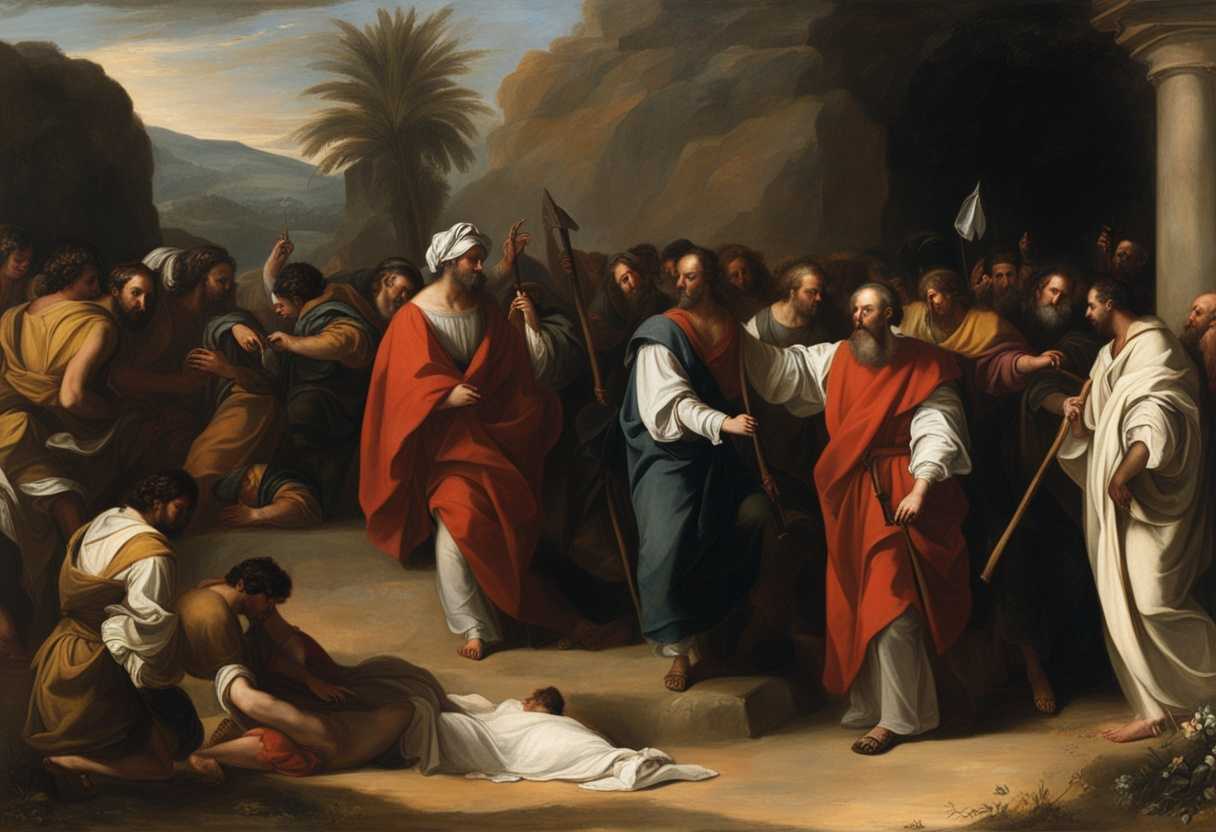
Setting the Scene for Acts 8:1-5
In Acts chapter 8, we find the early Christian community in Jerusalem facing persecution following the martyrdom of Stephen. The scene is tense and somber as the believers scatter to escape the persecution. Among them is Saul, a zealous Pharisee who is consenting to Stephen’s death and is on a mission to persecute the followers of Jesus.
As the believers flee, Philip, one of the seven chosen to serve in Acts 6, finds himself in Samaria. The city is bustling with people from different backgrounds, beliefs, and cultures. Philip begins to preach the gospel, performing miracles and casting out unclean spirits, which captures the attention of the Samaritans. They are amazed by the signs and wonders they witness, and many believe in the message of Jesus Christ.
The contrast between the fear and persecution in Jerusalem and the openness and reception in Samaria is striking. The believers in Jerusalem are scattered and in hiding, while Philip is boldly proclaiming the gospel and seeing a great harvest of souls in Samaria. This pivotal moment marks the beginning of the spread of the gospel beyond Jerusalem and into the surrounding regions, fulfilling Jesus’ command to be His witnesses “in Jerusalem, and in all Judea and Samaria, and to the ends of the earth” (Acts 1:8).
What is Acts 8:1-5 about?
This verse carries a powerful message about how persecution can have both negative and positive effects on believers. Initially, when faced with persecution, believers may become scattered and disheartened, feeling isolated and vulnerable. However, in the midst of these challenges, we see the example of Philip who chose to respond differently. Despite the persecution, he continued to preach the Gospel with boldness and determination. His actions brought joy and healing to the people of Samaria, illustrating the transformative power of faith in the face of adversity. Philip demonstrates resilience and unwavering faith in this verse. Despite the difficult circumstances, he chose to spread the message of hope and love, making a significant impact on those around him. This verse challenges us to reflect on how we respond to persecution and hardship in our own lives. Do we allow it to scatter us and weaken our faith, or do we rise above it with courage and conviction, like Philip? Through this reflection, we can learn the importance of standing firm in our beliefs, even in the face of opposition, and the profound difference it can make in bringing light and healing to a hurting world.
Understanding what Acts 8:1-5 really means
The Book of Acts, penned by Luke, serves as a historical account of the early church’s growth and the spread of the Gospel following Jesus’ ascension. Acts 8:1-5 unfolds after the martyrdom of Stephen, a pivotal moment marking a significant shift for the early church. This passage introduces Saul, later known as Paul, as a central figure in the persecution of Christians, setting the stage for the unfolding narrative.
“On that day a great persecution broke out against the church in Jerusalem,” signifies a crucial juncture where early Christians encountered intense trials, leading to their dispersion. The believers, excluding the apostles, were scattered throughout Judea and Samaria, not as a setback but as a divine strategy to propagate the Gospel. Despite the adversity, those dispersed continued to proclaim the word of Jesus wherever they went, showcasing unwavering faith and resilience in the face of persecution.
Philip’s journey to Samaria to proclaim the Messiah underscores the breaking of cultural and religious barriers, fulfilling Jesus’ directive in Acts 1:8 to be witnesses in Jerusalem, Judea, Samaria, and to the ends of the earth. This mission aligns with the Great Commission in Matthew 28:19-20, emphasizing the universal call to make disciples of all nations. The passage resonates with Romans 8:28, illustrating how God works all things for the good of those who love Him, even utilizing persecution to advance the spread of Christianity.
In contemporary times, Acts 8:1-5 holds relevance for believers facing adversity. It underscores the need for perseverance in faith amidst challenges, highlighting God’s sovereignty in using difficult circumstances for His divine purposes. The passage also emphasizes the mission and evangelistic mandate for modern-day Christians, urging them to share their faith boldly, even in the face of opposition.
Consider a modern missionary encountering severe resistance in a foreign land, akin to the early Christians’ persecution. Despite being compelled to depart, they persist in their ministry online, reaching a broader audience. This anecdote mirrors the early believers’ experience, showcasing how God can transform trials into opportunities for greater impact, reinforcing the timeless lessons from Acts 8:1-5.
Acts 8:1-5 serves as a poignant reminder of the enduring nature of faith, the imperative of evangelism, and God’s ability to orchestrate circumstances for His glory. It challenges believers to trust in God’s providential plan and to boldly proclaim the Gospel, regardless of the obstacles encountered in their journey of faith.
How can we have faith and proclaim Christ boldly?
To have faith and proclaim Christ boldly, we can look to the example set in these verses from Acts. Despite facing persecution and hardship, the early followers of Jesus did not waver in their faith. They continued to boldly proclaim the message of Christ, even as they were scattered across different regions. This demonstrates the importance of standing firm in our faith and proclaiming Christ confidently, regardless of the challenges we may face.
We can also draw inspiration from the early believers’ obedience to the leading of the Holy Spirit. They responded to the prompting to spread the Good News, and as a result, many people came to believe in Christ. We can boldly proclaim Christ to those around us by staying attuned to the Holy Spirit and being willing to step out in faith, trusting that God will work through us to draw others to Himself. Having faith and proclaiming Christ boldly ultimately require a deep-rooted trust in God and a willingness to step out in obedience. We too can rely on the Spirit’s guidance and strength to speak boldly about our faith, just as the early believers in Acts were empowered by the Holy Spirit to proclaim the message of Christ. We can confidently share the hope we have in Christ with others by trusting in God’s sovereignty and being obedient to His leading.
Application
Let’s uncover Acts 8:1-5 and understand the deep urge for us to step up and extend the message of Christ outside our cozy spaces. It’s time for us to act decisively and with a clear goal, mirroring Philip’s powerful journey to spread the Gospel in Samaria. We are being asked to step out confidently, just like the first disciples did, and become catalysts for change in our surroundings. Will you embrace this challenge and courageously spread the word of redemption, just like Philip did in Samaria?

Reverend Michael Johnson is an experienced Church Minister with a profound expertise in spirituality and guidance. With a serene presence and a compassionate heart, he has faithfully served his congregation for over 20 years, leading them on a spiritual journey towards inner peace and enlightenment. Reverend Johnson’s extensive knowledge of religious philosophies and profound understanding of human nature have made him a trusted confidant and mentor to many, as he seamlessly weaves his profound wisdom into life teachings. Reverend Johnson’s calming demeanor and empathetic nature continue to uplift and heal souls, nurturing a sense of unity and tranquility within his community.