
Acts 8:26 is about Philip being directed by an angel to encounter the Ethiopian eunuch, prompting the sharing of the gospel and leading to the eunuch’s baptism, illustrating God’s sovereignty and the inclusion of all people in His salvation plan.
26 Now an angel of the Lord said to Philip, “Rise and go toward the south to the road that goes down from Jerusalem to Gaza.” This is a desert place.
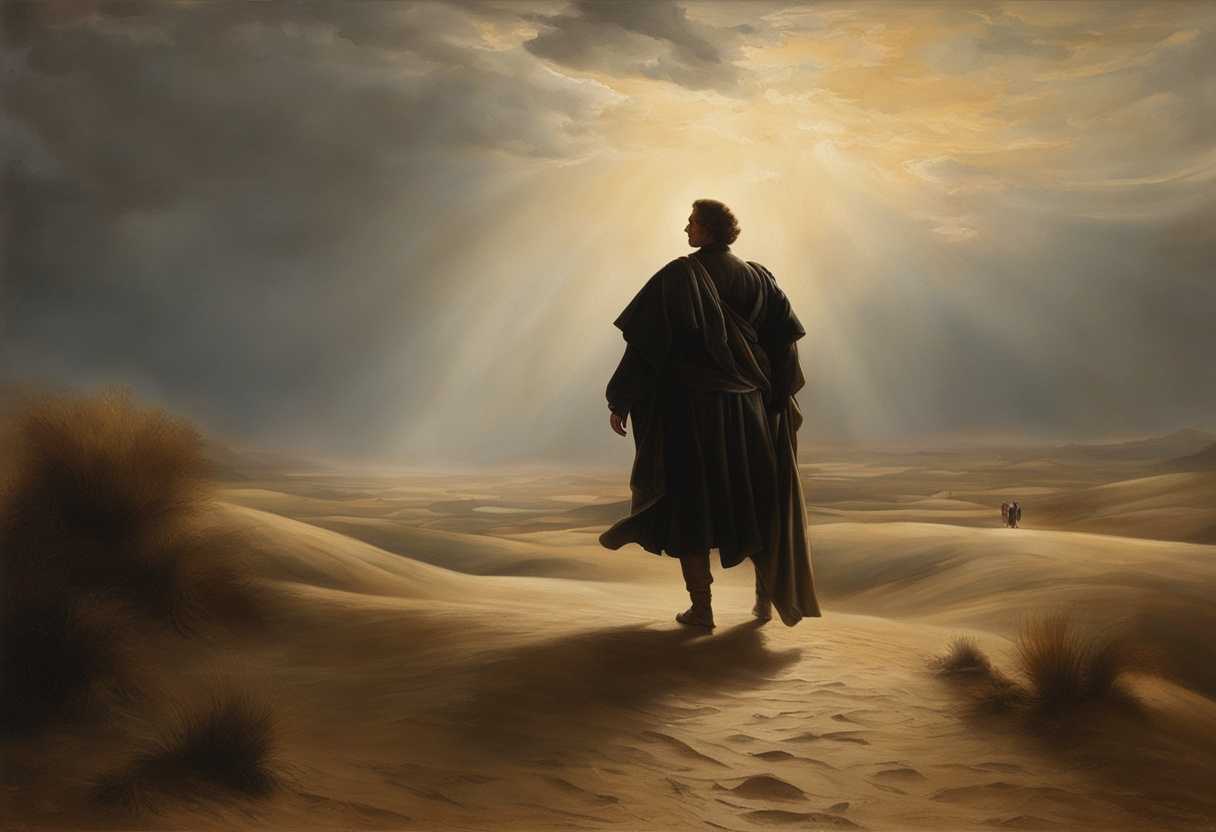
Setting the Scene for Acts 8:26
In Acts chapter 8, we find Philip, one of the seven chosen to serve the early Christian community, being directed by an angel of the Lord to go south to the desert road that goes down from Jerusalem to Gaza. As Philip obediently follows the angel’s instructions, he encounters an Ethiopian eunuch, a high-ranking official in charge of all the treasury of the Queen of the Ethiopians. The eunuch had been to Jerusalem to worship and was now returning home, sitting in his chariot, reading from the book of Isaiah.
The scene is set in the desert along the road from Jerusalem to Gaza, a remote and arid location. The sun beats down on the travelers, creating a stark and harsh environment. Philip approaches the chariot and hears the eunuch reading aloud. Sensing an opportunity to share the Gospel, Philip engages the eunuch in conversation about the passage he is reading, which leads to a discussion about Jesus as the fulfillment of the prophecy in Isaiah. The eunuch, eager to learn more, invites Philip to join him in the chariot as they continue their journey, providing a unique and intimate setting for the sharing of the Good News.
What is Acts 8:26 about?
Philip, a disciple of Jesus, encounters an Ethiopian eunuch who is reading the Book of Isaiah in this verse. The eunuch is struggling to understand the prophecy in Isaiah about Jesus, and Philip seizes this moment to explain and illuminate the scripture for him. Through their conversation, Philip helps the eunuch connect the dots between the prophecy in Isaiah and the life, death, and resurrection of Jesus. This encounter highlights the importance of guidance and teaching in understanding complex or challenging spiritual concepts. Philip’s actions here remind us of the crucial role of mentors and facilitators in helping others navigate and comprehend the teachings of faith. Philip shows us the power of patience, empathy, and knowledge-sharing in helping others grow spiritually and deepen their understanding of scripture by taking the time to engage with the eunuch and explain the prophecy to him. This verse serves as a poignant reminder that we are all on a journey of learning and growth in our faith, and sometimes we need the guidance and wisdom of others to help us along the way.
Understanding what Acts 8:26 really means
Introduction and Structure
To explore Acts 8:26, we will follow a structured approach:
1. Contextual Background
2. Exegesis of Key Phrases
3. Cross-References with Other Biblical Passages
4. Relevance to Today’s Readers
5. Practical Application and Anecdote
Contextual Background
Acts 8:26 finds its place in the narrative of the early Christian church. This verse introduces the story of Philip and the Ethiopian eunuch, a significant event illustrating the spread of the gospel beyond Jewish communities. Understanding the historical setting helps us grasp the magnitude of Philip’s encounter and the divine orchestration behind it. An angel of the Lord said to Philip.” This indicates divine intervention and guidance. Angels often serve as messengers in the Bible, delivering God’s instructions. Here, God’s active role in guiding His servants is evident. Reflect on the implications: God directs His followers to specific tasks, often without revealing the full picture initially.
Next, “Go south to the road—the desert road.” This instruction is peculiar. Why a desert road? Deserts symbolize barrenness and desolation, yet God chooses this unlikely path for a significant encounter. This teaches us that God’s plans often unfold in unexpected places and ways. Consider Jonah’s reluctant journey to Nineveh (Jonah 1:1-3) or Ananias’s mission to Saul (Acts 9:10-17) as examples of cross-references with other Biblical passages. Both narratives highlight obedience to God’s call, even when the destination or task seems daunting. Similarly, Philip’s willingness to go without questioning exemplifies faith and trust in God’s plan.
Relevance to Today’s Readers
What does this mean for us today? We live in a world driven by planning and predictability. Yet, this verse invites us to embrace divine interruptions. Are we open to God redirecting our paths, even if it leads to a “desert road”? This challenges our comfort zones and invites us to trust God’s bigger picture.
Practical Application and Anecdote
Imagine being prompted to take an unfamiliar route home, only to encounter someone in need of help. This happened to a friend of mine, who felt an inexplicable urge to take a different street. There, she found a stranded motorist. Her assistance wasn’t just physical; it opened a conversation about faith. This modern-day parallel shows how God’s guidance can lead to unforeseen opportunities for ministry. Acts 8:26 isn’t just about Philip’s journey; it’s about ours too. Encouraging us to listen for God’s direction, embrace the unexpected, and trust that He can use us in the most unlikely places. How might God be calling you to step out in faith today?
How can we discern and respond to God’s guidance?
One way we can discern and respond to God’s guidance is by being attentive to the Holy Spirit’s leading. The Spirit directed Philip to go to a specific place in Acts 8:26, where he encountered the Ethiopian eunuch. This shows us that when we are open and sensitive to the prompting of the Holy Spirit, we can be led to places and people where God wants us to be and work. We can seek God’s guidance through prayer, meditation on His Word, and being open to His voice in our hearts. Being obedient and trusting in God’s plan are essential when responding to His guidance. Philip did not question or doubt the instructions given to him by the Spirit but promptly followed through. Likewise, when we feel called by God in a certain direction, it is important to step out in faith and obedience, knowing that He is leading us for a purpose. We can have confidence that God’s guidance is always for our good and for the advancement of His kingdom. We should also seek the counsel of other mature believers as we seek to discern and respond to God’s guidance. Philip was part of the early church community, and his actions were affirmed and supported by the apostles. Seeking wise and godly advice from others can help confirm God’s leading in our lives and provide added clarity and perspective. We can receive valuable insight and encouragement as we navigate the path God has set before us by being in community with other believers.
Application
Imagine your day as a bustling city, full of tasks and responsibilities. Just as Philip listened and acted, you too can seize the moments God places in your path. Be it helping a colleague, spending time with family, or showing kindness to a stranger—these are your opportunities. Will you let them pass unnoticed, or will you rise to the occasion? How will you respond to God’s nudges in your busy day?

Reverend Michael Johnson is an experienced Church Minister with a profound expertise in spirituality and guidance. With a serene presence and a compassionate heart, he has faithfully served his congregation for over 20 years, leading them on a spiritual journey towards inner peace and enlightenment. Reverend Johnson’s extensive knowledge of religious philosophies and profound understanding of human nature have made him a trusted confidant and mentor to many, as he seamlessly weaves his profound wisdom into life teachings. Reverend Johnson’s calming demeanor and empathetic nature continue to uplift and heal souls, nurturing a sense of unity and tranquility within his community.