
Acts 8:27-39 is about Philip encountering an Ethiopian eunuch who is reading the book of Isaiah, explaining the passage to him, baptizing him, and the eunuch’s immediate belief and immersion into the faith, highlighting the inclusivity of God’s message and the readiness of all individuals to receive the Gospel.
27 And he rose and went. And there was an Ethiopian, a eunuch, a court official of Candace, queen of the Ethiopians, who was in charge of all her treasure. He had come to Jerusalem to worship
28 And he was returning, seated in his chariot, and he was reading the prophet Isaiah.
And the Spirit said to Philip, “Go over and join this chariot.”
30 So Philip ran to him and heard him reading Isaiah the prophet and asked, “Do you understand what you are reading?”
31 And he said, “How can I, unless someone guides me?” And he invited Philip to come up and sit with him.
32 Now the passage of the Scripture that he was reading was this: “Like a sheep he was led to the slaughter and like a lamb before its shearer is silent, so he opens not his mouth.
33 In his humiliation justice was denied him. Who can describe his generation? For his life is taken away from the earth.
34 And the eunuch said to Philip, “About whom, I ask you, does the prophet say this, about himself or about someone else?”
35 Then Philip opened his mouth, and beginning with this Scripture he told him the good news about Jesus.
36 And as they were going along the road they came to some water, and the eunuch said, “See, here is water! What prevents me from being baptized?”
37 And Philip said, “If you believe with all your heart, you may.” And he replied, “I believe that Jesus Christ is the Son of God.”
38 And he commanded the chariot to stop, and they both went down into the water, Philip and the eunuch, and he baptized him.
39 And when they came up out of the water, the Spirit of the Lord carried Philip away, and the eunuch saw him no more, and went on his way rejoicing.
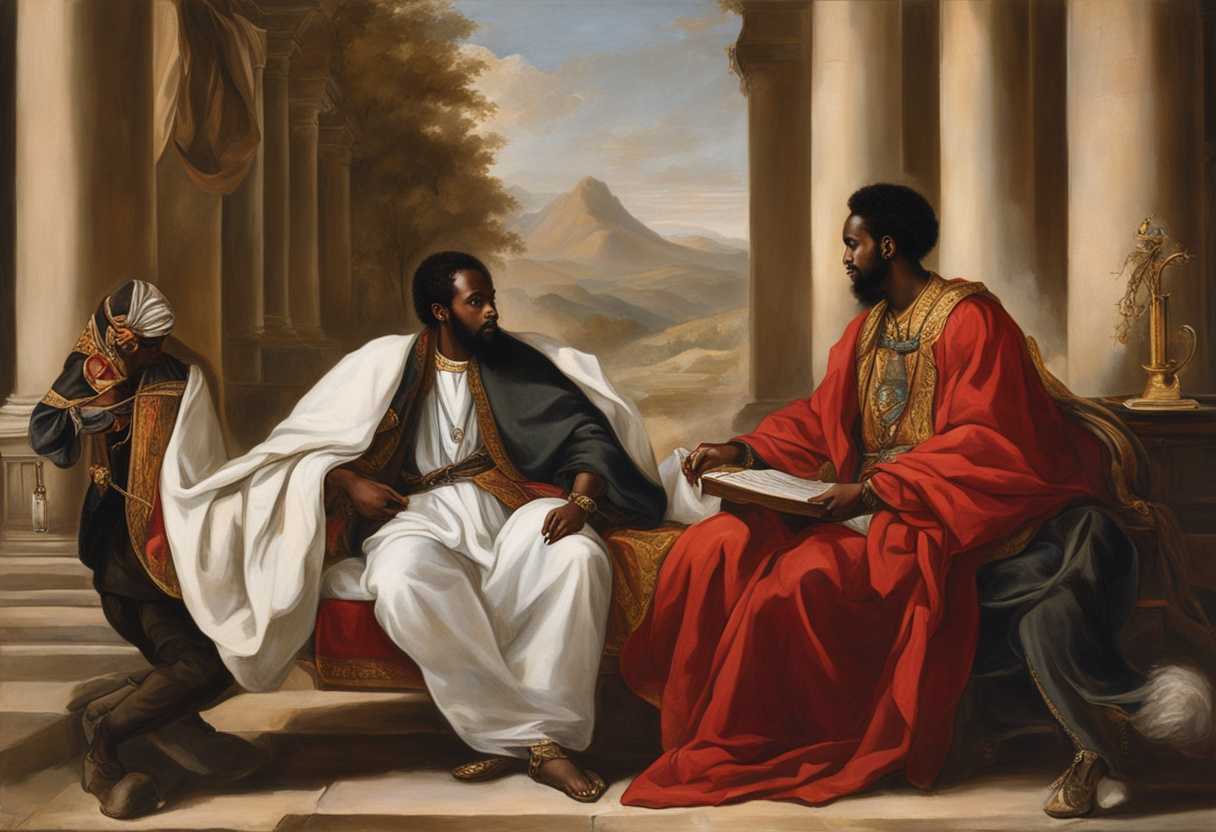
Setting the Scene for Acts 8:27-39
In Acts 8:27-39, we find Philip, one of the early Christian disciples, being directed by an angel of the Lord to go south towards Gaza on the desert road. As Philip obediently follows the angel’s instructions, he comes across an Ethiopian eunuch who is a high official in charge of all the treasury of the Kandake (which means “queen of the Ethiopians”). The eunuch had been to Jerusalem to worship and was now returning home, sitting in his chariot and reading from the book of Isaiah.
The scene is set in the desert along the road to Gaza, with the scorching sun beating down on the travelers. The dusty road stretches out before them, with sparse vegetation and rocky terrain surrounding them. Philip, guided by the Spirit, approaches the chariot and hears the eunuch reading aloud from the book of Isaiah. The eunuch is intrigued by the passage he is reading but admits he needs someone to guide him and explain its meaning. Philip seizes this divine opportunity to share the Gospel with the eunuch, starting from the very passage he was reading and leading him to a life-changing encounter with Jesus Christ. The two men engage in a deep conversation about the Scriptures, culminating in the eunuch’s decision to be baptized in a nearby body of water, symbolizing his newfound faith in Jesus.
What is Acts 8:27-39 about?
This verse captures a profound moment of understanding and transformation. Philip, guided by the Spirit, interprets a prophecy from the book of Isaiah for the Ethiopian eunuch, revealing to him the truth about Jesus Christ. Through this explanation, the eunuch comes to believe in Jesus and is baptized, symbolizing his faith and commitment to following the teachings of Christ.
Do you wonder about the power of interpretation and guidance in spreading the message of Christ to those who may not fully understand? Have you ever experienced a moment of clarity or insight that led you to a deeper understanding of your faith? This verse reminds us of the importance of sharing our beliefs with others and the possibility of sparking a spiritual awakening in someone through our words and actions. Reflect on this verse as you consider the significance of Philip’s role as a messenger of God’s word and the eunuch’s response of belief and baptism. How might you be called to share the message of Christ with others in your own life? Let this story inspire you to be open to the guidance of the Spirit and willing to share the good news with those who are seeking understanding and faith.
Understanding what Acts 8:27-39 really means
The encounter between Philip and the Ethiopian eunuch in Acts 8:27-39 is a profound illustration of divine guidance and obedience. Philip, prompted by an angel of the Lord, follows the desert road to meet the eunuch who is reading the book of Isaiah but lacks understanding. This narrative emphasizes the significance of being receptive to God’s leading without hesitation, showcasing Philip’s unwavering faith and obedience. It prompts us to reflect on our own readiness to heed God’s call in our lives, even when it may lead us to unexpected places or encounters.
“Do you understand what you are reading?” This pivotal question posed by Philip to the eunuch underscores the essence of comprehension in spiritual growth. It highlights the role of mentors and guides in helping others grasp the depth and meaning of scripture, not merely skimming its surface. This inquiry challenges us to delve deeper into the Word of God, seeking not just to read but to truly understand and apply its teachings in our lives.
“Look, here is water. What can stand in the way of my being baptized?” The eunuch’s immediate response to the opportunity for baptism symbolizes his eagerness and readiness to embrace faith. It serves as a poignant reminder of the transformative power of belief and the willingness to act swiftly upon conviction. This moment prompts us to consider our own readiness to respond to God’s call for repentance, faith, and baptism without delay or reservation.
The story of Philip and the Ethiopian eunuch resonates with contemporary relevance, urging believers to engage in evangelism and discipleship actively. It demonstrates that God can use ordinary individuals in extraordinary ways to spread His message of love and salvation. In a world where many are searching for meaning and truth, this passage encourages us to be bold in sharing our faith and helping others comprehend the profound truths of the Bible.
Consider a modern-day parallel where a friend or mentor assists someone in deciphering a complex piece of literature, making it relatable and enlightening. Similarly, in our spiritual journey, having mentors and fellow believers to guide us can significantly impact our understanding and application of biblical principles. Just as Philip elucidated Isaiah for the eunuch, we too can play a vital role in helping others grasp the profound message of the Scriptures and grow in their faith journey.
In conclusion, the narrative of Philip and the Ethiopian eunuch teaches us about the importance of divine guidance, the value of understanding scripture, and the transformative influence of faith and baptism. It calls us to be attentive to God’s leading, eager to share our faith with others, and open to the life-altering power of the gospel. May we heed the lessons from this encounter, being willing vessels for God’s work in spreading His truth and love to all those we encounter on our journey of faith.
How can we listen to the Holy Spirit’s guidance?
We can listen to the Holy Spirit’s guidance by being open and attentive to His voice. The Spirit prompts Philip in the passage to approach the Ethiopian eunuch and engage in conversation with him. Similarly, the Holy Spirit may lead us to specific people or situations where we can be vessels of His love and truth. We should cultivate a sensitivity to His leading, which often comes as a gentle nudge or impression in our hearts.
Furthermore, we can listen to the Holy Spirit’s guidance through prayer and studying the Scriptures. We can seek His wisdom and direction in all aspects of our lives by spending time in prayer. The Bible is also a key way in which the Holy Spirit communicates with us, as He helps us to understand and apply God’s Word to our lives. The Spirit illuminates the truths of Scripture and provides insight into how we should live and make decisions that honor God as we immerse ourselves in it.
Lastly, we can listen to the Holy Spirit’s guidance by being willing to obey His promptings, even if they may seem unconventional or outside of our comfort zone. Philip’s obedience to the Spirit’s leading resulted in the Ethiopian eunuch coming to faith in Christ. Likewise, as we step out in faith and obedience to the Holy Spirit, we will see God work in remarkable ways in and through us.
Application
Let’s embrace the powerful message of Acts 8:27-39 where Philip reached out to the Ethiopian eunuch, teaching us to spread the Gospel to everyone, no matter who they are. Are we actively looking for chances to speak about our faith like Philip did? Let’s be courageous in our beliefs and answer God’s call to share His message of hope with all we meet, following the inspiring example from this scripture. Are we ready to make an impact just like Philip?

Reverend Michael Johnson is an experienced Church Minister with a profound expertise in spirituality and guidance. With a serene presence and a compassionate heart, he has faithfully served his congregation for over 20 years, leading them on a spiritual journey towards inner peace and enlightenment. Reverend Johnson’s extensive knowledge of religious philosophies and profound understanding of human nature have made him a trusted confidant and mentor to many, as he seamlessly weaves his profound wisdom into life teachings. Reverend Johnson’s calming demeanor and empathetic nature continue to uplift and heal souls, nurturing a sense of unity and tranquility within his community.