
Acts 8:30-31 is about Philip encountering the Ethiopian eunuch who was reading from the book of Isaiah but did not understand its meaning, prompting Philip to explain to him the prophecies about Jesus.
30 So Philip ran to him and heard him reading Isaiah the prophet and asked, “Do you understand what you are reading?”
31 And he said, “How can I, unless someone guides me?” And he invited Philip to come up and sit with him.
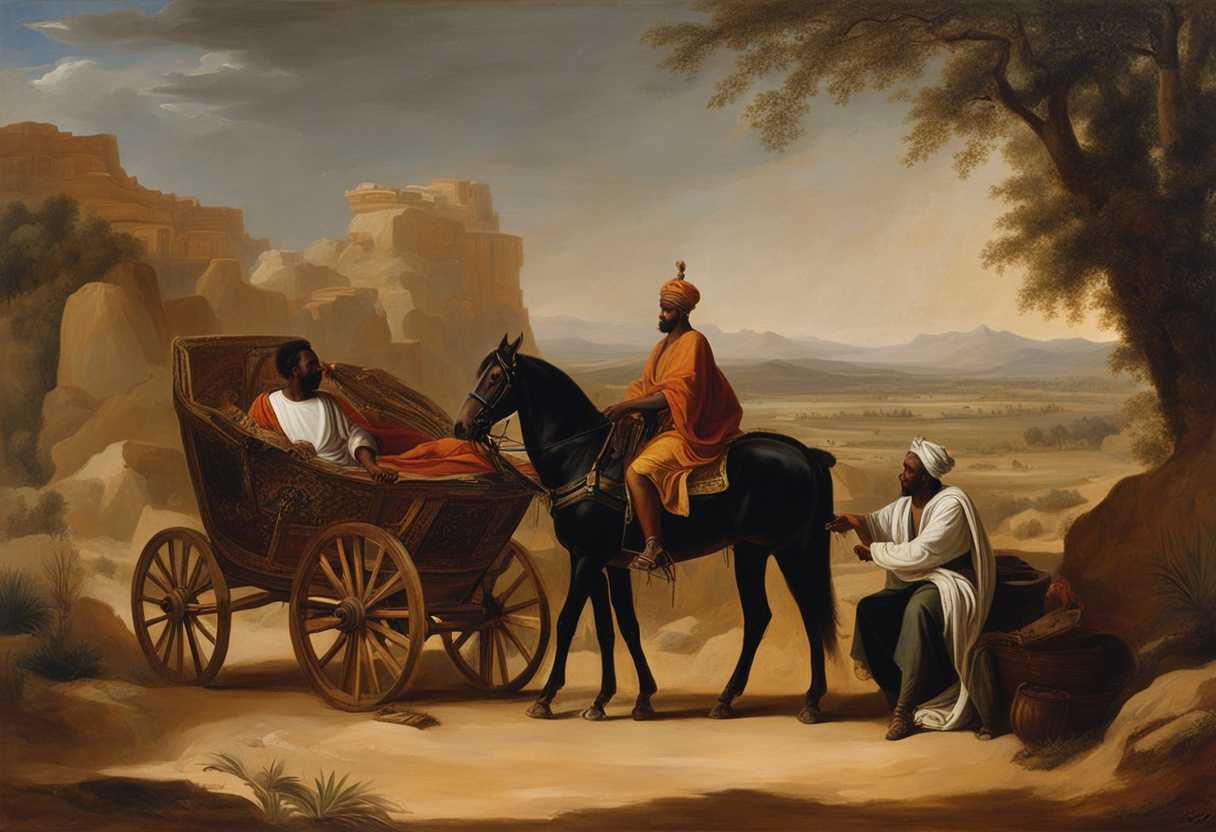
Setting the Scene for Acts 8:30-31
In Acts chapter 8, we find Philip, one of the seven chosen to serve the early Christian community, on a desert road. The scene is set in the wilderness, a barren and desolate place with little signs of life. Philip is prompted by an angel of the Lord to go south to the road that goes down from Jerusalem to Gaza. As he obeys, he encounters an Ethiopian eunuch, a high official in charge of all the treasury of the Kandake (which means “queen of the Ethiopians”).
The Ethiopian eunuch is returning from Jerusalem, where he had gone to worship. He is seated in his chariot, reading from the book of Isaiah. The eunuch is a seeker of God, earnestly trying to understand the scriptures he is reading. Philip, guided by the Holy Spirit, approaches the chariot and hears the eunuch reading aloud. This sets the stage for a divine encounter where Philip explains the passage to the eunuch, leading to his baptism and conversion to Christianity. The interaction between Philip and the Ethiopian eunuch on that dusty desert road becomes a pivotal moment in the spread of the gospel to the ends of the earth.
What is Acts 8:30-31 about?
This verse captures a powerful moment of spiritual enlightenment and transformation. Philip, a faithful disciple of Jesus, encounters the Ethiopian eunuch who is reading from the book of Isaiah. Through their conversation, Philip explains the prophecy in Isaiah 53, which foreshadows the suffering and sacrificial death of Jesus Christ. This revelation opens the eyes of the Ethiopian eunuch to the truth of Jesus as the Messiah, leading to his decision to be baptized as a follower of Christ.
Imagine the profound impact of this encounter – a chance meeting on a dusty road leading to a life-changing decision. The Ethiopian eunuch’s journey from confusion and seeking to clarity and faith is a testament to the transformative power of God’s word and the guidance of dedicated disciples like Philip. Through this verse, we are reminded of the importance of sharing our faith and knowledge of scripture with others, as it has the potential to lead them to a deeper understanding of God’s love and salvation. God’s message is universally powerful and His kingdom is inclusive, welcoming all who seek Him with open hearts.
Understanding what Acts 8:30-31 really means
The Book of Acts, penned by Luke, provides a historical account of the early church’s development and the propagation of the Gospel following Jesus’ ascension. Acts 8:30-31 delves into the interaction between Philip, one of the seven deacons, and an Ethiopian eunuch, a prominent official overseeing the treasury of Queen Candace of Ethiopia. The eunuch, engrossed in reading from the Book of Isaiah, grapples with grasping its significance.
Philip’s pivotal question, “Do you understand what you are reading?” serves as a poignant reminder of the necessity of comprehension in spiritual maturation. It underscores that mere reading of Scripture is insufficient; true growth stems from a deep understanding of its teachings. The eunuch’s humble response, “How can I, unless someone explains it to me?” underscores the essential role of guidance and instruction in deciphering the Bible. It showcases a willingness to learn and an acknowledgment of the need for elucidation.
Drawing parallels from other biblical passages enriches our understanding of Acts 8:30-31. In Luke 24:27, Jesus elucidates the Scriptures to the disciples on the road to Emmaus, emphasizing the significance of comprehending the Word. Romans 10:14, articulated by Paul, underscores the critical nature of preaching and teaching for individuals to grasp the Gospel’s message. Proverbs 4:7 encapsulates the essence of seeking understanding in spiritual matters, highlighting its intrinsic value.
The relevance of Acts 8:30-31 in contemporary society is profound. In a world marked by rapidity, many individuals engage with the Bible but struggle to unearth its profound truths. This passage advocates for seeking counsel from knowledgeable sources to navigate the complexities of Scripture. It accentuates the communal aspect of spiritual growth, emphasizing the necessity of mentors, pastors, and study groups in aiding believers on their journey.
Consider Sarah, a young woman navigating her faith journey. Despite her daily Bible readings, she often finds herself perplexed by the text. Upon joining a Bible study group led by a pastor who expounds on the Scriptures, Sarah experiences a newfound comprehension and deepening of her faith. This anecdote mirrors the eunuch’s encounter with Philip, illustrating the transformative influence of guided learning and mentorship.
Acts 8:30-31 serves as a poignant reminder of the significance of comprehending Scripture and the value of seeking guidance. It advocates for humility and a receptiveness to learning, underscoring that spiritual advancement frequently necessitates the assistance of others. This passage resonates with believers, urging them to embrace the wisdom of seeking understanding and the transformative power of communal learning.
How can we understand the Scriptures without guidance?
Understanding the Scriptures without guidance can be challenging because it often requires insight and interpretation beyond surface-level reading. Philip asks the Ethiopian eunuch if he understands what he is reading in the case of Acts 8:30-31. The eunuch responds by highlighting the need for someone to guide him in understanding the Scriptures. This interaction demonstrates the limitations of interpreting the Scriptures on one’s own and the value of seeking guidance or insight from others.
When we try to understand the Scriptures without guidance, we may struggle to grasp the deeper meanings, historical context, or theological implications present in the text. Without the benefit of someone to help explain or provide context, we may miss out on crucial insights that can deepen our understanding of God’s Word. The Ethiopian eunuch’s request for guidance serves as a reminder of the importance of seeking wisdom and understanding from those who are knowledgeable in the Scriptures. Seeking guidance from others, such as pastors, teachers, or scholars, can greatly enhance our comprehension and application of the Word of God, even though it is possible to read the Scriptures independently. Engaging with different perspectives and interpretations can help us gain a richer understanding of the Scriptures and grow in our faith and knowledge of God.
Application
Harness the power of seeking wisdom in the teachings of the Bible. Embrace the journey of delving into Scripture with a receptive spirit, ready to grasp its deep meanings. Just like Philip guided the Ethiopian eunuch towards comprehension, are you prepared to unlock the treasures hidden within the Word?

Reverend Michael Johnson is an experienced Church Minister with a profound expertise in spirituality and guidance. With a serene presence and a compassionate heart, he has faithfully served his congregation for over 20 years, leading them on a spiritual journey towards inner peace and enlightenment. Reverend Johnson’s extensive knowledge of religious philosophies and profound understanding of human nature have made him a trusted confidant and mentor to many, as he seamlessly weaves his profound wisdom into life teachings. Reverend Johnson’s calming demeanor and empathetic nature continue to uplift and heal souls, nurturing a sense of unity and tranquility within his community.