
Acts 8:32 is about the prophet Isaiah’s prophecy being fulfilled in the suffering and sacrifice of Jesus Christ as the ultimate Lamb of God.
32 Now the passage of the Scripture that he was reading was this: “Like a sheep he was led to the slaughter and like a lamb before its shearer is silent, so he opens not his mouth.
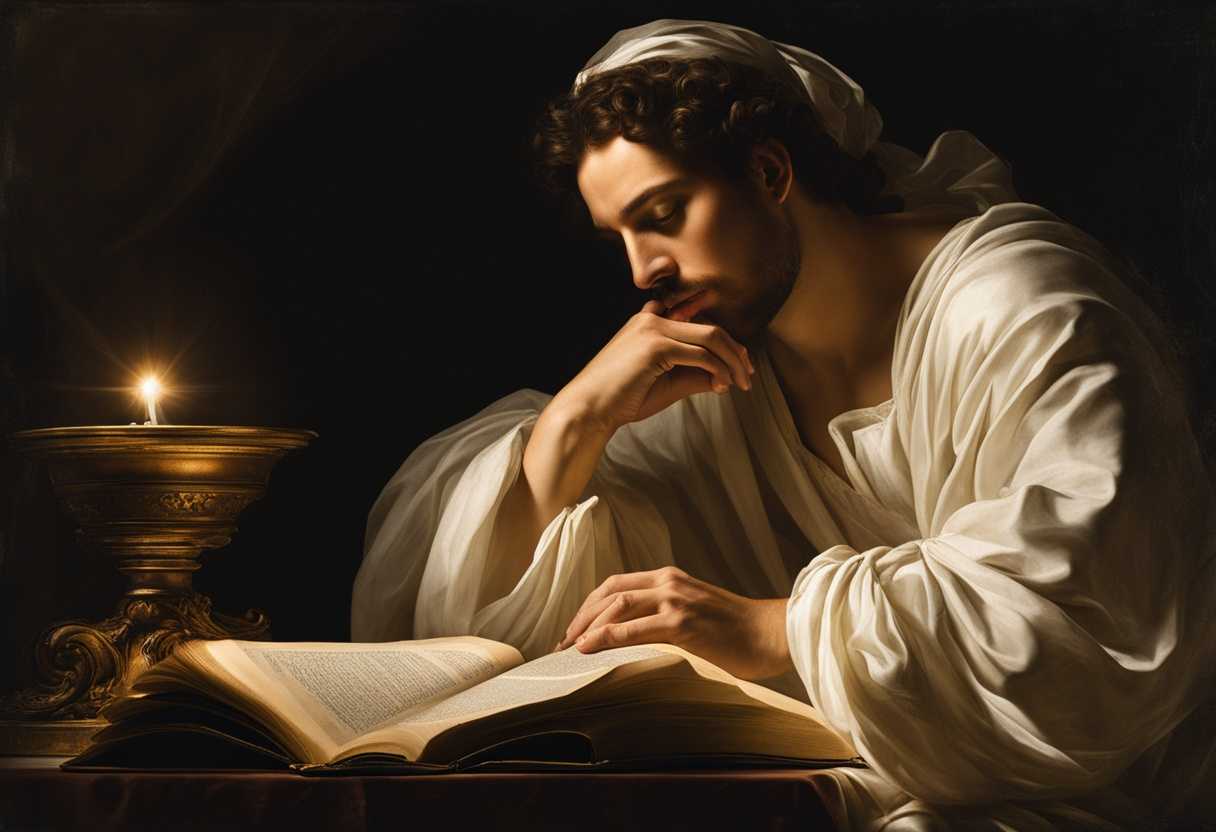
Setting the Scene for Acts 8:32
In Acts chapter 8, we find Philip, one of the seven chosen to serve the early Christian community, on a desert road. The scene is set in the region of Gaza, a desert area with sandy dunes stretching as far as the eye can see. The scorching sun beats down on the parched land, creating a shimmering heat haze in the distance.
As Philip walks along the dusty road, he notices a chariot approaching in the distance. The chariot is being driven by an Ethiopian eunuch, a high-ranking official in charge of the treasury of the queen of Ethiopia. The eunuch had been to Jerusalem to worship and is now returning home, sitting in his chariot, reading from the book of Isaiah.
Philip, prompted by the Holy Spirit, approaches the chariot and hears the eunuch reading aloud. The eunuch is struggling to understand the passage he is reading, and Philip seizes the opportunity to explain the scripture to him, leading to a profound conversation about the message of Jesus Christ.
What is Acts 8:32 about?
This powerful verse describes a profound image of humility and sacrifice. Imagine a gentle and innocent lamb being led to its ultimate fate without resistance or protest. Here, the imagery of a sheep being led to slaughter symbolizes a sense of vulnerability, submission, and acceptance of one’s destiny. Just like how a lamb remains silent before its shearer, this verse portrays a quiet and serene acceptance of what is to come, even in the face of impending pain and suffering.
Reflecting on this verse, we can see parallels to the story of Jesus Christ, who willingly accepted his crucifixion as a sacrificial lamb for the sins of humanity. It also speaks to the idea of surrendering to a higher purpose or divine plan, even when faced with difficulties and challenges. We can learn the virtues of humility, acceptance, and trust in the greater good, even amidst adversity, by embodying the qualities of a lamb being led to slaughter. This verse ultimately calls us to reflect on the power of meekness and faith in the face of trials and tribulations. It prompts us to consider our own attitudes towards sacrifice, submission, and surrendering to forces beyond our control. We are invited to embrace our own vulnerabilities with grace and trust, believing that there is a deeper meaning and purpose to be found in every situation we face, just as the sheep goes to slaughter without resistance.
Understanding what Acts 8:32 really means
In Acts 8:32, we find a pivotal moment in the encounter between Philip and the Ethiopian eunuch, where the eunuch is reading from the book of Isaiah. This interaction is not merely a chance encounter but a divine appointment orchestrated by God. The passage the eunuch is reading, Isaiah 53:7-8, speaks of the suffering servant, a prophecy that finds its fulfillment in Jesus Christ. This connection between the Old Testament prophecy and its realization in the New Testament through Jesus is a powerful testament to the continuity and coherence of God’s plan throughout history.
Philip seizes this opportunity to explain the scripture to the eunuch, bridging the gap between the Old and New Testaments by revealing how Jesus is the fulfillment of the prophecy. This act of teaching and sharing the gospel underscores the importance of understanding scripture and the role of believers in guiding others towards the truth. Just as Philip was instrumental in helping the eunuch comprehend the Word of God, we are called to be vessels through which God’s wisdom and truth can flow to those around us.
The imagery of Jesus as the sacrificial lamb, depicted in Isaiah 53 and echoed in John 1:29, portrays His willing sacrifice for the redemption of humanity. The phrases “He was led like a sheep to the slaughter” and “And as a lamb before its shearer is silent, so he did not open his mouth” emphasize Jesus’ humility, obedience, and the unjust suffering He endured for our sake. These verses not only point to the atoning work of Christ but also serve as a poignant reminder of the depth of God’s love and the extent to which Jesus was willing to go to save us.
Today, we can draw parallels from this encounter between Philip and the eunuch to our own lives. Just as the eunuch sought understanding and guidance, we too should approach scripture with a humble and teachable heart, ready to receive insights from those whom God places in our path. We are called to be like Philip, willing to share the gospel with others and to explain the profound truths of God’s Word to those who are seeking. This verse challenges us to delve deeper into the scriptures, to recognize the fulfillment of prophecy in Jesus, and to embody the humility and submission exemplified by our Savior.
As we reflect on Acts 8:32 and its surrounding context, may we be inspired to engage with scripture earnestly, to be open to divine appointments where we can share the good news, and to emulate the humility and obedience of Christ in our daily lives. Just as Philip played a crucial role in the eunuch’s understanding of the prophecy about Jesus, let us also be willing instruments in God’s hands, guiding others towards a deeper relationship with Him.
How can we understand God’s Word more deeply?
To understand God’s Word more deeply, we can first approach it with humility and an open heart. We can allow the Holy Spirit to illuminate the Scriptures for us by recognizing our need for God’s guidance and wisdom. Meditating on the Word and praying for insight can help us gain a deeper understanding of the message God is conveying.
Another way to understand God’s Word more deeply is to study it in context. We can gain a richer understanding of the meaning behind the words by examining the surrounding verses, the historical background, and the cultural context in which it was written. Additionally, consulting commentaries, studying the original languages, and seeking guidance from mature believers can also help us grasp the depth and layers of meaning within the text. Understanding God’s Word more deeply ultimately requires a combination of study, prayer, and reliance on the Holy Spirit. We can experience the richness and depth of God’s Word in a profound and personal way as we seek to apply the teachings of Scripture to our lives and allow it to transform us from within.
Application
Delve into the depths of Scripture like a dedicated explorer, seeking treasures of wisdom and understanding. Let the words of the Bible be the guiding light in your journey through life, shaping your decisions and actions. Like a skilled artisan, craft your character and faith through prayer and study. Will you choose to take a step closer to God’s truth today?

Reverend Michael Johnson is an experienced Church Minister with a profound expertise in spirituality and guidance. With a serene presence and a compassionate heart, he has faithfully served his congregation for over 20 years, leading them on a spiritual journey towards inner peace and enlightenment. Reverend Johnson’s extensive knowledge of religious philosophies and profound understanding of human nature have made him a trusted confidant and mentor to many, as he seamlessly weaves his profound wisdom into life teachings. Reverend Johnson’s calming demeanor and empathetic nature continue to uplift and heal souls, nurturing a sense of unity and tranquility within his community.