
1 But Saul, still breathing threats and murder against the disciples of the Lord, went to the high priest
2 And asked him for letters to the synagogues at Damascus, so that if he found any belonging to the Way, men or women, he might bring them bound to Jerusalem.
3 Now as he went on his way, he approached Damascus, and suddenly a light from heaven shone around him.
4 And falling to the ground, he heard a voice saying to him, “Saul, Saul, why are you persecuting me?”
5 And he said, “Who are you, Lord?” And he said, “I am Jesus, whom you are persecuting.
6 But rise and enter the city, and you will be told what you are to do.”
7 The men who were traveling with him stood speechless, hearing the voice but seeing no one.
8 Saul rose from the ground, and although his eyes were opened, he saw nothing. So they led him by the hand and brought him into Damascus.
9 And for three days he was without sight, and neither ate nor drank.
10 Now there was a disciple at Damascus named Ananias. The Lord said to him in a vision, “Ananias.” And he said, “Here I am, Lord.”
11 And the Lord said to him, “Rise and go to the street called Straight, and at the house of Judas look for a man of Tarsus named Saul, for behold, he is praying,
12 and he has seen in a vision a man named Ananias come in and lay his hands on him so that he might regain his sight.”
13 But Ananias answered, “Lord, I have heard from many about this man, how much evil he has done to your saints in Jerusalem.
14 And here he has authority from the chief priests to bind all who call on your name.”
15 But the Lord said to him, “Go, for he is a chosen instrument of mine to carry my name before the Gentiles and kings and the children of Israel.
16 For I will show him how much he must suffer for the sake of my name.”
17 So Ananias departed and entered the house. And laying his hands on him he said, “Brother Saul, the Lord Jesus who appeared to you on the road by which you came has sent me so that you may regain your sight and be filled with the Holy Spirit.”
18 And immediately something like scales fell from his eyes, and he regained his sight. Then he rose and was baptized.
19 and taking food, he was strengthened.
20 And immediately he proclaimed Jesus in the synagogues, saying, “He is the Son of God.”
21 And all who heard him were amazed and said, “Is not this the man who made havoc in Jerusalem of those who called upon this name? And has he not come here for this purpose, to bring them bound before the chief priests?”
22 But Saul increased all the more in strength, and confounded the Jews who lived in Damascus by proving that Jesus was the Christ.
23 When many days had passed, the Jews plotted to kill him,
24 but their plot became known to Saul. They were watching the gates day and night in order to kill him,
25 but his disciples took him by night and let him down through an opening in the wall, lowering him in a basket.
26 And when he had come to Jerusalem, he attempted to join the disciples. And they were all afraid of him, for they did not believe that he was a disciple.
27 But Barnabas took him and brought him to the apostles and declared to them how on the road he had seen the Lord, who spoke to him, and how at Damascus he had preached boldly in the name of Jesus.
28 So he went in and out among them at Jerusalem, preaching boldly in the name of the Lord.
29 And he spoke and disputed against the Hellenists. But they were seeking to kill him.
30 And when the brothers learned this, they brought him down to Caesarea and sent him off to Tarsus.
31 So the church throughout all Judea and Galilee and Samaria had peace and was being built up. And walking in the fear of the Lord and in the comfort of the Holy Spirit, it multiplied.
32 Now as Peter went here and there among them all, he came down also to the saints who lived at Lydda.
33 There he found a man named Aeneas, bedridden for eight years, who was paralyzed.
34 And Peter said to him, “Aeneas, Jesus Christ heals you; rise and make your bed.” And immediately he rose.
35 And all the residents of Lydda and Sharon saw him, and they turned to the Lord.
36 Now there was in Joppa a disciple named Tabitha, which, translated, means Dorcas. She was full of good works and acts of charity.
37 In those days she became ill and died, and when they had washed her, they laid her in an upper room.
38 Since Lydda was near Joppa, the disciples, hearing that Peter was there, sent two men to him, urging him, “Please come to us without delay.”
39 But Peter put them all outside, and knelt down and prayed; and turning to the body he said, “Tabitha, arise.” And she opened her eyes, and when she saw Peter she sat up.
40 But Peter put them all outside, and knelt down and prayed; and turning to the body he said, “Tabitha, arise.” And she opened her eyes, and when she saw Peter she sat up.
41 And he gave her his hand and raised her up. Then, calling the saints and widows, he presented her alive.
42 And it became known throughout all Joppa, and many believed in the Lord.
43 And Peter stayed many days in Joppa with one Simon, a tanner.
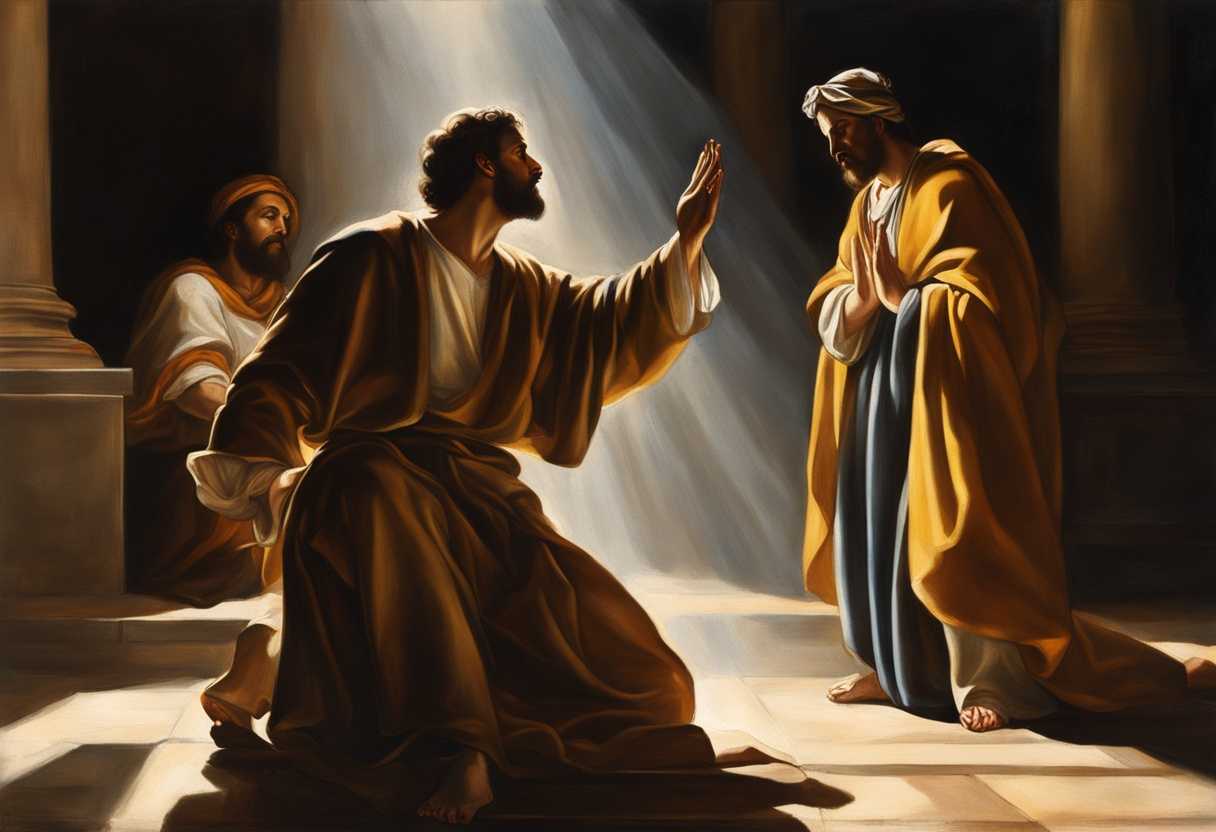
The True Meaning of Acts 9
The Book of Acts, written by Luke, the beloved physician, provides a captivating account of the early Christian church and the remarkable transformation of Saul, a zealous persecutor of believers, into the apostle Paul, a tireless champion of the gospel. Saul’s life is forever altered in this chapter, leading to the expansion of the Christian faith beyond the borders of Jerusalem. Saul’s dramatic encounter with the risen Christ on the road to Damascus in Acts 9 will forever change the course of his life and the trajectory of the early church as we explore it. This chapter also introduces us to Ananias, a disciple of Jesus, who plays a crucial role in Saul’s conversion and subsequent commissioning as an apostle. Additionally, we will see how Saul’s newfound faith in Christ leads to his bold proclamation of the gospel, despite the initial skepticism and hostility of his former allies.
Throughout this passage, we will find echoes of Jesus’ own teachings, as well as connections to the prophetic promises found in the Old Testament. The events described in Acts 9 serve as a powerful testament to the transformative power of God’s grace and the unstoppable progress of the gospel message.
Acts 9:1-6
Saul, later known as the apostle Paul, undergoes a dramatic conversion in Acts 9:1-6. This passage is significant not just because of the extraordinary event itself, but for what it represents in the broader context of the early Christian church. Saul is depicted as a zealous persecutor of Christians in the opening verses. He is on his way to Damascus with the authority and commission from the high priest to arrest followers of Jesus. Saul’s intentions were hostile towards the Christians as he sought to eradicate what he believed to be a false sect. His zeal even led him to endorse the stoning of Stephen, the church’s first martyr (Acts 7:58; 8:1).
However, on the road to Damascus, Saul encounters a blinding light from heaven, and the Lord Jesus speaks to him. This moment is pivotal not only in Saul’s life but in the history of Christianity. The voice asks Saul why he is persecuting Him, revealing that by attacking the followers of Jesus, he is actually attacking Jesus Himself. This encounter is a powerful demonstration of Jesus’ identification with His followers and His intimate concern for them. It is a reminder that to persecute the church is to persecute Christ (Matthew 25:40).
Saul’s response to this supernatural event is one of humility and surrender. He asks, “Who are you, Lord?” This question signifies a turning point in Saul’s life. Previously so sure of his mission and beliefs, he is now confronted with the reality of the living Christ. Saul’s journey symbolizes the transformative power of encountering Jesus. It shows that even the most hardened opponents of the faith can be reached by God’s grace and mercy.
The Lord identifies Himself as Jesus, whom Saul is persecuting. This revelation must have been both shocking and humbling for Saul. He recognizes the true identity of Jesus Christ as Lord and Savior in that moment. This encounter marks the beginning of Saul’s conversion and his commission to be an apostle to the Gentiles (Acts 9:15). God’s ability to transform lives and use unlikely individuals for His purposes is powerfully exemplified in Acts 9:1-6. Saul’s conversion from a persecutor to a preacher illustrates the depth of God’s mercy and grace. This passage is a reminder that no one is beyond the reach of God’s love and redemption. It challenges us to reflect on our own preconceptions and biases, reminding us that God can work in ways that defy our expectations. Just as Saul was transformed into the apostle Paul, we too can experience a radical change through our encounter with the risen Christ.
Acts 9:7-9
Saul experiences a powerful moment in his conversion in Acts 9:7-9, later becoming known as the apostle Paul. Let’s break down this verse into sections for deeper insight.
-
“The men traveling with Saul stood there speechless; they heard the sound but did not see anyone.”
This portion highlights the dramatic nature of Saul’s encounter with Jesus on the road to Damascus. The fact that the men with Saul heard the voice but did not see anyone demonstrates the supernatural dimension of this event. This moment not only marks a turning point in Saul’s life but also emphasizes the divine intervention and sovereignty of God in choosing and calling individuals for His purpose. This supernatural encounter echoes similar moments in the Bible where God directly calls individuals like Moses through the burning bush (Exodus 3:2-6) and Isaiah in the temple (Isaiah 6:1-8). -
“Saul got up from the ground, but when he opened his eyes he could see nothing. So they led him by the hand into Damascus.”
This part depicts Saul’s physical blindness after the encounter. The temporary blindness serves as a symbolic representation of Saul’s spiritual blindness prior to his encounter with Jesus. Saul was a devout Pharisee who vehemently persecuted Christians, thinking he was serving God zealously. However, his encounter with Jesus blinded him physically but opened his spiritual eyes to see the truth. This physical blindness mirrors the blindness of the spiritual eyes that Jesus refers to in John 9:39-41, where He distinguishes between those who see spiritually and those who remain blind. -
“For three days he was blind, and did not eat or drink anything.”
The three days of blindness and fasting that Saul experiences are significant. Just as Jesus spent three days in the tomb before His resurrection, Saul’s time of darkness and fasting symbolizes a period of transition, solitude, and preparation for his new life in Christ. This period of darkness represents the death of his old self and the emergence of the new creation that he would become in Christ (2 Corinthians 5:17). Like many other Biblical characters who underwent a period of waiting and transformation (such as Moses in Midian or Elijah by the brook Cherith), Saul’s time of waiting and fasting serves as a turning point in his life where he is humbled and prepared for his new mission. Saul, who goes on to become one of the most influential figures in spreading the Gospel, showcases the transformative power of God in his life in Acts 9:7-9. This encounter emphasizes themes of divine calling, spiritual blindness, transformation, and preparation for service. It serves as a reminder that God can radically transform even the hardest of hearts and use them for His glory. Just as Saul’s encounter led to his conversion and commission as an apostle, it also speaks to the universal truth that God’s grace and mercy are available to all who earnestly seek Him.
Acts 9:10-19
We witness a significant moment in the life of Saul, who would later become known as the apostle Paul, one of the most influential figures in the early Christian church in Acts 9:10-19. The passage begins with Ananias, a disciple of Jesus living in Damascus, being addressed by the Lord in a vision. The Lord instructs Ananias to go to Saul, who had been blinded by a shining light on his way to Damascus, and lay his hands on him so that Saul may regain his sight. Ananias is understandably hesitant, as Saul had gained a notorious reputation for persecuting followers of Jesus.
This encounter between Ananias and the Lord highlights a key theme in the Bible: the transformative power of God’s grace and forgiveness. Ananias, a faithful follower of Jesus, is called to set aside his fear and prejudices towards Saul and act in obedience to God’s command. This episode serves as a powerful reminder that God’s love knows no bounds, and even those who seem the least likely to receive mercy can be chosen by God for a specific purpose.
Ananias eventually obeys the Lord’s command and goes to Saul, addressing him as “Brother Saul” and laying his hands on him. Through Ananias’ obedience and Saul’s encounter with God, Saul’s sight is restored, and he is filled with the Holy Spirit. This miraculous event marks the beginning of Saul’s transformation from a persecutor of Christians to a devoted follower and preacher of the Gospel.
The conversion of Saul is a pivotal moment in the Book of Acts and the broader narrative of the Bible. Saul’s transformation underscores the theme of redemption and God’s ability to change hearts and lives. Saul’s conversion also sets the stage for his future role as a missionary to the Gentiles and a key figure in spreading the message of Christianity throughout the Roman world.
This passage in Acts 9:10-19 also highlights the importance of obedience to God’s will, even when it may seem difficult or risky. Ananias could have allowed fear to hinder his obedience, but he chose to trust in God’s plan and became an instrument in Saul’s conversion. This serves as a lesson to all believers that stepping out in faith and following God’s commands can lead to unexpected blessings and opportunities for growth in our own lives and the lives of others. We can draw parallels to other stories in the Bible where God chooses unlikely individuals for His divine purposes when reflecting on this passage. Just as God called Ananias to minister to Saul, He calls each of us to be instruments of His grace and love in the world. Like Saul, who was transformed from a persecutor to a preacher, we too can experience a radical change when we encounter the living God and surrender to His will.
Acts 9:20-22
The passage in Acts 9:20-22 details an incredibly significant moment following Saul’s conversion on the road to Damascus. Let’s break it down:
-
“Immediately he began to preach about Jesus in the synagogues, saying, ‘He is indeed the Son of God.’” – This part of the verse signifies a dramatic shift in Saul, who was persecuting Christians and now, after encountering Jesus on the road to Damascus, becomes a fervent preacher of the Gospel. The transformation in Saul’s life serves as a powerful testimony to the transformative power of Christ. It illustrates the profound change that can happen when someone encounters Jesus and chooses to follow Him wholeheartedly.
-
“All who heard him were amazed. ‘Isn’t this the same man who caused such devastation among Jesus’ followers in Jerusalem?’ they asked. ‘And didn’t he come here to arrest them and take them in chains to the leading priests?’” – This section highlights the astonishment and disbelief of the people who knew Saul as a persecutor of Christians. It showcases the radical nature of Saul’s conversion and the profound impact it had on those who witnessed it. This reaction underscores the notion that true conversion is often so profound that it leaves others astounded at the change that takes place in a person’s life when encountering Christ.
-
“Saul’s preaching became more and more powerful, and the Jews in Damascus couldn’t refute his proofs that Jesus was indeed the Messiah.” – This final part of the passage underscores the effectiveness of Saul’s preaching and the undeniable evidence he presented regarding Jesus being the promised Messiah. Despite his past as a persecutor of Christians, Saul’s deep knowledge of the Scriptures and his encounter with Christ enabled him to present a compelling case for Jesus as the Son of God. This showcases the transformative power of the Gospel to change lives and to equip individuals to boldly proclaim the truth of Jesus Christ. This passage marks a pivotal moment not only in Saul’s life but also in the advancing of the Gospel in the broader context of Acts 9. Saul, later known as the apostle Paul, goes on to become one of the most influential figures in the early Christian church, playing a crucial role in spreading the message of Jesus Christ to the Gentiles. His conversion serves as a powerful example of God’s grace and mercy, demonstrating that no one is beyond the reach of God’s transformative love.
This passage also echoes the themes of repentance, forgiveness, and redemption found throughout the Bible. Saul’s conversion illustrates that no one is beyond redemption, regardless of their past actions or beliefs. It serves as a reminder that God’s grace is available to all who genuinely seek Him, no matter how far they may have strayed.
Furthermore, this passage aligns with other verses in the Bible that speak to the power of God to transform lives. Romans 12:2 encourages believers to be transformed by the renewing of their minds, while 2 Corinthians 5:17 emphasizes that in Christ, we become new creations, the old passing away. Saul’s conversion in Acts 9 exemplifies these principles in action, showing how a life surrendered to Christ can be completely changed and used for His glory. Acts 9:20-22 captures a pivotal moment of transformation in the life of Saul, showcasing the power of God to change hearts, minds, and destinies. It serves as a potent reminder of God’s redemptive work and the profound impact of encountering Jesus Christ.
Acts 9:23-25
The passage in Acts 9:23-25 recounts a pivotal moment in the life of Saul, who later becomes known as the apostle Paul. After his dramatic conversion on the road to Damascus, where he encountered the resurrected Jesus Christ and was blinded temporarily, Saul immediately began preaching about Jesus in the synagogues. This bold and unexpected move by Saul, who was previously known for persecuting Christians, caused quite a stir among the Jews. They were astonished at the sudden transformation of Saul from a persecutor to a preacher of the faith he once sought to destroy.
The verses mention that the Jews in Damascus were so disturbed by Saul’s message that they plotted to kill him. Their anger and disbelief at his conversion led them to conspire against him. This reaction reflects the deep-seated hostility that many Jews had towards the early followers of Jesus, viewing them as heretics and threats to their traditions. Saul’s conversion not only challenged their beliefs but also posed a direct challenge to their religious authority.
Saul’s supporters, however, helped him escape from Damascus by lowering him in a basket through an opening in the city wall. This escape demonstrates the intensity of the opposition Saul faced and the lengths to which his friends went to protect him. This event foreshadows the many trials and persecutions that Saul, now Paul, would face in his ministry as a follower of Christ. It also underscores the theme of divine protection and intervention in the face of adversity, showcasing God’s faithfulness to those who are called according to His purpose.
This narrative echoes the broader themes of redemption, transformation, and the sovereignty of God in the book of Acts. The conversion of Saul, a zealous persecutor of the early church, into one of its most fervent advocates, highlights the power of God to change hearts and redirect lives. It serves as a powerful reminder that no one is beyond the reach of God’s grace and that His plans are often far beyond our understanding. The account of Saul’s escape from Damascus also sets the stage for his future missions and the significant role he would play in spreading the Gospel throughout the known world.
Throughout the New Testament, Paul’s ministry and letters reflect his deep commitment to sharing the message of salvation through faith in Jesus Christ. From his dramatic conversion experience to his courageous preaching amid persecution and imprisonment, Paul’s life exemplifies the transformative power of encountering the risen Christ. The events in Acts 9:23-25 mark the beginning of a new chapter in Paul’s life and ministry, showcasing the resilience and dedication that would characterize his service to God until his martyrdom.
Acts 9:26-30
We encounter a pivotal moment in the life of the Apostle Paul, known as Saul at this point, in Acts 9:26-30. Let’s break down these verses into essential sections to gain a deeper understanding of the significance within this passage.
Firstly, the verse begins with “When he (Saul) came to Jerusalem, he tried to join the disciples, but they were all afraid of him, not believing that he was really a disciple.” This verse highlights the profound transformation Saul experienced on the road to Damascus (Acts 9:1-9). Saul, a zealous persecutor of Christians, had encountered the risen Jesus and was converted to Christianity. However, the disciples in Jerusalem were understandably hesitant and skeptical of Saul. They had known him as a persecutor, and his sudden conversion seemed unbelievable to them. This skepticism reveals the human tendency to doubt and the struggle to accept miraculous transformations. It also reminds us of the importance of grace and redemption in Christianity. Saul’s transformation serves as a powerful testament to the saving power of Jesus Christ, demonstrating that no one is beyond God’s reach.
Next, we see in verse 27, “But Barnabas took him and brought him to the apostles.” Barnabas, whose name means “son of encouragement,” played a crucial role in the early church. He recognized the authenticity of Saul’s conversion and vouched for him, bridging the gap between Saul and the skeptical disciples. Barnabas’ act of support emphasizes the importance of community, acceptance, and second chances in the Christian faith. It shows the significance of believers coming alongside one another, offering support, forgiveness, and guidance. This act by Barnabas also displays the principle of reconciliation and restoration, illustrating how Christians should be willing to reconcile with those who have wronged them and embrace them back into the community with love and grace.
The passage continues with Saul moving freely in Jerusalem, speaking boldly in the name of the Lord. Saul, later known as Paul, faced threats to his life due to his dramatic conversion and newfound dedication to preaching the Gospel. His boldness and unwavering faith despite facing dangers exemplify the courage and conviction required to spread the message of Christ. Paul’s life serves as an inspiration for modern-day Christians, urging us to be fearless in sharing our faith and standing firm in the face of adversity. It teaches us about perseverance, faithfulness, and the willingness to endure hardship for the sake of the Gospel.
Lastly, we see in verses 29-30 that the Hellenists sought to kill Saul, prompting the believers to send him off to Tarsus for his safety. This event marks a crucial turning point in Paul’s journey, as he is sent back to his hometown, Tarsus, for protection. This period of retreat provided Paul with the opportunity to grow in his understanding of the Scriptures and prepare for his future ministry. It highlights the divine protection and guidance provided to those who are called to spread the Gospel. Paul’s time in Tarsus was a season of preparation for the impactful ministry he would later undertake, demonstrating the importance of periods of obscurity and growth in the life of a believer before they are thrust into the spotlight of ministry. Acts 9:26-30 encapsulates themes of transformation, acceptance, courage, and divine protection. It underscores the power of God to radically change lives, the necessity of community and support within the body of Christ, the importance of bold faith in the face of opposition, and the providential guidance of God in the lives of His servants. This passage challenges us to examine our own attitudes towards transformation, forgiveness, and our willingness to step out in faith despite obstacles. The story of Paul’s early experiences in Jerusalem and Tarsus serves as a timeless reminder of God’s faithfulness, sovereignty, and the transformative power of encountering Christ.
Acts 9:31
The church throughout Judea, Galilee, and Samaria enjoyed a time of peace and was strengthened in Acts 9:31. Living in the fear of the Lord and encouraged by the Holy Spirit, it increased in numbers.” This verse captures a significant moment in the early church following the conversion of Saul, who later becomes known as the apostle Paul.
The verse begins by describing a period of peace that the church in various regions experienced. This peace could be attributed to the transformation of Saul, who had previously been persecuting Christians before his encounter with Jesus on the road to Damascus. His conversion had a profound impact on the church and likely contributed to the newfound tranquility they experienced. This is a powerful reminder of the transformative power of God’s grace and how the conversion of one person can have a ripple effect on the entire community of believers.
The verse goes on to mention that the church was strengthened and increased in numbers. This growth and fortification of the church can be seen as a result of the collective commitment of the believers to live in the fear of the Lord and be encouraged by the Holy Spirit. This underscores the importance of both individual spiritual growth and community support within the body of believers. When Christians are united in their reverence for God and are open to the leading of the Holy Spirit, the church can thrive and attract new followers.
The reference to different regions – Judea, Galilee, and Samaria – shows the geographical expansion of the church beyond its origins in Jerusalem. This geographical spread aligns with the command given by Jesus before his ascension to go and make disciples of all nations (Matthew 28:19). The church’s growth in these diverse regions highlights the universal nature of the gospel and how it is intended for people from all walks of life, not limited by cultural or geographical boundaries. Acts 9:31 conveys a message of unity, peace, growth, and the empowerment of the Holy Spirit within the early church. It serves as a reminder to believers today of the importance of staying steadfast in faith, being sensitive to the leading of the Holy Spirit, and working together to advance the kingdom of God. Through this unity and reliance on God’s guidance, the church can continue to thrive and impact the world around it, just as it did in the early days of the Christian movement.
Acts 9:32-35
The apostle Peter traveled through the region of Judea and Samaria, spreading the Gospel and performing miracles in the name of Jesus Christ, as seen in Acts 9:32-35. The passage describes Peter’s visit to Lydda, where he encounters a man named Aeneas who had been bedridden for eight years due to being paralyzed. Peter heals Aeneas in the name of Jesus, telling him to “Jesus Christ heals you. Get up and roll up your mat.” What an amazing demonstration of the power of God working through Peter!
This section of Acts highlights the authority and power the apostles received through the Holy Spirit after Jesus’ ascension. Peter’s ability to heal Aeneas was not through his own strength or merit but through the direct intervention of God. This miracle serves to strengthen the faith of the believers in Lydda and the surrounding areas, drawing more people to the message of salvation through Jesus Christ.
This story is reminiscent of other instances in the Gospels where Jesus healed the sick and performed miracles to demonstrate his divinity and the kingdom of God. Jesus shows that his power and authority extend beyond his earthly ministry by continuing this work through his apostles. The healing of Aeneas not only restored his physical health but also served as a powerful testimony to the truth of the Gospel.
The mention of Aeneas being bedridden for eight years is significant as it mirrors other instances in the Bible where periods of time are highlighted, such as the woman who had been bleeding for twelve years in Mark 5:25-34 or the man who had been paralyzed for 38 years at the pool of Bethesda in John 5:1-15. These specific durations underscore the severity and hopelessness of the conditions, emphasizing the miraculous nature of the healings that take place. Peter’s actions in this passage exemplify the call for believers to be vessels of God’s power and love in the world. Just as Peter performed miracles through faith in Jesus Christ, Christians today are called to show the transformative power of the Gospel in their own lives and through their actions. Through prayer, faith, and obedience to God, believers can be instruments of healing, reconciliation, and restoration in a broken world, just as Peter was in Lydda.
Acts 9:36-43
The passage in Acts 9:36-43 narrates the miraculous resurrection of a woman named Tabitha, also known as Dorcas. This event holds significant importance in the narrative of Acts as it showcases the power of God working through the Apostle Peter to perform a miracle, ultimately leading to many people in Joppa believing in the Lord.
The section starts by introducing Tabitha, a woman described as a disciple who was always doing good and helping the poor. Her character is highlighted as being one of compassion and service, which aligns with the teachings of Jesus to love one another and care for those in need. Tabitha’s story is a powerful example of how followers of Christ are called to live a life of service and kindness towards others, reflecting the love of God in tangible ways.
When Tabitha falls ill and dies, the believers in Joppa are devastated and send for Peter, who was in a nearby town. This illustrates the importance of community and coming together in times of hardship. The believers did not try to handle the situation on their own but sought the help of someone with spiritual authority and faith. This emphasizes the value of seeking support and guidance from fellow believers in times of trouble, rather than struggling alone.
Upon Peter’s arrival, he is taken to the room where Tabitha’s body is laid out. The scene is filled with mourning widows showing Peter the clothing and garments Tabitha had made while she was with them. This detail portrays the impact Tabitha had on the lives of those around her through her acts of kindness and generosity. Her legacy continued to live on even after her passing, reaffirming the idea that our actions and deeds can have a lasting influence on others.
Peter sends everyone out of the room and kneels down to pray before addressing Tabitha directly, commanding her to get up. Through the power of the Holy Spirit, Tabitha is brought back to life, causing many people in Joppa and Sharon to believe in the Lord. This incredible display of God’s power not only brings Tabitha back from the dead but also serves as a testimony to the surrounding communities, leading many to faith.
This passage holds timeless messages about the importance of living a life of service and compassion, the significance of community and support among believers, the power of prayer and faith in overcoming seemingly impossible situations, and the impact of miracles in bringing people closer to God. It reminds us that God is able to work through His followers in extraordinary ways to bring about His purposes and draw people to Himself. The story of Tabitha’s resurrection echoes other instances of miraculous healings and resurrections throughout the Bible, emphasizing God’s ultimate power over life and death.
After Acts 9
Saul, a persecutor of Christians, undergoes a miraculous transformation into a believer and preacher of the Gospel in this chapter. Through a powerful encounter with the risen Christ on the road to Damascus, Saul’s life is forever changed. He goes from being a fierce opponent of the faith to a passionate follower of Jesus, ready to spread the message of salvation to all. The transformative power of God’s grace reminds us of Saul’s conversion as we reflect. No one is beyond the reach of God’s love and mercy. Just as Saul was called to a new life and purpose, we too are called to respond to God’s invitation to be instruments of His peace and love in the world. Saul, now known as Paul, zealously and dedicatedly shares the good news of Jesus Christ with all people, inspiring us in the chapters to come.

Reverend Michael Johnson is an experienced Church Minister with a profound expertise in spirituality and guidance. With a serene presence and a compassionate heart, he has faithfully served his congregation for over 20 years, leading them on a spiritual journey towards inner peace and enlightenment. Reverend Johnson’s extensive knowledge of religious philosophies and profound understanding of human nature have made him a trusted confidant and mentor to many, as he seamlessly weaves his profound wisdom into life teachings. Reverend Johnson’s calming demeanor and empathetic nature continue to uplift and heal souls, nurturing a sense of unity and tranquility within his community.