
Exodus 3:2-6 is about God’s initial revelation of Himself to Moses through a burning bush, demonstrating His holiness, power, and intention to deliver His people from bondage.
2 And the angel of the Lord appeared to him in a flame of fire out of the midst of a bush. He looked, and behold, the bush was burning, yet it was not consumed.
3 And Moses said, “I will turn aside to see this great sight, why the bush is not burned.”
4 When the Lord saw that he turned aside to see, God called to him out of the bush, “Moses, Moses!” And he said, “Here I am.”
5 Then he said, “Do not come near; take your sandals off your feet, for the place on which you are standing is holy ground.”
6 And he said, “I am the God of your father, the God of Abraham, the God of Isaac, and the God of Jacob.” And Moses hid his face, for he was afraid to look at God.
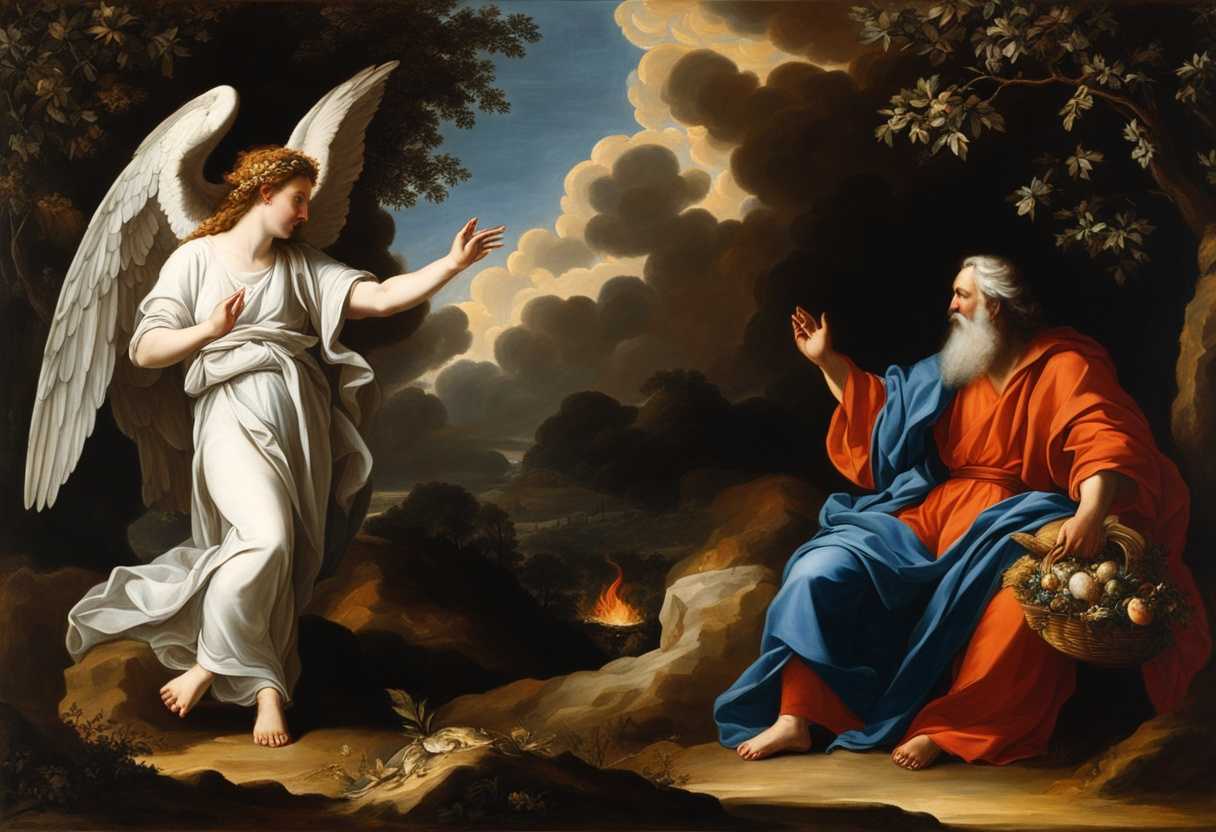
Setting the Scene for Exodus 3:2-6
In Exodus chapter 3, we find Moses, a former prince of Egypt turned shepherd, tending to his father-in-law Jethro’s flock in the wilderness near Mount Horeb. It’s a hot day, and the sun beats down on the rugged terrain as Moses guides the sheep to find grazing spots. The landscape is vast and barren, with rocky outcrops and sparse vegetation dotting the area.
As Moses walks along, he notices a strange sight—a bush that is on fire but is not being consumed by the flames. Intrigued, he decides to approach the burning bush to investigate further. As he draws near, a voice calls out to him from the midst of the flames, revealing itself to be the voice of God. The presence of the Almighty fills the air with a sense of awe and reverence, causing Moses to remove his sandals as a sign of respect for the sacred ground he now stands upon.
In this pivotal moment, God commissions Moses to go back to Egypt and lead the Israelites out of slavery. The encounter at the burning bush marks the beginning of a significant chapter in Moses’ life and in the history of the Israelite people, as he is chosen to be the instrument through which God will deliver His chosen nation from bondage.
What is Exodus 3:2-6 about?
We witness a profound encounter between God and Moses in this powerful verse. Picture a humble shepherd, going about his daily routines, only to be confronted by a miraculous sight – the bush that burns but is not consumed. God reveals His holiness by speaking to Moses from the midst of the flames as he draws near. Imagine the awe and wonder that must have filled Moses’ heart as he received this divine message. This moment is a clear demonstration of God’s power and presence.
God not only reveals His holiness but also His plan for Moses’s life. He calls Moses to a great purpose – to lead the Israelites out of Egypt, to freedom and liberation. This verse is a reminder of how God often chooses the most ordinary individuals to accomplish extraordinary tasks. Imagine the weight of responsibility and the faith required to accept such a monumental calling. Through this encounter, we learn that God not only sees us but also equips us for the challenges He sets before us. So, reflecting on this verse prompts us to consider: How does God speak to us in our daily lives? What extraordinary plans might He have in store for us if we are willing to listen and respond in faith?
Understanding what Exodus 3:2-6 really means
In Exodus 3:2-6, we witness a significant moment in the life of Moses as he encounters God through the burning bush on Mount Horeb. This encounter serves as a pivotal point not only in Moses’ journey but also in the history of Israel, as God commissions Moses to lead His people out of Egypt. The imagery of the burning bush, with flames of fire yet not consumed, symbolizes God’s presence and power in a miraculous and awe-inspiring manner. It serves as a visual representation of God’s sustaining nature, highlighting His ability to be present without overwhelming or destroying.
As God instructs Moses to remove his sandals because he is standing on holy ground, we are reminded of the sanctity of God’s presence and the importance of approaching Him with reverence and humility. This act of removing sandals signifies a gesture of respect and acknowledgment of God’s holiness, teaching us to approach Him with a sense of awe and submission. The declaration, “I am the God of your father, the God of Abraham, the God of Isaac, and the God of Jacob,” reaffirms God’s covenant with the patriarchs, emphasizing His faithfulness to His promises throughout generations.
This passage resonates with other biblical accounts, such as God’s call to Abraham in Genesis 12:1-3 and Isaiah’s vision in Isaiah 6:1-8, showcasing a continuity in God’s plan and His profound encounters with His chosen servants. Acts 7:30-34, in Stephen’s speech recounting Moses’ experience with the burning bush, further underscores the significance of this event in the broader narrative of God’s salvation history. These interconnected passages highlight the consistency of God’s character and His redemptive work throughout the Scriptures.
The relevance of this passage extends to our lives today, reminding us of the possibility of encountering God in unexpected ways and the importance of approaching Him with reverence and humility. Just as Moses was called to a specific task, we are also called to listen to God’s voice and trust in His faithfulness. The burning bush serves as a metaphor for those transformative moments when we become aware of God’s presence and calling, leading us to a deeper sense of purpose and direction in our lives.
In conclusion, Exodus 3:2-6 invites us to reflect on God’s presence, holiness, and faithfulness. It challenges us to be attentive to His voice, to approach Him with reverence, and to trust in His enduring promises. Like Moses, may we be open to encountering God in the ordinary and mundane aspects of our lives, allowing His presence to transform us and guide us on the path He has set before us.
What does encountering God in the ordinary reveal?
Encountering God in the ordinary reveals that even in the most mundane aspects of our lives, God’s presence and power can be manifest. This passage illustrates how Moses, while going about his daily task of tending to his flock, encounters God in the form of a burning bush. This encounter serves as a reminder that God can reveal Himself to us in unexpected and everyday moments, inviting us to pay attention and be receptive to His presence in our midst.
The burning bush also symbolizes the sacredness of the ordinary. God tells Moses to take off his sandals in this encounter because the ground he is standing on is holy. This act signifies that in our daily routines and surroundings, God’s presence can sanctify and transform the ordinary into something sacred and significant. It challenges us to see beyond the surface of our daily experiences and recognize the divine potential that exists in the midst of our ordinary lives. Moses hid his face in reverence, responding in awe and humility, as encountering God in the ordinary ultimately calls us to do. It reminds us that God’s presence is not limited to extraordinary or grandiose moments, but can be found in the ordinary activities and routines of our lives. This encounter with God in the burning bush challenges us to be attentive and open to experiencing the sacred in the midst of the ordinary, inviting us to live with a sense of wonder and reverence for the divine presence that surrounds us.
Application
Dear friend, it’s time to strip away the walls keeping you from reaching your true potential. Just as Moses removed his sandals on the holy ground, let go of the barriers that separate you from your goals. The burning bush symbolizes the presence of greatness within you, urging you to listen closely and follow the path set out for you. Will you shed your doubts and hesitations, and take that bold step towards embracing your destiny?

Reverend Michael Johnson is an experienced Church Minister with a profound expertise in spirituality and guidance. With a serene presence and a compassionate heart, he has faithfully served his congregation for over 20 years, leading them on a spiritual journey towards inner peace and enlightenment. Reverend Johnson’s extensive knowledge of religious philosophies and profound understanding of human nature have made him a trusted confidant and mentor to many, as he seamlessly weaves his profound wisdom into life teachings. Reverend Johnson’s calming demeanor and empathetic nature continue to uplift and heal souls, nurturing a sense of unity and tranquility within his community.