
Acts 9:1-21 is about the transformative power of God’s grace and the conversion of Saul from a persecutor of Christians to an ardent follower of Christ, illustrating the possibility of redemption and radical change through divine intervention.
1 But Saul, still breathing threats and murder against the disciples of the Lord, went to the high priest
2 and asked him for letters to the synagogues at Damascus, so that if he found any belonging to the Way, men or women, he might bring them bound to Jerusalem.
3 Now as he went on his way, he approached Damascus, and suddenly a light from heaven shone around him.
4 And falling to the ground, he heard a voice saying to him, “Saul, Saul, why are you persecuting me?”
5 And he said, “Who are you, Lord?” And he said, “I am Jesus, whom you are persecuting.
6 But rise and enter the city, and you will be told what you are to do.”
7 The men who were traveling with him stood speechless, hearing the voice but seeing no one.
8 Saul rose from the ground, and although his eyes were opened, he saw nothing. So they led him by the hand and brought him into Damascus.
9 And for three days he was without sight, and neither ate nor drank.
10 Now there was a disciple at Damascus named Ananias. The Lord said to him in a vision, “Ananias.” And he said, “Here I am, Lord.”
11 And the Lord said to him, “Rise and go to the street called Straight, and at the house of Judas look for a man of Tarsus named Saul, for behold, he is praying,
12 and he has seen in a vision a man named Ananias come in and lay his hands on him so that he might regain his sight.”
13 But Ananias answered, “Lord, I have heard from many about this man, how much evil he has done to your saints in Jerusalem.
14 And here he has authority from the chief priests to bind all who call on your name.”
15 But the Lord said to him, “Go, for he is a chosen instrument of mine to carry my name before the Gentiles and kings and the children of Israel.
16 For I will show him how much he must suffer for the sake of my name.
17 So Ananias departed and entered the house. And laying his hands on him he said, “Brother Saul, the Lord Jesus who appeared to you on the road by which you came has sent me so that you may regain your sight and be filled with the Holy Spirit.”
18 And immediately something like scales fell from his eyes, and he regained his sight. Then he rose and was baptized.
19 and taking food, he was strengthened.
20 And immediately he proclaimed Jesus in the synagogues, saying, “He is the Son of God.”
21 And all who heard him were amazed and said, “Is not this the man who made havoc in Jerusalem of those who called upon this name? And has he not come here for this purpose, to bring them bound before the chief priests?”
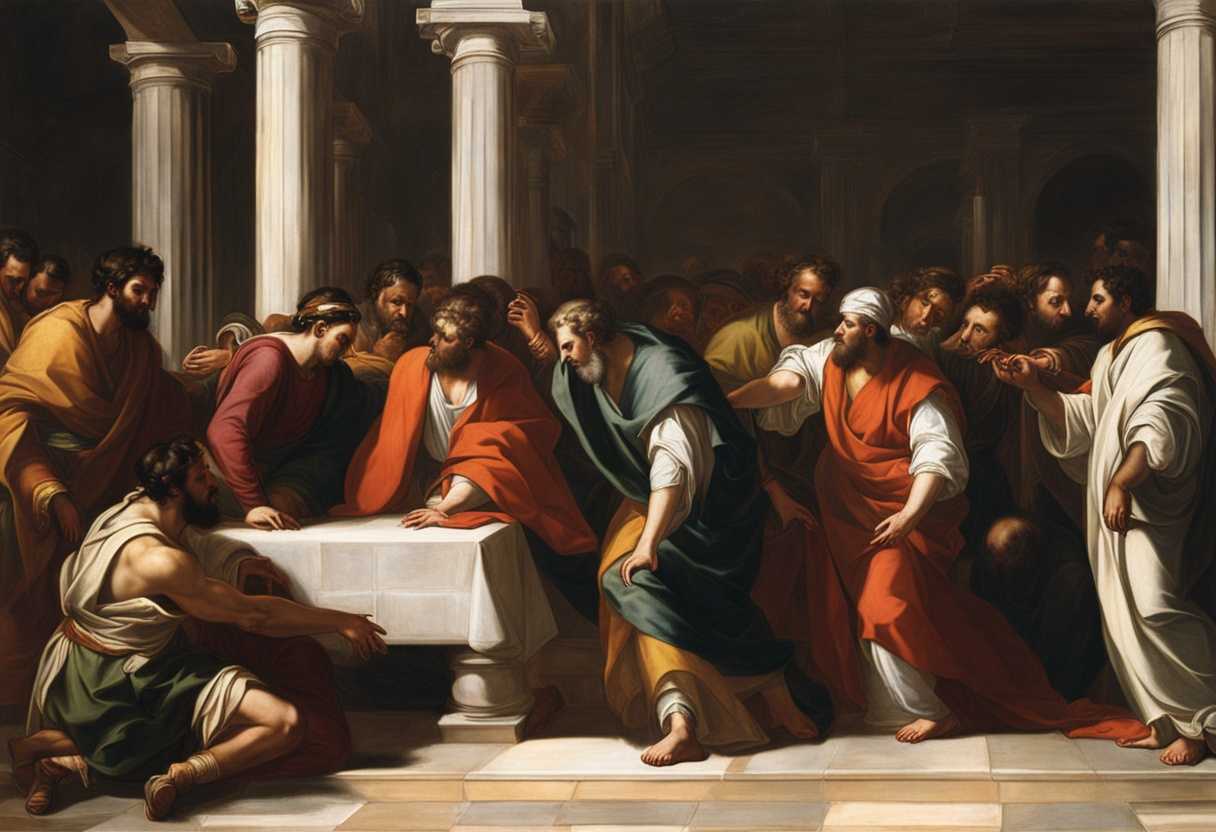
Setting the Scene for Acts 9:1-21
In Acts chapter 9, we find Saul of Tarsus, a zealous Pharisee who was known for persecuting the early Christians. As the scene unfolds, Saul is on his way to Damascus with a group of men. They are traveling to arrest any followers of Jesus they find there and bring them back to Jerusalem for trial. The journey is dusty and hot, with the sun beating down on the group as they make their way along the road.
Suddenly, a bright light from heaven flashes around Saul, causing him to fall to the ground. He hears a voice saying, “Saul, Saul, why are you persecuting me?” Trembling and astonished, Saul asks, “Who are you, Lord?” The voice replies, “I am Jesus, whom you are persecuting.” Saul is blinded by the light and led into Damascus by his companions. He spends three days without sight, fasting and praying, before a disciple named Ananias arrives to restore his sight and baptize him. This encounter marks a profound turning point in Saul’s life, leading to his conversion and transformation into the apostle Paul, one of the most influential figures in early Christianity.
What is Acts 9:1-21 about?
Isn’t it incredible how one transformative moment can completely change a person’s life? Saul was a fierce persecutor of Christians, but on the road to Damascus, he experienced a powerful encounter with Jesus that completely turned his life around. This event was so profound that Saul not only changed his name to Paul but also dedicated the rest of his life to spreading the teachings of Jesus.
This verse reminds us of the power of redemption and the possibility of transformation. It shows us that no one is beyond redemption and that even the most unlikely candidates can become devoted followers of Christ. Paul’s conversion is a powerful example of how God’s grace can work in mysterious ways, softening even the hardest of hearts and leading them to a life of faith and service. It challenges us to reflect on our own lives and consider how we can be more open to the possibility of transformation and renewal, just as Paul was on that fateful journey to Damascus.
Understanding what Acts 9:1-21 really means
In Acts 9:1-21, we witness a pivotal moment in the New Testament narrative as Saul, a zealous Pharisee known for persecuting Christians, undergoes a radical transformation into the apostle Paul. This passage holds immense significance in illustrating the transformative power of God’s grace and the profound impact one encounter with Christ can have on a person’s life journey.
Before his conversion, Saul was a fierce opponent of the early Christian movement, actively involved in persecuting believers. However, on his journey to Damascus, he encountered a blinding light from heaven and heard the voice of Jesus questioning his persecution of the Church. This divine encounter marked a turning point in Saul’s life, leading to his conversion and commissioning as a chosen instrument of God.
The key phrases in this passage carry deep meanings that resonate with timeless truths about God’s character and His relationship with humanity. The sudden light from heaven symbolizes divine intervention and the presence of God, reminiscent of God’s appearances in the Old Testament, such as with Moses at the burning bush. Jesus’ identification with His persecuted followers underscores the unity between Christ and the Church, emphasizing the intimate connection believers share with their Lord.
The relevance of Saul’s transformation extends to people today, serving as a powerful reminder that no one is beyond the reach of God’s grace and transformative power. Just as Saul was chosen for a specific purpose, each individual is uniquely called by God to fulfill a role in His divine plan. This passage challenges readers to reflect on their own lives, seeking areas where they need transformation and embracing God’s calling with openness and obedience.
Furthermore, the unity between Christ and His followers highlighted in this passage underscores the importance of community and mutual support within the body of believers. Encouraging readers to foster unity and solidarity in their faith journey, the narrative of Saul’s conversion serves as a compelling example of the transformative impact of encountering Christ and embracing His redemptive love.
As we contemplate the profound implications of Saul’s conversion, let us prayerfully consider our own need for transformation, purpose, and unity in our walk with God. May we be inspired by Saul’s journey to seek God’s guidance, embrace our unique calling, and actively participate in building a community of faith grounded in love and mutual support.
How can we respond when God calls us?
We can follow the example of obedience and submission demonstrated by the Apostle Paul in Acts 9:1-21 in response to God’s call. When we hear God’s call, we can be willing to surrender our own plans and desires, just as Paul did when he turned from persecuting Christians to following Jesus. We can demonstrate our willingness to respond by having a humble and teachable heart, willing to listen and obey God’s instructions even if they challenge our previous beliefs or way of life. We too can experience transformation when we answer God’s call with faith and obedience, just as Paul did when he went from being a persecutor of the church to a passionate follower of Christ. We can trust in His power and provision to equip us for the task ahead as we respond to God’s call. Paul’s conversion experience on the road to Damascus was accompanied by a supernatural encounter with Jesus, demonstrating God’s ability to transform and empower us for His purposes. When we say yes to God’s call, we can rely on His strength to guide us through challenges and uncertainties, knowing that He will give us everything we need to fulfill His plan for our lives. We can step out in faith and embrace the calling He has placed on our lives with confidence and trust in His leading by leaning on God’s grace and guidance.
Application
Are we ready to experience our own transformation, just like Saul became Paul? Let’s embrace the limitless grace and power of God working within us, shaping us into our best selves. It’s time to let go of our doubts and fears, making room for God’s miracles to unfold in our lives. Like a master craftsman, God can mold us into something truly extraordinary if we only allow Him to. Will we choose to open our hearts and minds to the divine plan that awaits us?

Reverend Michael Johnson is an experienced Church Minister with a profound expertise in spirituality and guidance. With a serene presence and a compassionate heart, he has faithfully served his congregation for over 20 years, leading them on a spiritual journey towards inner peace and enlightenment. Reverend Johnson’s extensive knowledge of religious philosophies and profound understanding of human nature have made him a trusted confidant and mentor to many, as he seamlessly weaves his profound wisdom into life teachings. Reverend Johnson’s calming demeanor and empathetic nature continue to uplift and heal souls, nurturing a sense of unity and tranquility within his community.