
Acts 9:8-9 is about Saul (later known as the apostle Paul) experiencing a powerful encounter with Jesus on the road to Damascus, where he is blinded physically to symbolize his spiritual blindness being removed and his transformation as a follower of Christ.
8 Saul rose from the ground, and although his eyes were opened, he saw nothing. So they led him by the hand and brought him into Damascus.
9 And for three days he was without sight, and neither ate nor drank.
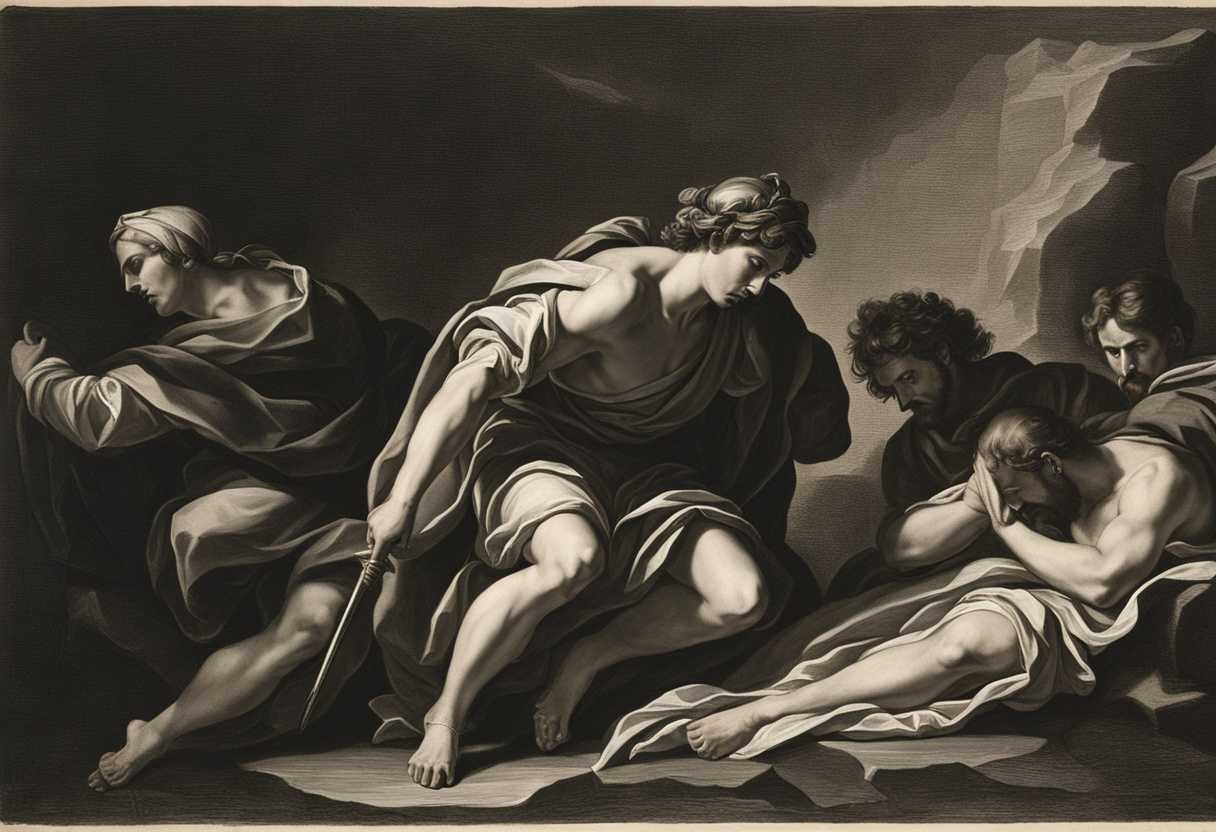
Setting the Scene for Acts 9:8-9
In Acts chapter 9, we find Saul, a devout Pharisee known for persecuting Christians, on his way to Damascus with the intention of arresting followers of Jesus. Suddenly, a bright light from heaven flashes around him, causing him to fall to the ground. As he lays there, blinded by the light, he hears a voice saying, “Saul, Saul, why are you persecuting me?”
Saul, confused and trembling, asks, “Who are you, Lord?” The voice replies, “I am Jesus, whom you are persecuting. Now get up and go into the city, and you will be told what you must do.” Saul’s companions stand there speechless, hearing the voice but seeing no one. They help Saul to his feet, but he remains blind and has to be led by the hand into Damascus.
The scene is filled with tension and awe as Saul, a fierce opponent of Christianity, encounters the risen Jesus in a powerful and transformative way. The surroundings are likely a dusty road leading into the city, with the sun beating down on the group. Saul’s companions are bewildered by the experience, witnessing the event but not fully understanding its significance. This encounter marks a pivotal moment in Saul’s life, leading to his conversion and eventual transformation into the apostle Paul, one of the most influential figures in the early Christian church.
What is Acts 9:8-9 about?
When we read about Saul being blinded by the light and led to Damascus while fasting and praying, we are witnessing a pivotal moment of transformation in his life. Saul, who later became known as the apostle Paul, was a devout persecutor of Christians before this event. However, encountering the blinding light on the road to Damascus marked a turning point in his beliefs and actions. This moment symbolizes the beginning of his journey of repentance, enlightenment, and spiritual awakening.
Imagine the intense inner turmoil Saul must have felt during his time of blindness, fasting, and prayer in Damascus. He was forced to confront his past actions and reconsider his entire worldview. This verse reminds us that transformation is possible for anyone, no matter how deeply entrenched they may be in their old ways. Just like Saul, we all have the potential to experience a profound shift in our lives that leads to growth, enlightenment, and a renewed sense of purpose.
Understanding what Acts 9:8-9 really means
The verses in Acts 9:8-9 capture a significant moment in the life of Saul, later known as Paul, as he journeys on the road to Damascus. Saul, a zealous persecutor of Christians, encounters a divine vision of Jesus that leaves him temporarily blinded. This encounter serves as a turning point in Saul’s life, marking the beginning of his transformation into Paul, a devoted apostle of Christ. The physical blindness experienced by Saul upon opening his eyes symbolizes his spiritual blindness and ignorance of the truth of Jesus Christ, highlighting the profound impact of encountering the divine.
As Saul finds himself unable to see, he is led by the hand into Damascus, showcasing his vulnerability and newfound dependence on others. This stark contrast to his previous self-reliance and aggression emphasizes the humbling nature of his experience. The three days of blindness and fasting that follow serve as a period of reflection, repentance, and preparation for his upcoming mission, illustrating the importance of introspection and spiritual readiness in times of transformation.
These verses resonate with broader themes found throughout the Bible, such as the transformative power of encountering Christ, as emphasized in 2 Corinthians 5:17. The parallels between Saul’s physical and spiritual journey and Jesus’ teachings on spiritual blindness and sight in John 9:39-41 further enrich the depth of this narrative. The prophecy in Isaiah 42:16, promising guidance for the blind along unfamiliar paths, mirrors Saul’s experience of being led by God onto a new and unforeseen trajectory.
The relevance of Saul’s story extends to people today, serving as a testament to the possibilities of transformation and redemption, regardless of one’s past. Just as Saul had to rely on others and ultimately on God, we are reminded of our need for divine guidance and support in our own journeys. The three days of blindness can be seen as a metaphor for the periods in our lives when we must pause, reflect, and realign ourselves with God’s purpose, emphasizing the importance of introspection and spiritual growth.
In considering modern-day parallels to Saul’s experience, we encounter individuals deeply entrenched in harmful lifestyles who, through life-altering events, find themselves in states of vulnerability and dependence. Through reflection and seeking help, they undergo profound transformations, emerging with renewed purpose and direction. This anecdote underscores the timeless relevance of Saul’s journey and the enduring message of hope and renewal found in Acts 9:8-9. Ultimately, these verses serve as a powerful reminder of the transformative power of God’s grace, urging us to embrace vulnerability and reflection as pathways to growth and renewal in our own lives.
How can we respond when God calls us?
When God calls us, we should respond like Saul did in Acts 9:8-9. When Saul heard the voice of God calling him, he asked, “Who are you, Lord?” This shows humility and a willingness to listen to and engage with God. Saul’s response was one of openness and readiness to receive instruction from God.
We should also respond to God’s call with a desire to know Him more deeply, like Saul did. The question, “Who are you, Lord?” was asked.” Saul showed a hunger for a deeper relationship with God. When God calls us, we should seek to understand His character, His will, and His plans for our lives. Responding in this way demonstrates a heart that is open to God’s leading and guidance.
Finally, when we hear God’s call, we should be willing to submit to His will and follow His instructions, just as Saul did. Saul’s question to God was followed by the response, “I am Jesus, whom you are persecuting.” This revelation led to Saul’s radical transformation and obedience to God’s will. When God calls us, we should be ready to surrender our own desires and plans in order to follow Him wholeheartedly.
Application
Just like Saul was blinded by the light from heaven, let’s allow God’s intervention to illuminate our path and lead us to transformation. Embrace divine guidance and let it steer your journey towards fulfilling God’s purpose for you. Will you heed the call for transformation in your life right now?

Reverend Michael Johnson is an experienced Church Minister with a profound expertise in spirituality and guidance. With a serene presence and a compassionate heart, he has faithfully served his congregation for over 20 years, leading them on a spiritual journey towards inner peace and enlightenment. Reverend Johnson’s extensive knowledge of religious philosophies and profound understanding of human nature have made him a trusted confidant and mentor to many, as he seamlessly weaves his profound wisdom into life teachings. Reverend Johnson’s calming demeanor and empathetic nature continue to uplift and heal souls, nurturing a sense of unity and tranquility within his community.