
Amos 2:13-16 is about how the punishment of the Israelites for their disobedience and injustice will be severe, as God will bring destruction upon them even in their strongest fortresses and wealthiest possessions.
13 “Behold, I am pressed under you, as a cart is pressed that is full of sheaves.”
14 “Flight shall perish from the swift,
and the strong shall not retain his strength,
nor shall the mighty save his life.”
15 he who holds the bow shall not stand, he who is swift of foot shall not save himself, nor shall he who rides the horse save his life.
16 And he who is stout of heart among the mighty shall flee away naked in that day,” declares the Lord.
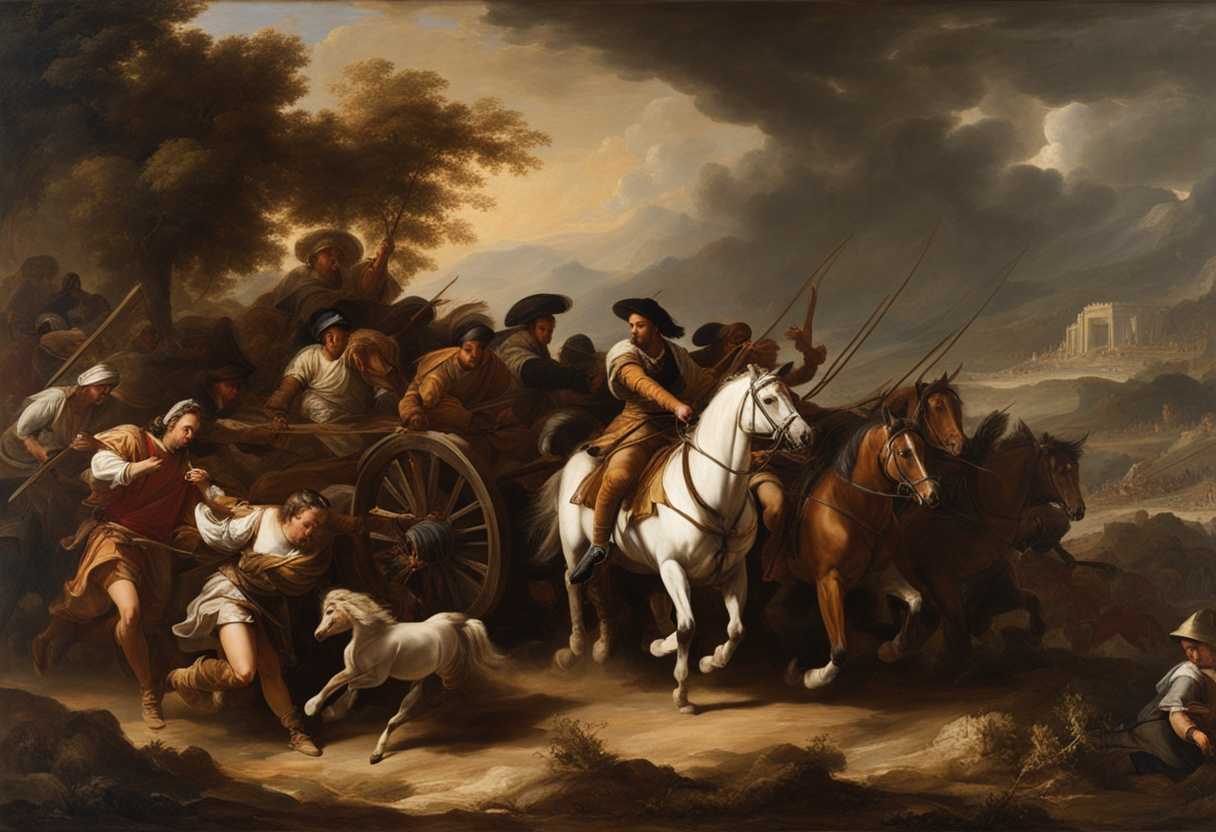
Setting the Scene for Amos 2:13-16
In Amos chapter 2, the prophet Amos delivers a message of judgment against the nation of Israel for their sins and transgressions. The scene unfolds in a solemn setting, with Amos standing before a gathering of Israelites in a town square. The crowd is a mix of people from different social classes, including wealthy landowners, merchants, and common laborers. They have come together to hear what the prophet has to say, some out of curiosity and others out of a sense of obligation.
Surrounded by the dusty streets of the town, the atmosphere is tense as Amos begins to speak. His words are powerful and convicting as he condemns the people for their injustices, idolatry, and mistreatment of the poor. The crowd listens intently, some with expressions of disbelief and others with a sense of guilt creeping into their hearts. As Amos continues to deliver his message, the weight of his words hangs heavy in the air, stirring a mixture of emotions among the listeners.
As the sun begins to set on the horizon, the scene is filled with a sense of foreboding and impending judgment. The people gathered before Amos are faced with a choice – to heed his warning and turn back to God in repentance, or to continue down the path of destruction. The prophet’s words echo in the minds of the crowd as they disperse, leaving them to grapple with the message of Amos and its implications for their lives.
What is Amos 2:13-16 about?
The prophet in Amos 2:13-16 condemns the people of Israel for their disobedience and describes the impending judgment that they will face as a consequence of their actions. Through these verses, Amos highlights how the Israelites have strayed from God’s will and failed to uphold the values of justice, righteousness, and compassion. Their pursuit of wealth and power has led them to oppress the poor and needy, neglecting their duties to care for the most vulnerable in society. Reflecting on these verses prompts us to consider our own actions and attitudes towards others. Are we living in alignment with God’s will, seeking justice and righteousness in all that we do? Or are we, like the Israelites, allowing greed and selfishness to guide our decisions, leading us away from the path of righteousness? These verses serve as a powerful reminder of the importance of remaining faithful to God’s commandments and showing compassion to those in need. Let us ponder the message of Amos 2:13-16 as we strive to embody the values of justice, righteousness, and compassion in our own lives. May we learn from the mistakes of the Israelites and work towards building a society that is rooted in God’s love and grace, where all individuals are treated with dignity and respect. Let us heed the warning of impending judgment and choose to walk in obedience to God’s will, seeking to bring about positive change in the world around us.
Understanding what Amos 2:13-16 really means
Amos, a prophet from Judah, was tasked with delivering a message to Israel, addressing social injustices and religious hypocrisy. In Amos 2:13-16, the weight of Israel’s sins is likened to a cart loaded with grain, symbolizing the impending judgment. The imagery emphasizes the inescapable nature of God’s justice, highlighting the futility of relying on human abilities in the face of divine judgment. Even the bravest warriors will not escape, showcasing the helplessness when one relies on their own strength rather than on God.
Isaiah 5:15-16 and Jeremiah 9:23-24 further emphasize God’s justice and the importance of knowing and understanding Him. These passages complement Amos by underscoring that true strength and wisdom come from a relationship with God. The timeless message of Amos 2:13-16 warns against turning away from God and relying solely on personal strength. In today’s world, where trust is often placed in abilities or wealth, this passage calls for introspection to ensure alignment with God’s will.
Consider a businessman who lost everything during an economic downturn due to misplaced trust in his abilities. His story reflects the lesson of Amos 2:13-16, illustrating the consequences of relying on human strength. This humbling experience led him to rebuild his life on faith and reliance on God. Amos 2:13-16 serves as a poignant reminder of the repercussions of disobedience and the certainty of God’s judgment, urging us to live in accordance with His will and trust in His guidance for true security.
Reflecting on this passage prompts us to examine our lives and realign them with God’s will, rather than relying solely on personal strength. By internalizing the message of Amos 2:13-16, we can lead lives that honor God and experience genuine security through trust in Him.
What does it mean to oppress and silence others?
To oppress and silence others means to subjugate them and prevent them from expressing their thoughts, opinions, or beliefs. It involves using power and authority to silence those who may have different perspectives or dissenting voices. This can be done through various means such as physical force, manipulation, censorship, or suppression of information.
The act of oppression and silencing is a way to control and dominate others, often for one’s own benefit or to maintain a particular status quo. Oppressors can maintain their power and influence without facing opposition or criticism by denying individuals the opportunity to speak up or advocate for themselves. Oppressors not only restrict the freedom and autonomy of others but also create an environment of fear and intimidation that hinders progress, justice, and equality. It is a form of injustice that stifles diversity of thought and undermines the value of individual voices and perspectives.
Application
In the bustling city of our lives, let’s not overlook the cries of the marginalized and oppressed. Let’s be proactive in showing empathy and kindness. Are we ready to make a difference or will we choose to stay on the sidelines, doing nothing?

Reverend Michael Johnson is an experienced Church Minister with a profound expertise in spirituality and guidance. With a serene presence and a compassionate heart, he has faithfully served his congregation for over 20 years, leading them on a spiritual journey towards inner peace and enlightenment. Reverend Johnson’s extensive knowledge of religious philosophies and profound understanding of human nature have made him a trusted confidant and mentor to many, as he seamlessly weaves his profound wisdom into life teachings. Reverend Johnson’s calming demeanor and empathetic nature continue to uplift and heal souls, nurturing a sense of unity and tranquility within his community.