
Amos 2:2 is about God’s judgment on the nations for their cruel and unjust treatment of the people of Israel, highlighting the consequences of their actions and the importance of living in accordance with God’s will.
2 So I will send a fire upon Moab,
and it shall devour the strongholds of Kerioth,
and Moab shall die amid uproar,
amid shouting and the sound of the trumpet;
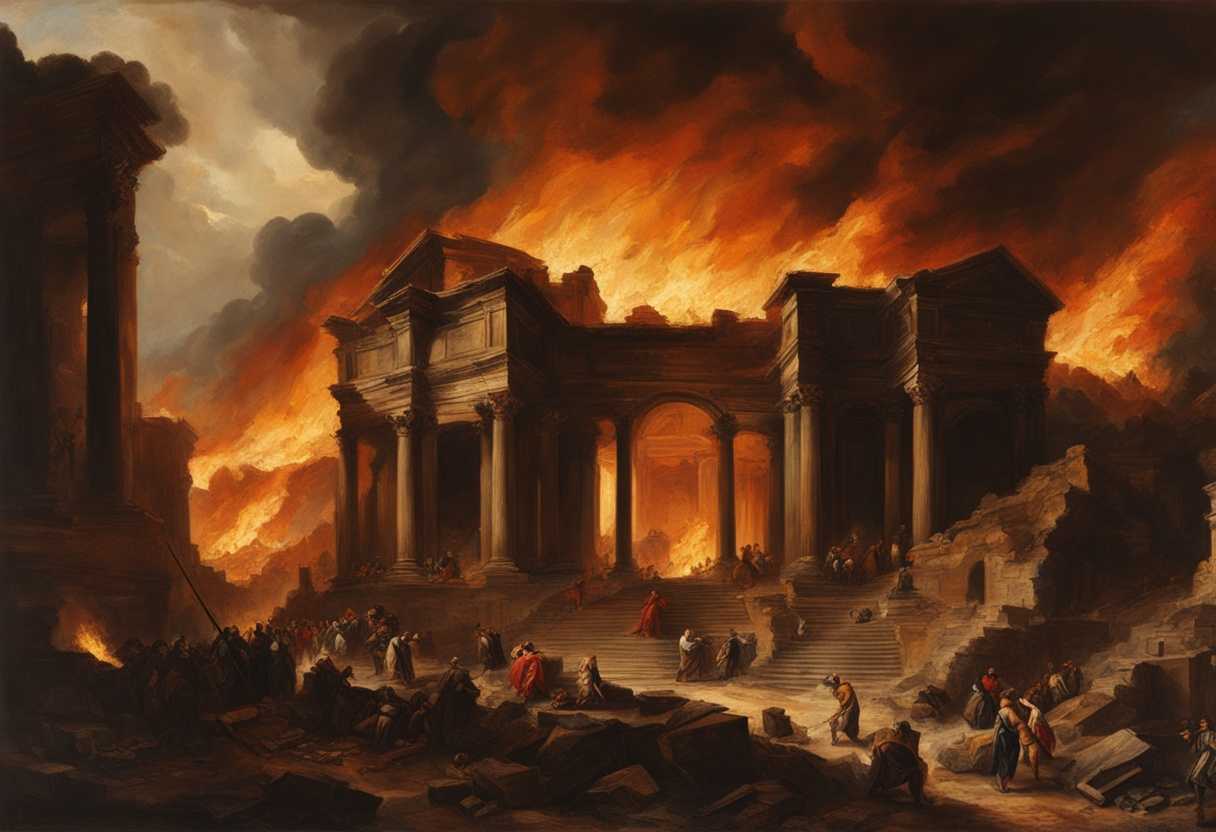
Setting the Scene for Amos 2:2
The scene in Amos 2:2 takes place in the ancient kingdom of Israel during a time of great turmoil and moral decay. The prophet Amos, a shepherd from Tekoa, has been called by God to deliver a message of judgment and warning to the people of Israel. As he stands in the marketplace of the bustling city, surrounded by merchants and traders going about their business, Amos begins to speak out against the sins of the nation.
Among the crowd gathered to listen are wealthy landowners who have exploited the poor, priests who have turned away from the true worship of God, and rulers who have perverted justice. The air is thick with tension as Amos condemns their actions and warns of the impending judgment that will come upon them if they do not repent. The sun beats down on the dusty streets, casting long shadows as Amos delivers his message with a mix of sorrow and righteous anger.
As the people of Israel listen to Amos’s words, some scoff and mock him, while others are convicted in their hearts and begin to question their own actions. The scene is charged with emotion as Amos stands alone, a solitary figure speaking truth to power in a society that has strayed far from God’s ways.
What is Amos 2:2 about?
The prophet Amos delivers a powerful condemnation of the kingdom of Moab in Amos 2:2 for burning the bones of Edom’s king to lime, highlighting their heinous act. This verse reflects the intense anger and judgment of God upon the Moabites for their cruel and disrespectful treatment of the remains of another nation’s leader. It serves as a stark reminder of the consequences of disrespecting the deceased and violating the sanctity of human remains.
Through this verse, we are prompted to reflect on the values of respect, honor, and dignity for all individuals, even in death. It challenges us to consider the implications of our actions and the importance of treating others with kindness and compassion, both in life and in death. This verse also underscores the idea that God detests acts of cruelty and desecration, emphasizing the need for humanity to uphold ethical and moral principles that honor the sanctity of life and death. We are compelled to examine our own behavior and attitudes towards others, especially in moments of conflict or animosity, as we ponder the significance of Amos 2:2. It prompts us to question how we treat not only the living but also the deceased, reminding us of the importance of showing empathy, respect, and understanding towards all individuals, regardless of our differences. Let this verse serve as a poignant reminder of the value of human life and the dignity that should be afforded to every individual, even in times of strife and disagreement.
Understanding what Amos 2:2 really means
Amos, a prophet during a time of peace and prosperity marred by social injustice and idolatry, delivers a message of judgment in his prophecies. In Amos 2:2, the imagery of fire upon Moab symbolizes God’s wrath and purification, consuming their fortresses to signify the end of their power. The chaotic scene of Moab’s demise underscores the severity of God’s judgment, a theme echoed in other passages like Jeremiah 48:42, emphasizing the consequences of defying the Lord. Isaiah 15-16 and Psalm 9:17 further illustrate the downfall of nations that forget God, reinforcing the message of divine justice.
Today, Amos 2:2 remains relevant as a warning against turning away from God and embracing sinful ways. It prompts reflection on the importance of justice, humility, and faithfulness in a world plagued by social injustice and moral decay. Just as Moab faced destruction for their defiance, individuals and societies today are called to examine their actions and realign with God’s principles. The verse serves as a cautionary tale, urging us to uphold righteousness in the face of temptation and corruption.
Consider a community that deteriorates from mutual respect to corruption, mirroring Moab’s fate. Similarly, a business starting ethically but succumbing to greed illustrates the principle of actions bearing consequences. Amos 2:2’s vivid imagery and timeless message resonate in contemporary contexts, urging us to uphold integrity and righteousness in all aspects of life. By internalizing its teachings, we can strive to build communities grounded in justice and faithfulness, honoring God’s will and avoiding the pitfalls of moral decline.
How can we seek justice and righteousness?
We can seek justice and righteousness by standing up against wrongdoing and oppression. It involves advocating for those who are being mistreated and marginalized in society. Justice is about ensuring that everyone is treated fairly and that the vulnerable are protected. Righteousness goes beyond just following rules; it involves acting with integrity and doing what is morally right even when it is difficult.
Seeking justice and righteousness also requires self-reflection and personal accountability. It involves examining our own actions and beliefs to ensure that they align with principles of fairness and goodness. It calls for making choices that are in line with what is right, even if it means going against popular opinion or societal norms. Individual commitment and collective effort towards creating a more just and equitable world require a continuous process of seeking justice and righteousness.
Application
Think of sin as a bug in the software of your life, disrupting everything—work, family, and peace of mind. God’s judgment isn’t something distant; it’s a system crash waiting to happen. Don’t ignore the error messages. Instead, debug your life by repenting and striving for righteousness. Will you fix the code and align your life with God’s design today?

Reverend Michael Johnson is an experienced Church Minister with a profound expertise in spirituality and guidance. With a serene presence and a compassionate heart, he has faithfully served his congregation for over 20 years, leading them on a spiritual journey towards inner peace and enlightenment. Reverend Johnson’s extensive knowledge of religious philosophies and profound understanding of human nature have made him a trusted confidant and mentor to many, as he seamlessly weaves his profound wisdom into life teachings. Reverend Johnson’s calming demeanor and empathetic nature continue to uplift and heal souls, nurturing a sense of unity and tranquility within his community.