
Amos 5:10-12 is about the people’s corrupt actions in society, warning them of the impending consequences of exploiting the vulnerable and perverting justice.
10 They hate him who reproves in the gate, and they abhor him who speaks the truth.
11 Therefore because you trample on the poor
and you exact taxes of grain from him,
you have built houses of hewn stone,
but you shall not dwell in them;
you have planted pleasant vineyards,
but you shall not drink their wine.
12 For I know how many are your transgressions and how great are your sins— you who afflict the righteous, who take a bribe, and turn aside the needy in the gate.
Setting the Scene for Amos 5:10-12
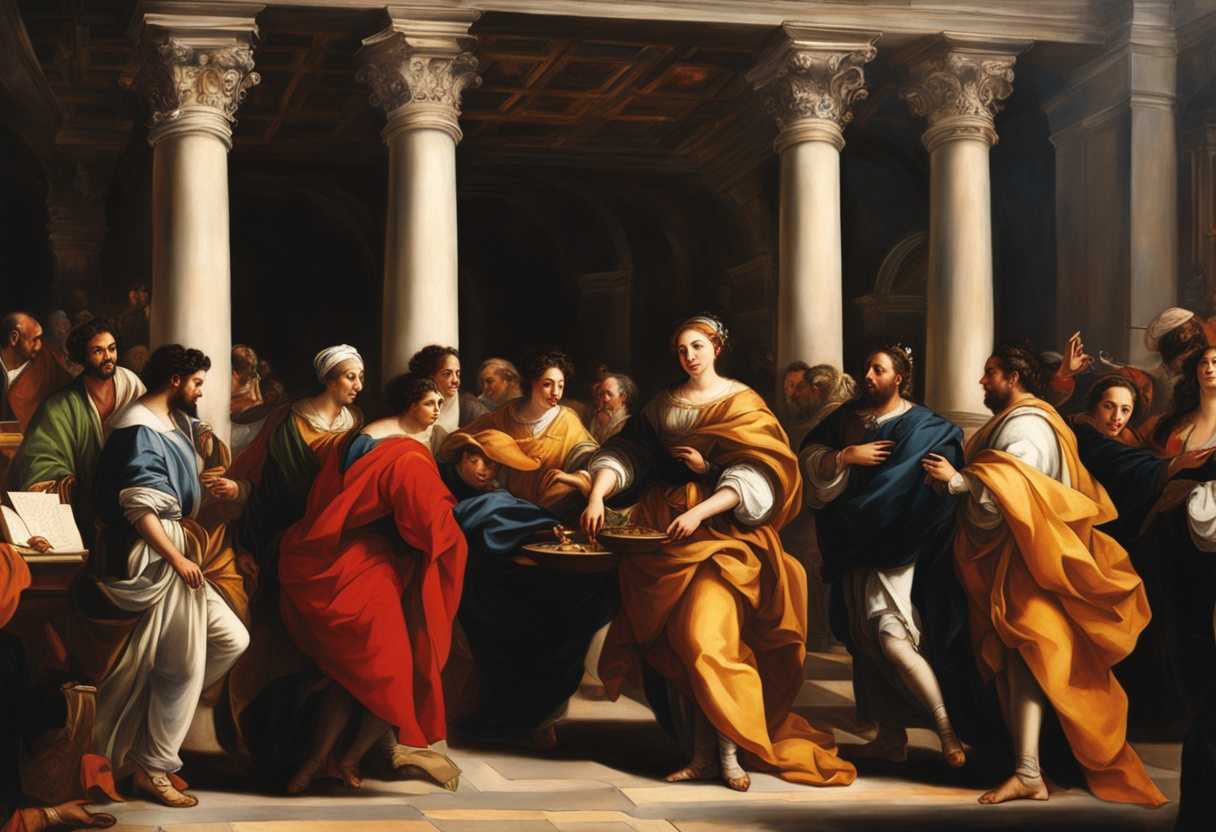
In the scene described in Amos 5:10-12, we find a group of people gathered in the city square of a bustling ancient town. The square is filled with merchants, traders, and townspeople going about their daily business. The air is filled with the sounds of bargaining, animals, and the general hum of activity. The sun beats down on the dusty streets, casting long shadows as people move about.
Among the crowd are the wealthy and powerful individuals who have gained their wealth through dishonest means. They are adorned in fine clothing and jewelry, exuding an air of arrogance and self-importance. These individuals have exploited the poor and marginalized in society, taking advantage of their vulnerability for personal gain. The prophet Amos, a humble shepherd called by God to deliver a message of justice and righteousness, stands in the midst of the square, calling out these corrupt practices and warning of the impending judgment that will come upon those who oppress the weak and needy.
As the crowd continues with their transactions and conversations, Amos’s voice rises above the noise, proclaiming the word of the Lord and urging the people to turn from their wicked ways and seek justice and righteousness. The scene is tense as the powerful individuals in the crowd listen uneasily to Amos’s words, knowing deep down that their actions have not gone unnoticed by the Almighty. The atmosphere crackles with a sense of impending judgment and the need for repentance and change.
What is Amos 5:10-12 about?
The prophet Amos condemns the exploitation of the poor and the perversion of justice in Amos 5:10-12. He reminds us of the importance of treating all people with fairness and compassion, especially those who are vulnerable and in need. This verse serves as a powerful reminder that societal injustices, such as economic exploitation and legal corruption, go against the principles of righteousness and love that should guide our interactions with one another.
Imagine a world where the wealthy take advantage of the poor and where justice is twisted to serve the interests of the powerful. How would such a society function? Amos calls for introspection and action, challenging us to examine our own behaviors and to work towards a more just and equitable society. We can strive to create a world where all individuals are treated with dignity and where justice is upheld for everyone, regardless of their social status or economic position, by heeding the warning in this verse. Let us remember the importance of standing up for the oppressed and fighting against injustice in all its forms.
Understanding what Amos 5:10-12 really means
The Book of Amos provides a stark portrayal of a society plagued by social injustice and moral decay. In Amos 5:10-12, we see a scathing indictment of those who oppress the righteous and pervert justice for personal gain. The prophet condemns the widespread corruption and exploitation that have taken root in the community, highlighting the disdain for truth-tellers and the mistreatment of the poor and vulnerable.
“They hate him who reproves in the gate” speaks to the societal rejection of those who speak out against injustice. The “gate” was a place of public discourse and judgment, yet those who sought to uphold righteousness were met with hostility and contempt. Similarly, “They abhor him who speaks the truth” underscores the prevailing preference for deception over honesty, revealing a society that has strayed far from ethical principles.
The condemnation of trampling on the poor and exacting unfair taxes from them reflects a system that exploits and marginalizes the most vulnerable members of society. These verses serve as a poignant reminder of the importance of advocating for justice and defending the rights of the oppressed, echoing the sentiments expressed in Proverbs 31:8-9 and Isaiah 1:17.
In today’s world, the themes of social injustice, speaking truth to power, and economic inequality remain all too relevant. The call to action embedded in these verses urges us to confront corruption, stand up for the marginalized, and strive for a more just and equitable society. Whether it be through whistleblowing against corporate malpractice or advocating for the rights of marginalized communities, the courage to speak out against injustice is a timeless virtue.
As we reflect on the message of Amos 5:10-12, let us consider how we can actively combat injustice in our own communities. Are there ways in which we have remained silent in the face of wrongdoing, and how can we cultivate the courage to speak out for truth and justice? Let us draw inspiration from the examples of modern-day advocates who fearlessly champion the cause of the oppressed, embodying the spirit of integrity and compassion called for in these verses.
In closing, let us pray for the strength and wisdom to act justly, love mercy, and walk humbly with God, as Micah 6:8 exhorts us. May we be empowered to stand up for righteousness, advocate for the marginalized, and strive for a society where justice and compassion reign supreme.
How do we pursue justice and righteousness?
We pursue justice and righteousness by upholding the principles of fairness, compassion, and integrity in all areas of our lives. This involves actively seeking to right the wrongs we see around us, standing up against injustice, and being a voice for the marginalized and oppressed. It also means living in a way that is in alignment with our values, treating others with kindness and respect, and taking responsibility for our actions.
Additionally, pursuing justice and righteousness involves seeking accountability for those who perpetrate harm or commit wrongdoing. It requires us to not turn a blind eye to injustice or allow corruption to go unchecked. We contribute to creating a more just and equitable society for all by holding ourselves and others accountable to a higher standard of conduct. Constant reflection, growth, and action are required for the ongoing journey of pursuing justice and righteousness. We can work towards creating a world where all individuals are treated with dignity and respect, and where fairness and compassion prevail by continually striving to do what is right and just.
Application
Embrace the call to be agents of justice and righteousness in this chaotic world. Let’s be warriors against corruption and oppression, champions for the downtrodden. Will you rise to the challenge and make a difference in the lives of those who need it most?

Reverend Michael Johnson is an experienced Church Minister with a profound expertise in spirituality and guidance. With a serene presence and a compassionate heart, he has faithfully served his congregation for over 20 years, leading them on a spiritual journey towards inner peace and enlightenment. Reverend Johnson’s extensive knowledge of religious philosophies and profound understanding of human nature have made him a trusted confidant and mentor to many, as he seamlessly weaves his profound wisdom into life teachings. Reverend Johnson’s calming demeanor and empathetic nature continue to uplift and heal souls, nurturing a sense of unity and tranquility within his community.