
Amos 8:9-10 is about the impending judgment and darkness that will come upon the people as a consequence of their sins and injustices.
9 “And on that day,” declares the Lord God, “I will make the sun go down at noon and darken the earth in broad daylight.”
10 I will turn your feasts into mourning
and all your songs into lamentation;
I will bring sackcloth on every waist
and baldness on every head;
I will make it like the mourning for an only son
and the end of it like a bitter day.
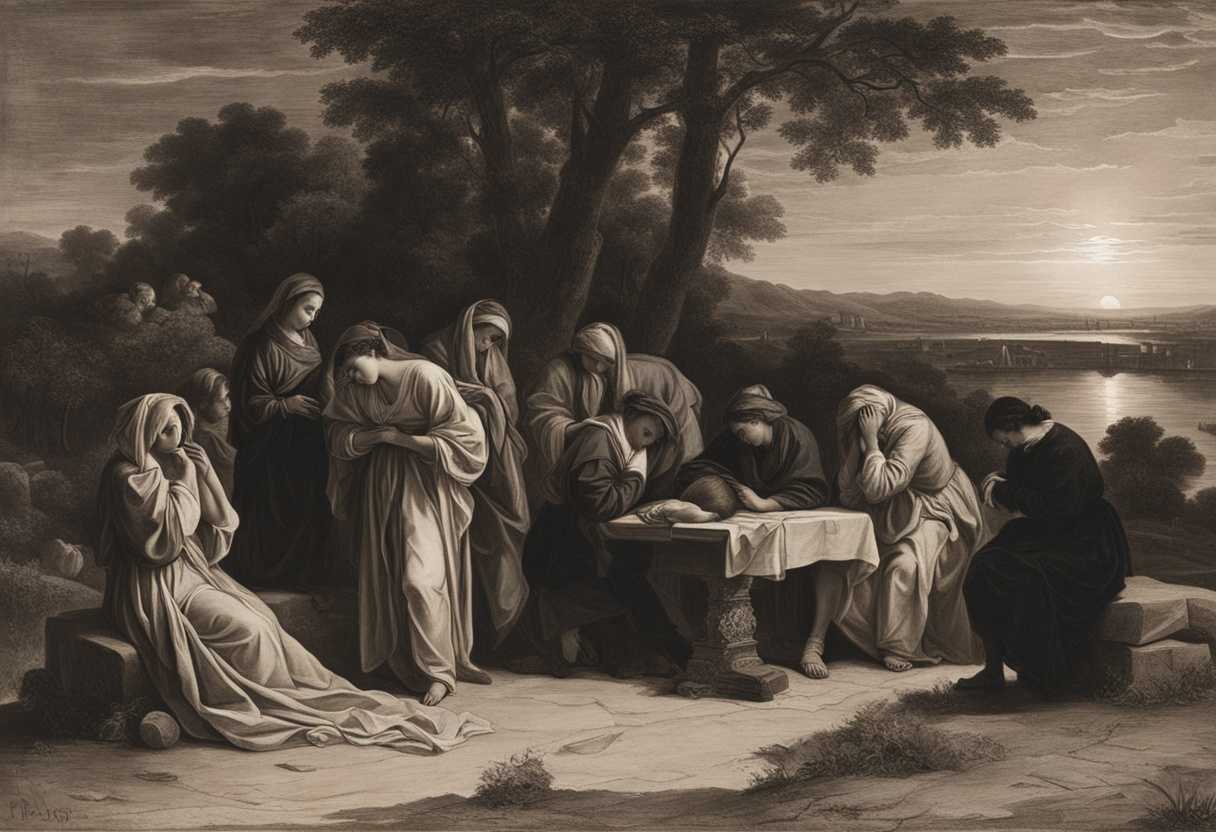
Setting the Scene for Amos 8:9-10
The scene in Amos 8:9-10 is set in ancient Israel during a time of great darkness and despair. The prophet Amos is delivering a message from God to the people of Israel, warning them of impending judgment and destruction due to their sins and injustices. The atmosphere is heavy with a sense of impending doom, as the people have strayed far from God’s ways and are facing the consequences of their actions.
In this scene, Amos is standing in the marketplace of a bustling city, surrounded by merchants and traders who are busy buying and selling goods. The sun is high in the sky, but instead of providing warmth and light, it seems to be dimmed, casting a shadow over the land. The people are going about their daily business, oblivious to the spiritual darkness that is descending upon them.
As Amos raises his voice to deliver God’s message, a hush falls over the crowd, and a sense of fear and foreboding grips their hearts. The prophet’s words cut through the noise of the marketplace, warning of a time when the sun will go down at noon, and the land will be covered in darkness. The people are shaken to their core, realizing the gravity of their sins and the need for repentance before it is too late.
What is Amos 8:9-10 about?
Imagine a world plunged into darkness, not just physically but spiritually, where the light of hope and joy fades away. This is the picture painted in Amos 8:9-10, as God’s judgment brings a profound sense of mourning for sin. This passage reveals the consequences of turning away from God and pursuing a life contrary to His will. It shows us that the choices we make have real and lasting implications, not just for ourselves but for the world around us.
Have you ever experienced a time when you felt the weight of your own sin or witnessed the effects of wrongdoing in society? The darkness and mourning described in these verses serve as a powerful reminder of the importance of living in alignment with God’s principles. It prompts us to reflect on our actions and consider whether we are contributing to the light or adding to the darkness in the world. Amos 8:9-10 ultimately highlights the reality of God’s righteous judgment and serves as a call to repentance and reconciliation with Him.
Understanding what Amos 8:9-10 really means
Amos, a prophet during a time of prosperity marred by social injustice and religious hypocrisy, delivers powerful prophecies in the book bearing his name. The key phrases in Amos 8:9-10 paint a vivid picture of impending calamity and divine judgment. The imagery of the sun going down at noon and turning religious festivals into mourning signifies a drastic shift from joy to sorrow, highlighting the consequences of forsaking righteousness. The mention of wearing sackcloth and mourning for an only son emphasizes the depth of grief and repentance that will befall the people.
These phrases find resonance in other biblical passages like Joel 2:31, Isaiah 13:10, and Matthew 24:29, which also speak of cosmic disturbances heralding divine judgment. The relevance of Amos’s message today is striking, as it confronts issues of social injustice and superficial religiosity that still plague societies. It serves as a poignant reminder for introspection and genuine repentance, urging individuals to align their actions with their professed faith.
Consider a community that outwardly displays religious fervor but harbors corruption and neglect. When disaster strikes, their facade crumbles, revealing the hollowness of their faith. This narrative mirrors Amos’s warning, stressing the importance of genuine righteousness and justice over mere religious observance. In conclusion, Amos’s prophecy stands as a timeless call to authentic faith and compassion, reminding us that true devotion to God entails living justly and mercifully. Reflecting on this message prompts us to strive for lives that honor God through genuine faith and righteous deeds.
How can we avoid spiritual darkness and despair?
To avoid spiritual darkness and despair, it is important to seek and maintain a close relationship with God. We can find guidance, comfort, and strength even in the midst of challenging times by cultivating a deep connection through prayer, meditation, and study of scriptures. Remembering God’s promises and trusting in His plan can help us navigate through difficulties with faith and hope.
Additionally, staying connected with a community of believers can provide support and encouragement during seasons of darkness. Surrounding ourselves with fellow believers who can offer prayer, counsel, and companionship can help lift our spirits and remind us of the light and love that God brings into our lives. Engaging in fellowship and worship can help us find renewed strength and inspiration to persevere through trials and remain grounded in our faith.
Application
Think about those moments at work when everything seems to go wrong at once. Amos 8:9-10 tells us about a time when darkness falls at noon, serving as a piercing reminder of God’s power. Just like you listen to your boss or take care of your family, why not give that same attention to your faith? It’s time to step up, seek righteousness, and be vigilant in your spiritual journey. Are you ready to take that next step and deepen your relationship with God?

Reverend Michael Johnson is an experienced Church Minister with a profound expertise in spirituality and guidance. With a serene presence and a compassionate heart, he has faithfully served his congregation for over 20 years, leading them on a spiritual journey towards inner peace and enlightenment. Reverend Johnson’s extensive knowledge of religious philosophies and profound understanding of human nature have made him a trusted confidant and mentor to many, as he seamlessly weaves his profound wisdom into life teachings. Reverend Johnson’s calming demeanor and empathetic nature continue to uplift and heal souls, nurturing a sense of unity and tranquility within his community.