
Baruch 6:11-15 is about the folly of idol worship, revealing the futility of worshipping objects made by human hands that can neither help nor harm, contrasting the powerlessness of idols with the omnipotence of the true God.
11 And when the Babylonians came to her, they defiled her; they were satisfied with her dishonor.
12 They are made of wood and overlaid with gold; they are fastened with hammers and nails so that they cannot move.
13 How then can one not know that they are not gods?
14 And when he sees the power of their gods, let him cast them down to the ground, so that they may be broken into pieces, while their temple shall be set on fire, and their gods shall be stripped of their images, and their idols, which are the most precious things, shall be broken in pieces, and their works shall be destroyed.
15 They are not gods, so do not fear them.
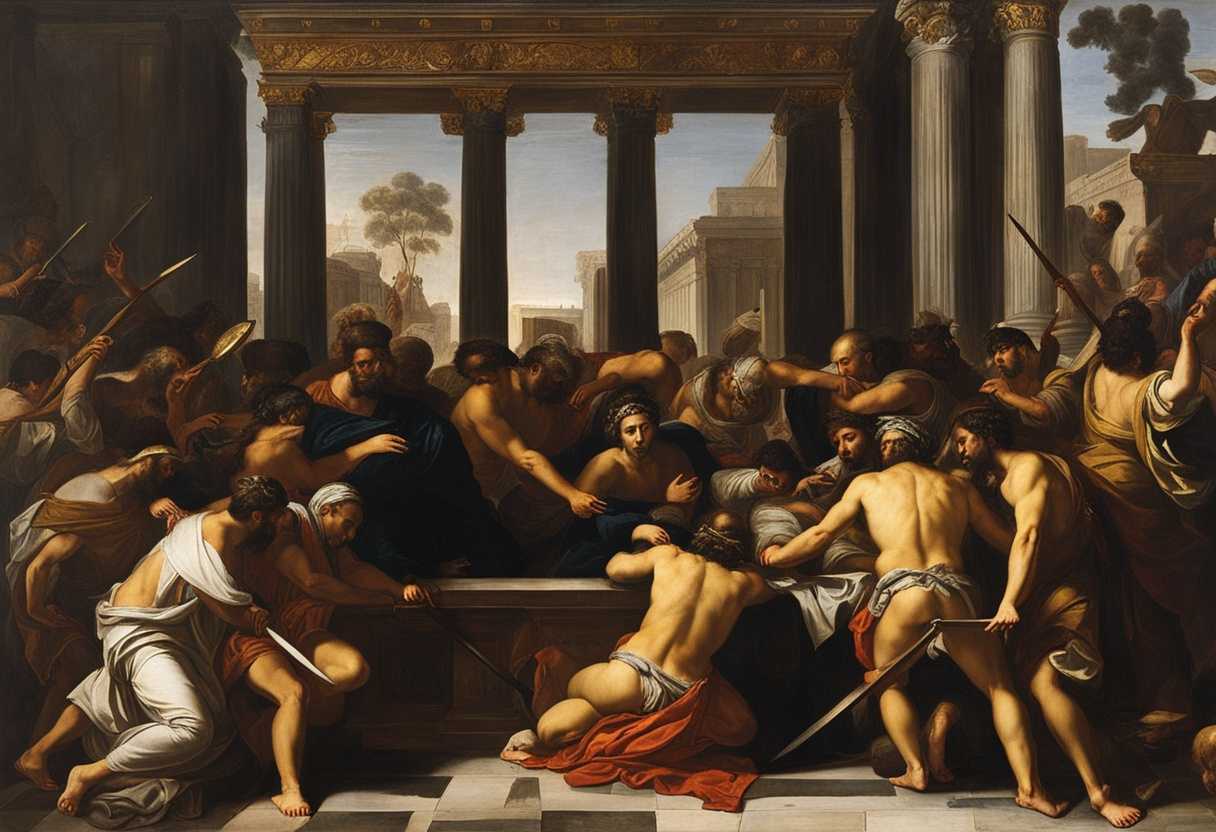
Setting the Scene for Baruch 6:11-15
In Baruch chapter 6, we find the prophet Baruch standing before King Cyrus of Persia, along with the princes and the people of Babylon. The scene is set in the grand palace of King Cyrus, adorned with opulent decorations and luxurious furnishings. Baruch, a faithful servant of God, has been summoned to present a message from the Lord to the king and his court.
As Baruch stands before the mighty ruler, he begins to speak with authority and conviction, delivering a powerful message of warning and repentance. The king and his courtiers listen intently as Baruch proclaims the greatness of the one true God and calls on them to turn away from their idolatrous ways. The atmosphere in the room is tense as Baruch’s words echo off the walls, challenging the beliefs and practices of the Babylonians.
The tension in the room is palpable as Baruch finishes his message, leaving the king and his courtiers to ponder the weight of his words. The scene is filled with a sense of anticipation and uncertainty as the fate of the kingdom hangs in the balance. Baruch’s boldness and unwavering faith in God serve as a powerful reminder of the importance of staying true to one’s beliefs, even in the face of opposition and adversity.
What is Baruch 6:11-15 about?
Isn’t it fascinating how people can put their trust in something so lifeless and powerless as an idol? It’s like relying on a rock to protect you in a storm or expecting a statue to bring you comfort in times of trouble. Baruch is reminding us of the futility of worshiping idols and the emptiness of placing our faith in something that has no power to save us in these verses.
Think about it – idols are just creations of human hands, made of materials like stone, wood, or metal. How can something so fragile and fabricated possibly offer us true protection and salvation? Baruch is encouraging us to shift our focus away from these false idols and instead place our trust in the one true God, who has the power to truly save and deliver us from any harm or danger. We can avoid the trap of idolatry and find genuine security and hope in the Almighty by heeding this warning.
Understanding what Baruch 6:11-15 really means
The Book of Baruch, attributed to the secretary of the prophet Jeremiah, offers a poignant message in a letter to the exiles in Babylon, cautioning against idolatry and urging fidelity to God. Within these verses, vivid imagery is employed to illustrate the futility of worshipping idols. The comparison of idols to scarecrows in a cucumber field underscores their lifelessness and inability to provide protection or aid, akin to how a scarecrow cannot safeguard a crop. Additionally, the mention of idols’ faces being blackened by temple smoke emphasizes the fruitlessness of idol worship, despite elaborate rituals and offerings.
Furthermore, the assertion that idols cannot save themselves from rust and corrosion serves as a stark reminder of their transient and decaying nature, contrasting sharply with the eternal and unchanging character of God. The direct admonition to not fear these false gods reinforces the exclusive reverence and awe due only to the true God. Parallel passages in other biblical texts, such as Isaiah, Psalms, and Jeremiah, echo the sentiment of the worthlessness and foolishness of idol worship, emphasizing the impotence of man-made deities.
The relevance of these verses extends to contemporary society, where idolatry may manifest in various forms beyond physical statues, such as the pursuit of wealth, power, or fame. The underlying message prompts reflection on prioritizing eternal values over fleeting possessions. Consider the individual fixated on amassing riches, only to realize the emptiness of such pursuits in providing genuine happiness or security. Similar to the exiles in Babylon, recognizing the powerlessness of these “idols” can lead to a shift in focus towards what truly brings fulfillment.
In personal reflection, it is essential to identify the modern-day idols that may be prioritized above God. Evaluating whether these pursuits genuinely offer lasting peace and joy is crucial. By reorienting priorities towards nurturing a deeper relationship with God and diminishing the emphasis on transient desires, one can align with the eternal power and love of the Divine. These verses serve as a poignant reminder to place trust in God’s unwavering nature, rather than in the fleeting allure of worldly idols.
How can we discern false idols in our lives?
We can discern false idols in our lives by recognizing where we invest our time, energy, and devotion. When we prioritize material possessions, relationships, success, or even our own desires above our relationship with God, we risk elevating them to the status of false idols. These things can become distractions that draw us away from worshiping the one true God and living according to His will.
False idols can also manifest as anything that takes precedence over our faith and obedience to God. When we prioritize seeking approval, wealth, power, or comfort above our spiritual growth and commitment to God, we may unknowingly be worshiping false idols. We can identify and break free from the grip of false idols in our lives by evaluating our priorities and examining where we place our trust and reliance.
Additionally, false idols can be revealed through introspection and reflection on our thoughts, actions, and motives. We can uncover areas where we have allowed false idols to take root in our hearts by honestly assessing our attitudes towards worldly possessions, relationships, status, or achievements. Through prayer, self-examination, and guidance from Scripture, we can identify and remove anything that hinders our relationship with God and distorts our worship of Him.
Application
In a world filled with chaos and distractions, our faith in the Lord acts as our anchor, grounding us through life’s storms. Let’s make a conscious decision to place our trust in God above all else, letting His light shine through the darkness. By prioritizing our relationship with the Lord, we pave the way for a more meaningful and purposeful existence. Will you take that leap of faith, allowing God to lead you on a path of righteousness and fulfillment?

Reverend Michael Johnson is an experienced Church Minister with a profound expertise in spirituality and guidance. With a serene presence and a compassionate heart, he has faithfully served his congregation for over 20 years, leading them on a spiritual journey towards inner peace and enlightenment. Reverend Johnson’s extensive knowledge of religious philosophies and profound understanding of human nature have made him a trusted confidant and mentor to many, as he seamlessly weaves his profound wisdom into life teachings. Reverend Johnson’s calming demeanor and empathetic nature continue to uplift and heal souls, nurturing a sense of unity and tranquility within his community.