
Colossians 2:11-15 is about the new spiritual identity believers receive through baptism, the victory of Christ over sin and death through his sacrifice on the cross, and the defeat of dark cosmic forces, ultimately leading to the forgiveness of sins and the restoration of humanity’s relationship with God.
11 In him also you were circumcised with a circumcision made without hands, by putting off the body of the flesh, by the circumcision of Christ,
12 having been buried with him in baptism, in which you were also raised with him through faith in the powerful working of God, who raised him from the dead.
13 And you, who were dead in your trespasses and the uncircumcision of your flesh, God made alive together with him, having forgiven us all our trespasses,
14 by canceling the record of debt that stood against us with its legal demands. This he set aside, nailing it to the cross.
15 He disarmed the rulers and authorities and put them to open shame, by triumphing over them in him.
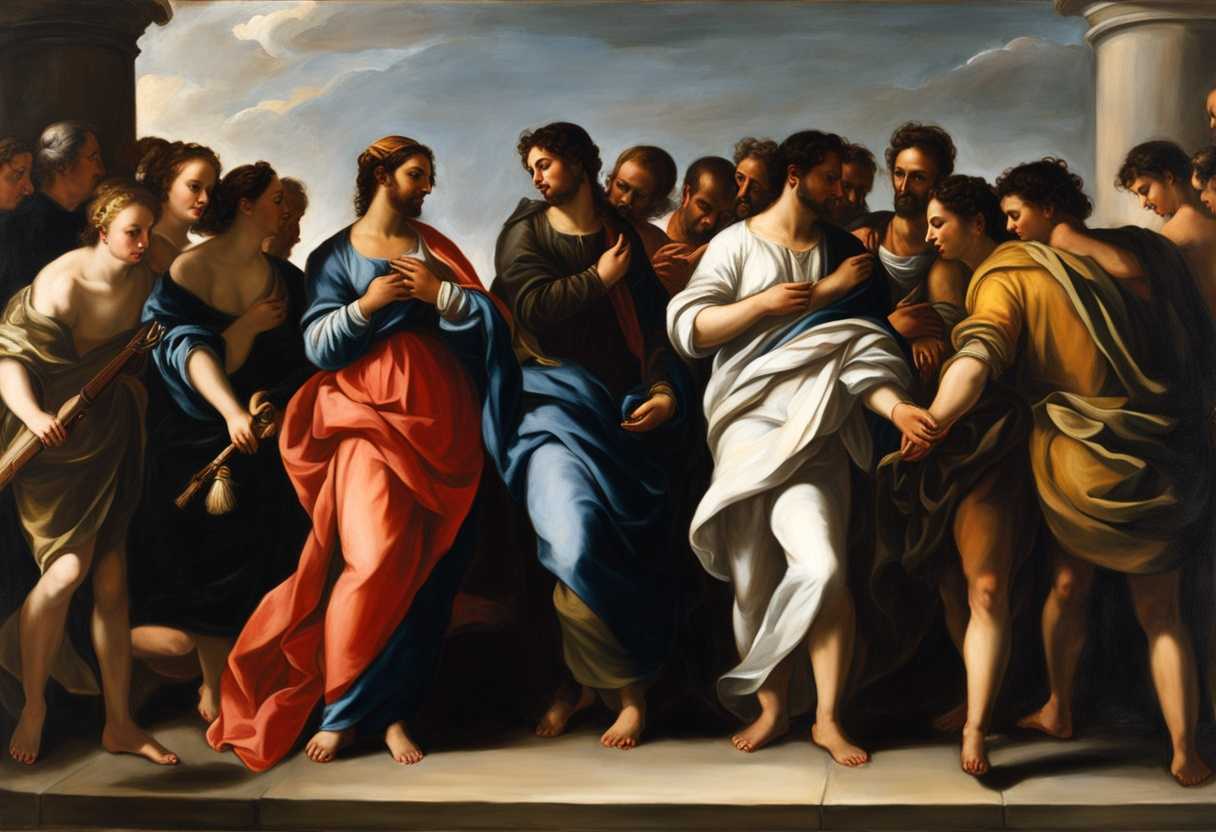
Setting the Scene for Colossians 2:11-15
The scene in Colossians 2:11-15 takes place in a small, dimly lit room in the city of Colossae. The room is filled with a diverse group of individuals gathered for a bible study session. Among them are Lydia, a wealthy merchant from Thyatira who had recently converted to Christianity, and Onesimus, a runaway slave who had found refuge in the teachings of the apostle Paul. Also present is Epaphras, a local pastor who had brought these believers together to deepen their understanding of the gospel.
As they sit on simple cushions arranged in a circle on the floor, the flickering light of oil lamps casts shadows on the walls, creating an atmosphere of intimacy and reverence. Epaphras begins to read from a letter he had received from Paul, written while the apostle was imprisoned in Rome. The words of Colossians 2:11-15 resonate deeply with the group, as they reflect on the significance of their newfound faith and the freedom they have in Christ.
In this moment, surrounded by fellow believers from different walks of life, Lydia, Onesimus, and the others are reminded of the power of the gospel to break down barriers and unite them in a common purpose. As they meditate on the words of Paul, they are filled with gratitude for the grace and forgiveness they have received through Christ’s sacrifice on the cross.
What is Colossians 2:11-15 about?
Think about the symbolism of circumcision in the Old Testament. It was a physical sign of the covenant between God and His people, showing separation from the world and dedication to Him. Now, Paul is using this imagery to explain a deeper spiritual truth. Through Christ’s sacrifice on the cross, believers are spiritually circumcised. This means that our old sinful nature is cut away, and we are made new in Christ. Spiritual circumcision marks a separation from sin and a new dedication to Christ, just as physical circumcision marked a separation from the world.
Paul is emphasizing that our spiritual circumcision is not something we do for ourselves, but something that Christ has already accomplished for us through His death and resurrection. Just like physical circumcision was a sign of belonging to God’s covenant people, our spiritual circumcision is a sign of our belonging to Christ and being part of His new covenant. It is a powerful reminder that we are no longer slaves to sin but are free in Christ. Next time you read this verse, remember the profound significance of Christ’s sacrifice and how it has spiritually circumcised believers, marking us as His own and setting us apart for His glory.
Understanding what Colossians 2:11-15 really means
In Colossians 2:11-15, we delve into a profound exploration of spiritual transformation and victory in Christ. The passage begins by highlighting the concept of spiritual circumcision, a circumcision not performed by human hands but by Christ Himself. This spiritual circumcision symbolizes the cutting away of our sinful nature, a theme echoed in Romans 2:29, which speaks of circumcision of the heart by the Spirit. It signifies a deep inner transformation that goes beyond mere outward rituals.
Furthermore, the verse speaks of putting off our old selves ruled by the flesh and embracing a new life in Christ. This idea of shedding the old and embracing the new is reiterated in Ephesians 4:22-24, emphasizing the renewal of our minds and hearts in Christ. Through baptism, we are symbolically buried with Christ, dying to our old sinful selves, and raised to walk in newness of life through faith in God’s power, as Romans 6:4 also illustrates.
The passage continues by highlighting the contrast between our former state of spiritual death in sin and the new life we have in Christ. Ephesians 2:1-5 further elaborates on this transformation from death to life, emphasizing God’s grace and mercy in making us alive with Christ. The forgiveness of sins is a central theme, with the imagery of our sins being canceled and nailed to the cross, as Psalm 103:12 beautifully portrays God removing our transgressions from us as far as the east is from the west.
Moreover, the passage culminates in the triumphant victory of Christ over spiritual powers and authorities, making a public spectacle of them through the cross. This victory echoes the spiritual battle described in Ephesians 6:12, emphasizing Christ’s ultimate triumph over the forces of darkness. It underscores the power and authority that believers have in Christ, enabling them to overcome spiritual opposition and walk in victory.
Today, this passage remains relevant as it reminds us of the transformative power of Christ in our lives. It offers hope, assurance of forgiveness, and the promise of new life to all who believe. Just as the individuals in the Bible experienced profound changes through their faith, we too can encounter life-altering transformations when we surrender to Christ. The story of someone who underwent a significant life change after embracing their faith serves as a powerful illustration of the gospel’s transformative impact on individuals.
In conclusion, Colossians 2:11-15 encapsulates the essence of spiritual renewal, victory in Christ, and the profound depth of God’s love and grace. As we reflect on this passage, may we be encouraged to embrace our spiritual journey with renewed vigor, knowing that we have been made alive in Christ and empowered to live victoriously. Let us pray that each reader experiences the fullness of life in Christ, walking in the freedom and victory that He has secured for us through His sacrifice on the cross.
What significance does the forgiveness of sins hold?
The forgiveness of sins holds immense significance in the Christian faith as it is through this forgiveness that believers are united with Christ. Colossians 2:11-15 states that the act of forgiveness symbolizes cutting off the old self and being clothed with Christ. This act of forgiveness is transformative, bringing about a spiritual circumcision and enabling believers to be buried and raised with Christ in baptism.
Furthermore, the forgiveness of sins not only brings about a personal transformation but also has a cosmic significance. Colossians 2:15 highlights that through forgiveness, Christ disarmed the powers and authorities, triumphing over them by the cross. This victory over sin and death through forgiveness is a central aspect of the Christian faith, offering believers hope, freedom, and reconciliation with God. Thus, the forgiveness of sins is not merely a theological concept but a profound reality that shapes the identity and relationship of believers with Christ.
Application
Friend, just like upgrading to a faster computer changes everything about your workday, your faith in Christ transforms your life. Toss out the outdated habits and embrace this powerful upgrade with faith. The victory He secured is like getting a huge promotion – it changes everything. So are you ready to step into this new and victorious life, leaving the old chains behind?

Reverend Michael Johnson is an experienced Church Minister with a profound expertise in spirituality and guidance. With a serene presence and a compassionate heart, he has faithfully served his congregation for over 20 years, leading them on a spiritual journey towards inner peace and enlightenment. Reverend Johnson’s extensive knowledge of religious philosophies and profound understanding of human nature have made him a trusted confidant and mentor to many, as he seamlessly weaves his profound wisdom into life teachings. Reverend Johnson’s calming demeanor and empathetic nature continue to uplift and heal souls, nurturing a sense of unity and tranquility within his community.