
1 In the third year of the reign of Jehoiakim king of Judah, Nebuchadnezzar king of Babylon came to Jerusalem and besieged it.
2 And the Lord gave Jehoiakim king of Judah into his hand, with some of the vessels of the house of God. And he brought them to the land of Shinar, to the house of his god, and placed the vessels in the treasury of his god.
3 Then the king commanded Ashpenaz, his chief eunuch, to bring some of the people of Israel, both of the royal family and of the nobility,
4 youths without blemish, of good appearance and skillful in all wisdom, endowed with knowledge, understanding learning, and competent to stand in the king’s palace, and to teach them the literature and language of the Chaldeans.
5 The king assigned them a daily portion of the food that the king ate, and of the wine that he drank. They were to be educated for three years, and at the end of that time they were to stand before the king.
6 Among these were Daniel, Hananiah, Mishael, and Azariah of the tribe of Judah.
7 And the chief of the eunuchs gave them names: Daniel he called Belteshazzar, Hananiah he called Shadrach, Mishael he called Meshach, and Azariah he called Abednego.
8 But Daniel resolved that he would not defile himself with the king’s food, or with the wine that he drank.
9 And God gave Daniel favor and compassion in the sight of the chief of the eunuchs,
10 and the chief of the eunuchs said to Daniel, “I fear my lord the king, who assigned your food and your drink; for why should he see that you were in worse condition than the youths who are of your own age? So you would endanger my head with the king.”
11 Then Daniel said to the steward whom the chief of the eunuchs had assigned over Daniel, Hananiah, Mishael, and Azariah,
12 “Test your servants for ten days; let us be given vegetables to eat and water to drink.”
13 Then let our appearance and the appearance of the youths who eat the king’s food be observed by you, and deal with your servants according to what you see.”
14 So he listened to them in this matter, and tested them for ten days.
15 At the end of ten days it was seen that they were better in appearance and fatter in flesh than all the youths who ate the king’s food.
16 So the steward took away their food and the wine they were to drink, and gave them vegetables.
17 As for these four youths, God gave them learning and skill in all literature and wisdom, and Daniel had understanding in all visions and dreams.
18 At the end of the time, when the king had commanded that they should be brought in, the chief of the eunuchs brought them in before Nebuchadnezzar.
19 And the king spoke with them, and among all of them none was found like Daniel, Hananiah, Mishael, and Azariah. Therefore they stood before the king.
20 And in every matter of wisdom and understanding about which the king inquired of them, he found them ten times better than all the magicians and enchanters that were in all his kingdom.
21 And Daniel was there until the first year of King Cyrus.
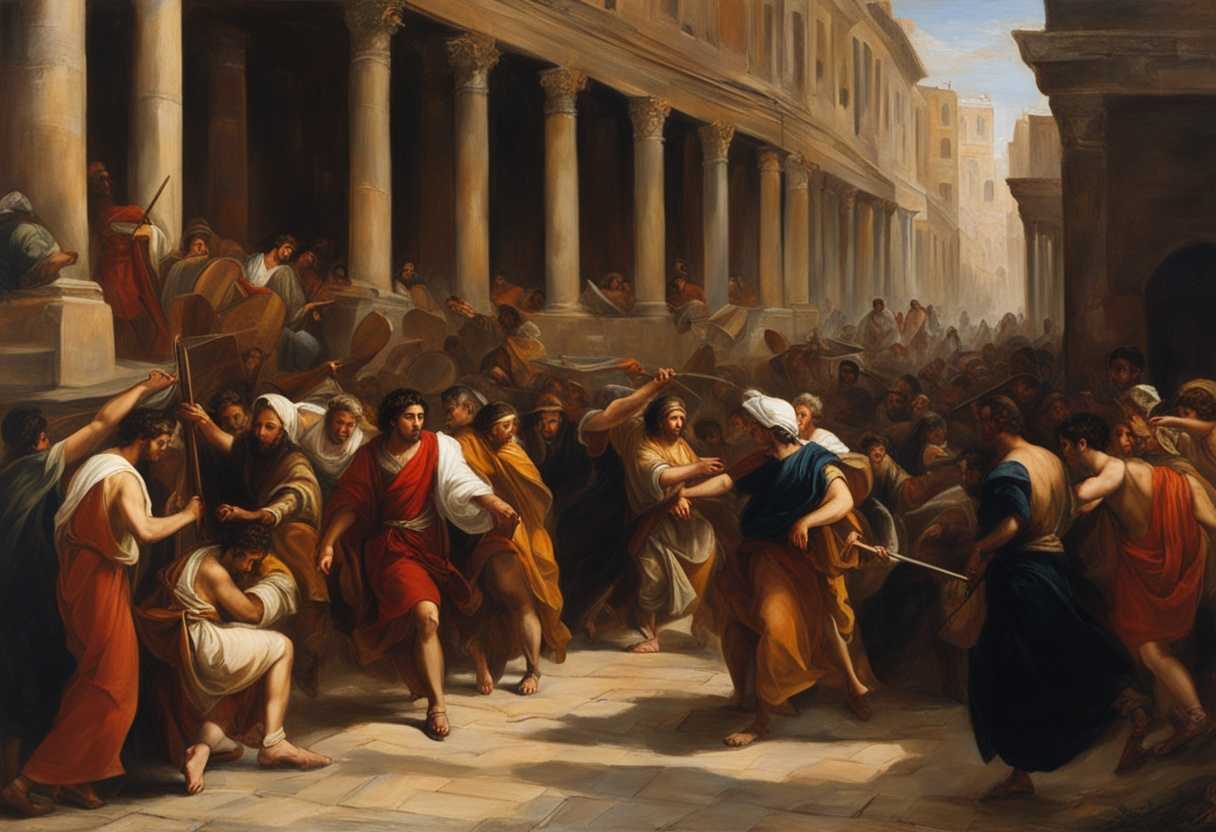
The True Meaning of Daniel 1
The book of Daniel was written by the prophet Daniel, who was a young Jewish exile living in Babylon during the reign of King Nebuchadnezzar. Daniel and his companions begin a remarkable journey in this chapter, as they are taken from their homeland and thrust into a foreign land, facing the challenges of adapting to a new culture and upholding their faith. Daniel and his friends demonstrate their unwavering commitment to their beliefs as we delve into this chapter, even in the face of temptation and pressure from the Babylonian authorities. Their refusal to defile themselves with the king’s food and wine, as described in Leviticus 11, foreshadows the strength of their convictions and the blessings that will come as a result of their obedience to God.
The events in this chapter set the stage for the remarkable visions and prophecies that will unfold throughout the book of Daniel, providing a glimpse into God’s sovereign plan for His people, even in the midst of their captivity. We will see how Daniel’s wisdom and interpretation of dreams, as mentioned in Genesis 40-41, will ultimately bring him favor and influence in the Babylonian court, paving the way for his pivotal role in the unfolding of God’s purposes.
Daniel 1:1-7
The verse in Daniel 1:1-7 breaks down into several sections that lay the foundation for the rest of the book of Daniel. The passage starts by setting the scene, stating that Nebuchadnezzar, the king of Babylon, besieged Jerusalem and took captives from Judah. Among those captives were some young Israelite nobles, including Daniel, Hananiah, Mishael, and Azariah. The king ordered Ashpenaz, the chief of his court officials, to bring some of the Israelites’ descendants, specifically those without any physical defect, handsome, showing aptitude for every kind of learning, well informed, and quick to understand, to be trained in the Babylonian ways. They were to be taught the language and literature of the Babylonians.
This section of the verse is crucial as it introduces key characters like Daniel and his friends, setting the stage for showcasing their unwavering faith and resilience in the face of adversity. It also highlights the cultural clash between the Babylonian ways and the beliefs of the Israelites, painting a picture of the challenges that Daniel and his companions would soon face. This clash serves to emphasize the importance of staying true to one’s beliefs and not conforming to worldly standards, a recurring theme in the Bible.
We see here a direct confrontation between the values and practices of the world and those of God’s people. This situation mirrors the eternal struggle that believers face when confronted with societal norms that contradict their faith. It sets the tone for Daniel and his friends to remain faithful to their God amidst immense pressure to assimilate into a culture that opposes their beliefs. The stark contrast between the values of Babylon and the values of God’s kingdom is a common theme throughout the Bible, calling believers to stand firm in their faith regardless of the circumstances.
The specific criteria set by Nebuchadnezzar for choosing the captives for training are significant. The requirement for physical attractiveness, intelligence, and quick aptitude for learning emphasizes the importance placed on external appearances and worldly knowledge in Babylonian society. This mirrors the superficiality and materialism that can often dominate worldly cultures, leading individuals to prioritize outward appearances and earthly knowledge over spiritual growth and wisdom. This can serve as a lesson for believers to focus on inner qualities and spiritual discernment rather than conforming to societal standards that do not align with God’s teachings. God’s hand is evident in orchestrating events as He chose Daniel and his friends, who exemplified not only physical qualities but also wisdom and a strong foundation in their faith. This serves as a reminder that God can use even the most challenging circumstances to position His faithful followers in places where they can shine His light. Throughout the Bible, we see how God raises up individuals like Daniel, Joseph, and Esther in foreign lands to fulfill His plans and purposes, demonstrating that God’s sovereignty transcends worldly powers and rulers. This passage sets the stage for the trials and triumphs that Daniel and his friends will face as they navigate life in Babylon. It underscores the importance of remaining steadfast in one’s faith, even in the midst of adversity, and serves as a reminder that God’s plans will ultimately prevail, regardless of the challenges that His people may encounter.
Daniel 1:8-16
Daniel and his three friends, Hananiah, Mishael, and Azariah, commonly known by their Babylonian names—Shadrach, Meshach, and Abednego, experience a significant event in their lives in Daniel 1:8-16. The section begins with Daniel making a crucial decision not to defile himself by eating the royal food and wine provided by King Nebuchadnezzar. This decision was not borne out of disrespect but out of a desire to remain faithful to God’s commands even in a foreign land.
Daniel’s resolve not to partake in the luxurious provisions of the king was grounded in Jewish dietary laws found in the Torah. These laws, outlined in Leviticus and Deuteronomy, were given to set the Israelites apart as a holy people unto the Lord. Daniel was demonstrating his commitment to obeying God rather than yielding to the pressures of the culture around him by adhering to these laws. This act of faithfulness amidst adversity sets the tone for the rest of the book of Daniel, showing that even in exile, God’s people can remain steadfast in their faith.
When Daniel proposed a test to eat only vegetables and drink water for ten days, we see the hand of God at work. At the end of the trial period, Daniel and his friends appeared healthier and better nourished than those who ate the royal food. This was a clear indication of God’s favor and blessing on their obedience. It also serves as a testimony to the power of faith and obedience to God’s commands.
This passage underscores the importance of standing firm in one’s faith, even when faced with challenges or temptations. Daniel and his friends’ unwavering commitment to God’s principles in the face of adversity serves as an example for believers today. The story of Daniel and his companions challenges us to consider where our allegiances lie and to prioritize obedience to God above all else, even when it seems difficult or countercultural.
Furthermore, the dietary choices of Daniel and his friends were not just about food; it was about maintaining spiritual purity in a pagan environment. This theme of remaining separate from the world while being in it is echoed throughout the Bible. Jesus prays for His disciples in John 17:14-16, asking God to protect them from the evil one and to sanctify them by the truth. Just as Daniel chose to adhere to God’s commands in Babylon, believers are called to live holy lives that reflect their dedication to God amidst a world that may not share the same values.
Daniel 1:17-21
Several important sections in Daniel 1:17-21 shed light on the characters and themes in the book of Daniel. Let’s break down each of these sections:
- “To these four young men God gave knowledge and understanding of all kinds of literature and learning. And Daniel could understand visions and dreams of all kinds.” (Daniel 1:17)
Here, we see God blessing Daniel, Hananiah, Mishael, and Azariah with knowledge and wisdom. This is significant as it highlights the divine intervention in their lives, equipping them with the skills needed to serve in the king’s court. The ability to understand visions and dreams would later play a crucial role in Daniel’s life as he interprets dreams for King Nebuchadnezzar in subsequent chapters.
This verse emphasizes the importance of God’s hand in providing wisdom and understanding to his servants. It echoes the sentiment found in Proverbs 2:6, “For the Lord gives wisdom; from his mouth come knowledge and understanding.” Throughout the Bible, we see God empowering individuals with knowledge and insight to accomplish His purposes, emphasizing the divine source of all wisdom.
- “At the end of the time set by the king to bring them into his service, the chief official presented them to Nebuchadnezzar. The king talked with them, and he found none equal to Daniel, Hananiah, Mishael and Azariah; so they entered the king’s service. They found them ten times better than all the magicians and enchanters in his whole kingdom in every matter of wisdom and understanding about which the king questioned them.” (Daniel 1:18-20)
This section highlights the favor that God bestowed upon Daniel and his friends in the eyes of King Nebuchadnezzar. Despite being in a foreign land and undergoing a period of training, they excelled beyond all the others in wisdom and understanding. This not only showcases their abilities but also demonstrates God’s faithfulness in honoring those who remain steadfast in their faith and commitment.
The superiority of Daniel and his friends over the Babylonian wise men speaks to the theme of God’s sovereignty and how He exalts the humble and faithful. It reminds us of verses like James 4:10, “Humble yourselves before the Lord, and he will lift you up.” Throughout the Bible, we see examples of individuals who remained faithful to God and were elevated to positions of influence and power, just as Daniel and his friends were in the court of Nebuchadnezzar.
- “And Daniel remained there until the first year of King Cyrus.” (Daniel 1:21)
The closing of this passage with a reference to King Cyrus is significant for several reasons. King Cyrus is known for issuing the decree allowing the Jews to return to Jerusalem and rebuild the temple, as prophesied in Isaiah 44:28. This reference serves as a foreshadowing of future events and ties into the overarching theme of God’s faithfulness in fulfilling His promises to His people.
The mention of King Cyrus also sets the stage for the later chapters of Daniel, where prophecies concerning the rise and fall of kingdoms, including the Persian Empire under Cyrus, are foretold. This verse serves as a link between the historical account of Daniel’s early days in Babylon and the prophetic visions that he would receive in the years to come. Daniel 1:17-21 provides a foundation for understanding the characters of Daniel and his friends, the divine intervention in their lives, and the themes of wisdom, faithfulness, and prophecy that permeate the book of Daniel. Through their examples, we are reminded of God’s faithfulness to those who remain committed to Him, and the ultimate fulfillment of His plans and purposes in the course of history.
After Daniel 1
The young men had shown great wisdom and understanding beyond their years. They had proven themselves to be of noble character, steadfast in their faith, and dedicated to serving the Lord. The reverend knew that their journey was far from over as they continued their studies. The trials and tribulations they would face in the days to come would test their resolve, but the reverend had no doubt that with God’s guidance, they would emerge stronger and more resilient than ever before.

Reverend Michael Johnson is an experienced Church Minister with a profound expertise in spirituality and guidance. With a serene presence and a compassionate heart, he has faithfully served his congregation for over 20 years, leading them on a spiritual journey towards inner peace and enlightenment. Reverend Johnson’s extensive knowledge of religious philosophies and profound understanding of human nature have made him a trusted confidant and mentor to many, as he seamlessly weaves his profound wisdom into life teachings. Reverend Johnson’s calming demeanor and empathetic nature continue to uplift and heal souls, nurturing a sense of unity and tranquility within his community.