
Daniel 11:2 is about the rise of Persia and Greece as world powers after the fall of the Babylonian Empire, foreshadowing the historical events that will unfold in the following verses.
2 And now I will show you the truth. Behold, three more kings shall arise in Persia, and a fourth shall be far richer than all of them. And when he has become strong through his riches, he shall stir up all against the kingdom of Greece.
Setting the Scene for Daniel 11:2
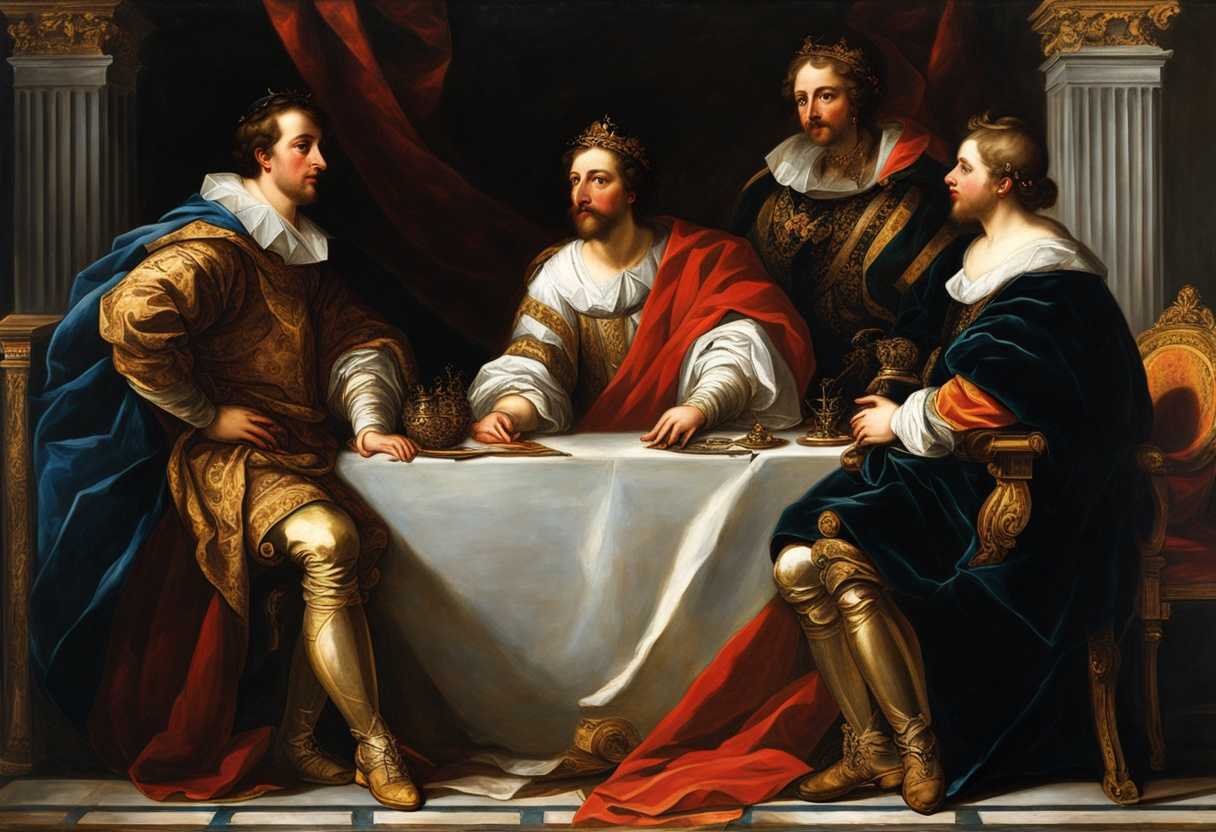
The scene in Daniel chapter 11 is set in the Persian Empire during the reign of King Darius the Mede. In this chapter, Daniel receives a vision from an angel that foretells the future conflicts and alliances between the kings of the North (Seleucid Empire) and the kings of the South (Ptolemaic Empire). The vision provides detailed prophecies about the rise and fall of various rulers and kingdoms in the region.
In this particular scene, Daniel is accompanied by his fellow Israelite exiles who have been serving in the royal court of King Darius. Among them are Shadrach, Meshach, and Abednego, who have remained faithful to their God despite the pressures to conform to the pagan practices of the empire. The group is gathered in a quiet corner of the palace, seeking to understand the significance of the visions and prophecies that Daniel has received.
The surroundings are opulent yet tense, as the political landscape of the Persian Empire is fraught with intrigue and power struggles. The group huddles together, their faces reflecting a mix of concern and determination as they try to decipher the angelic message and its implications for their people and their faith. The weight of the future hangs heavy in the air as they grapple with the knowledge of the events that will unfold in the coming years.
What is Daniel 11:2 about?
This verse paints a vivid picture of the powerful Persian Empire and its eventual downfall at the hands of the Greek Empire. It foretells the rise of the Persian ruler, Cyrus the Great, who conquered many lands and built a massive empire. However, despite his might and success, the prophecy indicates that his empire will not last forever. The verse predicts that a Greek king of great power will arise to challenge and ultimately defeat the Persian Empire, bringing about its downfall.
Reflecting on this prophecy, we can see the cyclical nature of history and the inevitable rise and fall of powerful empires. It prompts us to consider the transient nature of earthly power and the importance of humility and foresight in leadership. We are reminded of the impermanence of human endeavors and the need for wisdom and virtue in the exercise of power as we ponder the rise and fall of these great empires. How can we learn from the mistakes and achievements of these ancient rulers to navigate the challenges of our own time? What does this prophecy teach us about the consequences of greed, ambition, and hubris in the pursuit of power? Let us reflect on these questions as we delve into the rich tapestry of history and prophecy encapsulated in this verse.
Understanding what Daniel 11:2 really means
Daniel 11:2 is a pivotal verse within the prophetic vision given to Daniel, shedding light on the future of the Persian and Greek empires. The mention of three kings rising in Persia signifies a period of stability and succession before the emergence of a fourth king, notably wealthier and more powerful, who would incite conflict with Greece. This foreshadowing sets the stage for significant historical events to unfold.
The phrase “Three more kings will arise in Persia” underscores the orderly transition of power within the Persian Empire, hinting at a sense of continuity and predictability before a notable shift. The description of the fourth king as “far richer than all of them” points to the exceptional wealth and influence of this ruler, often identified as Xerxes I, whose actions would have far-reaching consequences.
“He will stir up everyone against the kingdom of Greece” anticipates the turbulent times ahead, highlighting the brewing conflict between Persia and Greece that would ultimately shape the course of history. This prophetic insight not only reveals the geopolitical dynamics of the ancient world but also underscores the overarching theme of divine sovereignty at play.
Drawing connections to related biblical passages such as Esther 1:1-4 and Ezra 4:6 provides historical context and reinforces the narrative of power struggles and opposition during the reign of Xerxes. Additionally, references like Isaiah 45:1-3 showcase God’s ultimate authority over earthly kingdoms and rulers, emphasizing His sovereignty in orchestrating events according to His divine will.
In a contemporary context, Daniel 11:2 prompts reflection on God’s sovereignty over human affairs, inviting us to trust in His overarching plan for our lives. Just as Daniel was granted foresight into future events, we are encouraged to lean on God’s wisdom and providence, finding assurance in His guidance amidst uncertainty and challenges.
Consider a young professional navigating a volatile career landscape, grappling with uncertainties and changes in their industry. Similar to how Daniel found reassurance in God’s revelations, this individual can take solace in the knowledge that God holds their future in His hands, offering a sense of peace and confidence as they navigate their professional journey.
In conclusion, Daniel 11:2 serves as a poignant reminder of God’s omniscience and omnipotence, weaving together historical narratives and prophetic insights to underscore His sovereign control over world events. By delving into the context and implications of this verse, we are invited to embrace a deeper trust in God’s plan, finding comfort and strength in His unwavering presence amidst the ebb and flow of life’s uncertainties.
What does it mean to stand firm in faith?
Standing firm in faith means remaining unwavering and strong in one’s belief in God despite challenges, doubts, or opposition. It involves confidently trusting in God’s promises and remaining steadfast in the face of adversity. Individuals demonstrate their commitment and dedication to their beliefs by standing firm in faith, allowing them to persevere through difficult times and strengthen their relationship with God. Maintaining one’s trust in God’s sovereignty and unwavering belief in His plans, even when events may seem tumultuous or unclear, can help one stand firm in faith in the context of Daniel 11:2. It involves holding onto the truth of God’s word and relying on His guidance and protection. Through standing firm in faith, individuals exhibit their faithfulness and obedience to God, reaffirming their reliance on His strength and wisdom in all circumstances.
Application
Dive into the depths of the scripture, like a dedicated employee in pursuit of excellence at work or a caring parent nurturing their family. Devote time each day to understand and apply the teachings of the Bible into your life. Will you take up the call to immerse yourself in the Word of God and let its wisdom guide your every step?

Reverend Michael Johnson is an experienced Church Minister with a profound expertise in spirituality and guidance. With a serene presence and a compassionate heart, he has faithfully served his congregation for over 20 years, leading them on a spiritual journey towards inner peace and enlightenment. Reverend Johnson’s extensive knowledge of religious philosophies and profound understanding of human nature have made him a trusted confidant and mentor to many, as he seamlessly weaves his profound wisdom into life teachings. Reverend Johnson’s calming demeanor and empathetic nature continue to uplift and heal souls, nurturing a sense of unity and tranquility within his community.