
Daniel 2:1-2 is about King Nebuchadnezzar having troubling dreams, leading him to summon his magicians, enchanters, sorcerers, and Chaldeans to interpret his dreams, demonstrating the king’s reliance on human wisdom and power rather than seeking guidance from God.
1 In the second year of the reign of Nebuchadnezzar, Nebuchadnezzar had dreams; his spirit was troubled, and his sleep left him.
2 Then the king commanded that the magicians, the enchanters, the sorcerers, and the Chaldeans be summoned to tell the king his dreams. So they came in and stood before the king.
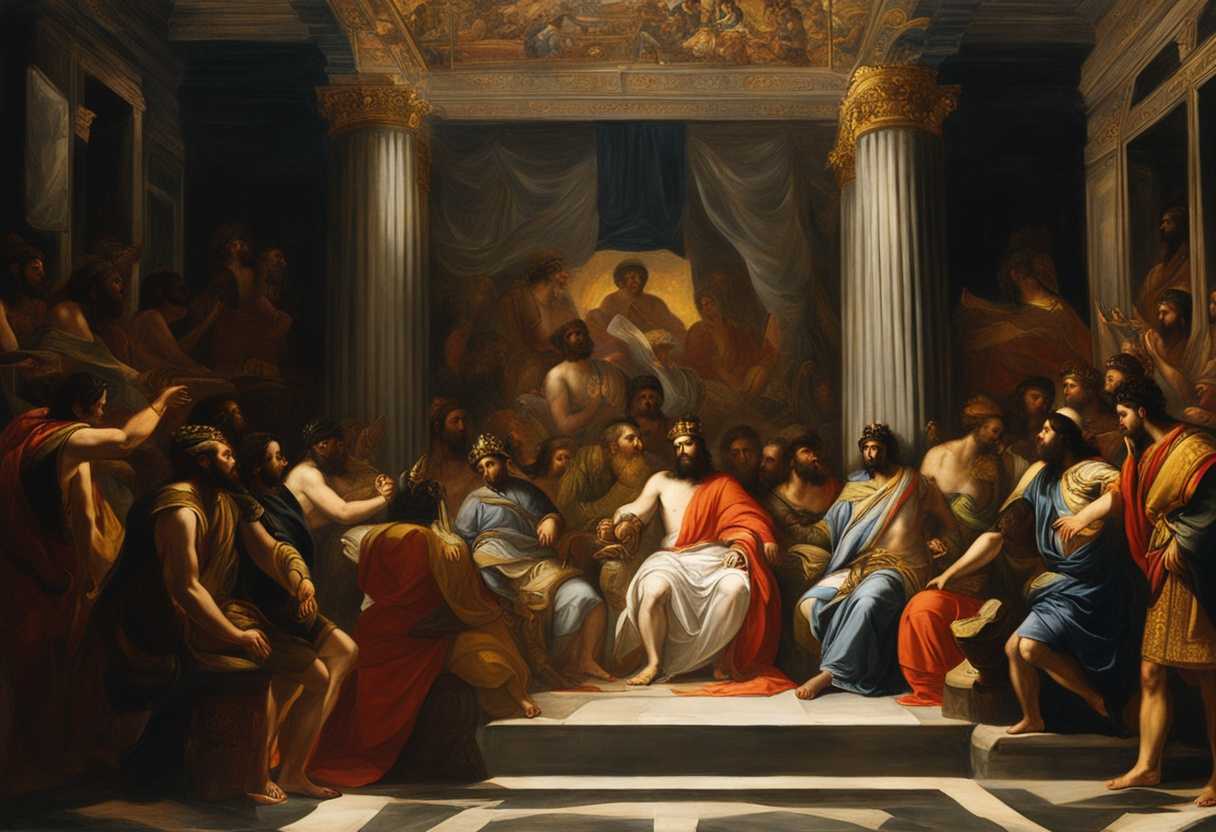
Setting the Scene for Daniel 2:1-2
In Daniel chapter 2, we find King Nebuchadnezzar of Babylon troubled by a dream that he had during the second year of his reign. The dream was so disturbing to him that it caused him to lose sleep and he was unable to find peace of mind. Seeking interpretation and understanding of the dream, the king summoned his magicians, enchanters, sorcerers, and astrologers to come before him. These wise men were known for their ability to interpret dreams and provide counsel to the king.
The scene is set in the grand palace of King Nebuchadnezzar, a lavish and opulent setting befitting a powerful ruler. The king, adorned in royal robes and seated on his throne, is surrounded by his courtiers and advisors, including the wise men he had summoned. The air is tense with anticipation as the king prepares to recount his dream to the gathered assembly, hoping for an interpretation that would bring him peace of mind. The room is filled with an air of mystery and intrigue as the fate of the king and his kingdom hangs in the balance, awaiting the revelation of the dream’s meaning.
What is Daniel 2:1-2 about?
This verse illustrates the power dynamics and challenges faced by individuals in positions of authority. King Nebuchadnezzar’s demand for an interpretation of his troubling dreams underlines the pressure and high stakes that come with leadership. The threat of death to the wise men if they fail to provide an interpretation also highlights the consequences of not meeting the expectations set by those in power. We can ask ourselves: How do we handle situations where we are faced with high expectations and potential consequences for not meeting them as we reflect on this verse? What can we learn from the response of the wise men in this story, who turn to God for wisdom and guidance in the face of such a daunting task? This verse encourages us to consider how we approach challenges and pressures in our own lives, and to remember that seeking guidance and support from a higher power can help us navigate difficult situations with strength and courage.
Understanding what Daniel 2:1-2 really means
The Book of Daniel unfolds against the backdrop of the Babylonian exile, where Daniel, a young Jewish noble, finds himself in the service of King Nebuchadnezzar. In Daniel 2:1-2, we witness a pivotal moment as the king grapples with troubling dreams that disrupt his inner peace, leading him to summon his array of wise men for interpretation. The phrase “In the second year of the reign of Nebuchadnezzar” grounds us in a specific historical timeframe, marking the early days of the king’s rule, setting the stage for the unfolding events.
Nebuchadnezzar’s distress is palpable as we read that “his spirit was troubled, and his sleep left him,” hinting at the profound nature of the dreams that haunt him. The king’s response, commanding the magicians, enchanters, sorcerers, and Chaldeans to decipher his dreams, underscores his reliance on human wisdom and supernatural insight to unravel the mysteries that torment him. This summons a reflection on the human tendency to seek answers from earthly sources when faced with uncertainty and turmoil, mirroring our own inclinations in times of crisis.
Drawing parallels with other biblical passages like Genesis 41:1-8 and 1 Samuel 28:7-20, we observe a recurring theme of seeking supernatural guidance in moments of desperation. Acts 16:16-18 further illuminates the New Testament perspective on such practices, offering a broader context for understanding the complexities of seeking spiritual insight. These connections invite us to contemplate the sources of wisdom we turn to in our own lives and the implications of seeking guidance beyond human understanding.
The narrative in Daniel prompts us to consider the relevance of divine revelation in our quest for clarity and direction. Just as Nebuchadnezzar’s dreams foreshadowed God’s intervention through Daniel, we are reminded of the profound wisdom that emanates from seeking God’s guidance in the midst of uncertainty. This challenges us to reevaluate our reliance on human wisdom alone and to embrace the transformative power of divine insight in navigating life’s complexities.
In a contemporary context, the image of a modern-day CEO grappling with critical decisions mirrors Nebuchadnezzar’s predicament. While seeking counsel from experts is prudent, the story of Daniel urges us to recognize the limitations of human wisdom and the transcendent value of seeking divine guidance. Like the CEO who ultimately finds solace in higher wisdom, we are encouraged to turn to God in moments of turmoil, trusting in His ability to illuminate our paths with clarity and peace beyond human comprehension.
In conclusion, Daniel 2:1-2 serves as a poignant reminder of the profound wisdom that flows from seeking divine guidance amidst life’s uncertainties. It beckons us to reexamine our sources of wisdom, challenging us to transcend the confines of human understanding and embrace the transformative power of God’s revelation. As we navigate the complexities of our own journeys, may we heed the call to seek divine insight, trusting in the assurance that true wisdom and peace are found in the presence of the Almighty.
How can we set aside our fears to seek God’s wisdom?
To set aside our fears and seek God’s wisdom as demonstrated in Daniel 2:1-2, we can choose to trust in the Lord’s sovereignty and power. We can find peace in knowing that God holds all things in His hands and is in control of every situation. Rather than letting fear hinder us, we can turn to prayer and seek direction from the One who knows all things and can provide us with the answers we need.
Furthermore, we can cultivate a mindset of faith and reliance on God’s wisdom. When we approach Him with a humble heart, recognizing our limitations and His unlimited knowledge, we can receive clarity and guidance that surpasses human understanding. We can overcome our fears and step out in confidence by placing our trust in God’s wisdom and seeking His counsel above all else, knowing that He will lead us in the right path. We can also remind ourselves of His faithfulness and past provisions in seeking God’s wisdom. Reflecting on the times when God has come through for us and provided solutions to seemingly insurmountable challenges can strengthen our faith and courage. We can cast aside our fears and approach Him with boldness by meditating on His goodness and relying on His unfailing promises, knowing that He will impart the wisdom we need to navigate through life’s uncertainties.
Application
Unlock the secrets of your world by seeking God’s guidance with unwavering faith and devotion. Embrace each challenge as an opportunity to grow in your relationship with Him. Tap into the divine wisdom and clarity available to you. Are you ready to commit to seeking God’s wisdom fearlessly in every aspect of your life?

Reverend Michael Johnson is an experienced Church Minister with a profound expertise in spirituality and guidance. With a serene presence and a compassionate heart, he has faithfully served his congregation for over 20 years, leading them on a spiritual journey towards inner peace and enlightenment. Reverend Johnson’s extensive knowledge of religious philosophies and profound understanding of human nature have made him a trusted confidant and mentor to many, as he seamlessly weaves his profound wisdom into life teachings. Reverend Johnson’s calming demeanor and empathetic nature continue to uplift and heal souls, nurturing a sense of unity and tranquility within his community.