
Daniel 3:1-7 is about King Nebuchadnezzar commanding all people to worship a golden statue he had made, reflecting the dangers of idolatry and the importance of remaining faithful to one’s faith even in the face of societal pressure.
1 King Nebuchadnezzar made an image of gold, whose height was sixty cubits and its breadth six cubits. He set it up on the plain of Dura, in the province of Babylon.
2 Then King Nebuchadnezzar sent to gather the satraps, the prefects, and the governors, the counselors, the treasurers, the justices, the magistrates, and all the officials of the provinces to come to the dedication of the image that King Nebuchadnezzar had set up.
3 Then the satraps, the prefects, and the governors, the counselors, the treasurers, the justices, the magistrates, and all the officials of the provinces gathered for the dedication of the image that King Nebuchadnezzar had set up. And they stood before the image that Nebuchadnezzar had set up.
4 And the herald proclaimed aloud, “You are commanded, O peoples, nations, and languages,
5 that when you hear the sound of the horn, pipe, lyre, trigon, harp, bagpipe, and every kind of music, you are to fall down and worship the golden image that King Nebuchadnezzar has set up.
6 And whoever does not fall down and worship shall immediately be cast into a burning fiery furnace.
7 Therefore, as soon as all the peoples heard the sound of the horn, pipe, lyre, trigon, harp, bagpipe, and every kind of music, all the peoples, nations, and languages fell down and worshiped the golden image that King Nebuchadnezzar had set up.
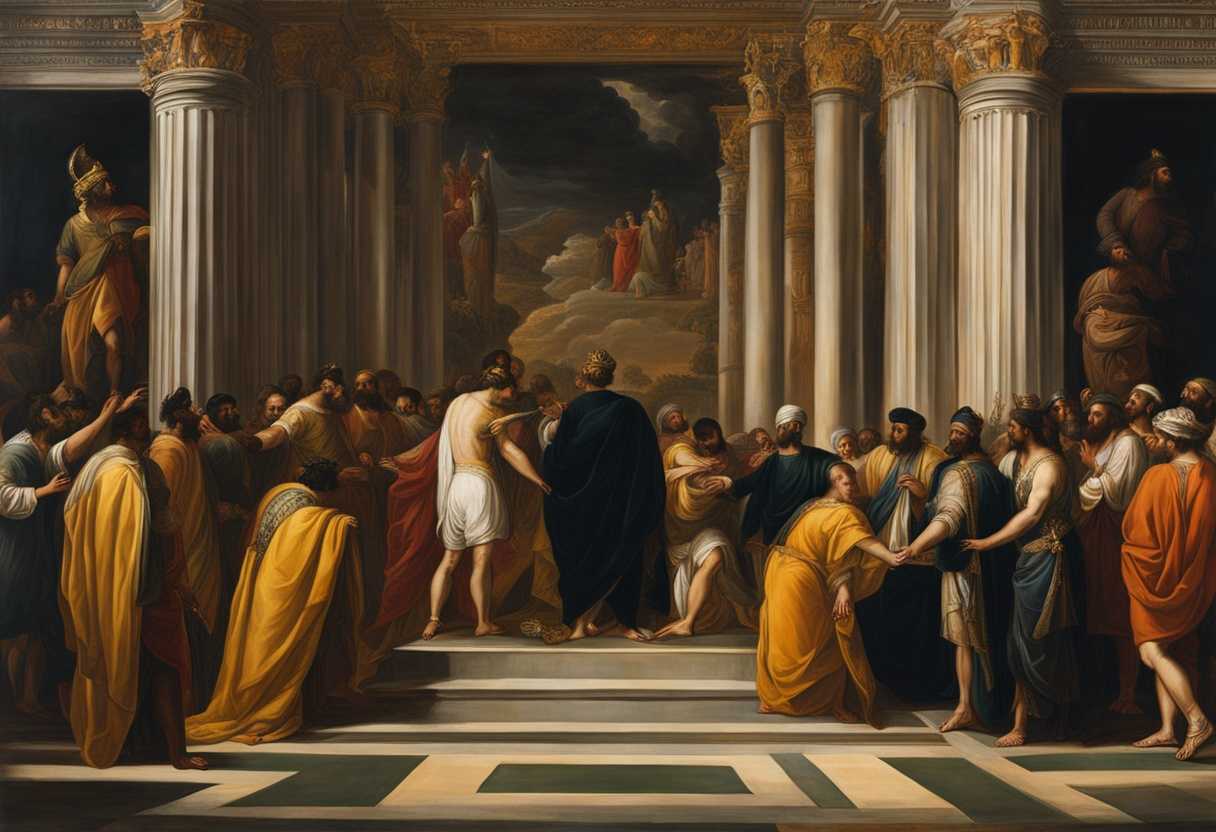
Setting the Scene for Daniel 3:1-7
In Daniel chapter 3, we find King Nebuchadnezzar of Babylon constructing a massive golden statue. The king gathers together all the officials of his kingdom, including the satraps, prefects, governors, counselors, treasurers, judges, magistrates, and all the other provincial officials, to the dedication ceremony of this impressive statue. The scene is set in the plain of Dura, a vast open space where the statue is erected, towering high above the crowd.
As the officials assemble before the golden statue, a herald proclaims that when the music plays, everyone must bow down and worship the statue that King Nebuchadnezzar has set up. The atmosphere is tense as the crowd awaits the signal to bow down in obedience to the king’s command. Among the officials present are Shadrach, Meshach, and Abednego, three Jewish men who serve in the king’s court. These three men, known for their unwavering faith in God, find themselves in a dilemma as they are faced with the choice of either bowing down to the golden statue or staying true to their beliefs.
The stage is set for a dramatic confrontation as Shadrach, Meshach, and Abednego refuse to worship the golden statue, defying the king’s orders. Their act of defiance sets off a chain of events that will test their faith and ultimately lead to a miraculous intervention by God. The scene in the plain of Dura is a powerful reminder of the importance of staying faithful to one’s beliefs, even in the face of great pressure and adversity.
What is Daniel 3:1-7 about?
King Nebuchadnezzar’s command to worship a golden statue under the threat of death reveals the power dynamics at play in the ancient world in this verse. On one hand, there is the absolute authority of the king, who demands unquestioning obedience and loyalty from his subjects. On the other hand, there is the defiance and courage of those who choose to resist this unjust decree, even at the risk of their own lives. This story challenges us to consider the limits of authority and the importance of standing up for our beliefs, even in the face of great danger. We reflect on this verse and ask ourselves: What would we do in the face of such a command? Would we prioritize our own safety and survival, or would we have the strength to resist oppression and injustice, even when it comes from the highest authority? This verse serves as a powerful reminder of the value of individual conscience and moral courage, and encourages us to remain steadfast in our beliefs, no matter the consequences. It challenges us to think critically about the nature of power and authority, and to consider the ways in which we can uphold our principles in the face of adversity.
Understanding what Daniel 3:1-7 really means
The Book of Daniel provides a glimpse into the lives of exiled Israelites during the Babylonian captivity, where King Nebuchadnezzar’s reign looms large. In a display of grandeur and power, the king erects a towering golden statue, demanding universal worship from all his subjects. This act of setting up the golden image symbolizes not only the king’s pride but also the prevalent idolatry in Babylon, where worship of false gods was rampant.
Placing the golden statue in the public square of Dura underscores the king’s desire for a public demonstration of loyalty. The diverse subjects of the Babylonian empire, encompassing various peoples, nations, and languages, were all summoned to bow down and worship the golden image. This command was not merely a request for homage but a test of faith, challenging the exiled Israelites to choose between obedience to the king and fidelity to their God.
Drawing parallels from other biblical passages, such as the prohibition of idolatry in the Ten Commandments and Jesus’ affirmation of worshiping God alone, we see a consistent theme of exclusive devotion to the one true God. Acts of defiance against unjust commands, as seen in Peter and the apostles’ declaration to obey God rather than human authorities, resonate with the courageous stand taken by Shadrach, Meshach, and Abednego.
The narrative of Shadrach, Meshach, and Abednego’s unwavering faith prompts reflection on contemporary challenges. In a world where idolatry may manifest in subtler forms like the pursuit of material wealth or societal approval, the call to stand firm in faith remains relevant. Just as these three men refused to compromise their beliefs despite immense pressure, we are urged to uphold our convictions in the face of societal expectations.
Consider a modern-day scenario where ethical compromises are the norm in a workplace striving for success. One individual, akin to Shadrach, Meshach, and Abednego, chooses integrity over expediency, risking professional repercussions. This anecdote illustrates the courage and steadfastness required to navigate moral dilemmas, echoing the timeless message of Daniel 3:1-7.
Ultimately, this passage challenges us to scrutinize our lives for contemporary idols and to exhibit unwavering faith in both private and public spheres. It serves as a reminder that true worship belongs solely to God and that our convictions should shine brightly, even in the face of adversity. As we ponder the lessons from Shadrach, Meshach, and Abednego’s defiance, may we find inspiration to stand firm in our faith, regardless of the challenges that confront us.
How do we respond when pressured to compromise beliefs?
When we are pressured to compromise our beliefs, we can draw inspiration from the story of Shadrach, Meshach, and Abednego in Daniel 3. Despite facing immense pressure to bow down to the golden statue, they chose to remain steadfast in their faith and trust in God alone. They knew that honoring God was far more important than conforming to the demands of society or facing punishment.
Just like Shadrach, Meshach, and Abednego, we are called to stand firm in our beliefs and trust in God, even when faced with adversity or pressure to compromise. It is important to remember that our faithfulness to God is not determined by convenience or popularity, but by our unwavering commitment to follow Him wholeheartedly, no matter the circumstances. Shadrach, Meshach, and Abednego set an example in times of pressure to compromise our beliefs, and trust in God’s faithfulness to deliver us. We can experience His strength and protection in the face of opposition by staying true to our convictions and remaining obedient to God. God is with us, and He will always honor those who remain faithful to Him.
Application
Let the tale of Shadrach, Meshach, and Abednego inspire you today. Dare to stand unwavering in your beliefs, just like them, against all odds. Embrace your faith with the same conviction they showed in the face of adversity. Let their courage guide you to hold on to your beliefs, no matter what. Will you join the ranks of the fearless and choose faith over fear in your trials?

Reverend Michael Johnson is an experienced Church Minister with a profound expertise in spirituality and guidance. With a serene presence and a compassionate heart, he has faithfully served his congregation for over 20 years, leading them on a spiritual journey towards inner peace and enlightenment. Reverend Johnson’s extensive knowledge of religious philosophies and profound understanding of human nature have made him a trusted confidant and mentor to many, as he seamlessly weaves his profound wisdom into life teachings. Reverend Johnson’s calming demeanor and empathetic nature continue to uplift and heal souls, nurturing a sense of unity and tranquility within his community.