
Daniel 4:10-12 is about King Nebuchadnezzar’s dream of a great tree being cut down and its interpretation by the prophet Daniel as a symbol of the king’s impending downfall and subsequent restoration after recognizing the sovereignty of God.
10 The visions of my head as I lay in bed were these: I saw, and behold, a tree in the midst of the earth, and its height was great.
11 The tree grew and became strong, and its top reached to heaven, and it was visible to the end of the whole earth.
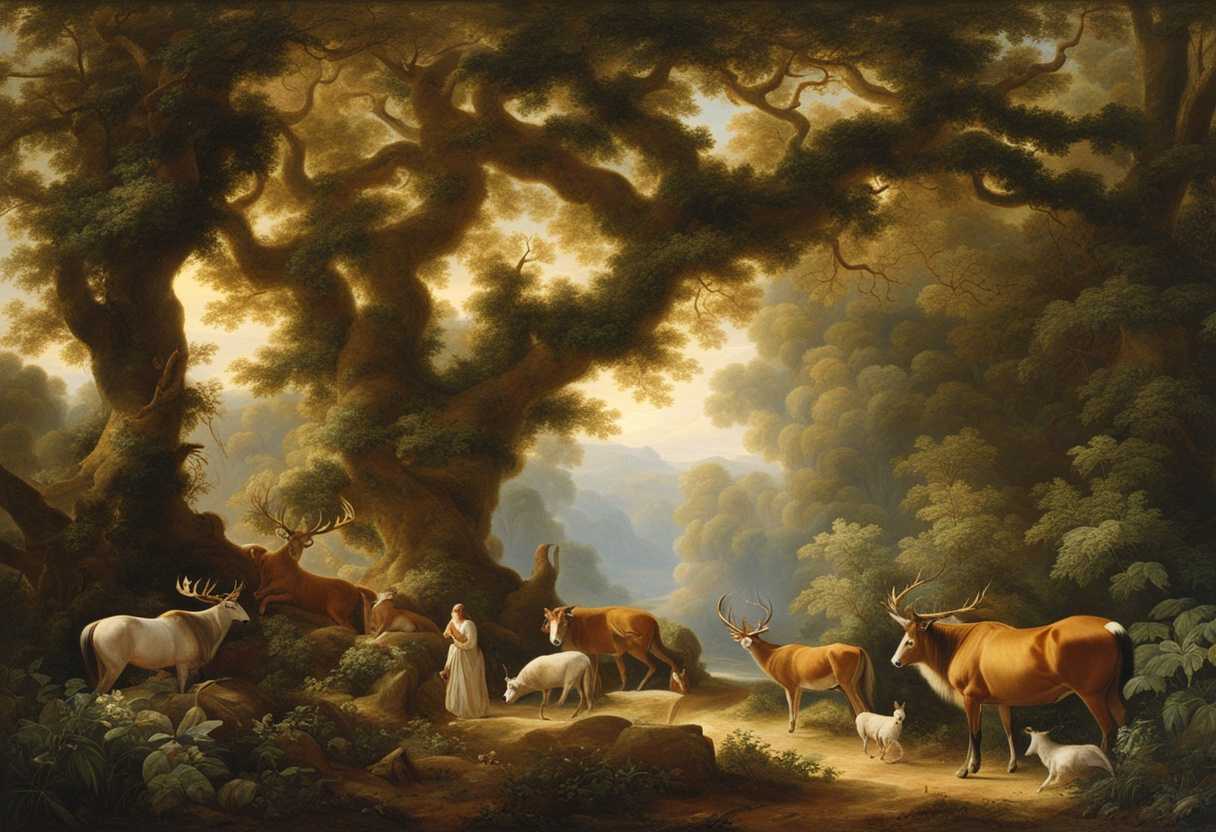
12 Its leaves were beautiful and its fruit abundant, and in it was food for all. The beasts of the field found shade under it, and the birds of the heavens lived in its branches.
Setting the Scene for Daniel 4:10-12
In Daniel chapter 4, King Nebuchadnezzar of Babylon finds himself troubled by a dream that he had. The dream was so disturbing to him that he called for his magicians, enchanters, sorcerers, and astrologers to interpret it for him. However, none of them were able to provide him with an interpretation that satisfied him.
Frustrated and desperate for answers, King Nebuchadnezzar then summoned Daniel, a Hebrew captive who had previously interpreted dreams for him. Daniel was brought before the king, and as he stood in the grand throne room of the palace, surrounded by opulent decorations and courtiers, he listened attentively to the king’s description of the dream.
The scene is tense as King Nebuchadnezzar recounts the details of his dream to Daniel, hoping for a clear interpretation. The king’s anxiety is palpable as he waits for Daniel’s response, while the courtiers observe in hushed anticipation. Daniel, guided by divine wisdom, eventually reveals the meaning of the dream to the king, foretelling the downfall of his pride and the humbling that he will experience. The atmosphere in the room shifts as the gravity of Daniel’s words sinks in, setting the stage for the unfolding of a powerful lesson in humility and the sovereignty of God.
What is Daniel 4:10-12 about?
This verse reminds us of the timeless principle that God values humility and despises pride. The story of King Nebuchadnezzar’s dream in the Bible serves as a powerful illustration of this truth. Despite his great power and accomplishments, the king’s pride led to his downfall. It was only when he humbled himself before God that he was exalted once again.
Think about it – how often do we see arrogance and self-importance leading to destruction in our world? The verse underscores the importance of staying humble and grounded in our actions and attitudes. It challenges us to reflect on our own lives and ask ourselves: Are we seeking to exalt ourselves through pride, or are we willing to humble ourselves before God and others? Contemplating this verse invites us to examine our hearts and align our values with God’s. We should strive to cultivate humility in our lives because true exaltation and blessings come through humbleness. Just like King Nebuchadnezzar, when we humble ourselves before God, we open ourselves up to His grace, mercy, and ultimate exaltation.
Understanding what Daniel 4:10-12 really means
In the book of Daniel, we encounter a fascinating dream experienced by King Nebuchadnezzar of Babylon. This dream revolves around a majestic tree that stands at the center of the earth, symbolizing the king’s flourishing kingdom. The imagery of the tree’s immense height and strength mirrors the power and influence that Nebuchadnezzar’s realm had attained. Its lush foliage and abundant fruit signify the prosperity and provision that the kingdom offered to its inhabitants, while the shelter it provided for various creatures reflects the protection and support extended to different peoples and nations under his rule.
Drawing parallels with other biblical passages, such as Ezekiel 31:3-9, where a great tree represents the Assyrian empire, we see a recurring theme of powerful kingdoms depicted through natural imagery. Similarly, in Matthew 13:31-32, Jesus uses the parable of the mustard seed growing into a large tree to illustrate the expansive nature of the Kingdom of Heaven, emphasizing how small beginnings can lead to significant impacts that benefit many.
Reflecting on these verses in the context of contemporary society, we are reminded of the transient nature of earthly power and the significance of humility in leadership. Just as Nebuchadnezzar’s kingdom rose to prominence but ultimately fell under God’s decree, we are prompted to consider the source of true strength and the ethical use of influence for the betterment of others. In a world where the pursuit of power often overshadows considerations of compassion and humility, these verses challenge us to reevaluate our priorities and responsibilities in positions of authority.
To illustrate this point further, imagine a successful business leader who has built a thriving company, providing livelihoods for many and contributing to the community’s welfare. While their achievements may be commendable, it is crucial for them to acknowledge that their success is not solely self-made but is also a result of the collective efforts of employees, the support of the community, and ultimately, the grace of God. This recognition of interdependence fosters humility, guiding them to wield their influence with wisdom and benevolence.
In conclusion, the imagery of the tree in Daniel 4:10-12 serves as a poignant metaphor for the responsibilities that accompany power and influence. It prompts us to utilize our resources and authority to uplift and support others, recognizing that all we possess is ultimately entrusted to us by a higher power. May these verses inspire us to lead with humility, integrity, and a deep sense of stewardship, mindful of the impact our actions have on those around us.
How can we stay humble in times of success?
One way to stay humble in times of success is by acknowledging that all accomplishments and blessings come from God. Understanding that our abilities, opportunities, and achievements are ultimately gifts from Him can help keep us grounded and prevent feelings of pride or superiority. We can maintain a humble attitude despite any achievements we may experience by recognizing our dependence on God and giving Him thanks for our successes.
Another way to stay humble is by remembering that success is often temporary and can be fleeting. Success can be taken away just as quickly as we achieve it. This perspective can help us appreciate the highs while also being prepared for the lows. We can remain steadfast in our faith and trust in God’s plans for us by staying humble in times of success, knowing that our true value and worth come from Him rather than our accomplishments or achievements.
Lastly, surrounding ourselves with a supportive community of family, friends, and mentors who can keep us accountable and provide honest feedback can help us stay humble. We can remain humble even as we experience success in various areas of our lives by being open to constructive criticism, staying grounded in our values and beliefs, and continuing to serve and help others.
Application
Embrace the wisdom from Daniel 4:10-12; humble yourself as Nebuchadnezzar did before the Lord. Let us bow down our egos and acknowledge the divine power that guides us. Surrender to God’s plan and seek His counsel in all your endeavors. Will you step up and surrender your heart to the Almighty today?

Reverend Michael Johnson is an experienced Church Minister with a profound expertise in spirituality and guidance. With a serene presence and a compassionate heart, he has faithfully served his congregation for over 20 years, leading them on a spiritual journey towards inner peace and enlightenment. Reverend Johnson’s extensive knowledge of religious philosophies and profound understanding of human nature have made him a trusted confidant and mentor to many, as he seamlessly weaves his profound wisdom into life teachings. Reverend Johnson’s calming demeanor and empathetic nature continue to uplift and heal souls, nurturing a sense of unity and tranquility within his community.