
Daniel 4:10-18 is about King Nebuchadnezzar’s dream of a great tree being chopped down, symbolizing his impending downfall and humbling by God due to his pride and arrogance.
10 The visions of my head as I lay in bed were these: I saw, and behold, a tree in the midst of the earth, and its height was great.
11 The tree grew and became strong, and its top reached to heaven, and it was visible to the end of the whole earth.
12 Its leaves were beautiful and its fruit abundant, and in it was food for all. The beasts of the field found shade under it, and the birds of the heavens lived in its branches.
13 I saw in the visions of my head as I lay in bed, and behold, a watcher, a holy one, came down from heaven.
14 He proclaimed aloud and said thus: ‘Chop down the tree and lop off its branches, strip off its leaves and scatter its fruit. Let the beasts flee from under it and the birds from its branches.
15 But leave the stump of its roots in the earth, bound with a band of iron and bronze, amid the tender grass of the field. Let him be wet with the dew of heaven. Let his portion be with the beasts in the grass of the earth.
16 Let his mind be changed from a man’s, and let a beast’s mind be given to him; and let seven periods of time pass over him.
17 The sentence is by the decree of the watchers, the decision by the word of the holy ones, to the end that the living may know that the Most High rules the kingdom of men and gives it to whom he will and sets over it the lowliest of men.
18 This dream I, King Nebuchadnezzar, saw. And you, O Belteshazzar, tell me the interpretation, because all the wise men of my kingdom are not able to make known to me the interpretation, but you are able, for the spirit of the holy gods is in you.”
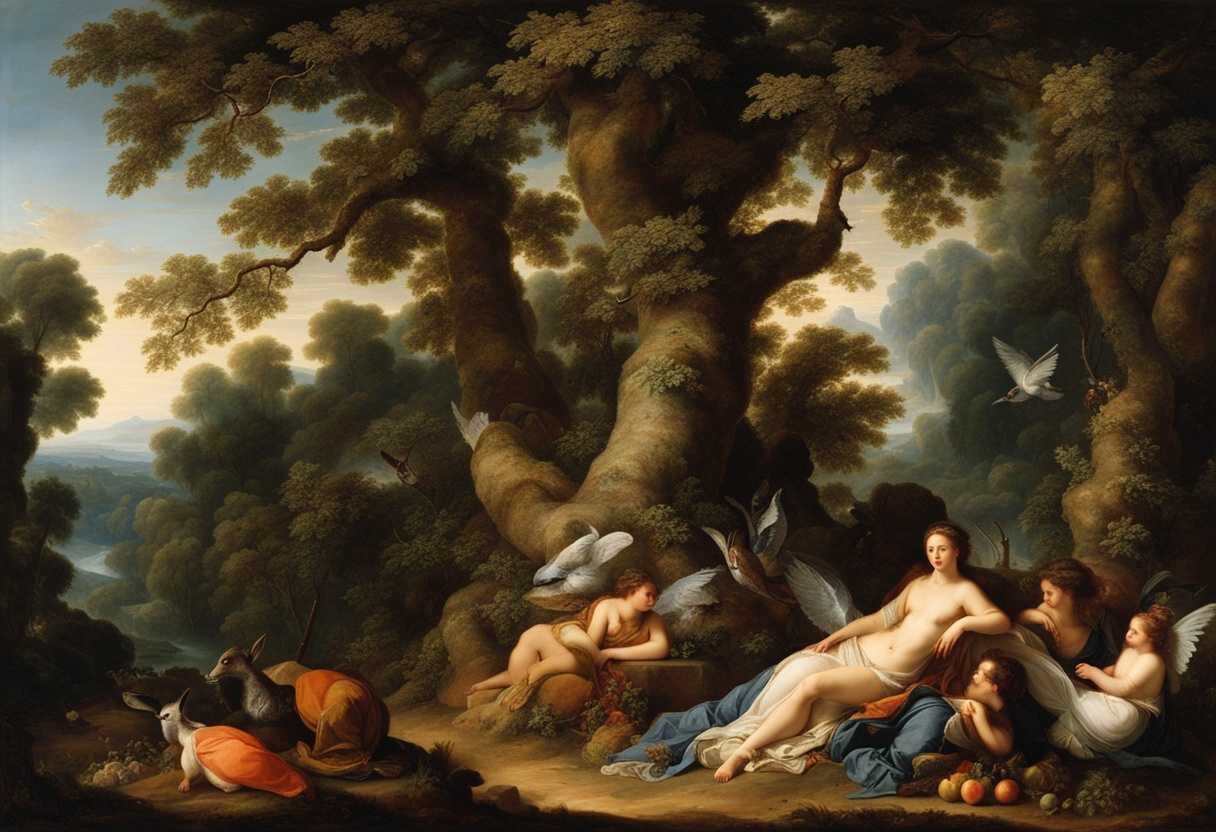
Setting the Scene for Daniel 4:10-18
In the scene described in Daniel 4:10-18, we find King Nebuchadnezzar of Babylon standing on the flat roof of his royal palace, overlooking the magnificent city below. The king had become increasingly proud of his power and achievements, boasting about the great kingdom he had built by his own might and for his own glory. As he gazed out at the city, filled with grand buildings and bustling streets, he declared, “Is not this the great Babylon I have built as the royal residence, by my mighty power and for the glory of my majesty?”
Surrounding the king were his royal advisors, officials, and courtiers, who had gathered to witness his grandiose proclamation. Among them was the prophet Daniel, who had been brought before the king to interpret a troubling dream that had been troubling Nebuchadnezzar. Despite Daniel’s warnings to repent and turn from his prideful ways, the king remained defiant, choosing to ignore the prophet’s counsel.
The scene was set in a lavish and opulent setting, befitting the grandeur of the Babylonian empire. The palace was adorned with gold and precious stones, reflecting the wealth and power of the king. As the sun set in the distance, casting a warm glow over the city, the tension in the air was palpable as Nebuchadnezzar’s fate hung in the balance, awaiting the fulfillment of the prophetic dream that would humble the mighty king.
What is Daniel 4:10-18 about?
King Nebuchadnezzar has a mysterious dream of a great tree that gets cut down, leaving only its stump intact in this verse from the Book of Daniel. Daniel, filled with divine wisdom, interprets the dream for the king. The tree represents the king himself, showcasing his grandeur and power. However, the dream foretells a humbling experience for the king. The cutting down of the tree symbolizes a period of distress and loss of power that the king will face. As we delve into this verse, we can reflect on the idea of humility and the transient nature of power and glory. It poses questions for us to ponder upon – How do we handle moments of challenge and humility? Do we remember to stay grounded even in times of success? The verse serves as a reminder that no matter how mighty we may seem, we are all subject to the forces of change and that true strength lies not in power but in how we navigate through trials with humility and grace. Take a moment to consider the deeper meaning behind this verse and how it may relate to your own journey of growth and self-awareness.
Understanding what Daniel 4:10-18 really means
In the book of Daniel, we encounter a fascinating passage where King Nebuchadnezzar has a dream about a magnificent tree that symbolizes his own power and influence. This tree, towering in the midst of the earth, with lush leaves and abundant fruit, represents the prosperity and provision that Nebuchadnezzar’s kingdom enjoyed under his rule. However, the dream takes a dramatic turn when a “watcher” or “holy one” descends from heaven and decrees the tree’s destruction, leaving only a stump and roots behind. This symbolic act of cutting down the tree signifies a significant change or downfall, serving as a warning of impending judgment or humbling.
The imagery of the tree being cut down echoes similar themes found in other biblical passages, such as Isaiah 10:33-34, where trees are also used to symbolize the humbling of the proud and powerful. This connection highlights a recurring motif in Scripture regarding the consequences of pride and the importance of remaining humble before God. Furthermore, in John 15:1-2, Jesus refers to Himself as the true vine and emphasizes the need for His followers to remain connected to Him for sustenance and growth, reinforcing the idea of dependence on God for true prosperity.
The relevance of this passage to people today is profound. It serves as a poignant reminder of the transient nature of earthly power and the necessity of humility in the face of success and influence. Just as Nebuchadnezzar’s kingdom was subject to divine judgment and intervention, so too are our lives ultimately in God’s hands. Anecdotal examples of successful leaders illustrate the stark contrast between those who remain humble and attribute their success to God versus those who succumb to pride and face eventual downfall due to their arrogance.
As we reflect on the implications of this passage, it prompts us to examine our own lives and attitudes. Are there areas where we may be taking credit for our achievements without acknowledging God’s role in them? Is pride subtly creeping into our hearts, blinding us to the need for humility and dependence on God? By contemplating these questions and seeking to align our lives with the principles of humility and integrity, we can strive to emulate the tree in Nebuchadnezzar’s dream, providing shelter and sustenance to those around us through our actions and attitudes.
In practical terms, this passage encourages us to pray for humility and wisdom, recognizing our need for God’s guidance in all aspects of our lives. By humbling ourselves before God and acknowledging His sovereignty, we can navigate the complexities of success and influence with grace and integrity. Ultimately, by internalizing the lessons of this passage, we can cultivate a deeper appreciation for the importance of humility, the fleeting nature of earthly power, and the transformative impact of divine intervention in our lives.
How can we humbly acknowledge God’s sovereignty?
The passage of Daniel 4:10-18 shows us the concept of acknowledging God’s sovereignty with humility. This is illustrated through the story of King Nebuchadnezzar, who, after experiencing a humbling transformation from a proud ruler to a humbled servant of God, came to understand and accept the ultimate authority and sovereignty of God. We recognize that God is the ultimate ruler and authority over all aspects of our lives by acknowledging His sovereignty.
To humbly acknowledge God’s sovereignty means to accept His absolute power and control over all things, including our own lives. It involves surrendering our own will and pride to God’s will, recognizing that He knows what is best for us and trusting in His perfect plan. This humble acknowledgment of God’s sovereignty fosters a deep sense of awe, reverence, and gratitude towards Him, leading us to live our lives in obedience and service to His purposes, knowing that He is the ultimate and rightful ruler of all creation.
Application
In the grand masterpiece of life, let’s entrust our brush to the hands of the Master Artist. Acknowledge the conductor’s baton in His hands, guiding the symphony of your days. Unveil the layers of self-reliance, revealing the blueprint of divine wisdom within. How will you let His orchestration illuminate your path today?

Reverend Michael Johnson is an experienced Church Minister with a profound expertise in spirituality and guidance. With a serene presence and a compassionate heart, he has faithfully served his congregation for over 20 years, leading them on a spiritual journey towards inner peace and enlightenment. Reverend Johnson’s extensive knowledge of religious philosophies and profound understanding of human nature have made him a trusted confidant and mentor to many, as he seamlessly weaves his profound wisdom into life teachings. Reverend Johnson’s calming demeanor and empathetic nature continue to uplift and heal souls, nurturing a sense of unity and tranquility within his community.