
Daniel 4:30-31 is about the downfall of King Nebuchadnezzar due to his pride and arrogance, serving as a cautionary tale against hubris and the importance of humility before God.
30 The king answered and said, “Is not this great Babylon, which I have built by my mighty power as a royal residence and for the glory of my majesty?”
31 While the words were still in the king’s mouth, there fell a voice from heaven, “O King Nebuchadnezzar, to you it is spoken: The kingdom has departed from you,
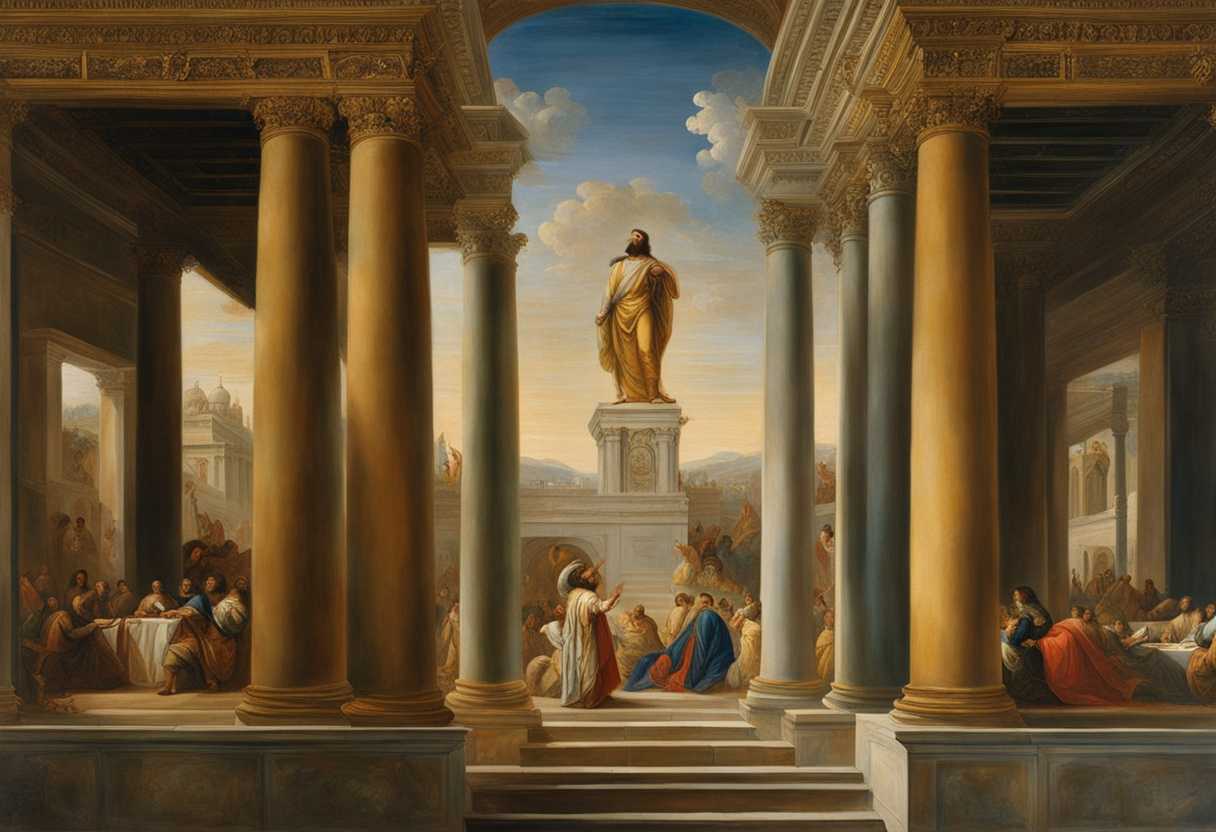
Setting the Scene for Daniel 4:30-31
In Daniel chapter 4, we find King Nebuchadnezzar standing on the roof of his royal palace in the great city of Babylon. The scene is grand and opulent, with the king surrounded by his nobles, officials, and advisors. The king had just finished boasting about his achievements and the splendor of his kingdom, declaring, “Is not this the great Babylon I have built as the royal residence, by my mighty power and for the glory of my majesty?” (Daniel 4:30).
The king’s pride and arrogance had reached its peak, and in that moment, a voice from heaven pronounced judgment upon him. The king was warned that he would be driven away from his people and live with the wild animals, eating grass like the oxen, until he acknowledged that the Most High is sovereign over all kingdoms on earth and gives them to anyone he wishes (Daniel 4:31). This dramatic scene serves as a powerful reminder of the consequences of pride and the importance of recognizing the authority of God above all else.
What is Daniel 4:30-31 about?
This verse serves as a powerful reminder of the consequences of pride and the importance of humility. King Nebuchadnezzar’s arrogance and self-importance led him to believe that he was above everyone else, including God. God humbled him, stripped him of his kingdom, and forced him to live like an animal to learn the lesson of humility.
Reflect on this verse and consider the role pride plays in your own life. Do you ever find yourself feeling superior to others or placing your own desires above everything else? How can you strive to cultivate humility and acknowledge the importance of being humble in your interactions with others?
Let this verse serve as a cautionary tale to remind us of the dangers of pride and the importance of remaining humble in the face of success and power.
Understanding what Daniel 4:30-31 really means
In the narrative of King Nebuchadnezzar found in Daniel 4:30-31, we witness a pivotal moment where the king’s pride reaches its peak. Nebuchadnezzar, the ruler of Babylon, boasts about the grandeur of the city he has built, attributing its magnificence solely to his own power and majesty. This declaration reveals his arrogance and self-reliance, as he fails to acknowledge the role of divine providence and the contributions of others in his accomplishments. The king’s words echo a common human tendency to take credit for achievements without recognizing the broader context of support and circumstances that enable success.
However, even as Nebuchadnezzar revels in his self-glorification, a voice from heaven interrupts him, signaling God’s immediate response to his prideful declaration. This swift divine intervention serves as a stark reminder of God’s sovereignty and awareness over human affairs. The abrupt shift from boasting to divine rebuke underscores the fleeting nature of human pride and the supremacy of God’s authority. It highlights the timeless truth that pride precedes downfall, a theme echoed in Proverbs 16:18, which warns against the destructive consequences of arrogance.
The juxtaposition of Nebuchadnezzar’s pride with God’s swift response prompts reflection on the broader implications of this narrative for contemporary audiences. In a world where self-promotion and individual achievements are often glorified, the story of Nebuchadnezzar serves as a cautionary tale about the perils of unchecked pride. It challenges us to examine our own attitudes towards success and recognition, reminding us of the importance of humility and gratitude in acknowledging the role of God and others in our accomplishments.
To illustrate this point, consider the archetype of a successful businessperson who attributes their prosperity solely to their efforts and abilities, disregarding the contributions of their team and external factors. Such individuals may find themselves blindsided by unforeseen challenges or setbacks, which serve as humbling reminders of the limitations of human agency and the need for humility. This anecdote underscores the fragility of human achievements and the transformative power of humility in fostering resilience and gratitude.
In conclusion, the verses from Daniel 4:30-31 offer a profound lesson on the dangers of pride and the virtues of humility. They urge us to cultivate a spirit of humility, recognizing the interconnectedness of our successes with the support of others and the providence of God. By embracing humility and gratitude, we not only guard against the pitfalls of pride but also foster a deeper appreciation for the blessings and relationships that enrich our lives.
What happens when we exalt ourselves above God?
When we exalt ourselves above God, we are essentially putting ourselves in the place of God and diminishing His supremacy. The verse describes a king who glorified himself for his own accomplishments and power, failing to acknowledge that everything he had achieved was because of God’s hand upon him. We essentially reject God’s sovereignty and deny His rightful place as the supreme authority in our lives by exalting ourselves above Him.
Additionally, exalting ourselves above God can lead to pride and arrogance, which are detrimental to our relationship with Him and others. The verse serves as a warning against the dangers of pride and self-glorification, emphasizing the importance of humility and recognizing that all our abilities and achievements are ultimately from God. When we exalt ourselves above God, we are walking away from His grace and guidance, which can lead to downfall and destruction, as seen in the consequences faced by the king in the verse. Exalting ourselves above God ultimately manifests our sinful nature and fails to acknowledge His sovereignty and lordship over our lives. It is a reminder that we are called to humble ourselves before God, recognizing His authority and giving Him the glory and honor that is due to Him. We can experience God’s blessings, guidance, and protection in our lives by putting Him first and exalting Him above all else.
Application
Reflect on the lessons from Daniel 4:30-31, where pride led to downfall. Are you elevating yourself above others or staying humble? Let’s nurture humility and gratefulness within, seeking divine wisdom for a better path. How will you counter arrogance and pride today?

Reverend Michael Johnson is an experienced Church Minister with a profound expertise in spirituality and guidance. With a serene presence and a compassionate heart, he has faithfully served his congregation for over 20 years, leading them on a spiritual journey towards inner peace and enlightenment. Reverend Johnson’s extensive knowledge of religious philosophies and profound understanding of human nature have made him a trusted confidant and mentor to many, as he seamlessly weaves his profound wisdom into life teachings. Reverend Johnson’s calming demeanor and empathetic nature continue to uplift and heal souls, nurturing a sense of unity and tranquility within his community.