
1 King Belshazzar made a great feast for a thousand of his lords and drank wine in front of the thousand.
2 Belshazzar, when he tasted the wine, commanded that the vessels of gold and of silver that Nebuchadnezzar his father had taken out of the temple in Jerusalem be brought, that the king and his lords, his wives, and his concubines might drink from them.
3 Then they brought in the golden vessels that had been taken out of the temple, the house of God in Jerusalem, and the king and his lords, his wives, and his concubines drank from them.
4 They drank wine and praised the gods of gold and silver, bronze, iron, wood, and stone.
5 Immediately the fingers of a human hand appeared and wrote on the plaster of the wall of the king’s palace, opposite the lampstand. And the king saw the hand as it wrote.
6 Then the king’s color changed, and his thoughts alarmed him; his limbs gave way, and his knees knocked together.
7 The king called loudly to bring in the enchanters, the Chaldeans, and the astrologers. The king declared to the wise men of Babylon, “Whoever reads this writing, and shows me its interpretation, shall be clothed with purple and have a chain of gold around his neck and shall be the third ruler in the kingdom.”
8 Then all the king’s wise men came in, but they could not read the writing or make known to the king the interpretation.
9 Then King Belshazzar was greatly alarmed, and his color changed, and his lords were perplexed.
10 The queen, because of the words of the king and his lords, came into the banqueting hall, and the queen declared, “O king, live forever! Let not your thoughts alarm you or your color change.
11 There is a man in your kingdom in whom is the spirit of the holy gods. In the days of your father, light and understanding and wisdom like the wisdom of the gods were found in him, and King Nebuchadnezzar, your father—your father the king—made him chief of the magicians, enchanters, Chaldeans, and astrologers,
12 because an excellent spirit, knowledge, and understanding to interpret dreams, explain riddles, and solve problems were found in this Daniel, whom the king named Belteshazzar. Now let Daniel be called, and he will show the interpretation.”
13 Then Daniel was brought in before the king. The king answered and said to Daniel, “You are that Daniel, one of the exiles of Judah, whom the king my father brought from Judah.
14 I have heard of you that the spirit of the gods is in you, and that light and understanding and excellent wisdom are found in you.
15 And now the wise men, the enchanters, have been brought in before me to read this writing and make known to me its interpretation, but they could not show the interpretation of the matter.
16 And I have heard of you, that you can give interpretations and solve problems. Now if you can read the writing and make known to me its interpretation, you shall be clothed with purple and have a chain of gold around your neck and shall be the third ruler in the kingdom.”
17 Then Daniel answered and said before the king, “Let your gifts be for yourself, and give your rewards to another. Nevertheless, I will read the writing to the king and make known to him the interpretation.
18 O king, the Most High God gave Nebuchadnezzar your father kingship and greatness and glory and majesty.
19 And because of the greatness that he gave him, all peoples, nations, and languages trembled and feared before him. Whom he would, he killed, and whom he would, he kept alive; whom he would, he raised up, and whom he would, he humbled.
20 But when his heart was lifted up and his spirit was hardened so that he dealt proudly, he was brought down from his kingly throne, and his glory was taken from him.
21 And he was driven from among the children of mankind, and his mind was made like that of a beast, and his dwelling was with the wild donkeys. He was fed grass like an ox, and his body was wet with the dew of heaven, until he knew that the Most High God rules the kingdom of mankind and sets over it whom he will.
22 And you his son, Belshazzar, have not humbled your heart, though you knew all this,
23 but you have lifted up yourself against the Lord of heaven. And the vessels of his house have been brought in before you, and you and your lords, your wives, and your concubines have drunk wine from them. And you have praised the gods of silver and gold, of bronze, iron, wood, and stone, which do not see or hear or know, but the God in whose hand is your breath, and whose are all your ways, you have not honored.
24 “Then from his presence the hand was sent, and this writing was inscribed.”
25 “And this is the writing that was inscribed: Mene, Mene, Tekel, and Parsin.
26 This is the interpretation of the matter: Mene, God has numbered the days of your kingdom and brought it to an end;
27 Tekel, you have been weighed in the balances and found wanting.
28 Peres, your kingdom is divided and given to the Medes and Persians.”
29 Then Belshazzar gave the command, and Daniel was clothed with purple, a chain of gold was put around his neck, and a proclamation was made about him, that he should be the third ruler in the kingdom.
30 That very night Belshazzar the Chaldean king was killed.
31 And Darius the Mede received the kingdom, being about sixty-two years old.
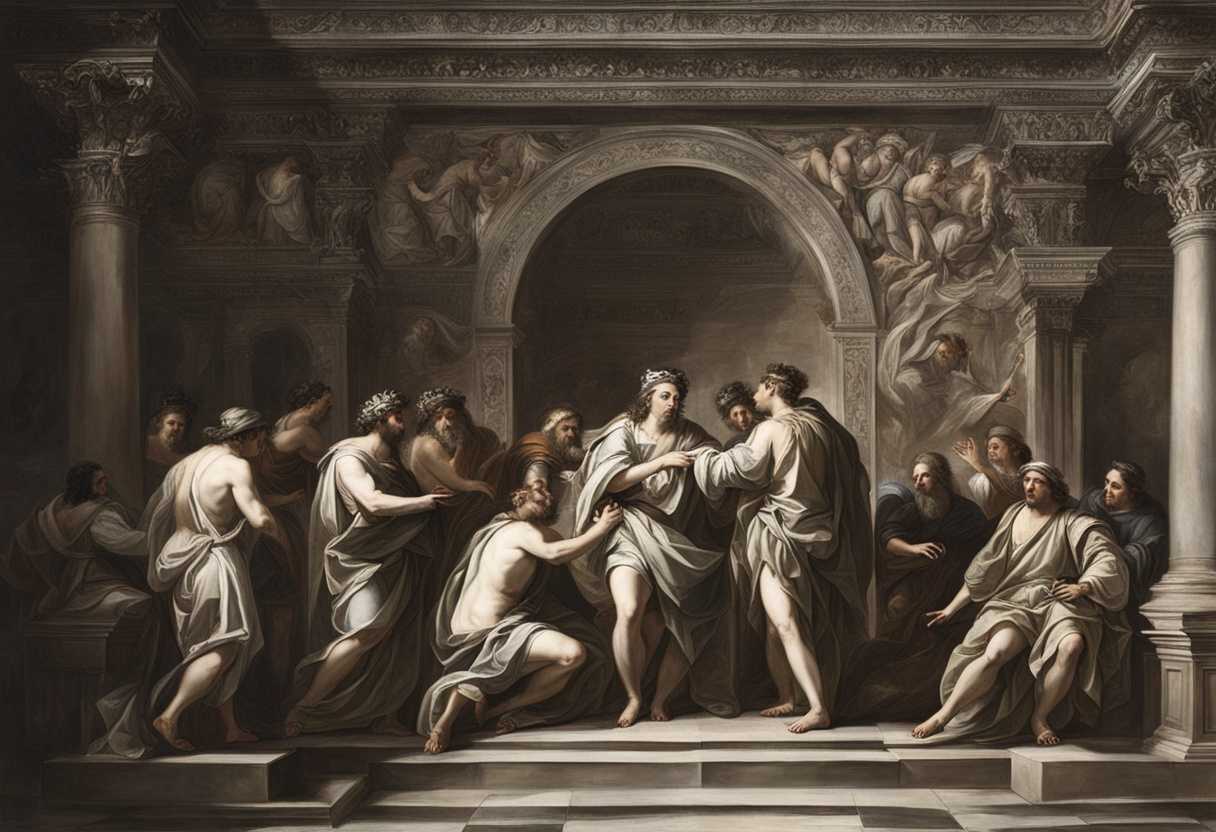
The True Meaning of Daniel 5
This chapter of the Book of Daniel was written by the prophet Daniel himself, who lived during the time of the Babylonian and Persian empires. Daniel was a highly respected and influential figure, known for his wisdom, faith, and unwavering commitment to God. We witness a pivotal moment in the history of the Babylonian kingdom in this chapter. The once-mighty empire, under the rule of King Belshazzar, is facing a critical turning point. A mysterious hand appears and writes a message on the wall as the king hosts a grand feast, leaving the king and his guests perplexed and terrified. This event sets the stage for the downfall of the Babylonian kingdom and the rise of the Persian empire, as foretold in the book of Daniel (Daniel 2:39).
The chapter also highlights the importance of humility and the consequences of pride and arrogance, as seen in the fate of King Belshazzar. This theme is echoed in other biblical passages, such as Proverbs 16:18, which states, “Pride goes before destruction, and a haughty spirit before a fall. Daniel’s interpretation of the mysterious message on the wall ultimately leads to the end of the Babylonian reign and the beginning of a new era as we delve into this chapter.
Daniel 5:1-4
Belshazzar, the king of Babylon, is introduced in the first four verses of Daniel 5. Belshazzar decides to throw a great feast for a thousand of his nobles and during the banquet, he commands that the gold and silver vessels taken from the temple in Jerusalem be brought so that he and his guests could drink from them. This act of using the sacred vessels dedicated to the worship of God for mundane, pagan revelry was a direct affront to the Lord. This sets the stage for the judgement that will soon come upon Belshazzar and the Babylonian empire.
The use of the sacred vessels from the temple in Jerusalem was symbolic of the disrespect and defiance shown by Belshazzar and his guests towards God. These vessels were consecrated for use in the worship of the one true God, and by using them for secular purposes, Belshazzar was not only dishonoring God but also challenging His authority. This act was reminiscent of the sin of Belshazzar’s predecessor, King Nebuchadnezzar, who had also displayed arrogance and pride before God, only to be humbled and brought to repentance.
The misuse of the sacred vessels highlights a recurring theme in the Bible – the consequences of pride, arrogance, and idolatry. Throughout the Old Testament, we see how the Israelites and other nations faced God’s judgement when they turned away from Him and engaged in idolatry. Belshazzar’s actions serve as a stark reminder of the importance of honoring and respecting God, and the grave consequences of disregarding His commandments. God commands His people not to have any other gods before Him or make idols for themselves in Exodus 20:3-5. The story of Belshazzar serves as a cautionary tale about the dangers of worshiping false gods or putting our trust in material things rather than in the one true God. It also underscores the principle that God will not be mocked, and He will hold us accountable for our actions, especially when we intentionally desecrate things that are consecrated to Him.
Daniel 5:5-9
King Belshazzar of Babylon decided to host a great feast using the sacred vessels that had been taken from the temple in Jerusalem in Daniel 5:5-9. Belshazzar, in his pride and defiance against the God of Israel, used these consecrated items to drink wine and praise false gods made of gold, silver, bronze, iron, wood, and stone. This act was a blatant display of disrespect towards the one true God, inviting divine judgment upon himself and his kingdom.
This passage holds a crucial lesson about the dangers of arrogance and disrespect towards God. Belshazzar’s actions mirrored those of his predecessor Nebuchadnezzar, who had also faced divine punishment for his pride but eventually humbled himself and acknowledged the sovereignty of the God of Israel (Daniel 4:34-37). Belshazzar, however, did not learn from Nebuchadnezzar’s mistakes and continued down a path of rebellion against God.
The misuse of the sacred vessels from the Temple symbolizes the desecration of what is holy and set apart for God’s purposes. This act not only angered God but also showed Belshazzar’s complete disregard for the spiritual significance of these vessels. It serves as a stark reminder that God’s holiness should be revered and that His commandments are not to be taken lightly.
The writing on the wall, which appears later in the chapter, is a powerful demonstration of God’s intervention and judgment. The hand that appears and writes the mysterious message terrifies Belshazzar and all those in attendance. This supernatural event emphasizes that God’s authority supersedes that of earthly kings and rulers. It also underscores the biblical truth that God is aware of all our actions, even those done in secret, and will hold us accountable for them (Galatians 6:7).
Belshazzar’s response to the writing on the wall is one of fear and desperation. He calls for his astrologers, sorcerers, and wise men to interpret the writing but they are unable to do so. This highlights the folly of relying on human wisdom and earthly knowledge when faced with divine matters. It also shows the futility of seeking answers from sources other than God, who alone holds the key to ultimate truth and wisdom (Proverbs 2:6). The story of Belshazzar in Daniel 5 serves as a cautionary tale about the consequences of pride, disrespect towards God, and the importance of acknowledging His supremacy. It urges us to humble ourselves before God, recognize His holiness, and seek His wisdom above all else. The events in this chapter remind us that God will not be mocked and that His judgment is just and inevitable.
Daniel 5:10-12
King Belshazzar of Babylon reacts when the queen mother enters the banquet hall during a great feast in Daniel 5:10-12. The queen mother, likely the queen dowager Nitocris, was aware of Daniel’s wisdom and connection to God, and she suggested that the king consult Daniel about the mysterious writing on the wall. This writing, which appeared during the banquet, greatly troubled the king. Despite having a multitude of wise men and advisers in his court, King Belshazzar was so disturbed by the supernatural nature of the writing that he sought after Daniel for answers.
This section of the passage serves to illustrate the power and authority of Daniel, who, through his unwavering faith in God, was able to interpret dreams and divine messages. It also highlights the limitations of earthly wisdom and knowledge compared to the divine insight granted to those who walk closely with God. The king’s reaction to the writing on the wall reveals his fear and desperation, as he turns to Daniel as a last resort. This event showcases the sovereignty of God over earthly kingdoms and the importance of seeking divine wisdom in times of uncertainty and trouble.
King Belshazzar’s fear and confusion at the sight of the writing on the wall echo the themes of divine judgment and accountability found throughout the Bible. The writing on the wall foretold the imminent fall of Babylon and the end of Belshazzar’s reign. This event serves as a powerful reminder of the consequences of pride, arrogance, and disrespect towards God. Belshazzar’s disregard for the sacred vessels of the temple of Jerusalem, which were used in the feast, further demonstrates his lack of reverence for the one true God. As we delve deeper into the Bible, individuals or nations faced judgment due to their disobedience and disregard for God’s commands. The fall of Babylon and the subsequent rise of the Medo-Persian Empire, as prophesied through the writing on the wall, serve as just one example of God’s ultimate authority and justice. Throughout the Bible, there are recurring themes of repentance, humility, and the consequences of ignoring divine warnings. Daniel’s role in interpreting the writing on the wall highlights the importance of remaining faithful and obedient to God, even in the midst of trials and tribulations.
Daniel 5:13-16
A significant encounter takes place during the famous feast in the royal palace of Babylon in Daniel 5:13-16. Belshazzar, the king of Babylon, is hosting a grand banquet where they are using the gold and silver vessels that had been taken from the temple in Jerusalem. A human hand appears in the midst of this extravagant banquet and writes on the wall of the palace. Belshazzar is shaken and troubled by this supernatural occurrence, and his countenance changes, reflecting his fear and distress.
The use of the sacred vessels from the temple to indulge in worldly pleasures and idolatry was a grave offense in the eyes of God. This event serves as a stark reminder that worldly wealth, indulgence, and pride are fleeting and will ultimately be judged by the Almighty. Belshazzar’s actions symbolize the arrogance and defiance against God that often lead to downfall and destruction. This incident demonstrates the consequences of disrespecting the sacred and dishonoring the divine. The appearance of the mysterious hand writing on the wall in this passage is a powerful manifestation of God’s divine intervention and judgment. The words written, “MENE, MENE, TEKEL, UPHARSIN,” were a message of judgment and warning to Belshazzar. The prophet Daniel was summoned to interpret the writing, revealing that Belshazzar had been weighed in the balance and found wanting, and his kingdom would be divided and given to the Medes and Persians.
This divine judgment is a recurring theme throughout the Bible, emphasizing the importance of faithfulness, humility, and obedience to God. Just as Belshazzar faced the consequences of his actions, individuals and nations are accountable for their deeds and will ultimately be judged by God. This passage serves as a sobering reminder of the transience of worldly power and the necessity of living in alignment with God’s will.
The story in Daniel 5 is a poignant illustration of the contrast between human pride and divine judgment. Belshazzar’s arrogance and disregard for the sacred led to his downfall, while Daniel’s unwavering faith and obedience to God positioned him as an instrument of divine revelation and interpretation. This account underscores the timeless message of the Bible that humankind’s true wisdom and power are found in reverence for God and living according to His principles.
Finally, this passage also points to the theme of God’s sovereignty and control over the affairs of men. Despite Belshazzar’s position as a powerful ruler, he was ultimately subject to the authority and judgment of the Most High God. Throughout the Bible, we see instances where human pride and ambition are humbled by God’s divine intervention, highlighting the overarching message that God is the ultimate authority and His will prevails over all earthly powers.
Daniel 5:17-23
King Belshazzar summons the prophet Daniel to interpret the mysterious writing on the wall during a lavish banquet in Daniel 5:17-23. The king offered rewards and great honor to anyone who could decipher the writing. Daniel’s reputation preceded him as a man filled with the spirit of God and wisdom. Let’s uncover the profound messages in this passage by delving into it. Daniel, unswayed by the king’s offerings, gently rebukes Belshazzar in verse 17, reminding him of the lessons learned by his predecessor, King Nebuchadnezzar. Daniel understood that true wisdom and power come from God alone, not from worldly riches and accolades. This rebuke serves as a timeless lesson about the dangers of pride and arrogance. It echoes Proverbs 16:18, “Pride goes before destruction, a haughty spirit before a fall.”
Moving on to verse 18, Daniel recounts Nebuchadnezzar’s reign and fall from grace due to his pride and arrogance. Despite witnessing the consequences of Nebuchadnezzar’s actions, Belshazzar failed to humble himself before the living God. This narrative highlights the importance of learning from the mistakes of others and the significance of humility before God. It also echoes the theme of repentance and redemption found throughout the Bible, as seen in the story of the prodigal son in Luke 15:11-32. Daniel in verses 20-23 explains the meaning of the writing on the wall, which foretells the imminent fall of Babylon and Belshazzar’s kingdom. The message, “You have been weighed on the scales and found wanting,” served as a divine judgment on Belshazzar’s actions and lack of reverence for God. This sobering message reminds us of the importance of living a righteous life and being accountable for our actions before God. It resonates with Galatians 6:7, which states, “Do not be deceived: God cannot be mocked. A man reaps what he sows. The passage in Daniel 5:17-23 underscores the recurring biblical theme of God’s sovereignty and righteousness. It teaches us about the perils of pride, the necessity of humility, and the inevitability of divine judgment. Through Daniel’s example, we are reminded to seek wisdom and guidance from God, rather than from fleeting earthly rewards. This narrative serves as a powerful lesson for believers to remain steadfast in their faith and to always prioritize a relationship with God above all else.
Daniel 5:24-28
Belshazzar, the king of Babylon, faced a mysterious and ominous message from God written on the wall during a great feast he was hosting in Daniel 5:24-28. The king had called for the vessels that had been taken from the temple in Jerusalem to be brought out so that he and his nobles, wives, and concubines could drink from them. This act was not only a display of arrogance and disrespect towards the God of Israel but also a flaunting of his power and disregard for sacred items that belonged to the temple of God.
When the fingers of a human hand appeared and wrote on the plaster of the wall, it caused fear and confusion among the king and his guests. None of the wise men of Babylon were able to interpret the writing, leading to the queen suggesting that Daniel, known for his wisdom and ability to interpret dreams, be brought before the king. This demonstrates that even in moments of great worldly splendor, human wisdom and power can be futile in the face of divine messages and judgment.
Daniel, upon seeing the inscription, reveals its meaning to the king. The message was a pronouncement of judgment upon Belshazzar for his arrogance and failure to humble himself before God. The words, “Mene, Mene, Tekel, Upharsin,” were interpreted by Daniel as a declaration that Belshazzar’s kingdom had been weighed and found wanting, and that it would be divided and given to the Medes and Persians. This event symbolizes the Biblical principle that God opposes the proud but gives grace to the humble (James 4:6), highlighting the importance of acknowledging and honoring God in all aspects of our lives.
The downfall of Belshazzar serves as a reminder of the transient nature of worldly power and the inevitable judgment that comes upon those who exalt themselves above God. Throughout the Bible, we see numerous instances where individuals or nations who defied God’s commandments and acted in arrogance faced severe consequences. Proverbs 16:18 echoes this sentiment, stating that “Pride goes before destruction, a haughty spirit before a fall. The account of Belshazzar in Daniel 5 serves as a sobering reminder of the consequences of arrogance and the necessity of humility before God. It calls us to reflect on our own actions and attitudes, ensuring that we do not allow pride to blind us to the truth of God’s sovereignty and our need for repentance and humility.
Daniel 5:29-31
Belshazzar, the king of Babylon, reaches the climax of his story in Daniel 5:29-31. The specific verse reads, “Then at Belshazzar’s command, Daniel was clothed in purple, a gold chain was placed around his neck, and he was proclaimed the third highest ruler in the kingdom.” This section reveals the immediate response of Belshazzar to the interpretation provided by Daniel regarding the mysterious writing on the wall. The king acknowledges the wisdom and insight of Daniel by honoring him with royal clothing, a gold chain, and a position of authority in his kingdom.
This act of honoring Daniel demonstrates a significant turning point in the narrative of Daniel in Babylon. Despite the disbelief and arrogance of Belshazzar, he is compelled to recognize the supernatural abilities and connection to God that Daniel possesses. The elevation of Daniel to the position of the third highest ruler showcases God’s favor upon His faithful servant in a foreign land. It highlights the theme of God’s sovereignty and His ability to exalt those who remain faithful to Him, even in the midst of challenging circumstances.
The downfall of Belshazzar follows swiftly after Daniel’s promotion. The same night that Daniel is honored, Belshazzar is slain, and Darius the Mede takes over the Babylonian kingdom. This abrupt turn of events highlights the fleeting nature of human power and pride when compared to the eternal authority of God. Belshazzar’s failure to heed the warning given by Daniel leads to his ultimate demise, serving as a cautionary tale about the consequences of pride and disobedience in the eyes of God.
The story of Belshazzar in Daniel 5 echoes the broader biblical theme of the rise and fall of earthly kingdoms in the face of God’s ultimate reign. The Babylonian Empire, represented by Belshazzar, is depicted as a prideful and idolatrous kingdom that fails to acknowledge the supremacy of the one true God. Daniel emerges as a faithful servant who remains steadfast in his devotion to God, even in the midst of adversity. His unwavering faithfulness ultimately leads to his exaltation and serves as a testament to the enduring power of God in the lives of His people. The fall of Belshazzar and the rise of Darius the Mede in the larger context of the Bible also foreshadow the eventual fall of Babylon to the Persian Empire. This transition of power mirrors the biblical prophecy of kingdoms rising and falling in accordance with God’s divine plan. It serves as a reminder that human rulers and empires are subject to the will of God and are ultimately accountable to Him for their actions and decisions. Believers reflect on the story of Belshazzar in Daniel 5, reminding them of the importance of humility, obedience, and faithfulness in their relationship with God. Just as Daniel remained steadfast in his convictions despite the challenges he faced, Christians are called to stand firm in their faith and trust in God’s sovereignty, knowing that He is ultimately in control of all earthly kingdoms and authorities. The story of Belshazzar serves as a powerful reminder of the consequences of pride and the rewards of faithfulness in the eyes of God.
After Daniel 5
The writing on the wall had been interpreted, and the kingdom of Babylon had fallen. King Belshazzar had been slain, and Darius the Mede had taken the throne. The new king began to make changes to the kingdom as he settled into his rule. He appointed one hundred and twenty satraps to govern the provinces, and over them, three administrators, one of whom was Daniel. Daniel’s wisdom and integrity soon caught the king’s eye, and he planned to set Daniel over the entire kingdom.
This news did not sit well with the other administrators and satraps. They grew jealous of Daniel’s favor with the king and began to plot against him. Little did they know, their schemes would soon be uncovered, leading to a great test of faith for God’s faithful servant.

Reverend Michael Johnson is an experienced Church Minister with a profound expertise in spirituality and guidance. With a serene presence and a compassionate heart, he has faithfully served his congregation for over 20 years, leading them on a spiritual journey towards inner peace and enlightenment. Reverend Johnson’s extensive knowledge of religious philosophies and profound understanding of human nature have made him a trusted confidant and mentor to many, as he seamlessly weaves his profound wisdom into life teachings. Reverend Johnson’s calming demeanor and empathetic nature continue to uplift and heal souls, nurturing a sense of unity and tranquility within his community.