
1 In the third year of the reign of King Belshazzar a vision appeared to me, Daniel, after that which appeared to me at the first.
2 And I saw in the vision; and when I saw, I was in Susa the citadel, which is in the province of Elam. And I saw in the vision, and I was at the Ulai canal.
3 Then I raised my eyes and saw, and behold, a ram standing on the bank of the canal. It had two horns, and both horns were high, but one was higher than the other, and the higher one came up last.
4 I saw the ram charging westward and northward and southward. No beast could stand before him, and there was no one who could rescue from his power. He did as he pleased and became great.
5 As I was considering, behold, a male goat came from the west across the face of the whole earth, without touching the ground. And the goat had a conspicuous horn between his eyes.
6 He came to the ram with the two horns, which I had seen standing on the bank of the canal, and he ran at him in his powerful wrath.
7 I saw him come close to the ram, and he was enraged against him and struck the ram and broke his two horns. And the ram had no power to stand before him, but he cast him down to the ground and trampled on him. And there was no one who could rescue the ram from his power.
8 Then the goat became exceedingly great, but when he was strong, the great horn was broken, and instead of it there came up four conspicuous horns toward the four winds of heaven.
9 Out of one of them came a little horn, which grew exceedingly great toward the south, toward the east, and toward the glorious land.
10 It grew great, even to the host of heaven.
11 It became great, even as great as the Prince of the host. And the regular burnt offering was taken away from him, and the place of his sanctuary was overthrown.
12 And a host will be given over to it together with the regular burnt offering because of transgression, and it will throw truth to the ground, and it will act and prosper.
13 Then I heard a holy one speaking, and another holy one said to the one who spoke, “For how long is the vision concerning the regular burnt offering, the transgression that makes desolate, and the giving over of the sanctuary and host to be trampled underfoot?”
14 And he said to me, “For 2,300 evenings and mornings. Then the sanctuary shall be restored to its rightful state.”
15 When I, Daniel, had seen the vision, I sought to understand it. And behold, there stood before me one having the appearance of a man.
16 And I heard a man’s voice between the banks of the Ulai, and it called, “Gabriel, make this man understand the vision.”
17 So he came near where I stood. And when he came, I was frightened and fell on my face. But he said to me, “Understand, O son of man, that the vision is for the time of the end.”
18 And when he had spoken to me, I fell into a deep sleep with my face to the ground. But he touched me and made me stand up.
19 He said, “Behold, I am making known to you what shall happen later in the period of wrath, for it refers to the appointed time of the end.
20 As for the ram that you saw with the two horns, these are the kings of Media and Persia.
21 And the goat is the king of Greece, and the great horn between his eyes is the first king.
22 As for the horn that was broken, in place of which four others arose, four kingdoms shall arise from his nation, but not with his power.
23 And at the latter end of their kingdom, when the transgressors have reached their limit, a king of bold face, one who understands riddles, shall arise.
24 His power shall be great—but not by his own power; and he shall cause fearful destruction and shall succeed in what he does, and destroy mighty men and the people who are the saints.
25 By his cunning he shall make deceit prosper under his hand, and in his own mind he shall become great. Without warning he shall destroy many. And he shall even rise up against the Prince of princes, and he shall be broken—but by no human hand.
26 The vision of the evenings and the mornings that has been told is true, but seal up the vision, for it refers to many days from now.
27 And I, Daniel, was overcome and lay sick for some days. Then I rose and went about the king’s business, but I was appalled by the vision and did not understand it.
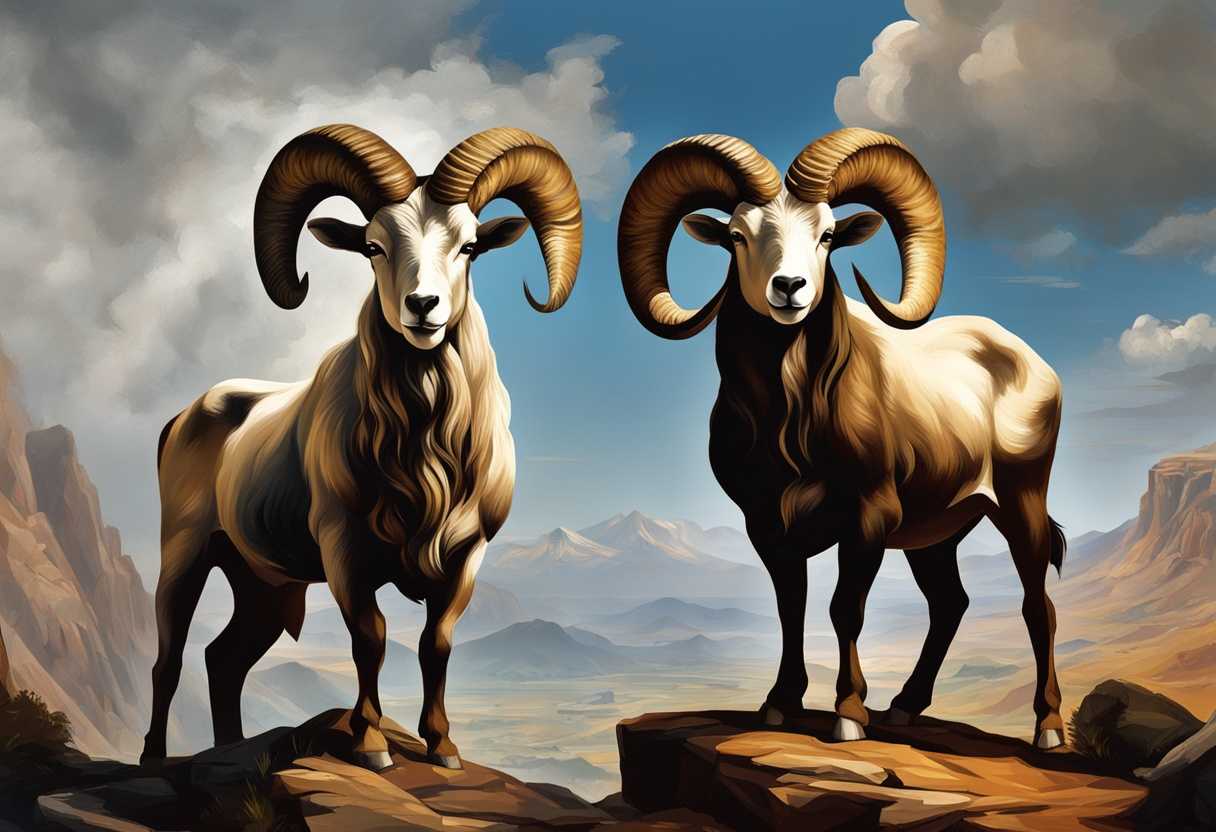
The True Meaning of Daniel 8
The Book of Daniel was written by the prophet Daniel, who lived during the Babylonian and Persian empires. Daniel was a highly respected Jewish exile in Babylon, known for his wisdom, integrity, and ability to interpret dreams and visions. Daniel recounts a vision he had regarding the future of the kingdoms that would rise and fall in this chapter. He sees a ram and a goat, representing the Persian and Greek empires, engaged in a fierce battle. This vision foreshadows the conflicts and power struggles that would shape the region in the centuries to come, as prophesied in other biblical passages, such as the vision of the four beasts in Daniel 7. As we delve into this chapter, a heavenly being encounters Daniel and provides him with a detailed interpretation of the vision, revealing the rise and fall of powerful rulers and the eventual triumph of God’s eternal kingdom. This passage offers a glimpse into the divine plan that unfolds throughout history, reminding us of the sovereignty of God and the importance of remaining faithful in the face of worldly challenges.
Daniel 8:1-4
The text in Daniel 8:1-4 describes a vision that Daniel had concerning a ram and a goat. Daniel has a vision in the third year of King Belshazzar’s reign, setting the scene for this occurrence. This context is significant because Belshazzar was the last Babylonian king before the fall of the Babylonian Empire to the Medes and Persians. This shows Daniel receiving divine revelations during a pivotal time in history. Daniel sees a ram with two horns in the vision, one horn longer than the other, symbolizing the dual power of the Medo-Persian Empire. This imagery echoes the vision in Daniel 7, where beasts represent kingdoms, emphasizing the theme of divine sovereignty over earthly powers. The ram pushing westward, northward, and southward demonstrates the expansionist nature of the Medo-Persian Empire under Cyrus the Great and his successors.
A goat with a prominent horn – Following the ram, a male goat with a single prominent horn appears from the west and swiftly defeats the ram. This goat represents the Greco-Macedonian Empire under the leadership of Alexander the Great, whose military conquests were characterized by swiftness and overwhelming force. The breaking of the horn and the emergence of four notable horns symbolize the division of Alexander’s empire among his generals after his untimely death, fulfilling the prophecy with remarkable historical accuracy.
The symbolism in this passage showcases God’s omniscience and sovereignty over the rise and fall of earthly kingdoms. The detailed prediction of successive empires aligns with God’s control over history, foreshadowing events that would unfold in the centuries following Daniel’s time. This passage serves as a reminder of the transient nature of human power and the ultimate authority of God over all nations, a theme reiterated throughout the Bible.
To deepen our understanding of these prophecies, we can connect them to other passages in the Bible, such as Daniel 2, where Nebuchadnezzar’s dream of the metallic statue also foretells the succession of world empires. Similar imagery in the book of Revelation depicts future events and the ultimate triumph of Christ over all earthly powers. The consistency of these prophecies across different books of the Bible emphasizes the reliability and coherence of God’s eternal plan for history, reinforcing the importance of faith and obedience to His will.
Daniel 8:5-8
The prophet Daniel experienced a vivid and powerful vision in Daniel 8:5-8. This passage describes a ram with two horns, one horn longer than the other, pushing westward, northward, and southward. This ram is then attacked by a male goat with a prominent horn between its eyes. The goat defeats the ram and tramples it, becoming great in its place. However, as the male goat becomes powerful, its horn is broken and replaced by four notable horns. Out of these four horns comes a little horn that grows exceedingly great towards the south, east, and towards the glorious land.
This vision holds significant symbolic meaning that is further explained later in the chapter. The ram with two horns represents the kings of Media and Persia, reflecting the rise of the Persian Empire which historically overthrew the Babylonian Empire. The male goat represents the kingdom of Greece under Alexander the Great, who famously conquered vast territories in a swift and powerful manner. The breaking of the large horn on the goat and its replacement by four horns signifies the division of Alexander’s empire among his four generals after his death. One of these divisions, the Seleucid Empire, is later represented by the little horn that grows exceedingly great, likely alluding to the oppressive actions of King Antiochus IV Epiphanes, who persecuted the Jewish people.
Through this prophecy, we see a pattern of powerful kingdoms rising and falling, illustrating the transient nature of earthly powers and the inevitability of God’s ultimate sovereignty. The intricate details of this vision demonstrate God’s foreknowledge and control over human history, as each kingdom’s rise and fall are foretold with precision. This passage serves as a reminder of the importance of staying faithful to God even in the midst of shifting powers and turbulent times. It encourages believers to trust in God’s overarching plan and providence, knowing that He is ultimately in control of all things.
This theme of kingdoms rising and falling is a recurring motif in the Bible, emphasizing the fleeting nature of human power and the enduring nature of God’s Kingdom. Throughout the Scriptures, we see numerous accounts of kingdoms and rulers who rise to prominence only to be humbled by God. Proverbs 21:1 affirms this truth, stating, “The king’s heart is a stream of water in the hand of the Lord; he turns it wherever he will.” This verse highlights the ultimate authority and control that God possesses over earthly rulers and kingdoms, reinforcing the message conveyed in Daniel’s vision. Believers reflect on Daniel’s vision in chapter 8, reminding them of the overarching theme of God’s sovereignty and providence in the midst of human history. This prophecy serves as a powerful testimony to God’s faithfulness in fulfilling His plans and purposes, even in the face of great empires and tumultuous events. It challenges readers to place their trust in the eternal Kingdom of God, which stands firm amidst the rise and fall of earthly powers. God’s control of all things and His Kingdom reigning victorious for eternity is the central message of the Bible, as ultimately pointed to in the vision in Daniel 8.
Daniel 8:9-12
The prophet Daniel receives a vision in Daniel 8:9-12 that describes a powerful goat with a prominent horn between its eyes, representing the kingdom of Greece. This goat charges at a ram with two horns, symbolizing the Medo-Persian Empire. The goat defeats the ram, shattering its horns and trampling it underfoot. The goat magnifies itself, but then its great horn is broken, and in its place, four notable horns spring up in different directions.
This vision is a prophecy regarding the rise and fall of empires in the future. The Medo-Persian Empire had conquered Babylon and was a dominant power during the time of Daniel. The Greek Empire, under the leadership of Alexander the Great, would later defeat the Persians and become a significant force in the ancient world. The breaking of the great horn represents the death of Alexander the Great and the subsequent division of his empire among his four generals.
This prophecy serves as a reminder of the transient nature of earthly kingdoms and the ultimate sovereignty of God over human affairs. It reinforces the biblical principle that earthly powers rise and fall according to God’s divine plan. The Book of Daniel is filled with prophecies that point to the ultimate triumph of God’s kingdom over all earthly kingdoms. The Book of Revelation in the New Testament also contains similar imagery of beasts and horns representing worldly powers that the Lord will ultimately vanquish.
Understanding these prophecies can bring comfort and hope to believers, reminding them that God is in control of history and that His Kingdom will endure forever. It encourages Christians to place their trust in God rather than in the fleeting powers of this world. This passage underscores the importance of staying faithful to God’s word and promises, even in the midst of turbulent times when earthly kingdoms may seem to reign supreme. God’s plans will ultimately prevail over all earthly powers and kingdoms, offering a message of hope and assurance.
Daniel 8:13-14
A holy one spoke to another holy one, asking about the duration of the vision regarding the regular burnt offering, the transgression that makes desolate, and the giving over of the sanctuary and host to be trampled underfoot.’ And he said to me, ‘For 2,300 evenings and mornings; then the sanctuary shall be restored to its rightful state.’”
This section of the Book of Daniel portrays a conversation between holy beings about a vision that foretells future events. The discussion centers around the regular burnt offering, transgressions leading to desolation, and the sanctuary being trodden upon. This vision sets the stage for the challenges that the sanctuary and the people of God will face.
The mention of the regular burnt offering alludes to the desecration of the temple and the cessation of proper worship. This sacrilege is a recurring theme throughout the Bible, highlighting the importance of faithfulness and dedication to God. The transgressions causing desolation could refer to the disobedience and rebellion of the people, leading to the loss of divine protection and blessings.
The period of 2,300 evenings and mornings is a symbolic representation of time, indicating a duration of tribulation and suffering before restoration. This timeframe may not be to be taken literally, but rather as a period of testing and purification before God’s deliverance and renewal of His sanctuary. This concept of suffering preceding restoration reflects the biblical theme of God’s faithfulness in times of trial and His ultimate victory over evil.
The restoration of the sanctuary to its rightful state signifies God’s sovereignty and His promise to renew and restore that which has been desecrated. This restoration brings hope and reassurance to the faithful, reminding them that God’s plans will ultimately prevail despite the challenges they may face. This passage in Daniel 8 connects to prophecies in other books in the broader scope of the Bible, such as the desolation of the temple foretold by prophets like Jeremiah (Jeremiah 7:34). The themes of desecration, tribulation, and restoration are common motifs in biblical prophecy, underscoring the importance of faithfulness, endurance, and trust in God’s redemptive plan. Daniel 8:13-14 conveys a message of hope amidst adversity, emphasizing the faithfulness of God to restore and renew His people and sanctuary. The vision serves as a reminder to remain steadfast in faith, even in the face of challenges and desolation, knowing that God’s ultimate victory is assured.
Daniel 8:15-19
The prophet Daniel begins the passage in Daniel 8:15-19 by seeking understanding of the vision he had seen. This shows Daniel’s humility and desire to comprehend the divine message being revealed to him. It teaches us the importance of seeking clarity and wisdom when faced with spiritual visions or messages, rather than assuming we already know all there is to know.
The appearance of the archangel Gabriel in verse 16 signifies the importance of the message being relayed to Daniel. Gabriel is known as a messenger of God in the Bible and has appeared in key moments to deliver important revelations, such as announcing the births of John the Baptist and Jesus. His presence in this vision underscores the gravity and significance of the events being foretold to Daniel.
The interpretation given by Gabriel in the subsequent verses reveals that the vision Daniel witnessed pertains to the future of Israel and the rise and fall of powerful earthly kingdoms. This foretelling of events demonstrates God’s sovereignty over the nations and His ability to orchestrate history according to His divine plan. It serves as a reminder to believers that even in times of turmoil and uncertainty, God remains in control and is working out His purposes.
The mention of the “time of wrath” in verse 19 conveys a sense of impending judgment and divine intervention. This theme is reiterated throughout the Bible, emphasizing the principle of reaping what one sows and the eventual accountability of nations and individuals before God. The concept of divine judgment serves as a warning to stay faithful and righteous in the face of worldly temptations and trials.
Connecting this passage to other parts of the Bible, we can see parallels in the book of Revelation, where similar visions of future events and divine judgments are described. The continuity of these themes across different books of the Bible reinforces the timeless message of God’s faithfulness, sovereignty, and ultimate victory over evil. It encourages believers to hold fast to their faith and trust in God’s plans, even when the world seems tumultuous and chaotic.
Daniel 8:20-22
A specific prophecy in Daniel 8:20-22 speaks about the ram and the goat. Let’s break it down into sections for a deeper understanding:
- “The ram which you saw, having the two horns—they are the kings of Media and Persia.”
This verse refers to the vision Daniel had of a ram with two horns, one higher than the other. Here, the angel Gabriel explains that the two horns represent the kings of Media and Persia. The Medo-Persian Empire was a significant power in biblical history that succeeded the Babylonian Empire. This interpretation shows that God’s prophecies are precise and can pinpoint specific kingdoms well in advance.
The mention of Media and Persia reminds us of the role these empires played in the grand scheme of God’s plan. The Medo-Persian Empire was instrumental in the fulfillment of various prophecies, including the release of the Jewish exiles to rebuild the temple in Jerusalem, as prophesied by Jeremiah (Jeremiah 29:10). This illustrates how God utilizes historical events and kingdoms to accomplish His divine purposes.
- “And the male goat is the kingdom of Greece. The large horn that is between its eyes is the first king. Gabriel explains in this part of the prophecy that the male goat symbolizes the kingdom of Greece, while the large horn represents the first king of Greece. This is a reference to Alexander the Great, who rapidly expanded the Greek Empire through conquest, fulfilling this prophetic vision.
The mention of Greece in this passage points to the subsequent rise of the Greek Empire after the fall of the Medo-Persian Empire. This aligns with the prophetic timeline of world empires outlined in the book of Daniel, showcasing the accuracy and foresight of God’s Word.
The significance of Greece in biblical prophecy is notable not only for its historical importance but also for its influence on the Jewish people. It was during the time of Greek dominance that the Septuagint, the Greek translation of the Hebrew Bible, was commissioned, paving the way for wider dissemination of the Scriptures and the eventual spread of Christianity.
- Four kingdoms shall arise out of that nation, but not with its power, as for the broken horn and the four that stood up in its place.”
This final part of the prophecy highlights the breakup of the Greek Empire after the death of Alexander the Great. The large horn being broken and replaced by four smaller horns symbolizes the division of Alexander’s empire among his four generals: Cassander, Lysimachus, Ptolemy, and Seleucus.
This division led to the emergence of the Ptolemaic and Seleucid kingdoms, which are referenced in subsequent chapters of Daniel as key players in the geopolitical landscape of the ancient world. The intricate details of these prophecies demonstrate God’s omniscience and sovereign control over the course of history. The prophecies in Daniel 8:20-22 offer a glimpse into the rise and fall of ancient empires, showcasing God’s ultimate authority over the nations and His faithfulness in fulfilling His word. Studying these passages reminds us of the overarching theme of God’s sovereignty and the certainty of His plans, providing comfort and assurance to believers throughout history.
Daniel 8:23-26
The verse in Daniel 8:23-26 can be broken down into a few important sections that are crucial to understanding the context and message of this passage.
Firstly, in verse 23, it talks about a time of great rebellion. This suggests a period of upheaval and defiance against God’s ways. This rebellion is not an external force, but rather an internal struggle within a group of people who have turned away from God. This can serve as a reminder for believers to always remain faithful to God and not be swayed by the temptations and pressures of the world. This rebellion can also be seen as a representation of the ongoing spiritual battle between good and evil that is present throughout the Bible in a broader sense.
Moving on to verse 24, it mentions a “fierce king, a master of intrigue”. This king is often interpreted as a symbol of the Antichrist or a human ruler who opposes God’s people. This figure is characterized by deceit and cunning, using manipulation and deception to achieve his goals. Deceptive leaders who lead people astray, such as the false prophets in the Old Testament and the Antichrist in the New Testament, are referenced in the Bible. This verse serves as a warning to believers to be discerning and not easily swayed by false teachings or charismatic but deceitful leaders.
Verse 25 describes this fierce king’s actions against the holy people of God. He will use cunning tactics to oppose and persecute them, causing distress and hardship. This mirrors the persecution and suffering that believers have faced throughout history and continue to face today in many parts of the world. The imagery here is a reminder that as followers of Christ, we may face challenges and tribulations, but ultimately our faithfulness and trust in God will see us through.
Finally, in verse 26, it mentions the vision of the evenings and mornings that has been spoken of is true. This signifies the reliability and truth of the vision that Daniel has received. Throughout the Bible, visions and prophecies serve as a way for God to communicate His plans and purposes to His people. It is a reminder for believers to trust in God’s word and promises, even in the midst of turmoil and uncertainty. Daniel 8:23-26 provides a message of perseverance, discernment, and trust in God’s sovereignty. It serves as a reminder for believers to stay faithful in the face of opposition, to be vigilant against deception, and to hold fast to the truth of God’s word. The themes of rebellion, deceit, persecution, and ultimately, the triumph of God’s truth are timeless messages that resonate throughout the Bible.
Daniel 8:27
The verse in Daniel 8:27 can be broken down into two main sections: the impact on Daniel and the aftermath of the vision. The verse states, “And I, Daniel, was overcome and lay sick for some days. Then I arose and went about the king’s business, but I was appalled by the vision and did not understand it.”
This verse provides insight into the emotional and physical toll that receiving this vision had on Daniel. The fact that he was overcome and lay sick for days showcases the magnitude of the vision he witnessed. Despite being a prophet chosen by God, Daniel was still human and vulnerable to the overwhelming nature of the supernatural experiences he encountered. This vulnerability serves as a reminder that even the most faithful individuals can be tested and shaken by the mysteries of God’s plans.
Furthermore, Daniel’s reaction to the vision, being appalled and not understanding it, highlights the complexities of divine revelations. It underscores the notion that God’s ways are not always easily deciphered by mortal minds. This lack of understanding emphasizes the importance of faith and trust in God’s ultimate wisdom, even in the face of confusion or uncertainty.
Throughout the book of Daniel, we see his unwavering faith and commitment to God despite facing trials and tribulations. We witness Daniel’s reliance on God for wisdom and guidance in earlier chapters, such as when Daniel interprets King Nebuchadnezzar’s dream in Daniel 2. This consistent theme of faith and reliance on God is reinforced in Daniel 8:27 as he grapples with the enigmatic vision he has received. Daniel’s experiences in the broader context of the Bible testify to the power of faith in navigating life’s challenges. His perseverance in the face of adversity and his trust in God’s plans exemplify qualities that are encouraged and revered throughout the scriptures. Verses like Proverbs 3:5-6 (“Trust in the Lord with all your heart and lean not on your own understanding; in all your ways submit to him, and he will make your paths straight”) echo the sentiment of Daniel 8:27, emphasizing the importance of leaning on God’s understanding rather than our own limited perspective.
After Daniel 8
The vision had come to an end, and Daniel was left to ponder its meaning. He knew that the message held great significance, not just for himself, but for the people of God, as he sought understanding. The events foretold would shape the course of history, and Daniel felt a deep responsibility to discern the truth and share it with those who needed to hear it. Daniel, with a heavy heart, prepared to delve deeper into the mysteries of this vision. He knew that the road ahead would not be easy, but he was determined to uncover the divine purpose hidden within. Daniel turned the page, bracing himself for the challenges that lay in store, trusting that the Lord would guide him every step of the way.

Reverend Michael Johnson is an experienced Church Minister with a profound expertise in spirituality and guidance. With a serene presence and a compassionate heart, he has faithfully served his congregation for over 20 years, leading them on a spiritual journey towards inner peace and enlightenment. Reverend Johnson’s extensive knowledge of religious philosophies and profound understanding of human nature have made him a trusted confidant and mentor to many, as he seamlessly weaves his profound wisdom into life teachings. Reverend Johnson’s calming demeanor and empathetic nature continue to uplift and heal souls, nurturing a sense of unity and tranquility within his community.