
Daniel 5:1-4 is about the downfall of King Belshazzar and the consequences of his pride and disregard for God, as symbolized by the mysterious writing on the wall during his lavish feast.
1 King Belshazzar made a great feast for a thousand of his lords and drank wine in front of the thousand.
2 Belshazzar, when he tasted the wine, commanded that the vessels of gold and of silver that Nebuchadnezzar his father had taken out of the temple in Jerusalem be brought, that the king and his lords, his wives, and his concubines might drink from them.
3 Then they brought in the golden vessels that had been taken out of the temple, the house of God in Jerusalem, and the king and his lords, his wives, and his concubines drank from them.
4 They drank wine and praised the gods of gold and silver, bronze, iron, wood, and stone.
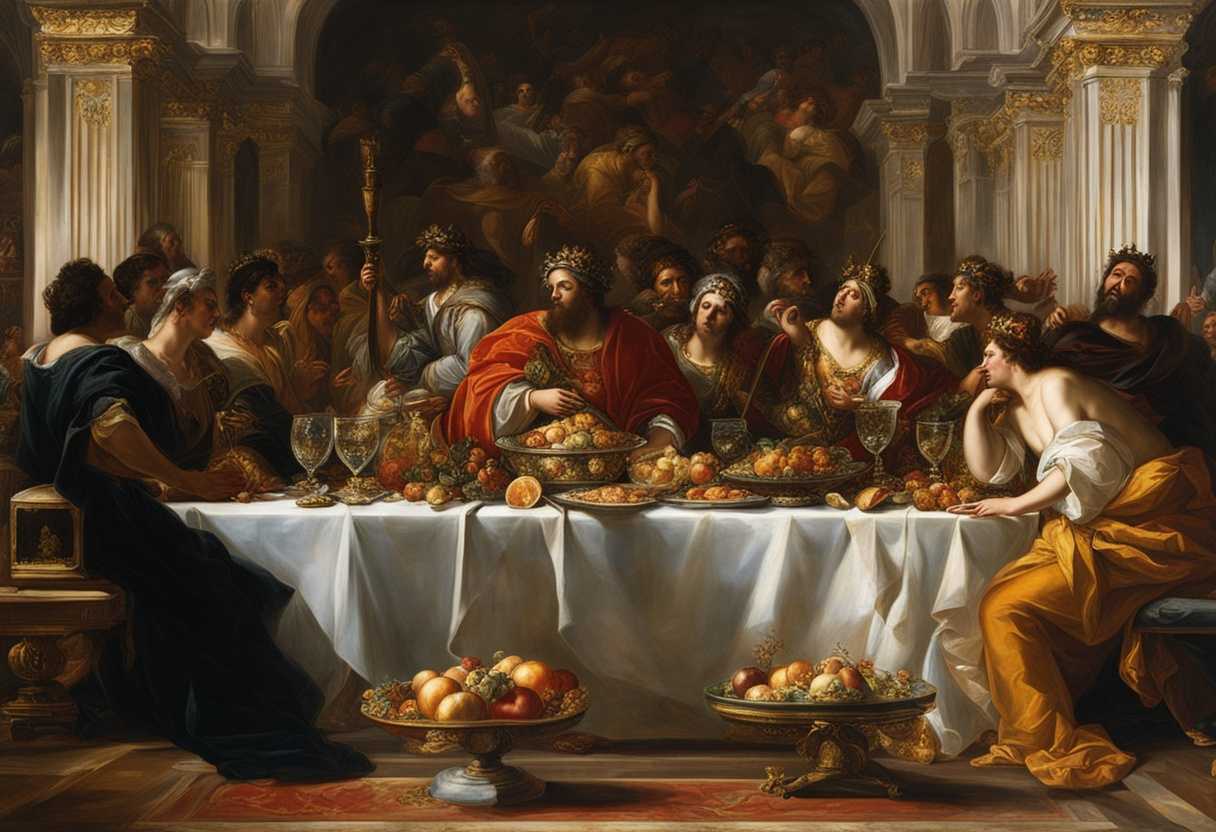
Setting the Scene for Daniel 5:1-4
The scene in Daniel 5:1-4 takes place in the grand banquet hall of King Belshazzar’s palace in ancient Babylon. The room is adorned with opulent decorations, including gold and silver vessels taken from the temple in Jerusalem. The air is filled with the sounds of music and laughter as the king and his nobles indulge in a lavish feast to celebrate their power and wealth.
King Belshazzar, the ruler of Babylon, sits at the head of the table, surrounded by his wives, concubines, and officials. The guests are enjoying the finest food and wine, reveling in their opulence and excess. The mood is festive and carefree as they toast to their own greatness and power.
Suddenly, in the midst of the revelry, a mysterious hand appears and begins writing on the wall of the banquet hall. The king and his guests are struck with fear and confusion as they witness this supernatural occurrence. The scene is tense as they try to decipher the cryptic message, realizing that it is a warning of impending doom. The atmosphere in the banquet hall shifts from one of celebration to one of dread and uncertainty as they await the interpretation of the mysterious writing.
What is Daniel 5:1-4 about?
Imagine a lavish feast with the finest delicacies and the most precious sacred vessels taken from a holy temple. Belshazzar, the king, seems to be celebrating his power and wealth without any regard for the sacredness of these vessels. Suddenly, a mysterious message appears on the wall, spelling out his impending doom and the end of his reign.
This verse serves as a cautionary tale, reminding us of the consequences of arrogance, disrespect, and indulgence. It highlights the fleeting nature of power and wealth when not grounded in humility and reverence. It prompts us to reflect on our own actions and values. Are we using our resources and blessings for the greater good, or are we being careless and selfish like Belshazzar? The story challenges us to consider the importance of integrity, respect, and gratitude in our pursuits and interactions. Let us strive to cultivate a mindset of humility and respect for the sacred as we ponder the tale of Belshazzar’s feast and the ominous writing on the wall. Let us be mindful of the impact of our actions on others and let us be grateful for the blessings we have. May we choose to lead our lives with integrity and compassion, embodying values that withstand the test of time and adversity.
Understanding what Daniel 5:1-4 really means
The Book of Daniel provides us with a glimpse into the life of Daniel, a Jewish noble serving in the court of Babylonian kings during the Israelites’ exile in Babylon. In these verses, we witness King Belshazzar hosting a grand feast, a lavish display of his wealth and power. However, the opulence of the banquet is overshadowed by the sacrilege committed as sacred vessels from the Jerusalem temple are used for drinking wine. This act of using holy objects for mundane purposes symbolizes a profound disrespect for the sacred and a blatant disregard for the worship of the true God.
The guests at the feast further compound the offense by praising the gods of gold, silver, bronze, iron, wood, and stone. This idolatrous act reflects a common theme throughout the Bible, where the worship of material possessions or false gods is condemned. The commandment in Exodus 20:3-4 explicitly forbids the worship of any other gods or the creation of idols, emphasizing the sin of idolatry. Isaiah 42:8 reinforces this message by highlighting God’s exclusive claim to glory and the futility of praising idols.
The New Testament also addresses the dangers of mixing sacred and profane practices, as seen in 1 Corinthians 10:21. This verse warns against partaking in both the Lord’s table and the table of demons, emphasizing the incompatibility of true worship with idolatry. In a modern context, idolatry may not always manifest as the worship of physical idols but can take subtler forms such as materialism, celebrity obsession, or prioritizing worldly pursuits over spiritual growth.
The relevance of this passage to contemporary life is evident in its call for respect for the sacred and a reminder to guard against idolatry in all its forms. Just as Belshazzar’s actions desecrated the sacred vessels, we are challenged to reflect on how we treat that which is holy in our lives. By examining our priorities and ensuring that our worship is directed solely towards God, we can avoid falling into the trap of idolatry and maintain a reverent attitude towards the sacred.
Consider the analogy of a cherished family heirloom being carelessly used at a gathering, mirroring the disrespect shown to the sacred vessels in this passage. Reflect on areas of your life where you may be prioritizing worldly pursuits over your relationship with God. How can you cultivate a greater sense of reverence for the sacred in your daily interactions and choices? By contemplating these questions and aligning our actions with a spirit of reverence, we can heed the lessons of Belshazzar’s folly and strive for a life centered on honoring the true God.
What are the consequences of lacking reverence for God?
Lacking reverence for God can lead to arrogance and a sense of self-sufficiency, as seen in the behavior of King Belshazzar in Daniel 5:1-4. Belshazzar’s lack of reverence for God is displayed through his blasphemous act of using the holy vessels from the temple of Jerusalem for his own pleasure and drunken revelry. This demonstrates his disrespect for the sacred and his disregard for the consequences of his actions.
The consequences of lacking reverence for God are evident in the swift judgment that falls upon Belshazzar. A supernatural hand appears in the midst of the feast and writes a message on the wall, striking fear and confusion into the heart of the king and his companions. This event serves as a powerful reminder of the importance of honoring and respecting God, as well as the consequences that can come from failing to do so. Belshazzar’s lack of reverence for God ultimately leads to his downfall because he is unable to interpret the message on the wall and seeks the help of Daniel. This serves as a cautionary tale about the dangers of pride and arrogance, and the importance of giving due respect and honor to God.
Application
In the fast-paced race of life, let’s not let pride blind our hearts. Let’s take a moment to ponder our actions and ensure they resonate with our values. Like fine-tuning a delicate instrument, let’s strive for faithfulness and humility in our work and family. Will you pause and reflect on your path, seeking the light to guide you?

Reverend Michael Johnson is an experienced Church Minister with a profound expertise in spirituality and guidance. With a serene presence and a compassionate heart, he has faithfully served his congregation for over 20 years, leading them on a spiritual journey towards inner peace and enlightenment. Reverend Johnson’s extensive knowledge of religious philosophies and profound understanding of human nature have made him a trusted confidant and mentor to many, as he seamlessly weaves his profound wisdom into life teachings. Reverend Johnson’s calming demeanor and empathetic nature continue to uplift and heal souls, nurturing a sense of unity and tranquility within his community.