
Deuteronomy 12:4 is about the command to not worship God in the same way that other nations worship their gods, as the Israelites are to follow the specific instructions and guidelines given to them by God.
4 You shall not worship the Lord your God in that way.
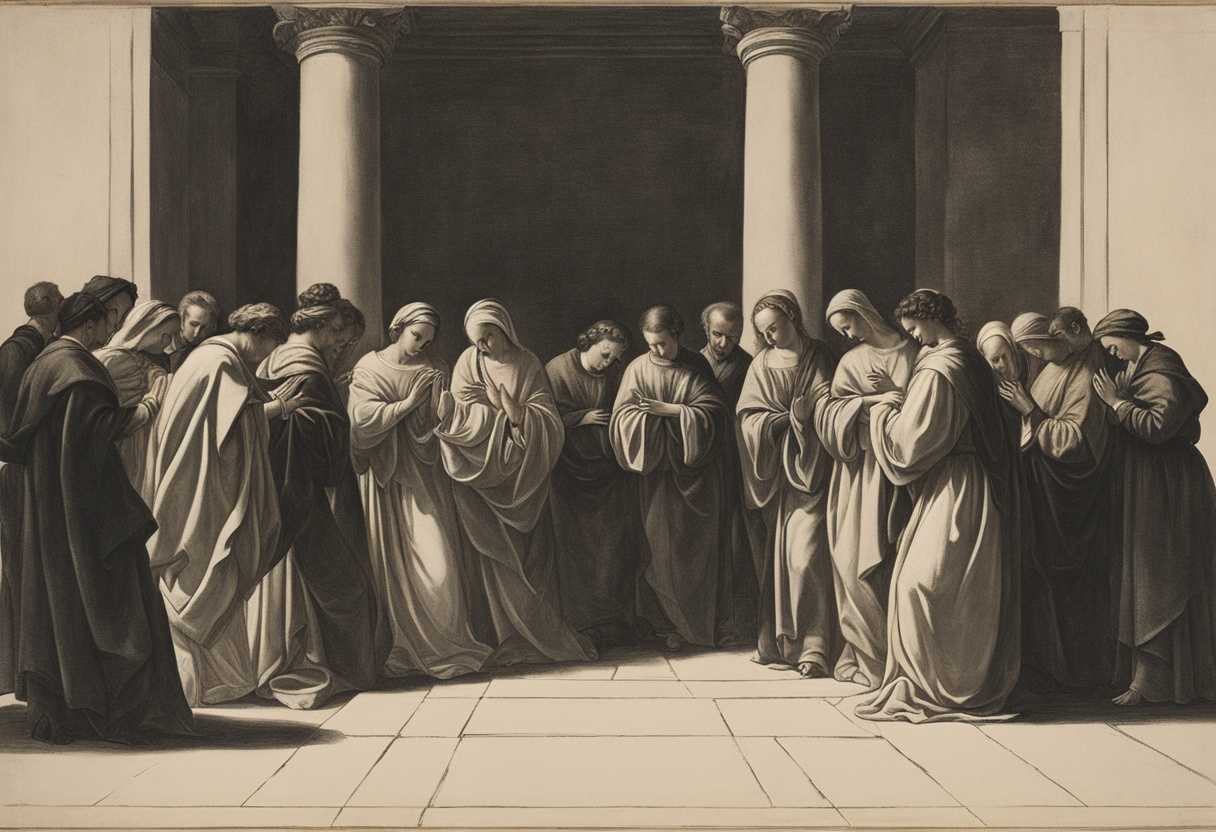
Setting the Scene for Deuteronomy 12:4
The scene in Deuteronomy 12:4 takes place during the time when the Israelites had just entered the Promised Land after wandering in the wilderness for forty years. The Israelites, led by Moses, had conquered various nations and were now settling in the land that God had promised to give them. The people had set up camp in different areas, and Moses was instructing them on how to worship and serve the Lord in the new land.
In this particular scene, Moses is addressing a large gathering of Israelites who have come together to hear his words. The setting is a vast open space, with the people gathered around a central area where Moses is standing. The Israelites are eager to learn and follow God’s commands as they establish their new lives in the Promised Land. The atmosphere is one of anticipation and reverence as Moses imparts the importance of worshiping God in the prescribed manner, emphasizing the need to destroy all pagan altars and places of worship in the land they are inheriting.
As the Israelites listen intently to Moses’ instructions, they understand the gravity of the situation and the significance of following God’s commands to ensure their success and prosperity in the land. The scene is filled with a sense of unity and purpose as the people commit to obeying God’s laws and dedicating themselves to worshiping Him alone in their new homeland.
What is Deuteronomy 12:4 about?
This verse cautions against following the practices of pagan nations when it comes to worshiping God. It emphasizes the importance of maintaining the purity and sincerity of worship, distinct from the traditions and rituals of other belief systems. This verse serves as a reminder to believers to remain faithful to the unique teachings and principles of their own faith by instructing them not to adopt the ways of pagan worship.
Think about it this way: imagine a beautiful painting created by a skilled artist. Each stroke and color is carefully chosen to convey a specific message or evoke a particular emotion. Similarly, our worship should be a reflection of our reverence and connection to God, expressing our faith in a genuine and authentic manner. We uphold the sanctity of our worship and honor the relationship we have with the divine by avoiding the practices of pagan nations. We should strive to worship God with pure hearts, free from external influences that may dilute the significance of our devotion.
Understanding what Deuteronomy 12:4 really means
Deuteronomy 12:4 presents a crucial directive in the context of the Israelites’ journey towards the Promised Land. As Moses addresses the people, he emphasizes the significance of not emulating the worship practices of the neighboring nations. This command carries a profound message about the purity and faithfulness required in worshipping God. It serves as a stark reminder to the Israelites, and by extension to us today, to uphold the sanctity of worship and not succumb to the allure of practices that deviate from God’s commands.
Drawing parallels to other biblical passages, such as Exodus 20:3-5 and Leviticus 18:3, we see a consistent theme against idolatry and the adoption of foreign customs. These verses collectively underscore the importance of maintaining a distinct and faithful worship of the one true God. Even in the New Testament, Paul’s exhortation in 1 Corinthians 10:14 to “flee from idolatry” reinforces the enduring relevance of this principle across different eras.
In our contemporary society, characterized by a myriad of beliefs and ideologies, the call to avoid compromising worship practices remains as pertinent as ever. The verse prompts us to reflect on the influences that shape our worship and to ensure that they align with biblical truths rather than conforming to societal norms. Just as the Israelites were urged to remain steadfast in their devotion amidst external pressures, we are encouraged to evaluate our worship practices and uphold the purity of our faith.
Consider a family relocating to a foreign land, tempted to adopt the customs of their new environment. Similarly, as Christians navigating a diverse cultural landscape, we face the constant challenge of preserving the integrity of our worship. This analogy highlights the need to cling to our spiritual heritage and resist the allure of practices that contradict our faith. It underscores the importance of grounding our worship in the unchanging truths of Scripture rather than being swayed by transient trends.
As we ponder Deuteronomy 12:4, let us introspect on our worship habits. Do they reflect a genuine devotion to God, untainted by external influences? Are we intentional in upholding the purity and sincerity of our worship, or have we unknowingly allowed worldly customs to seep into our spiritual practices? This verse beckons us to reevaluate our approach to worship, ensuring that it remains centered on God’s Word and free from contamination by secular ideologies.
In conclusion, Deuteronomy 12:4 stands as a timeless admonition to safeguard the sanctity of our worship. It urges us to uphold the purity and faithfulness of our devotion to God, resisting the pressures to conform to worldly standards. Let us heed this call to maintain a worship that is pleasing to God, rooted in His truth, and unwavering in its commitment to honoring Him alone.
How can we remain faithful to God alone?
To remain faithful to God alone, we must avoid worshipping any other gods or idols. This means putting God first in our hearts and lives, trusting in Him alone for our salvation and guidance. We should not allow anything or anyone else to take precedence over our devotion to God. We show our commitment to maintaining a strong and exclusive relationship with God by keeping our focus solely on Him.
One way to ensure our faithfulness to God is to regularly examine our hearts and actions to identify any areas where we may be tempted to turn to other gods, whether they be tangible idols or intangible desires. We must actively choose to align ourselves with God’s will and commandments, seeking His strength and guidance to resist temptation and remain steadfast in our faith. We can confidently rely on God alone for our provision, protection, and purpose by trusting in His sovereignty and goodness. Remaining faithful to God alone ultimately requires a daily commitment to walk in His ways, seeking to honor and glorify Him in all that we do. We can strengthen our faith and trust in God alone by cultivating a deep relationship with Him through prayer, study of His Word, and fellowship with other believers. When we prioritize God above all else and strive to live in accordance with His principles, we demonstrate our unwavering devotion to Him and experience the fullness of the abundant life He promises to those who love Him wholeheartedly.
Application
Imagine your life as a busy city. The hustle can lead us astray, but Deuteronomy 12:4 reminds us not to follow the crowd. Your faith should be like a lighthouse—steady and unwavering. Dedicate your worship solely to God, just as you prioritize your family and career. Will you stand firm and honor Him in every part of your life?

Reverend Michael Johnson is an experienced Church Minister with a profound expertise in spirituality and guidance. With a serene presence and a compassionate heart, he has faithfully served his congregation for over 20 years, leading them on a spiritual journey towards inner peace and enlightenment. Reverend Johnson’s extensive knowledge of religious philosophies and profound understanding of human nature have made him a trusted confidant and mentor to many, as he seamlessly weaves his profound wisdom into life teachings. Reverend Johnson’s calming demeanor and empathetic nature continue to uplift and heal souls, nurturing a sense of unity and tranquility within his community.