
Deuteronomy 14:22-29 is about the importance of tithing and generosity towards those in need, highlighting that by honoring God with one’s possessions and sharing with the less fortunate, one can experience blessings and abundance in their lives.
22 “You shall tithe all the yield of your seed that comes from the field year by year.
23 And before the Lord your God, in the place that he will choose, to make his name dwell there, you shall eat the tithe of your grain, of your wine, and of your oil, and the firstborn of your herd and flock, that you may learn to fear the Lord your God always.
24 And if the way is too long for you, so that you are not able to carry the tithe, when the Lord your God blesses you, because the place is too far from you, which the Lord your God chooses, to set his name there,
25 then you shall turn it into money and bind up the money in your hand and go to the place that the Lord your God chooses
26 and spend the money for whatever you desire—oxen or sheep or wine or strong drink, whatever your appetite craves. And you shall eat there before the Lord your God and rejoice, you and your household.
27 And you shall not neglect the Levite who is within your towns, for he has no portion or inheritance with you.
28 “At the end of every three years you shall bring out all the tithe of your produce in the same year and lay it up within your towns.
29 And the Levite, because he has no portion or inheritance with you, and the sojourner, the fatherless, and the widow, who are within your towns, shall come and eat and be filled, that the Lord your God may bless you in all the work of your hands that you do.
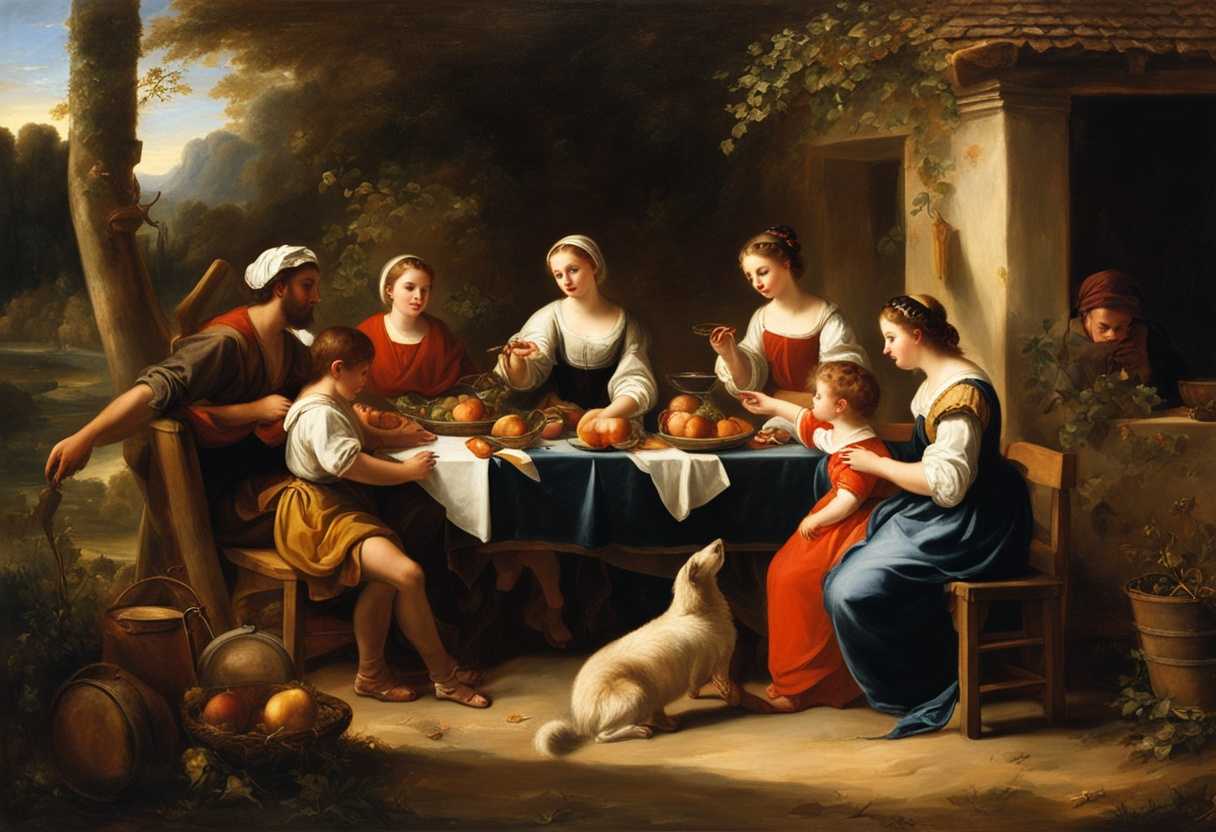
Setting the Scene for Deuteronomy 14:22-29
In Deuteronomy chapter 14, we find the scene set in the ancient land of Israel during the time of Moses. The Israelites have been wandering in the wilderness for years, following their deliverance from slavery in Egypt. As they settle in the Promised Land, Moses gathers the people together for a special assembly to remind them of the laws and commandments given to them by God.
The assembly takes place in a vast open field, with the majestic mountains of Canaan in the background and the Jordan River flowing nearby. The Israelites, men, women, and children, gather around Moses as he stands on a large rock, his face illuminated by the setting sun. The people listen intently as Moses speaks to them about the importance of tithing and giving offerings to the Lord.
As Moses speaks, the people are reminded of the blessings that come from obeying God’s commandments and the importance of sharing their resources with those in need. They are encouraged to bring a tithe of their produce, livestock, and other offerings to the tabernacle as a way of showing gratitude to God for His provision. The scene is filled with a sense of reverence and awe as the Israelites commit themselves to following God’s laws and living in obedience to His will.
What is Deuteronomy 14:22-29 about?
This verse is a powerful reminder of the importance of tithing and sharing with others in need with a sincere heart, as a way to honor and show gratitude towards God for all the blessings He has bestowed upon us. It emphasizes the significance of giving back a portion of our resources, whether it be money, time, or talents, in order to support those who are less fortunate and in need of assistance. We not only fulfill our duty to help others but also demonstrate our faith and trust in God’s provision by doing so.
Reflecting on this verse prompts us to consider the ways in which we can use our resources to make a positive impact on the lives of others and to further the work of God’s kingdom on earth. It challenges us to evaluate our priorities and examine whether we are truly honoring God with our finances and possessions. Are we willing to sacrifice our own comfort and convenience in order to help those in need? Are we approaching tithing and sharing with a genuine desire to serve others and glorify God, or are we simply fulfilling an obligation out of duty? May we all strive to be cheerful and generous givers, knowing that our acts of kindness and generosity have the power to bring hope and healing to those around us.
Understanding what Deuteronomy 14:22-29 really means
Deuteronomy 14:22-29 delves into the ancient practice of tithing, urging individuals to allocate a tenth of their produce for the Lord. This directive is nestled within the broader context of Moses imparting final guidance to the Israelites before their entry into the Promised Land. The phrase “Be sure to set aside a tenth of all that your fields produce each year” underscores the significance of tithing, a tradition centered on offering a portion of one’s income or harvest to God. It serves as a tangible demonstration of gratitude and acknowledgment of God’s provision in our lives.
“Eat the tithe of your grain, new wine and olive oil, and the firstborn of your herds and flocks in the presence of the Lord your God” emphasizes the communal and joyous nature of tithing. It portrays a scene of shared celebration and fellowship with God, highlighting the interconnectedness between worship and sustenance. Furthermore, the passage underscores the purpose behind this practice: “So that you may learn to revere the Lord your God always.” Tithing transcends a mere financial transaction; it is a spiritual discipline aimed at fostering reverence and dependency on God.
Drawing parallels with other biblical passages enriches our understanding of tithing’s significance. Malachi 3:10 challenges believers to bring their tithes faithfully, promising abundant blessings in return. Similarly, 2 Corinthians 9:7 underscores the importance of giving cheerfully and purposefully, reflecting a heart attuned to God’s generosity. These verses reinforce the timeless principles of generosity, trust, and joyful giving that underpin the act of tithing.
In a contemporary context, the practice of tithing remains relevant, offering valuable lessons on stewardship, generosity, and reliance on God’s provision. Amidst a culture that often prioritizes material wealth and self-reliance, tithing serves as a counter-cultural reminder to place God and others at the forefront of our financial decisions. It cultivates a spirit of gratitude and community, prompting us to share our blessings with others and support the mission of the church.
Consider a family’s journey of embracing tithing amidst financial challenges. Despite initial apprehensions, they discovered a profound sense of peace, unexpected blessings, and a deepened trust in God’s faithfulness. This anecdote illustrates how tithing can transform our perspective on finances, fostering a deeper connection with God and a heightened awareness of His provision.
In conclusion, Deuteronomy 14:22-29 beckons us to view tithing not as a mere duty but as a gateway to intimacy with God. By setting aside a portion of our resources, we acknowledge God’s sovereignty, express gratitude for His provision, and align our priorities with His kingdom. This practice, rooted in ancient tradition, continues to shape hearts and minds today, inviting us into a journey of trust, generosity, and reverence towards the One who sustains us.
How can we honor God with our possessions?
We can honor God with our possessions by faithfully tithing and giving offerings. Tithing involves giving a portion of our income back to God, demonstrating our trust in Him as our provider. We acknowledge His sovereignty over our lives and demonstrate our obedience to His commandments by setting aside a tenth of all our produce or income for the Lord. Additionally, giving offerings above and beyond the tithe is a way to express gratitude and generosity towards God for His blessings in our lives.
Furthermore, we can honor God with our possessions by being mindful of how we use them. This means responsibly managing our resources, being good stewards of what God has entrusted to us, and using our possessions to further His kingdom and bless others. Whether it is through supporting those in need, contributing to the work of ministry, or investing in initiatives that align with God’s purposes, our choices with our possessions should reflect our desire to honor and glorify Him in all that we do.
Application
Just as you manage your work and family, consider your resources. God calls us to be generous, helping those who struggle. Share what you’ve been blessed with—support the widows, orphans, and foreigners among us. Show your faith through action, not just words. Will you step up and make a difference today?

Reverend Michael Johnson is an experienced Church Minister with a profound expertise in spirituality and guidance. With a serene presence and a compassionate heart, he has faithfully served his congregation for over 20 years, leading them on a spiritual journey towards inner peace and enlightenment. Reverend Johnson’s extensive knowledge of religious philosophies and profound understanding of human nature have made him a trusted confidant and mentor to many, as he seamlessly weaves his profound wisdom into life teachings. Reverend Johnson’s calming demeanor and empathetic nature continue to uplift and heal souls, nurturing a sense of unity and tranquility within his community.