
Deuteronomy 16:13-15 is about celebrating the Feast of Tabernacles as a reminder of the Israelites’ journey and dependence on God, while also stressing the importance of joy, gratitude, and communal unity in worshiping God.
13 “You shall keep the Feast of Booths seven days, when you have gathered in the produce from your threshing floor and your winepress.”
14 You shall rejoice in your feast, you and your son and your daughter, your male servant and your female servant, the Levite, the sojourner, the fatherless, and the widow who are within your towns.
15 Seven days you shall keep a solemn feast to the Lord your God in the place that the Lord will choose, because the Lord your God will bless you in all your produce and in all the work of your hands, so that you will be altogether joyful.
Setting the Scene for Deuteronomy 16:13-15
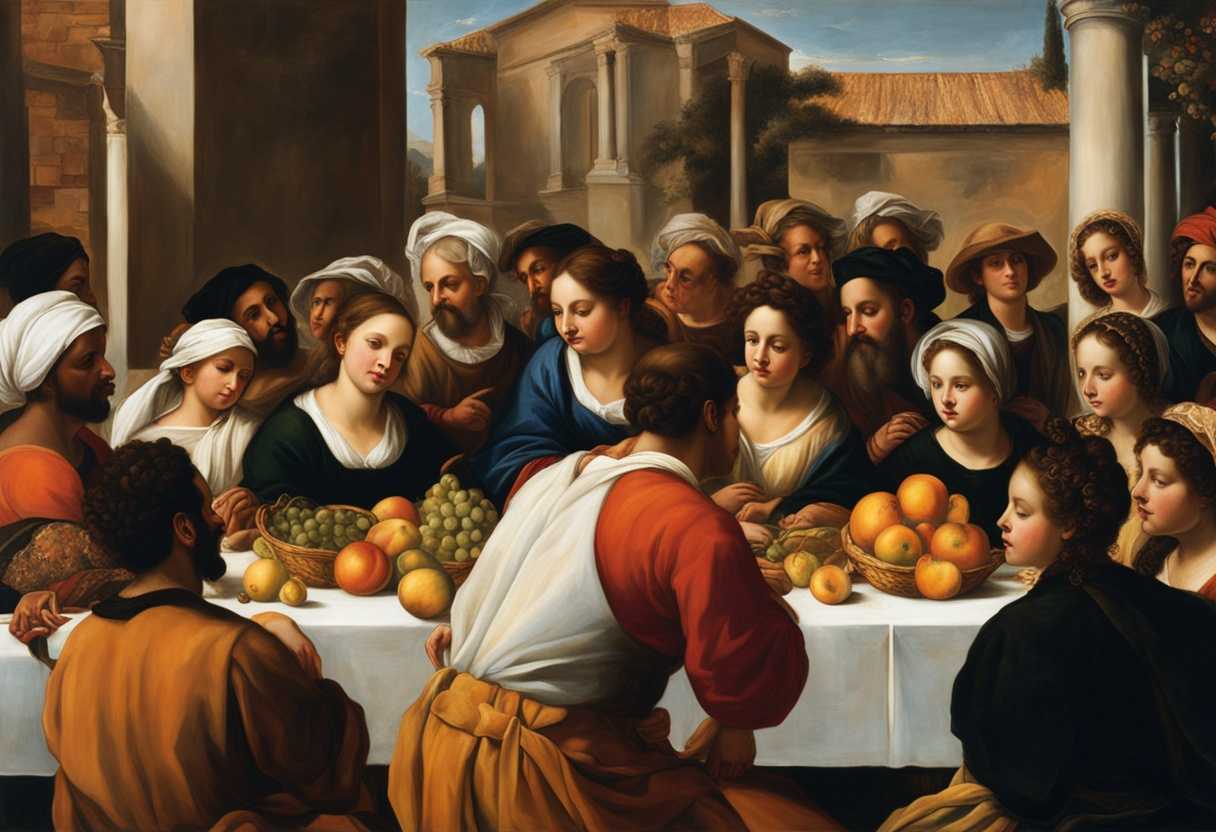
The scene described in Deuteronomy 16:13-15 takes place during the Feast of Tabernacles, also known as the Feast of Booths or Sukkot. The Israelites have gathered in Jerusalem to celebrate this important festival, as commanded by God. The atmosphere is one of joy and celebration as families and individuals from all over the land come together to commemorate God’s provision during their time in the wilderness.
The scene is set in the courtyard of the temple, where a large sukkah, or temporary shelter, has been constructed. Inside the sukkah, the Israelites are dining on festive meals, sharing stories, and singing songs of praise. The air is filled with the aroma of roasted meats and freshly baked bread, and colorful decorations adorn the walls of the sukkah. The sound of laughter and music can be heard as children play and adults engage in lively conversation.
Among the crowd are Moses, Aaron, and other leaders of the Israelites, who are leading the people in worship and thanksgiving. The scene is a beautiful display of unity and faith as the Israelites come together to honor God and remember His faithfulness throughout their history. The Feast of Tabernacles serves as a reminder of God’s provision and protection, as well as a time of rejoicing and gratitude for all that He has done for His people.
What is Deuteronomy 16:13-15 about?
This verse reminds us of the importance of celebrating and honoring God for all that He provides for us. The Feast of Tabernacles was a joyful and festive celebration in the Old Testament that commemorated the Israelites’ journey through the wilderness and God’s provision of food, water, and shelter during that time. The Israelites were acknowledging God’s faithfulness and goodness in their lives by observing this feast for seven days.
Think about the ways God has provided for you in your own life. How has He been faithful to you through challenges and trials? How can you take time to honor and celebrate God’s provision in your life? We can also set aside time to reflect on and appreciate all that God has done for us, just as the Israelites celebrated the Feast of Tabernacles to remember God’s faithfulness. Let’s cultivate an attitude of gratitude and celebrate God’s provision in our lives, trusting in His continued faithfulness for the future.
Understanding what Deuteronomy 16:13-15 really means
Deuteronomy 16:13-15 provides us with a glimpse into the ancient Israelites’ observance of the Feast of Tabernacles, a time of jubilant celebration and thanksgiving for the harvest. This festival was a significant event in the Jewish calendar, where the people were instructed to come together in unity and rejoice before the Lord. The command to “Celebrate the Festival of Tabernacles for seven days” underscores the importance of setting aside a dedicated period for joy and reflection on God’s provision and blessings. It serves as a reminder for us today to prioritize moments of gratitude and celebration in our lives, acknowledging the goodness of God.
The directive to “Be joyful at your festival” highlights the essential role of joy in worship and communal gatherings. It emphasizes the importance of approaching our times of celebration with a positive and grateful heart, recognizing the blessings we have received. Additionally, the promise that “The Lord your God will bless you in all your harvest and in all the work of your hands” serves as a reassurance of God’s provision and care for His people. It encourages us to trust in His faithfulness and rely on Him for our needs.
In exploring related biblical passages such as Leviticus 23:33-43, Nehemiah 8:14-18, and John 7:37-38, we see how the themes of gratitude, community, and reliance on God are woven throughout Scripture. These principles are not confined to ancient rituals but are timeless and relevant to our lives today. In a world that often prioritizes individual success and material gain, the call to celebrate, come together in community, and acknowledge God’s blessings is a refreshing reminder of what truly matters.
Consider a modern-day scenario where a family gathers annually for a Thanksgiving meal, sharing stories of perseverance, expressing gratitude, and recognizing God’s hand in their lives. This simple act of coming together in joy and thankfulness strengthens their bonds and renews their hope, mirroring the essence of the Feast of Tabernacles. It illustrates how setting aside time for communal celebration and gratitude can have a profound impact on our spiritual and emotional well-being.
In conclusion, Deuteronomy 16:13-15 invites us to embrace a rhythm of celebration and gratitude in our lives. By cultivating a heart of joy, fostering a spirit of community, and acknowledging God’s faithfulness, we can enrich not only our own lives but also the lives of those around us. May we heed the call to rejoice, give thanks, and celebrate the blessings that God has bestowed upon us.
How can we honor and worship God in celebration?
We can follow the instructions given in Deuteronomy 16:13-15 in celebrating and honoring God. One way to honor God in celebration is by appearing before Him and bringing offerings with a joyful heart. When we come into God’s presence with a spirit of gratitude and joy, it is a form of worship that pleases Him. Additionally, the verse emphasizes the importance of recognizing God’s blessings and provision in our lives by acknowledging His hand in all that we have.
During times of celebration, we can also honor and worship God by gathering together with fellow believers. Coming together as a community to worship God not only strengthens our faith but also fosters unity and encouragement among believers. We acknowledge His faithfulness and sovereignty in our lives by celebrating God’s goodness together, cultivating a sense of awe and reverence for Him. Gathering with others to worship and celebrate God’s goodness ultimately honors Him and gives Him the praise He deserves.
Application
Unwrap the gift of gratitude from Deuteronomy 16:13-15 and embrace the spirit of celebration that honors the abundance in your life. Let’s sow the seeds of thankfulness in the fields of our daily struggles and triumphs, not just when the sun shines brightly, but also when the storms rage. Can you commit to cultivating a garden of joy to honor the blessings that overflow in your life?

Reverend Michael Johnson is an experienced Church Minister with a profound expertise in spirituality and guidance. With a serene presence and a compassionate heart, he has faithfully served his congregation for over 20 years, leading them on a spiritual journey towards inner peace and enlightenment. Reverend Johnson’s extensive knowledge of religious philosophies and profound understanding of human nature have made him a trusted confidant and mentor to many, as he seamlessly weaves his profound wisdom into life teachings. Reverend Johnson’s calming demeanor and empathetic nature continue to uplift and heal souls, nurturing a sense of unity and tranquility within his community.