
Deuteronomy 16:8 is about remembering and celebrating the liberation from slavery in Egypt as a symbol of God’s faithfulness and provision for His people.
8 Six days you shall eat unleavened bread, and on the seventh day there shall be a solemn assembly to the Lord your God. You shall do no work on it.
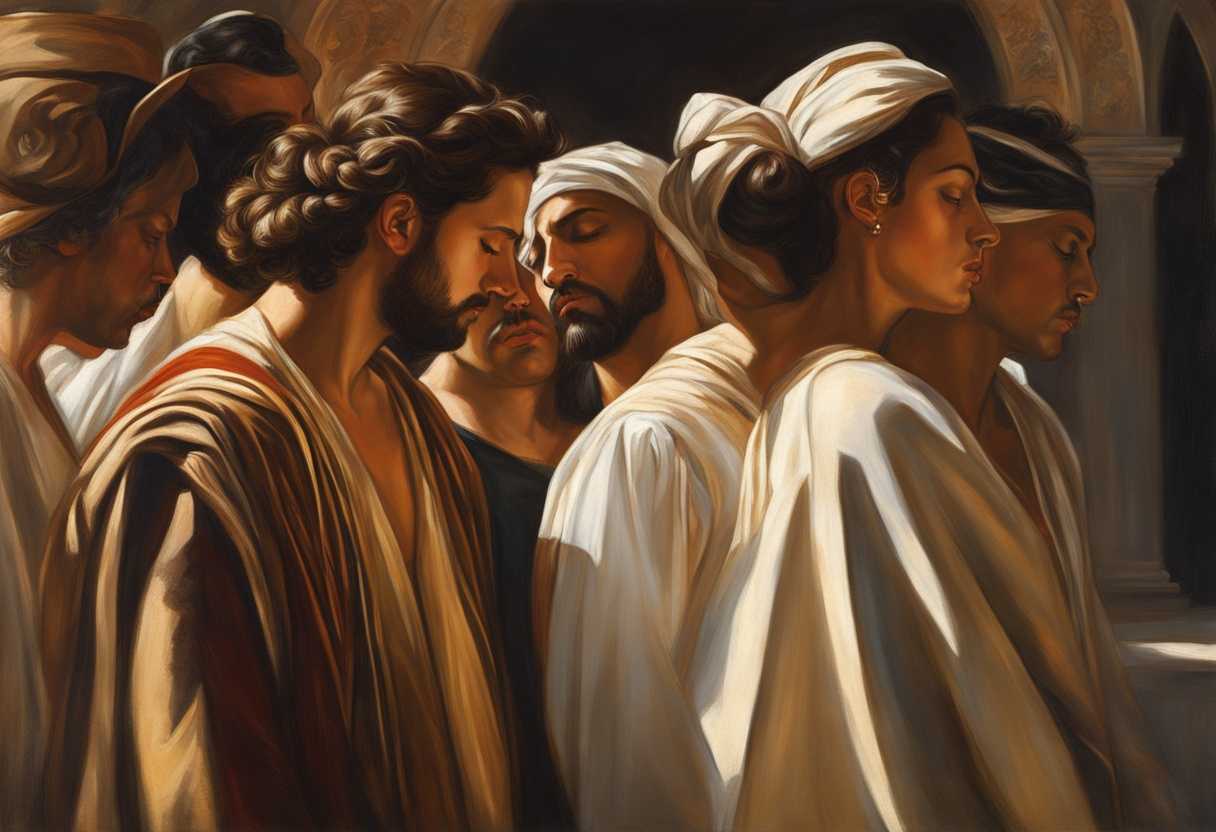
Setting the Scene for Deuteronomy 16:8
In Deuteronomy chapter 16, we find the scene set during the Feast of Tabernacles, also known as the Feast of Booths or Sukkot. The Israelites have gathered in Jerusalem to celebrate this important festival, as commanded by God. The atmosphere is one of joy and thanksgiving as families and individuals from all over the land come together to commemorate God’s provision during their time in the wilderness.
Among the crowd are Moses, Aaron, and other leaders of the Israelites, who have been instrumental in guiding the people through their journey. The scene is bustling with activity as people construct temporary shelters or booths made of branches and leaves, symbolizing the dwellings the Israelites lived in during their time in the wilderness. The air is filled with the sounds of prayers, songs, and the aroma of sacrifices being offered in gratitude to God.
As the sun begins to set, the people gather around a central location, possibly the Tabernacle or the Temple, to listen to the reading of the Law by the priests and leaders. The words of Deuteronomy 16 are recited, reminding the people of God’s faithfulness and their covenant with Him. It is a sacred moment of reflection, worship, and unity as the Israelites come together to honor God and His commandments during this special time of celebration.
What is Deuteronomy 16:8 about?
The command to remember the Exodus and celebrate the Feast of Unleavened Bread for seven days in this verse is a powerful reminder of God’s faithfulness and provision. The Exodus refers to the liberation of the Israelites from slavery in Egypt, a miraculous event where God displayed His power and fulfilled His promise to deliver His people. The Israelites were not only honoring their history and heritage but also expressing gratitude for God’s protection and guidance by commemorating this event and observing the Feast of Unleavened Bread.
The Feast of Unleavened Bread signifies a period of reflection, repentance, and purification. The removal of leaven, a symbol of sin, from their homes during this time represents the need to cleanse oneself from impurity and walk in righteousness. The Israelites committed themselves to a continuous journey of spiritual growth and dedication to God by observing this feast for seven days. This verse challenges us to consider our own spiritual journey and the ways in which we can remember and celebrate God’s deliverance in our lives. How can we emulate the faithfulness and obedience of the Israelites by commemorating significant moments of God’s intervention in our lives? How can we use the Feast of Unleavened Bread as a time for introspection and renewal in our relationship with God? Let us reflect on this verse.
Understanding what Deuteronomy 16:8 really means
Deuteronomy 16:8 is nestled within a passage that intricately details the observance of the Passover and the Feast of Unleavened Bread, pivotal events in the history of the Israelites. This verse specifically directs the Israelites on how to commemorate the final day of the seven-day festival, a celebration deeply rooted in their deliverance from Egypt, symbolizing freedom and God’s unwavering provision.
In exploring related passages, Exodus 12:15-20 lays the foundation for the Feast of Unleavened Bread, stressing the significance of purging leaven from their dwellings. Paul, in 1 Corinthians 5:7-8, draws parallels between Christ as the ultimate Passover lamb and urges believers to partake in sincere and truthful celebrations, devoid of the old leaven of malice and wickedness. Furthermore, Matthew 26:17-30 showcases Jesus observing the Passover with His disciples, establishing the Lord’s Supper as a bridge between the Old Testament traditions and the New Covenant.
The enduring relevance of Deuteronomy 16:8 resonates with contemporary believers on various levels. Firstly, it underscores the principle of remembrance, akin to the Israelites recalling their liberation from Egypt, urging Christians to reflect on Christ’s sacrificial deliverance from sin. Secondly, the call to holiness is vividly portrayed through the removal of leaven, symbolizing the eradication of sin from one’s life. Lastly, the emphasis on communal worship highlights the importance of congregational gatherings to honor and glorify God collectively.
Consider a family tradition where loved ones assemble annually to commemorate a significant occasion, reminiscing about the past and reinforcing familial bonds. Similarly, the Feast of Unleavened Bread served as a time for the Israelites to unite, recollect their shared history, and fortify their faith in God, fostering a sense of community and spiritual solidarity.
Delving into the meaningful phrases within Deuteronomy 16:8 unveils profound insights. “Six days you shall eat unleavened bread” underscores obedience and the symbolic consumption of unleavened bread, emblematic of purity and separation from sin. “On the seventh day there shall be a solemn assembly to the Lord your God” accentuates the festival’s culmination with a special convocation dedicated to worship and introspection, emphasizing the sanctity of setting aside time for God. “You shall do no work on it” signifies rest and devotion, prompting believers to prioritize their relationship with God over mundane tasks and laborious routines.
By comprehending the historical backdrop, interconnected scriptures, and the nuanced meanings encapsulated in these phrases, we glean profound insights into how Deuteronomy 16:8 beckons us to a life characterized by remembrance, holiness, and communal worship, principles that endure as poignant and transformative in our contemporary lives.
How can we remember God’s deliverance in our lives?
One way we can remember God’s deliverance in our lives is by celebrating and reflecting on the significant moments when God provided for us in times of need. We can cultivate a heart of gratitude and faith in God’s continued provision and faithfulness by setting aside designated times to remember and honor these instances of deliverance.
Additionally, we can create tangible reminders of God’s deliverance by establishing traditions or symbols that help us recall those moments when God intervened on our behalf. This may include keeping a journal of answered prayers, displaying reminders in our homes or workplaces, or sharing our testimonies with others to encourage and inspire them with God’s faithfulness. We can strengthen our relationship with God, deepen our trust in His power and provision, and remain steadfast in faith during future trials by intentionally reflecting on and commemorating the times when He delivered us from challenges or hardships.
Application
Let’s take a moment to appreciate the blessings we’ve been given and show gratitude towards our Creator in everything we do. Just as we dedicate ourselves to our work and family, let’s also commit to honoring and praising the Lord. Will you join me in expressing our reverence for God through our thoughts and deeds?

Reverend Michael Johnson is an experienced Church Minister with a profound expertise in spirituality and guidance. With a serene presence and a compassionate heart, he has faithfully served his congregation for over 20 years, leading them on a spiritual journey towards inner peace and enlightenment. Reverend Johnson’s extensive knowledge of religious philosophies and profound understanding of human nature have made him a trusted confidant and mentor to many, as he seamlessly weaves his profound wisdom into life teachings. Reverend Johnson’s calming demeanor and empathetic nature continue to uplift and heal souls, nurturing a sense of unity and tranquility within his community.