
Deuteronomy 18:20-22 is about the importance of discerning true prophets from false ones by requiring their predictions to come true, emphasizing the danger of speaking falsely in the name of God.
20 But the prophet who presumes to speak a word in my name that I have not commanded him to speak, or who speaks in the name of other gods, that same prophet shall die.
21 And if you say in your heart, ‘How may we know the word that the Lord has not spoken?’
22 when a prophet speaks in the name of the Lord, if the word does not come to pass or come true, that is a word that the Lord has not spoken; the prophet has spoken it presumptuously. You need not be afraid of him.
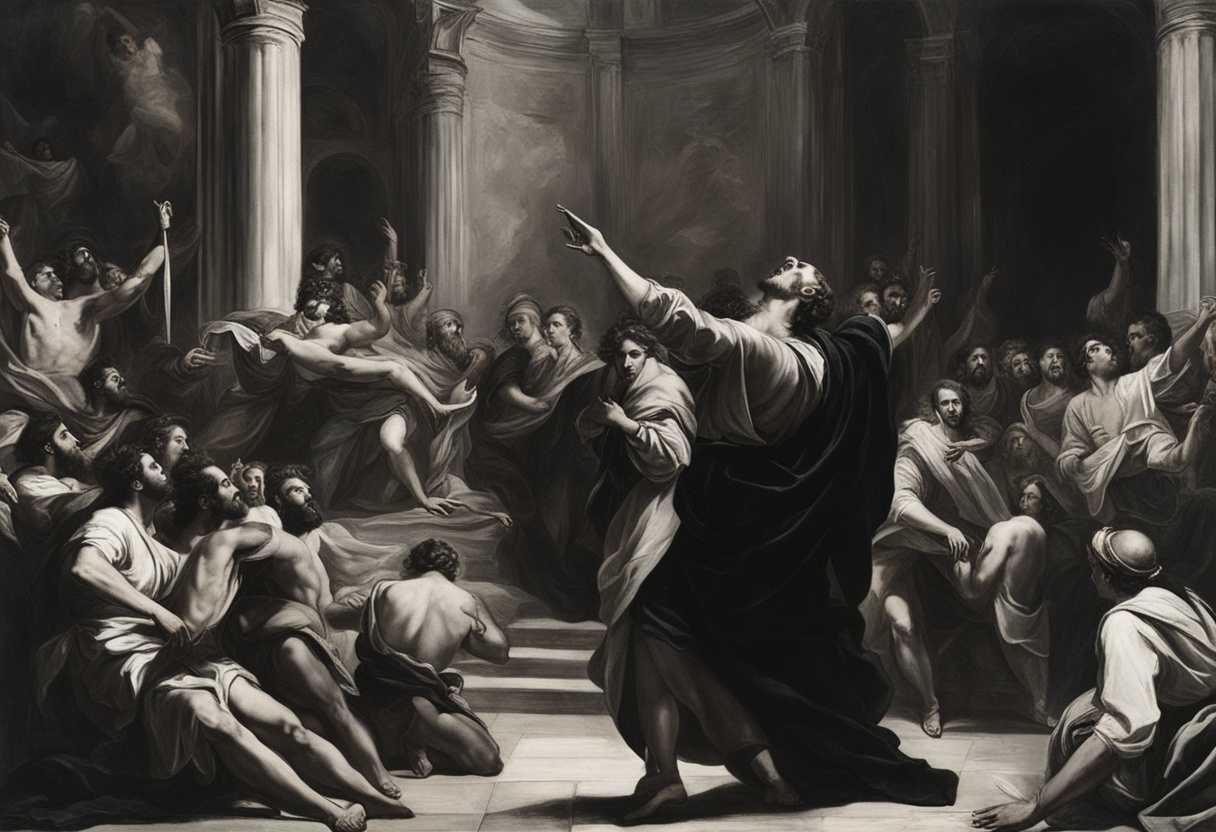
Setting the Scene for Deuteronomy 18:20-22
The scene in Deuteronomy 18:20-22 takes place in the ancient land of Israel, within the community of the Israelites. The setting is a solemn gathering of the people, with Moses, the revered leader and prophet, standing before them. The Israelites have gathered in the wilderness, surrounded by the vast expanse of sand dunes and rocky terrain, as they listen intently to the words of their leader.
Moses, with his long flowing beard and weathered face, speaks with authority and conviction as he delivers a message from God. The people, a mix of young and old, men and women, stand in respectful silence, their eyes fixed on Moses. They have come to rely on him as the intermediary between them and the divine, seeking guidance and wisdom in their journey through the wilderness.
As Moses warns the people about false prophets and the consequences of speaking falsely in the name of the Lord, a sense of reverence and fear fills the air. The Israelites understand the gravity of these words, knowing that their faith and obedience to God are paramount in their covenant relationship. In this moment, the community is united in their commitment to follow the true path laid out for them by God, as communicated through Moses.
What is Deuteronomy 18:20-22 about?
Let’s dive into this verse together to understand its deep meaning. It serves as a cautionary reminder to be vigilant against those who may try to deceive or lead us astray with their false teachings. We, as believers, must discern and stick to the authentic message of God. Following false prophets could lead us away from the path of righteousness and truth. We safeguard our faith and ensure we are following the right guidance by staying true to God’s genuine words. This verse encourages us to prioritize seeking and speaking the truth, even when faced with challenges or temptations to stray from it.
So, as we reflect on this verse, let’s ask ourselves: How can we discern between the words of false prophets and the true message of God? How can we ensure that we are speaking and living in alignment with God’s authentic teachings? Let’s make a conscious effort to stay grounded in the truth and trust in God’s guidance to navigate through any misleading paths that may come our way.
Understanding what Deuteronomy 18:20-22 really means
Deuteronomy 18:20-22, nestled within Moses’ counsel to the Israelites, serves as a beacon of guidance on distinguishing authentic prophets from false ones. The passage underscores the gravity of claiming divine authority without God’s command and the repercussions of speaking in the name of other gods. The severe consequence of death for false prophets highlights the sanctity of God’s word and the importance of upholding its purity. Moreover, the clear test provided for the authenticity of a prophet’s message by the fulfillment of their words reinforces the significance of discerning true prophecy.
In parallel, other biblical passages such as Jeremiah 23:16, Matthew 7:15-20, and 1 John 4:1 caution against false prophets and emphasize the need to test spiritual messages against the truth of God’s word. These scriptures collectively urge believers to exercise discernment in evaluating the authenticity of prophetic claims and teachings purportedly from God. They remind us of the accountability that accompanies speaking on behalf of the Lord and the necessity of remaining faithful to His revealed truth.
The relevance of Deuteronomy 18:20-22 extends to contemporary times, where a myriad of voices clamor for attention, each claiming divine insight. In a world rife with spiritual deception, this passage serves as a compass, guiding believers towards discernment and caution. It prompts individuals to scrutinize the messages they encounter, ensuring alignment with the principles laid out in Scripture. By heeding this call to discernment, believers can navigate the complexities of spiritual teachings with clarity and wisdom.
To illustrate the practical implications of this passage, envision a scenario where a community leader promises prosperity based on a vision that fails to materialize. The disappointment and disillusionment felt by the community mirror the cautionary tale of false prophets in Deuteronomy 18:20-22. This anecdote underscores the importance of verifying spiritual claims and seeking confirmation of God’s true guidance to avoid being led astray by empty promises.
In conclusion, Deuteronomy 18:20-22 stands as a timeless admonition, urging believers to uphold the integrity of God’s word and to exercise vigilance in discerning true prophecy. By internalizing the principles outlined in this passage and remaining steadfast in faithfulness to God’s revealed truth, individuals can navigate the spiritual landscape with clarity and confidence. Let us heed the wisdom encapsulated in these verses, guarding our hearts and minds against deception, and walking in the light of God’s unchanging truth.
Are prophets today speaking God’s truth or falsehood?
According to Deuteronomy 18:20-22, prophets who speak falsehood and claim to speak in the name of God are to be deemed false prophets. The verse specifically states that if a prophet speaks a word presumptuously in the name of God, which God has not commanded him to speak, or if he speaks in the name of other gods, that prophet shall be considered false.
Therefore, based on the teachings of this scripture, it is clear that prophets today who speak anything contrary to the truth of God, or claim to speak on behalf of other gods, are considered false prophets. It is essential to discern the messages being proclaimed by individuals who claim to be prophets and to compare them with the teachings found in the Bible to determine if they align with God’s truth. Individuals ultimately need to test the spirits and messages that prophets claim to convey to ensure they are in line with the Word of God. Those who do not adhere to the truth of God’s teachings and who speak falsehood are to be regarded as false prophets according to the guidance provided in Deuteronomy 18:20-22.
Application
Imagine your faith as a compass guiding you through the complexities of work and family life. In Deuteronomy 18:20-22, God emphasizes the importance of sharing His truth accurately, much like a project deadline can’t be missed or family values can’t be compromised. He asks us to test every message against the Bible, just like you’d verify a report before presenting it or seek solid advice when making pivotal family decisions. Are you ready to commit to studying the Bible diligently, ensuring you navigate life anchored in His truth?

Reverend Michael Johnson is an experienced Church Minister with a profound expertise in spirituality and guidance. With a serene presence and a compassionate heart, he has faithfully served his congregation for over 20 years, leading them on a spiritual journey towards inner peace and enlightenment. Reverend Johnson’s extensive knowledge of religious philosophies and profound understanding of human nature have made him a trusted confidant and mentor to many, as he seamlessly weaves his profound wisdom into life teachings. Reverend Johnson’s calming demeanor and empathetic nature continue to uplift and heal souls, nurturing a sense of unity and tranquility within his community.