
1 “If in the land that the Lord your God is giving you to possess someone is found slain, lying in the open country, and it is not known who killed him,”
2 then your elders and your judges shall come out, and they shall measure the distance to the surrounding cities.
3 And the elders of the city that is nearest to the slain man shall take a heifer that has never been worked and that has not pulled in a yoke.
4 and the elders of that city shall bring the heifer down to a valley with running water, which is neither plowed nor sown, and shall break the heifer’s neck there in the valley.
5 Then the priests, the sons of Levi, shall come forward, for the Lord your God has chosen them to minister to him and to bless in the name of the Lord, and by their word every dispute and every assault shall be settled.
6 And all the elders of that city nearest to the slain man shall wash their hands over the heifer whose neck was broken in the valley,
7 and they shall testify, ‘Our hands did not shed this blood, nor did our eyes see it shed.
8 forgive your people Israel, whom you have redeemed, O Lord, and do not set the guilt of innocent blood in the midst of your people Israel, so that their blood guilt be atoned for.’
9 So you shall purge the guilt of innocent blood from your midst, when you do what is right in the sight of the Lord.
10 “When you go out to war against your enemies, and the Lord your God gives them into your hand and you take them captive,
11 then you shall bring her home to your house, and she shall shave her head and pare her nails.
12 then you shall bring her home to your house, and she shall shave her head and pare her nails.
13 And she shall take off the clothes in which she was captured and shall remain in your house and lament her father and her mother a full month. After that you may go in to her and be her husband, and she shall be your wife.
14 But if you no longer delight in her, you shall let her go where she wants.
15 “If a man has two wives, the one loved and the other unloved, and both the loved and the unloved have borne him children, and if the firstborn son belongs to the unloved,
16 then on the day when he assigns his possessions as an inheritance to his sons, he may not treat the son of the loved as the firstborn in preference to the son of the unloved, who is the firstborn,
17 but he shall acknowledge the firstborn, the son of the unloved, by giving him a double portion of all that he has, for he is the firstfruits of his strength. The right of the firstborn is his.
18 “If a man has a stubborn and rebellious son who will not obey the voice of his father or the voice of his mother, and, though they discipline him, will not listen to them,
19 then his father and his mother shall take hold of him and bring him out to the elders of his city at the gate of the place where he lives,
20 They shall say to the elders, “This our son is stubborn and rebellious; he will not obey our voice; he is a glutton and a drunkard.”
21 Then all the men of the city shall stone him to death with stones. So you shall purge the evil from your midst, and all Israel shall hear, and fear.
22 “And if a man has committed a crime punishable by death and he is put to death, and you hang him on a tree,
23 his body shall not remain all night on the tree, but you shall bury him the same day, for a hanged man is cursed by God. You shall not defile your land that the Lord your God is giving you for an inheritance.
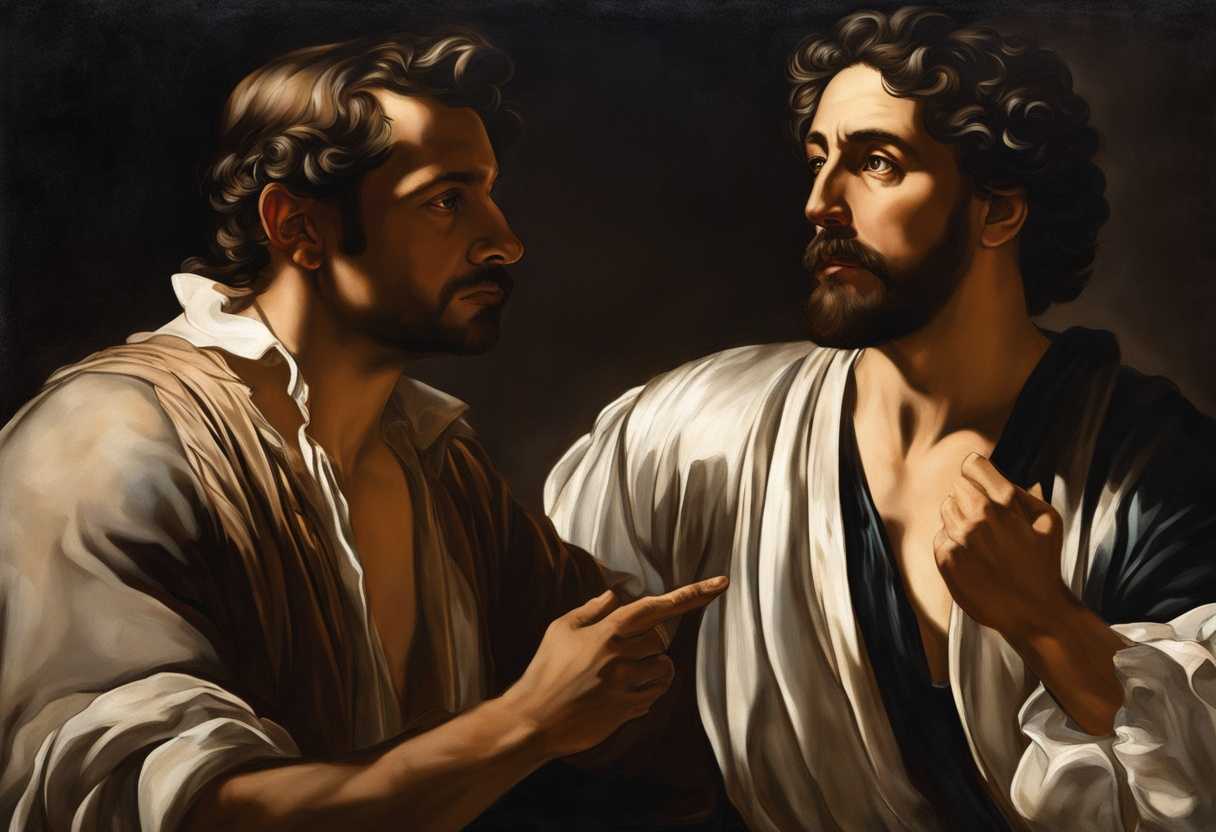
The True Meaning of Deuteronomy 21
The Book of Deuteronomy, the fifth and final book of the Pentateuch, was written by Moses, the great prophet and leader of the Israelites. Moses provided the Israelites with a series of laws and instructions as they prepared to enter the Promised Land to guide their lives and ensure their continued prosperity in the land. Moses addresses various legal and social issues that the Israelites would face as they settled in their new homeland in this chapter. From the treatment of captives to the inheritance rights of the firstborn, these regulations demonstrate the importance of maintaining justice, compassion, and obedience to God’s commands. As we delve into this chapter, we will see how these teachings not only shaped the Israelite society but also foreshadowed the coming of the Messiah and the establishment of God’s eternal kingdom.
Throughout this passage, we will find echoes of other biblical narratives, such as the story of Cain and Abel in Genesis 4, where the issue of unresolved murder is addressed. Additionally, the principles of inheritance and the rights of the firstborn are reminiscent of the patriarchal blessings found in Genesis 27 and 49. These interconnections serve to reinforce the unity and cohesiveness of God’s divine plan for His people.
Deuteronomy 21:1-9
The passage in Deuteronomy 21:1-9 discusses the procedure to be followed if a murder victim is found in a field, and the killer is unknown. This section begins by portraying a scenario where the body of a slain person is discovered in a field, and it is not clear who the murderer is. The elders and judges from the nearby towns are then required to measure the distance from the body to each town. The town closest to the body must then take a heifer that has never been worked and offer a sacrifice as atonement for the blood that was shed, even though they were not directly responsible for the crime.
This passage holds several key messages that are integral to the Old Testament teachings. Firstly, it emphasizes the importance of communal responsibility and accountability. Even if the people of a particular town were not personally involved in the crime, they are still required to make atonement for the innocent blood that was shed in their midst. This underscores the idea that individuals are not isolated entities but are part of a larger community where each member bears some responsibility for the well-being of others.
Furthermore, this passage also points towards the concept of bloodguilt and the need for spiritual purification. The ritual of offering a heifer as a sacrifice for the unknown murder serves as a way to cleanse the community of the bloodguilt associated with the crime. This ritual symbolizes the seriousness of murder and the need for expiation to restore harmony and justice within the community. This passage aligns with the themes of justice, mercy, and collective responsibility that are prevalent throughout the Old Testament in the broader context of the Bible. It echoes the sentiment from Proverbs 24:11-12, which urges believers to rescue those being led away to death and to hold back those staggering towards slaughter. This idea of standing up for the vulnerable and seeking justice for the oppressed is a recurring theme in the Bible and emphasizes the importance of societal accountability and moral righteousness. Deuteronomy 21:1-9 serves as a reminder of the interconnectedness of individuals within a community and the shared responsibility we have towards one another. It highlights the need for justice, compassion, and spiritual purity in order to maintain a harmonious and righteous society, in accordance with God’s commands and principles outlined throughout the scriptures.
Deuteronomy 21:10-14
Several important sections to break down are found in Deuteronomy 21:10-14. “When you go to war against your enemies“: This verse begins by addressing the reality of war, acknowledging that it was a common occurrence in ancient times. It shows that the Israelites were not sheltered from conflict but instead had to face it as a part of their existence. This sets the stage for the subsequent instructions on what to do with the women captives.
-
“And you see among the captives a beautiful woman and desire her“: This verse addresses the issue of lust and desire that can arise during times of conflict. It acknowledges the human nature of attraction but then proceeds to lay down guidelines for handling such situations with integrity and respect.
-
“You shall bring her home to your house“: Here, the verse delves into the specific instructions on how to handle the situation with the captive woman. It emphasizes the importance of treating her with dignity and care, even though she was taken as a captive during war. Bringing her into the house offers a level of responsibility and protection to her.
-
“She shall shave her head“: This act of shaving the woman’s head may seem harsh or degrading to modern readers, but in the context of that time, it was likely a cultural signifier of mourning or humility. It was a way to set her apart during a time of transition and potentially symbolized a new beginning for her.
-
“You shall not sell her for money“: This instruction serves as a reminder that the woman should not be treated as mere property to be bought and sold. It emphasizes that she is not to be exploited or viewed as a commodity but rather as a person deserving of respect and consideration.
This passage from Deuteronomy provides insights into how the Israelites were instructed to handle sensitive situations like taking women captives during times of war. It teaches principles of compassion, respect, and human dignity even in challenging circumstances. While some of the practices mentioned may seem foreign or even troubling to us today, it is essential to consider the historical and cultural context in which these instructions were given. God’s concern for the vulnerable and marginalized is a consistent theme in the broader context of the Bible. Throughout the Old Testament, there are numerous instances where God instructs His people to care for those who are disadvantaged, whether it be widows, orphans, or foreigners. For example, in Exodus 22:21-22, God commands the Israelites, “Do not mistreat or oppress a foreigner, for you were foreigners in Egypt. Do not take advantage of the widow or the fatherless.” These verses emphasize God’s heart for justice and compassion, which are reflected in the instructions regarding the treatment of the captive woman in Deuteronomy 21:10-14. This passage reminds us of the importance of treating all individuals with dignity and respect, regardless of their circumstances. It challenges us to consider how we can show compassion and care for those who may be in vulnerable situations, just as God instructed His people to do in ancient times.
Deuteronomy 21:15-17
Deuteronomy 21:15-17 states, “If a man has two wives, and he loves one but not the other, and both bear him sons but the firstborn is the son of the wife he does not love, when he wills his property to his sons, he must not give the rights of the firstborn to the son of the wife he loves in preference to his actual firstborn, the son of the wife he does not love.”
This passage delves into the complex dynamics of family relationships in ancient Israel concerning polygamy and inheritance rights. The scenario presented here involves a man who has two wives, a situation that was allowed but not God’s original design for marriage as seen in Genesis 2:24 where it is stated that a man shall leave his father and mother and be united to his wife, emphasizing the unity of marriage between one man and one woman. Here, the focus is on how to handle the issue of inheritance when there are competing interests within a family structure.
The passage emphasizes the principle of fairness and justice in inheritance, stating that the firstborn son, regardless of the mother he is born to or the father’s personal feelings towards the mother, must receive the birthright. This law ensured that the rights of the firstborn were protected and that there would be no favoritism or discrimination in inheritance matters. It serves as a reminder that God values justice and impartiality in familial relationships and inheritance.
The underlying message here is one of equality and the importance of upholding the rights of all children within a family, regardless of the circumstances of their birth or the dynamics between their parents. This principle is echoed in other parts of the Bible, such as Proverbs 22:2 which states, “Rich and poor have this in common: The Lord is the Maker of them all.” This verse emphasizes the equality of all people in the eyes of God and reinforces the idea that all individuals should be treated fairly and justly. God’s concern for the vulnerable and marginalized in society is reflected in this passage in Deuteronomy, ensuring that even in situations where familial relationships may be complicated, the rights of all individuals are protected. It serves as a reminder for us today to strive for fairness and justice in all our dealings, whether within our families or in society at large, reflecting the timeless message of God’s love for all his children and the importance of treating others with equity and respect.
Deuteronomy 21:18-21
The verse in Deuteronomy 21:18-21 specifically deals with the challenging topic of dealing with a rebellious son in ancient Israelite society. This section can be broken down into a few important components that offer insight into the values and justice system of the time.
Firstly, the passage begins by addressing a scenario where a man has a son who is rebellious and disobedient, not obeying his father and mother. The text highlights the gravity of the situation by mentioning how this son is not heeding discipline and correction, but rather is a glutton and a drunkard. These descriptions point to a son who not only disrespects his parents but also lives a reckless and undisciplined lifestyle, causing concern within the community.
This passage goes on to dictate that if a son is continually disobedient and unmanageable, despite attempts at correction from his parents, they are to bring him before the elders at the city gate. The significance of this action lies in the public nature of the judgment; it is a communal response to an individual’s behavior, emphasizing the communal responsibility for maintaining order and discipline within the society.
Furthermore, the verse delves into the severity of the consequences for the rebellious son. The text states that if, after being brought before the elders, the accusations against the son are found to be true, then the men of the city shall stone him to death. This punishment may seem harsh by contemporary standards, but it reflects the strict moral code and emphasis on obedience and respect for authority present in ancient Israelite society.
This passage serves as a reminder of the importance of respect, obedience, and discipline within the family unit and the broader community. It underscores the idea that there are consequences for actions, especially when they disrupt the harmony and order of society. The biblical principle of honoring parents and respecting authority can be found in various other parts of the Bible as well.
For instance, in the Ten Commandments in Exodus 20:12, it is commanded to honor your father and mother so that your days may be long in the land the Lord your God is giving you. This commandment sets the foundation for the importance of filial piety and respect for parents. Additionally, in Proverbs 30:17, there is a warning about the eye that mocks a father and scorns obedience to a mother. These verses further emphasize the weight of disobedience and disrespect towards parents.
Deuteronomy 21:22-23
God gives a specific instruction in Deuteronomy 21:22-23 regarding the treatment of a man who has been sentenced to death and hung on a tree as a form of capital punishment. The verse states, “If someone guilty of a capital offense is put to death and their body is exposed on a pole, you must not leave the body hanging on the pole overnight. Be sure to bury it that same day, because anyone who is hung on a pole is under God’s curse. You must not desecrate the land the Lord your God is giving you as an inheritance.”
This directive from God serves as a reminder of the respect that should be shown even to those who have been punished for their crimes. Israelites upheld the dignity of the individual by ensuring that the body was not left hanging overnight and was instead buried the same day, regardless of their actions. This act of burying the body promptly after execution also prevented the pollution of the land, underlining the importance of maintaining purity and respect for the land that God had given to the Israelites.
Furthermore, the mention of a person who is hung on a pole being under God’s curse connects to the broader theological concept of sin and its consequences. Throughout the Bible, there are instances where individuals face the consequences of their sins, whether through punishment, exile, or other hardships. This verse serves as a reminder of the seriousness of sin and the need for repentance and reconciliation with God.
The idea of being cursed by hanging on a tree is a powerful image that finds resonance in other parts of the Bible as well. The apostle Paul refers to this concept in Galatians 3:13 in the New Testament, where he writes, “Cursed is everyone who is hung on a pole.”” Paul uses this imagery to highlight the redemptive work of Christ on the cross, where he took upon himself the curse of sin and death, offering salvation to all who believe in him. Deuteronomy 21:22-23 serves as a reminder of the importance of upholding dignity, respecting the land, and recognizing the consequences of sin. It also foreshadows the ultimate sacrifice of Jesus on the cross, where he took upon himself the curse of sin to bring redemption to humanity. This verse teaches us about the mercy, justice, and grace of God, and how we are called to reflect these qualities in our own lives.
After Deuteronomy 21
The Lord had spoken to the people, laying out His commands and statutes. He had made clear the consequences of obedience and disobedience. Now, as the chapter drew to a close, the people were left to ponder the weight of their choices. Would they heed the Lord’s words and walk in His ways? Or would they turn aside, succumbing to the temptations of the world? The path ahead was clear, but the decision was theirs to make. The people responded to the Lord’s call as we move into the next chapter, and their choices had an impact on the course of their lives.

Reverend Michael Johnson is an experienced Church Minister with a profound expertise in spirituality and guidance. With a serene presence and a compassionate heart, he has faithfully served his congregation for over 20 years, leading them on a spiritual journey towards inner peace and enlightenment. Reverend Johnson’s extensive knowledge of religious philosophies and profound understanding of human nature have made him a trusted confidant and mentor to many, as he seamlessly weaves his profound wisdom into life teachings. Reverend Johnson’s calming demeanor and empathetic nature continue to uplift and heal souls, nurturing a sense of unity and tranquility within his community.