
7 If you do well, will you not be accepted? And if you do not do well, sin is crouching at the door. Its desire is contrary to you, but you must rule over it.”
2 And again, she bore his brother Abel. Now Abel was a keeper of sheep, and Cain a worker of the ground.
3 In the course of time Cain brought to the Lord an offering of the fruit of the ground.
4 and Abel also brought of the firstborn of his flock and of their fat portions. And the Lord had regard for Abel and his offering,
5 but for Cain and his offering he had no regard. So Cain was very angry, and his face fell.
6 The Lord said to Cain, “Why are you angry, and why has your face fallen?
7 If you do well, will you not be accepted? And if you do not do well, sin is crouching at the door. Its desire is contrary to you, but you must rule over it.
8 Cain spoke to Abel his brother. And when they were in the field, Cain rose up against his brother Abel and killed him.
9 Then the Lord said to Cain, “Where is Abel your brother?” He said, “I do not know; am I my brother’s keeper?”
10 And the Lord said, “What have you done? The voice of your brother’s blood is crying to me from the ground.
11 And now you are cursed from the ground, which has opened its mouth to receive your brother’s blood from your hand.
12 When you work the ground, it shall no longer yield to you its strength. You shall be a fugitive and a wanderer on the earth.”
13 Cain said to the Lord, “My punishment is greater than I can bear.
14 Behold, you have driven me today away from the ground, and from your face I shall be hidden. I shall be a fugitive and a wanderer on the earth, and whoever finds me will kill me.
15 Then the Lord said to him, “Not so! If anyone kills Cain, vengeance shall be taken on him sevenfold.” And the Lord put a mark on Cain, lest any who found him should attack him.
16 Then Cain went away from the presence of the Lord and settled in the land of Nod, east of Eden.
17 Cain knew his wife, and she conceived and bore Enoch. When he built a city, he called the name of the city after the name of his son, Enoch.
18 To Enoch was born Irad, and Irad fathered Mehujael, and Mehujael fathered Methushael, and Methushael fathered Lamech.
19 Lamech took two wives. The name of the one was Adah, and the name of the other Zillah.
20 Adah bore Jabal; he was the father of those who dwell in tents and have livestock.
21 His brother’s name was Jubal; he was the father of all those who play the lyre and pipe.
22 The name of the first is Adah, the name of the second Zillah.
23 Lamech said to his wives: “Adah and Zillah, hear my voice; you wives of Lamech, listen to what I say: I have killed a man for wounding me, a young man for striking me.
24 If Cain’s revenge is sevenfold,
then Lamech’s is seventy-sevenfold.”
25 And Adam knew his wife again, and she bore a son and called his name Seth, for she said, “God has appointed for me another offspring instead of Abel, for Cain killed him.”
26 To Seth also a son was born, and he called his name Enosh. At that time people began to call upon the name of the Lord.
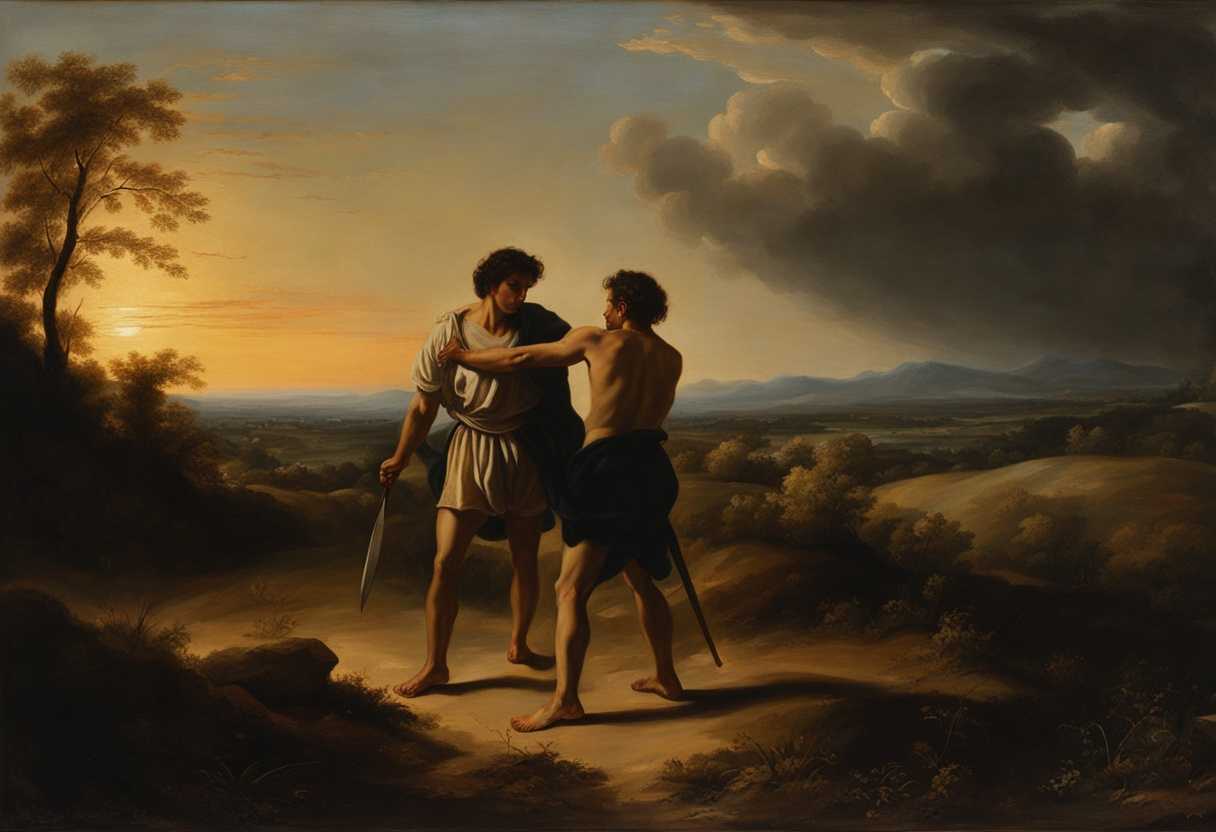
The True Meaning of Genesis 4
This passage from the book of Genesis recounts the story of Cain and Abel, the first two sons of Adam and Eve. The author, believed to be Moses, provides an insightful glimpse into the early days of humanity and the consequences of sin. We will witness the unfolding of a tragic tale that foreshadows the ongoing struggle between good and evil as we delve into this chapter. The chapter explores the complex dynamics between brothers, the importance of obedience to God, and the far-reaching impact of our choices.
The events described in Genesis 4 are pivotal, as they set the stage for the continued narrative of God’s plan for humanity. We see the introduction of the concept of sacrifice, the emergence of the first murder, and the subsequent consequences that reverberate through the generations. These events echo the warnings found in Proverbs 6:16-19, which cautions against the seven things the Lord hates, including “a heart that devises wicked plans” and “a false witness who breathes out lies.”
Genesis 4:1-2
The verses in Genesis 4:1-2 describe the birth of Cain and Abel, the first two sons of Adam and Eve. The text reads, “Now Adam knew Eve his wife, and she conceived and bore Cain, saying, ‘I have gotten a man with the help of the Lord.’ And again, she bore his brother Abel.” These verses signify the beginning of the human family tree and the unfolding narrative of sibling rivalry that ultimately leads to tragedy.
The birth of Cain and Abel holds significant symbolism in the Bible. Cain’s name in Hebrew means “acquisition,” in Eve’s statement “I have gotten a man with the help of the Lord,” it’s believed she saw Cain as a gift from God, emphasizing the idea that children are a blessing from the Lord. Abel’s name means “breath” or “vapor,” which may allude to the brevity of his life as it ended tragically.
The relationship between Cain and Abel sets the stage for one of the most iconic stories in the Bible. Their offerings to God, where Abel brings the best of his flock as a sacrifice while Cain offers just some of his harvest, reflect themes of obedience and giving one’s best to God. God’s favor of Abel’s sacrifice over Cain’s leads to jealousy and anger in Cain, showcasing the dangers of unchecked emotions and the consequences of harboring resentment.
The dynamic between Cain and Abel serves as a cautionary tale about the destructive power of envy and the importance of managing one’s emotions. Cain ultimately commits the first murder in history in the biblical narrative, killing his brother Abel out of resentment. This act of fratricide highlights the gravity of sin and the devastating consequences that can result from allowing negative emotions to fester.
The story of Cain and Abel is referenced throughout the Bible to illustrate various themes such as the consequences of sin, the importance of faith and obedience, and the need for accountability. Hebrews 11:4 in the New Testament mentions Abel as an example of faith, emphasizing how God accepted Abel’s offering because of his righteous character and genuine faith. This contrasts with Cain, who let his jealousy consume him and commit a grave sin. Genesis 4:1-2 sets the stage for the tragic tale of Cain and Abel, showcasing the destructive power of jealousy and the importance of obedience and faithfulness in one’s relationship with God. The story of these two brothers serves as a timeless reminder of the consequences of sin and the need to guard our hearts against negative emotions that can lead us astray from God’s will.
Genesis 4:3-5
The section in Genesis 4:3-5 describes the offerings brought by Cain and Abel to the Lord. Cain, a tiller of the ground, brought an offering of the fruit of the ground, while Abel, a keeper of sheep, brought the firstborn of his flock and their fat portions. God looked with favor on Abel’s offering but did not look with favor on Cain’s offering. This seemingly straightforward act of worship led to significant consequences and shed light on the nature of offerings and attitudes towards God.
Cain and Abel’s offerings represent more than just physical gifts. They symbolize the condition of their hearts and the sincerity of their worship. Abel’s offering of the best of his flock was accepted because it reflected his obedience, faith, and reverence for God. Cain’s offering of the fruit of the ground was rejected because it may have lacked the same level of respect, faith, and obedience that Abel demonstrated. This rejection led Cain to anger and jealousy towards his brother, eventually resulting in the tragic murder of Abel.
This passage highlights the importance of the attitude and heart behind our actions when we come before God. Abel is commended for his faith through his offering in Hebrews 11:4, showing that faith is a crucial aspect of pleasing God. Proverbs 21:27 also emphasizes that God desires pure motives and righteousness rather than mere external acts of worship. Cain’s story serves as a cautionary tale, reminding us that God sees beyond our external actions and judges the intentions of our hearts.
The contrast between Cain and Abel’s offerings also foreshadows the recurring theme of the righteous and the wicked seen throughout the Bible. Abel, as the innocent and faithful brother, becomes a symbol of righteousness and faith, while Cain’s jealousy and eventual sin represent the corruption and rebellion that lead to destruction. This theme is echoed in later biblical narratives, such as the righteous Abel being mentioned in Matthew 23:35 and Hebrews 12:24. Genesis 4:3-5 ultimately carries timeless lessons about the significance of genuine faith in our worship, the importance of having the right heart attitude before God, and the consequences of allowing jealousy and anger to take root in our lives. It challenges us to examine our motives and intentions when we come before God, encouraging us to offer Him our best with sincerity and faith, just as Abel did.
Genesis 4:6-7
The Lord said to Cain in Genesis 4:6-7, “Why are you angry? And why has your countenance fallen? If you do well, will you not be accepted? And if you do not do well, sin lies at the door. And its desire is for you, but you should rule over it. Cain and God interact in these verses. God questions Cain’s anger and the reason for his downcast expression, showing His awareness of Cain’s state of mind. God is giving Cain the opportunity to reflect on his emotions and actions by asking him why he is angry. This demonstrates God’s compassion and desire for Cain to recognize and rectify his feelings before they lead to sin.
God then presents Cain with a choice: to do well and be accepted or to allow sin to overtake him. This emphasizes the importance of personal responsibility and accountability for our actions. God is warning Cain that if he does not choose righteousness, sin is crouching at the door, ready to consume him. The imagery used here is powerful, portraying sin as a lurking predator waiting to pounce on its prey. It serves as a cautionary tale to all readers, reminding us of the constant battle between good and evil and the necessity of remaining vigilant in our actions and thoughts.
This passage holds a timeless message about the nature of sin and the importance of self-control. It teaches us that sin is not merely an external force acting upon us but also a choice that we make. Just as God urged Cain to rule over his sinful desires, we are also called to resist temptation and maintain mastery over our actions. This concept resonates throughout the Bible, with numerous passages emphasizing the need for self-discipline and obedience to God’s will (e.g., Galatians 5:16-26, James 4:7).
The story of Cain and Abel is a tragic one that showcases the consequences of jealousy, anger, and ultimately, murder. Cain’s unrighteous actions lead to the first murder recorded in the Bible, as he kills his brother Abel out of jealousy and anger. This act not only results in the loss of a life but also sets a precedent for the destructive power of sin when left unchecked.
God’s dialogue with Cain in Genesis 4:6-7 serves as a pivotal moment in the narrative, where God intervenes to offer guidance and a chance for repentance. Despite the gravity of Cain’s sin, God still extends mercy by giving him the opportunity to choose righteousness. This exemplifies God’s patience and desire for all individuals to turn away from sin and towards Him. These verses in Genesis 4 remind us of the importance of self-awareness, self-control, and the consequences of giving in to sinful impulses. They highlight God’s willingness to engage with us in our struggles and His desire for us to choose the path of righteousness. We reflect on the story of Cain and Abel, encouraging us to heed God’s warnings, resist temptation, and strive to live in accordance with His will.
Genesis 4:8
Cain said to Abel in Genesis 4:8, “Let’s go out to the field.”‘ And while they were in the field, Cain attacked his brother Abel and killed him.” This verse marks a pivotal moment in the early part of the biblical narrative, where we witness the tragic outcome of the conflict between these two brothers. At the heart of this story lies jealousy and the consequences of misplaced anger.
The relationship between Cain and Abel is significant not only for its depiction of the first murder in the Bible but also for its symbolism of the eternal struggle between good and evil. Cain’s jealousy towards Abel is rooted in God’s acceptance of Abel’s offering over his own. Instead of correcting his ways or seeking forgiveness, Cain allows his jealousy to fester and ultimately leads him to commit a heinous act.
From a moral standpoint, this verse serves as a cautionary tale about the destructive nature of jealousy and unchecked anger. It underscores the importance of addressing negative emotions before they escalate into harmful actions. The consequences of Cain’s actions result in him being marked by God and driven away from his family to wander the earth. This marks the beginning of a pattern of sin and exile that will be echoed throughout the Bible.
The story of Cain and Abel sets the stage for themes that will recur throughout the rest of the Bible, including the consequences of sin, the need for repentance and forgiveness, and the ongoing battle between good and evil. It also highlights the importance of obedience and sincere worship in the eyes of God. Abel’s righteous offering is accepted by God, showcasing the value of a heart that is aligned with God’s will. Abel is commended for his faith in Hebrews 11:4, despite being dead, he still speaks. The contrast between Cain’s rebellion and Abel’s faithfulness serves as a powerful example of the implications of one’s actions and the importance of living a life that pleases God. Genesis 4:8 ultimately serves as a stark reminder of the destructive potential of sin when left unchecked and the importance of cultivating virtues like humility, righteousness, and forgiveness in our relationships with others.
Genesis 4:9-12
Cain’s response after he had murdered his brother Abel is read in Genesis 4:9-12. This verse is a pivotal moment in the early chapters of Genesis as it reveals Cain’s attempt to evade responsibility for his actions. Let’s break down the verse into its important sections for deeper insight. The Lord asks Cain, “Where is your brother Abel?” in verse 9.” Cain responds with a callous question, “I do not know. Am I my brother’s keeper?” This exchange is significant as it shows Cain’s attempt to hide his crime and shift the blame onto God or even onto Abel. The phrase “Am I my brother’s keeper?” reflects Cain’s defiance and lack of concern for the life of his brother. This question challenges the reader to consider the importance of looking out for one another and taking responsibility for our actions, highlighting a timeless lesson about the value of human life and the consequences of our choices.
Moving on to verse 10, we see God confronting Cain with a powerful statement, “What have you done? The voice of your brother’s blood is crying to me from the ground.” This statement vividly illustrates the concept of innocent blood crying out for justice. It portrays a powerful image of Abel’s blood metaphorically calling out to God, seeking justice for the injustice done to him. This verse underscores the seriousness of murder and the accountability we have before God for our actions. It reminds us that even when we think we can bury our sins, they cry out to God for justice, emphasizing the importance of repentance and seeking forgiveness. God pronounces a curse upon Cain in verse 11 and 12, stating that the ground, which has received Abel’s blood, will no longer yield its strength to him. Cain will be a restless wanderer on the earth. This curse highlights the consequences of sin not only on the individual but also on the land itself. Cain’s punishment of being a wanderer without a place to call home reflects the alienation and separation that sin brings, not only from God but also from society and the created world. This curse serves as a warning about the far-reaching effects of sin and the importance of living in harmony with God and creation.
The story of Cain and Abel in Genesis 4 serves as a cautionary tale about the destructive nature of jealousy, anger, and lack of responsibility. Cain’s decision to murder his brother not only resulted in Abel’s death but also brought judgment upon himself. This account sets the stage for understanding the consequences of sin and the need for repentance and reconciliation. It also foreshadows the themes of sacrifice, redemption, and the ultimate sacrifice of Jesus Christ, the Lamb of God who takes away the sins of the world (John 1:29). Reflecting on Cain’s story challenges us to examine our own hearts, seek reconciliation with others, and strive for a life that honors God and values human life.
Genesis 4:13-15
God and Cain have a conversation in Genesis 4:13-15 after Cain had murdered his brother Abel and was facing the consequences of his actions. Let’s break down this verse into important sections:
-
“Cain said to the Lord, ‘My punishment is more than I can bear.’” This statement reveals Cain’s reaction to the punishment God has placed on him for killing his brother. Cain is feeling the weight of his actions and is already regretting the consequences he is facing. This shows a glimmer of remorse in Cain, although it seems to be more focused on the severity of his punishment rather than genuine sorrow for his sin.
-
“Today you are driving me from the land, and I will be hidden from your presence; I will be a restless wanderer on the earth, and whoever finds me will kill me.” Here, we see God’s response to Cain’s crime. God pronounces a punishment for Cain that involves him being banished from the land and being forced to wander as a restless fugitive. This punishment not only serves as retribution for Cain’s sin but also as a means of protection, as God acknowledges that others may seek to harm Cain for what he has done.
-
“But the Lord said to him, ‘Not so; anyone who kills Cain will suffer vengeance seven times over.’ Then the Lord put a mark on Cain so that no one who found him would kill him.” Despite Cain’s fear of retaliation from others, God shows mercy and protection towards him by placing a mark on him as a sign of divine protection. This mark serves as a warning to others not to harm Cain, as anyone who does so would face severe consequences. This act of grace from God towards Cain, despite his heinous crime, demonstrates God’s willingness to show mercy even in the face of sin and offers a message of hope for redemption and protection.
This passage in Genesis 4:13-15 highlights important themes such as repentance, consequences of sin, divine judgment, mercy, and divine protection. It serves as a reminder of the gravity of sin and the importance of taking responsibility for our actions. The story of Cain and Abel serves as a cautionary tale about the destructive nature of jealousy and the tragic consequences it can lead to. It also displays God’s justice and mercy in dealing with sin, providing a glimpse of His grace and protection even in the midst of judgment. Additionally, the marking of Cain can be seen as a foreshadowing of the concept of God’s chosen people being marked or sealed for protection, as seen in Revelation 7:3 where the servants of God are sealed on their foreheads.
Genesis 4:16-17
Cain went out from the Lord’s presence and lived in the land of Nod, east of Eden, as stated in Genesis 4:16-17. Cain made love to his wife, and she became pregnant and gave birth to Enoch. Cain was then building a city, and he named it after his son Enoch.” This passage follows the account of Cain’s punishment after he murdered his brother Abel. It sheds light on Cain’s descendants and the developments that followed his expulsion from the presence of the Lord.
Firstly, it is noteworthy that Cain left the presence of the Lord and settled in the land of Nod, which means “wandering.” This signifies his separation from God’s favor and the consequences of his sin. Despite being marked by God for his protection, Cain chose to distance himself from the divine presence. This separation highlights the spiritual ramifications of sin and rebellion against God. The idea of wandering also symbolizes a sense of aimlessness and disconnection that follows a life lived outside of God’s will.
Furthermore, the mention of Cain having a wife raises questions about her identity, given that Adam, Eve, Cain, and Abel are the only individuals explicitly mentioned at this point in Genesis. It is important to understand that the Bible does not provide explicit details about how people outside of the immediate family were present, or how they came into being. Some theologians suggest that there were other unnamed children of Adam and Eve besides Cain, Abel, and Seth, which could explain the existence of Cain’s wife. The verse’s focus remains on Cain’s lineage and the account of his descendants.
The birth of Enoch marks the beginning of the genealogy of Cain, culminating in the establishment of a city named after his son. This act of building a city implies a sense of settling down and creating a community. It is intriguing to note that while Cain was cursed to be a wanderer, he still managed to establish a place of dwelling and civilization. This reflects humanity’s inherent desire for stability and progress, even in the midst of sin and its consequences. We are reminded of the contrast between the line of Cain and the line of Seth, Adam and Eve’s third son, as we explore the implications of Cain’s lineage and the building of a city. The descendants of Cain are portrayed as worldly and focused on human achievements, as seen in the development of arts and technology (Genesis 4:20-22). On the other hand, the line of Seth is characterized by their faithfulness to God, as exemplified by Enoch, who “walked faithfully with God” (Genesis 5:22). This juxtaposition highlights the age-old theme of the struggle between worldly pursuits and spiritual devotion throughout the Bible. Genesis 4:16-17 serves as a bridge between the narrative of Cain’s punishment and the establishment of human civilization. It delves into the consequences of sin, the act of building a city as a human endeavor, and the contrasting paths of Cain’s descendants and those who choose to walk faithfully with God. This passage invites readers to ponder the choices we make in our own lives, whether we prioritize worldly accomplishments or seek to walk in obedience and faith before the Lord.
Genesis 4:18-22
An account of the descendants of Cain, the firstborn son of Adam and Eve who committed the first murder by killing his brother Abel out of jealousy, is seen in Genesis 4:18-22. This passage reveals a line of descendants from Cain, which provides us with insights into the development of human civilization and the consequences of sin in the lineage of Cain.
Verse 18 introduces us to Enoch, who was the first in Cain’s line to build a city. Cities in ancient times were not just physical locations but also symbols of human advancement, organization, and culture. Enoch naming the city after his son indicates a desire for legacy and permanence in human achievement. This early city-building underscores humanity’s propensity for creativity and innovation. However, it also highlights the potential for human ambition to deviate from God’s intended plan, leading to a focus on worldly pursuits rather than spiritual growth. Enoch’s mention also contrasts with the biblical Enoch in Genesis 5:18-24, who “walked faithfully with God” and was taken by God without experiencing death. This contrast between the two Enochs serves as a reminder of the divergent paths individuals can take – one leading to a life of faith and closeness to God, while the other possibly embodying the consequences of sinful lineage.
Continuing on, verses 19 and 20 introduce us to two significant figures: Lamech and his two wives, Adah and Zillah. Lamech’s actions are notable, as he is the first polygamist mentioned in the Bible, which deviates from God’s design for marriage as established in Genesis 2:24. Lamech’s declaration of vengeance and the boastful nature of his words in verse 23-24 showcase the escalating impact of sin and violence present in the lineage of Cain. His words indicate a lack of remorse and a blatant disregard for the sanctity of life—a stark contrast to the principles God intended for humanity. The introduction of Adah and Zillah as Lamech’s wives reflects a departure from the ideal of monogamous, complementary marriage presented in Genesis 2. The presence of polygamy and Lamech’s disregard for the sanctity of life further emphasize the consequences of sin and the distortion of God’s original plan for human relationships and society.
Finally, verses 21-22 introduce Jabal, Jubal, and Tubal-Cain, who are credited with significant advancements in human civilization such as animal husbandry, music, and metalworking. These developments, though beneficial for human progress, also illustrate the dual nature of human achievements – they can be used for both good and evil purposes. The skills and innovations introduced by these descendants of Cain highlight the abilities and potential within humanity, but also serve as a cautionary tale about how these gifts can be misused or distorted when separated from God’s intended purposes. The passage of Genesis 4:18-22 provides a multifaceted narrative about human civilization, innovation, sin, and the consequences of deviating from God’s plan. It challenges us to reflect on our own pursuits, motivations, and priorities, reminding us of the importance of staying rooted in God’s principles and seeking His guidance in all aspects of our lives.
Genesis 4:23-24
Lamech, a descendant of Cain, speaks in a poetic form in Genesis 4:23-24. Let’s break down these verses into two important sections:
- “Lamech said to his wives, ‘Adah and Zillah, hear my voice; you wives of Lamech, listen to what I say: I have killed a man for wounding me, a young man for striking me.’”
Lamech here is boasting to his wives about committing a violent act – killing a man who had wounded him. This is a stark contrast to the situation of Cain who was marked for killing his brother Abel. Lamech takes pride in his violent retaliation, showing a complete lack of remorse. This passage highlights the escalation of violence in human history since the time of Cain and Abel. It indicates a departure from the ways of righteousness, justice, and forgiveness that God expects from His children. Lamech’s action symbolizes the corrupt nature of humanity and sets a dangerous precedent for future generations to follow.
- “If Cain’s revenge is sevenfold, then Lamech’s is seventy-sevenfold.”
Lamech’s statement here reflects a mindset of retaliation and vengeance that deviates from the principles of forgiveness and mercy taught by God. The reference to Cain’s revenge being sevenfold alludes to a protective measure placed on Cain by God in Genesis 4:15, to prevent him from being killed as punishment for killing his brother. Lamech, however, takes this idea to an extreme by declaring that his revenge would be seventy-sevenfold. This exaggeration shows the extent of Lamech’s pride, arrogance, and unrepentant nature. This verse serves as a cautionary tale about the dangers of harboring hatred and seeking excessive vengeance, as it disrupts the peace and grace that God desires for His people. These verses in the broader context of Genesis 4 contribute to the overall theme of the consequences of sin and the degeneration of mankind after the fall. The account of Cain and his descendants showcases the destructive nature of sin and the downward spiral it creates in humanity. Lamech’s actions serve as a warning against the destructive path of pride, violence, and vengeance, urging readers to seek reconciliation, forgiveness, and peace instead. Through these passages, readers are reminded of the importance of turning away from sinful inclinations and following the ways of righteousness and love as modeled by God throughout the Bible.
Genesis 4:25-26
Adam knew his wife again and she bore a son and named him Seth, ‘For God has appointed another seed for me instead of Abel, whom Cain killed,’ as the text reads in Genesis 4:25-26.’ And as for Seth, to him also a son was born; and he named him Enosh. Then men began to call on the name of the Lord.”
This specific section of Genesis follows the tragic events surrounding Cain and Abel, where jealousy and sin led to the first murder in human history, as Cain killed his brother Abel out of jealousy. However, here we see hope and redemption as Adam and Eve have another son named Seth. The name “Seth” means “appointed” or “compensation”, signifying Eve’s belief that Seth was a replacement for Abel, whom Cain had killed. This event shows God’s faithfulness in providing another child to Adam and Eve despite the brokenness caused by sin.
Seth becomes the ancestor of the righteous line of humanity, from whom eventually Noah and then Abraham would descend. Luke 3:38 mentions Seth in the genealogy leading up to Jesus, emphasizing the continuity of God’s plan for salvation throughout history. Through Seth, we see that God is able to bring forth goodness and hope out of even the darkest of situations.
The mention of Enosh, Seth’s son, is significant as well. Enosh means “mortal” or “frail”, which could be a reminder of the mortality and frailty of humanity due to sin. Yet, even in the presence of this acknowledgment of human limitations, we see a turning point in mankind’s relationship with God. The text states, “Then men began to call on the name of the Lord.” This suggests a revival or a return to seeking God in worship and prayer. It marks a shift towards a more intentional and communal relationship with the Lord after a period of distance and brokenness following the expulsion from Eden.
This passage underscores the theme of God’s redemptive plan throughout the Bible. Despite the fall of humanity into sin, God continues to work out His divine plan for salvation and restoration. It shows that even in the midst of sorrow and death, God provides a way for new beginnings and reconciliation. The lineage from Seth to Jesus demonstrates God’s faithfulness in preserving the line through which the promised Messiah would come into the world. It ultimately foreshadows the ultimate redemption and reconciliation that Jesus Christ would fulfill.
After Genesis 4
The Lord had shown favor to Abel and his offering, but Cain grew angry and resentful. Cain lured his brother Abel into the field and killed him, the first murder in human history. When the Lord confronted Cain, he denied knowledge of his brother’s whereabouts. But the Lord knew the truth and pronounced a curse upon Cain, banishing him from the land. Cain, a marked man, took a wife and built the first city as he wandered the earth. His descendants multiplied, and with them came the beginnings of human civilization – the arts, industry, and technology. Yet, the shadow of Cain’s sin hung over them all. For the Lord had not forgotten the innocent blood spilled, and the consequences would echo through the generations to come.

Reverend Michael Johnson is an experienced Church Minister with a profound expertise in spirituality and guidance. With a serene presence and a compassionate heart, he has faithfully served his congregation for over 20 years, leading them on a spiritual journey towards inner peace and enlightenment. Reverend Johnson’s extensive knowledge of religious philosophies and profound understanding of human nature have made him a trusted confidant and mentor to many, as he seamlessly weaves his profound wisdom into life teachings. Reverend Johnson’s calming demeanor and empathetic nature continue to uplift and heal souls, nurturing a sense of unity and tranquility within his community.