
3 In the course of time Cain brought to the Lord an offering of the fruit of the ground.
4 and Abel also brought of the firstborn of his flock and of their fat portions. And the Lord had regard for Abel and his offering,
5 but for Cain and his offering he had no regard. So Cain was very angry, and his face fell.
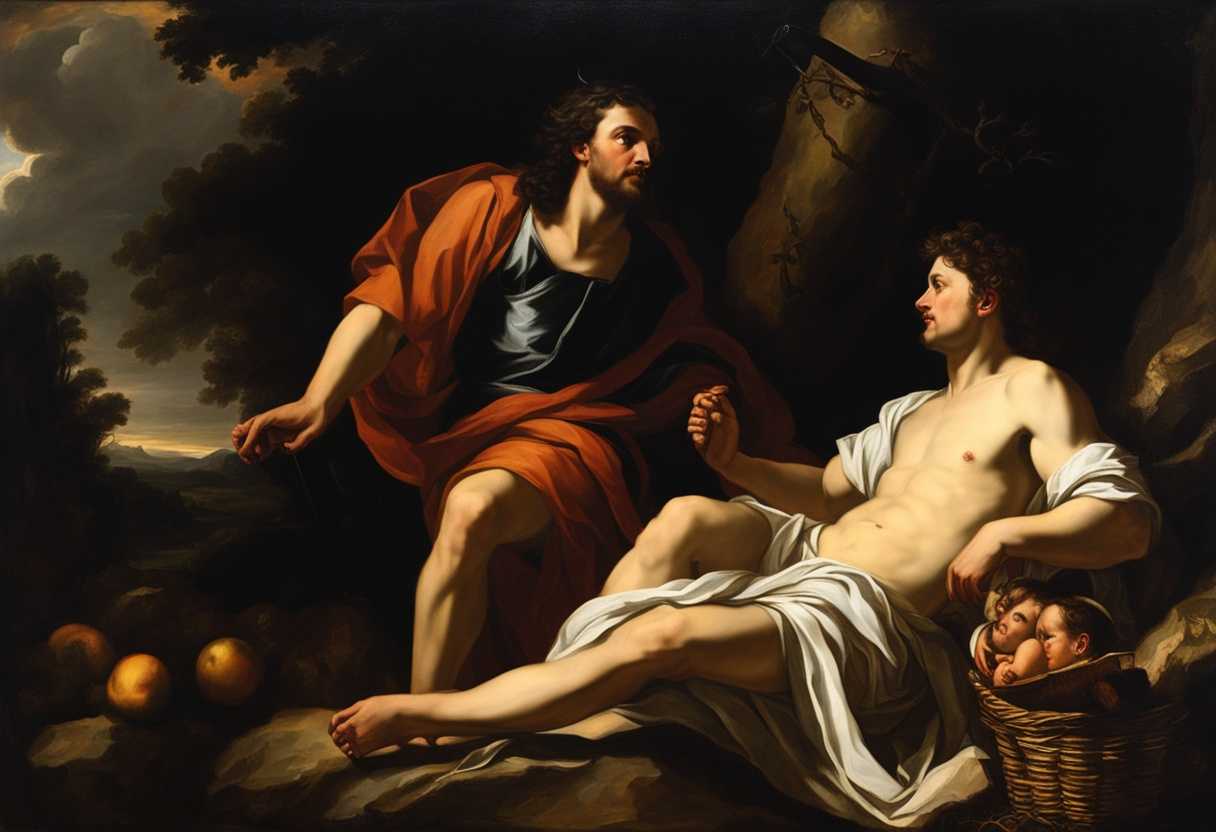
Setting the Scene for Genesis 4:3-5
In Genesis chapter 4, we find the scene where Cain and Abel, the sons of Adam and Eve, are offering sacrifices to God. The brothers have both chosen to present offerings to God, but with different intentions and outcomes. Abel, a shepherd, brings the best of his flock as an offering, while Cain, a farmer, offers some of his produce.
The setting is a vast open field, with the sun setting in the distance casting a warm glow over the landscape. The air is filled with the sounds of bleating sheep and rustling leaves as Abel tends to his flock and Cain works the land. As the brothers stand before an altar they have built, the flickering flames from their sacrifices dance in the gentle breeze.
God looks upon the offerings with favor towards Abel’s gift, which was given with a pure heart, but does not regard Cain’s offering. This leads to jealousy and anger in Cain’s heart, setting the stage for the tragic events that follow in the subsequent verses of Genesis chapter 4.
What is Genesis 4:3-5 about?
The story of Cain and Abel in this verse highlights the concept of jealousy, competition, and acceptance. Cain and Abel both offered sacrifices to God as siblings, but only God accepted Abel’s sacrifice. This rejection of Cain’s offering led to feelings of jealousy and anger towards his brother. This verse shows us the importance of intention and sincerity in our actions towards God. It emphasizes the idea that God is pleased not just with the outward act of sacrifice, but also with the purity of heart and intention behind it.
Reflecting on this verse, we are reminded of the significance of our intentions and attitudes in our worship and service to God. It prompts us to question our own motivations and whether we are approaching God with a genuine heart. Are we offering our best to God with sincerity and humility, or are we driven by selfish desires and comparisons to others? This story challenges us to examine our own hearts and strive for sincerity and authenticity in our relationship with God, just like Abel did.
Understanding what Genesis 4:3-5 really means
Commentary Structure:
- Introduction and Context
- Detailed Analysis of Key Phrases
- Cross-Referencing Other Scriptures
- Relevance to Contemporary Life
- Anecdotal Illustration
- Cain and Abel offer sacrifices to God in Genesis 4:3-5. One of the primary themes here is the nature of acceptable offerings to God and the attitude behind them. This passage raises profound questions about our relationship with God and what He values in our acts of worship and devotion. Cain, a farmer, brought some of the fruits of the soil as an offering to the LORD in the course of time. The phrase “some of the fruits” implies an offering from his abundance but does not specify the quality or the selection process. It suggests a more casual attitude, as opposed to a deliberate and heartfelt act of giving.
Contrast this with Abel’s act: “But Abel brought fat portions from some of the firstborn of his flock.” The “fat portions” and “firstborn” signify the best and the first of what he possessed. Here, Abel’s offering indicates reverence, sacrifice, and acknowledgment of God’s sovereignty.
“The LORD looked with favor on Abel and his offering, but on Cain and his offering he did not look with favor,” reveals the distinction God made between the two offerings. This preference underscores the significant point that God values the heart and intent behind our offerings more than the actual material substance.
Cross-Referencing Other Scriptures
This narrative parallels with 1 Samuel 16:7, where God tells Samuel, “The LORD does not look at the things people look at. People look at the outward appearance, but the LORD looks at the heart.” Similarly, in Mark 12:41-44, Jesus commends the widow who gave two very small copper coins, saying she gave more than all the others because she gave out of her poverty with sincere devotion.
Relevance to Contemporary Life
This passage is profoundly relevant today as it speaks to the heart of worship and the act of giving in our lives. It’s not about the quantity or the monetary value but the quality and intent of what we offer. Are our actions driven by a sincere desire to honor God, or are they merely a checkbox on our spiritual to-do list? We live our lives daily, showing kindness, mercy, and love towards others as acts of genuine worship, not just what we place in the collection plate on Sunday.
Anecdotal Illustration
I once knew a man named John who worked tirelessly, often volunteering for multiple church activities. Despite his busy schedule, he never missed an opportunity to contribute, whether in time, talent, or treasure. His offerings were not out of his abundance but a heartfelt sacrifice. His generosity echoed Abel’s spirit — giving his best to honor God, not for recognition but out of genuine love and reverence. John’s life and actions continually blessed and inspired those around him.
Conclusion
Genesis 4:3-5 calls us to introspect our motivations and attitudes in our acts of worship and giving. God desires heartfelt sacrifices and offerings that demonstrate our reverence and relationship with Him, not merely the outward appearance of piety. We should continually aim to offer our best with pure intentions as we reflect on this passage, trusting that God sees and values the heart behind every act of devotion.
What is our attitude towards worship and offerings?
Our attitude towards worship and offerings should be sincere and pleasing to God. Just as Abel brought the best of his flock as an offering, we should offer our best to God in worship. It is not merely the act of offering that is important, but the state of our hearts and the quality of our offering that matters to God. God desires offerings that are given with a pure heart and a genuine desire to worship Him.
We should approach worship and offerings with humility and reverence, understanding that we are bringing our offerings before the Lord. It is a way for us to show our gratitude, trust, and dependence on God. Our offerings are a way to honor and acknowledge God as our provider and sustainer. We demonstrate our love and devotion to God by giving our best in worship and offerings, seeking to please Him rather than seeking to gain anything for ourselves. Our attitude towards worship and offerings should reflect a genuine desire to honor and please God in conclusion. We should offer our best with sincerity and humility, recognizing the importance of worship as a way to show our love and devotion to God. When we come before the Lord with a genuine heart and a desire to please Him, our worship and offerings will be a pleasing aroma to God.
Application
In the hustle of work and family, we often give leftovers instead of our best. Genesis 4:3-5 urges us to reflect: Are we offering our sincere best to God, or just ticking boxes? Dive deep, reassess your worship. Are you truly present, genuinely thankful, or just going through the motions? Isn’t it time to give what really matters?

Reverend Michael Johnson is an experienced Church Minister with a profound expertise in spirituality and guidance. With a serene presence and a compassionate heart, he has faithfully served his congregation for over 20 years, leading them on a spiritual journey towards inner peace and enlightenment. Reverend Johnson’s extensive knowledge of religious philosophies and profound understanding of human nature have made him a trusted confidant and mentor to many, as he seamlessly weaves his profound wisdom into life teachings. Reverend Johnson’s calming demeanor and empathetic nature continue to uplift and heal souls, nurturing a sense of unity and tranquility within his community.