
Deuteronomy 22:4 is about the importance of caring for and showing kindness to those in need, even if it means going out of your way to help them.
4 You shall not see your brother’s donkey or his ox fallen down by the way and ignore them. You shall help him to lift them up again.
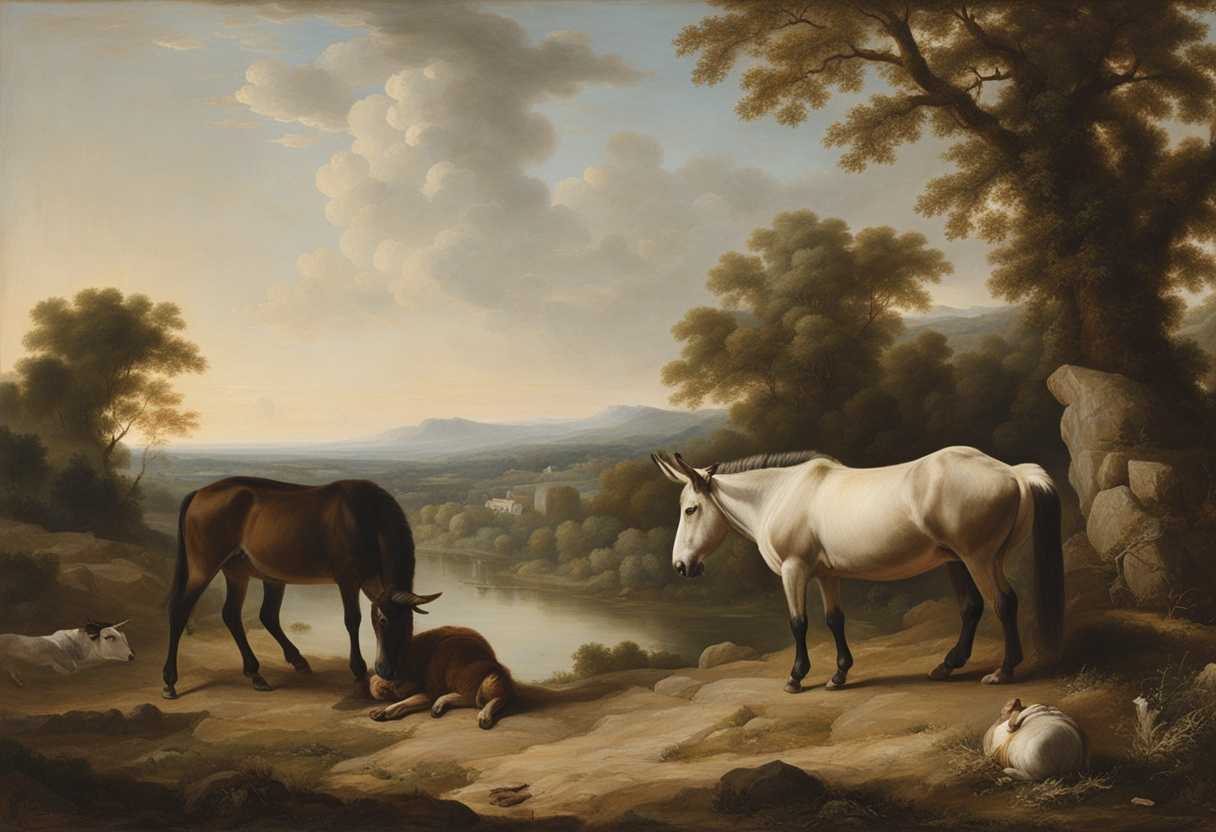
Setting the Scene for Deuteronomy 22:4
In Deuteronomy chapter 22, we find the Israelites encamped at the foot of Mount Sinai, where they have been journeying through the wilderness after their exodus from Egypt. Moses, the great leader and prophet of the Israelites, has been receiving instructions from God on how the people are to live in accordance with His laws. The scene is set amidst the vast desert landscape, with the imposing presence of the mountain in the background, shrouded in clouds and mystery.
As Moses addresses the people, he speaks to them about the importance of caring for one another and their possessions. He emphasizes the value of compassion and responsibility within the community, instructing them on how to handle various situations with fairness and justice. The Israelites listen intently, eager to learn and follow the teachings that will guide them in their journey towards the Promised Land.
Among the crowd gathered around Moses are elders, leaders, men, women, and children of all ages, each seeking wisdom and understanding from their revered leader. The atmosphere is one of reverence and solemnity, as the people absorb the words of Moses and contemplate how they can apply them to their daily lives. In this moment, the community is united in their commitment to uphold God’s commandments and live in harmony with one another.
What is Deuteronomy 22:4 about?
This verse is a reminder of the importance of showing kindness and compassion towards our neighbors, both human and animal. It emphasizes the value of community and supporting one another in times of need. We should be willing to extend a helping hand to others in similar situations, just as we would want help if our own beloved pet went missing.
Imagine the worry and distress that a neighbor might feel if their pet goes missing. We not only demonstrate empathy and care but also strengthen the bonds within our community by offering to help and actively participating in the search for the lost animal. This verse encourages us to be proactive in reaching out to those around us and practicing the Golden Rule – treating others as we would want to be treated in return.
Think about the impact we can make by simply keeping an eye out for a lost pet, spreading the word in the neighborhood, or even offering to assist in the search efforts. Our actions can bring comfort, relief, and joy to our neighbors, highlighting the power of compassion and unity in creating a more caring and supportive society. Let us remember to be there for our neighbors, whether in times of joy or moments of need, and strive to be a source of light and kindness in the lives of those around us.
Understanding what Deuteronomy 22:4 really means
In the book of Deuteronomy, nestled within the Mosaic Law, we find a collection of regulations and guidelines given to the Israelites as they journeyed through the wilderness towards the Promised Land. Deuteronomy 22:4 is one such directive, part of a series of laws aimed at shaping the moral and social fabric of the community. This verse specifically addresses the scenario where one encounters their brother’s donkey or ox fallen on the road and underscores the obligation not to ignore the situation but to actively assist in setting the animal upright.
To truly grasp the significance of Deuteronomy 22:4, we must delve into the historical and cultural backdrop of ancient Israel. In an agrarian society heavily reliant on livestock for labor and sustenance, the well-being of animals was intertwined with the welfare of their owners. Community cohesion and mutual aid were paramount in such a setting, where individuals depended on each other for survival and prosperity.
The key phrases in this verse, “If you see your brother’s donkey or his ox fallen on the road” and “Do not ignore it,” highlight the practical nature of the commandment. The mention of donkeys and oxen, essential beasts of burden in that era, underscores the economic value these animals held for their owners. The directive to not turn a blind eye emphasizes the moral duty to respond to the needs of others promptly.
Drawing parallels with other biblical passages, Exodus 23:5 echoes a similar sentiment of aiding even an enemy’s animal in distress, showcasing the consistent emphasis on compassion and assistance in the Law. Moreover, the New Testament’s exhortation in Galatians 6:2 to “Bear one another’s burdens” bridges the gap between the Old and New Covenants, emphasizing the enduring principle of mutual support and care.
The timeless relevance of Deuteronomy 22:4 resonates in today’s context, where the call to help those in need remains a universal moral imperative. In a world often marked by individualism and self-centered pursuits, the reminder to extend a helping hand to others carries profound significance. Acts of kindness and practical assistance not only alleviate immediate suffering but also foster a sense of community and interconnectedness.
Reflecting on anecdotes or stories where individuals have gone above and beyond to assist someone in distress brings the principle of Deuteronomy 22:4 to life. These narratives serve as powerful illustrations of how simple acts of compassion can transform lives and strengthen the social fabric. By embodying the spirit of mutual aid and solidarity, we embody the essence of the law given to the Israelites thousands of years ago.
In conclusion, Deuteronomy 22:4 serves as a poignant reminder of our shared responsibility to care for one another in times of need. As we navigate our daily lives, let us remain vigilant for opportunities to extend a helping hand, knowing that even the smallest gestures of assistance can have a profound impact on individuals and communities. May we embody the timeless wisdom encapsulated in this verse, striving to fulfill the spirit of the law through acts of compassion and practical support.
What responsibilities do we have towards our neighbors?
Our responsibilities towards our neighbors include assisting them in times of need and ensuring that they are not left to struggle on their own. This includes helping them if their livestock or property has gone astray, and ensuring that they are not left in a position of disadvantage. We contribute to the well-being and harmony of our community by fulfilling these obligations.
Furthermore, showing kindness and consideration towards our neighbors is essential in fostering strong relationships and creating a sense of unity within the community. We fulfill our duty towards our neighbors and promote a culture of mutual support and care by embodying a spirit of cooperation and compassion. We contribute to the overall welfare and harmony of society by doing so.
Application
Think of life as a busy highway and your neighbors as fellow travelers. When someone’s car breaks down, do you keep driving or stop to help? Deuteronomy 22:4 calls us to be that person who pulls over and offers a hand. Today, look around your work, your family, your community—see who needs a lift. Will you be the difference that turns their roadblock into a journey forward?

Reverend Michael Johnson is an experienced Church Minister with a profound expertise in spirituality and guidance. With a serene presence and a compassionate heart, he has faithfully served his congregation for over 20 years, leading them on a spiritual journey towards inner peace and enlightenment. Reverend Johnson’s extensive knowledge of religious philosophies and profound understanding of human nature have made him a trusted confidant and mentor to many, as he seamlessly weaves his profound wisdom into life teachings. Reverend Johnson’s calming demeanor and empathetic nature continue to uplift and heal souls, nurturing a sense of unity and tranquility within his community.