
Deuteronomy 22:6 is about the compassion and care that humanity should show towards God’s creatures, highlighting our responsibility to protect and consider the well-being of all living beings.
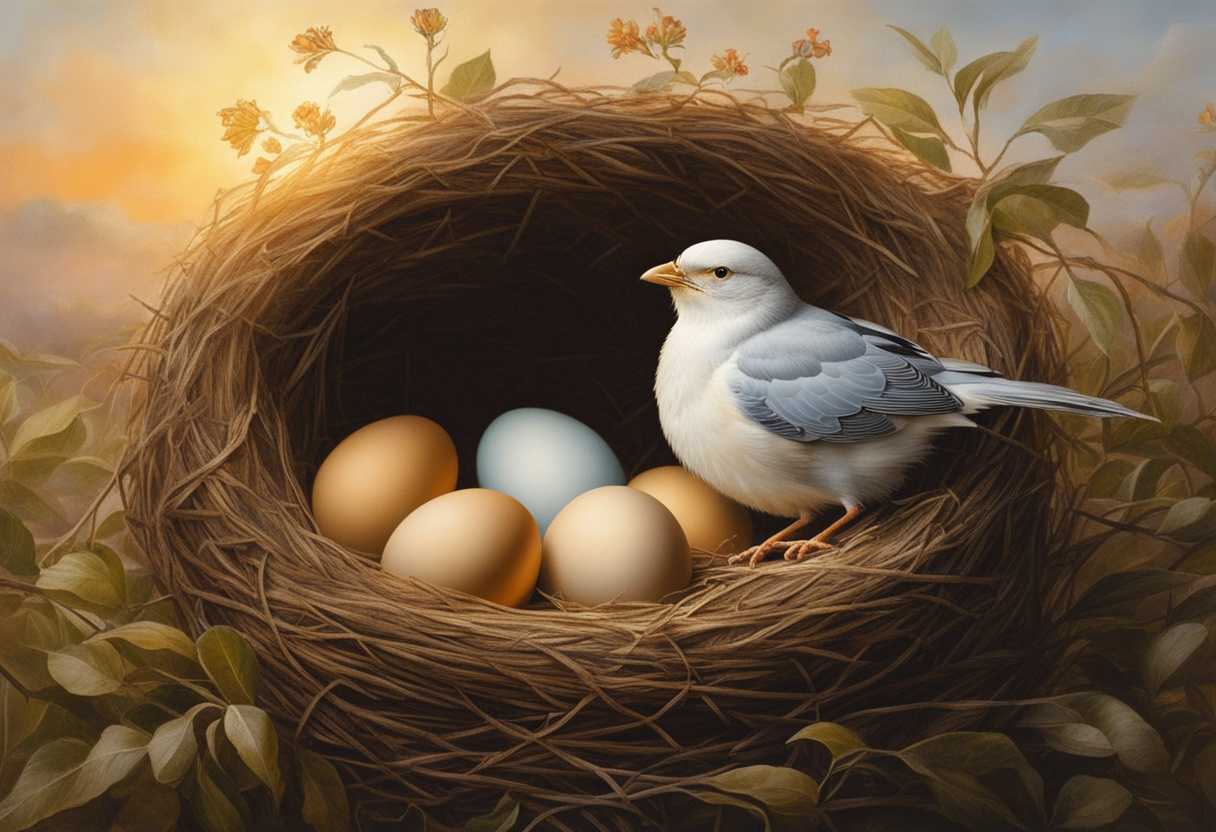
6 “If you come across a bird’s nest in any tree or on the ground, with young ones or eggs and the mother sitting on the young or on the eggs, you shall not take the mother with the young.
Setting the Scene for Deuteronomy 22:6
In Deuteronomy chapter 22, we find the Israelites encamped at the foot of Mount Sinai, where Moses is delivering the laws and commandments that God has given to him for the people. The scene is bustling with activity as the Israelites gather around to listen to Moses speak. The air is filled with anticipation and reverence as they await the wisdom and guidance that will shape their lives and their relationship with God.
Among the crowd are men, women, and children of all ages, eager to learn and understand the laws that will govern their community. The elders of the tribes are seated closer to Moses, their faces reflecting a mixture of solemnity and determination to uphold these laws. The younger generation stands at the back, their eyes wide with curiosity and perhaps a hint of apprehension at the weight of responsibility that comes with following these commandments.
As Moses continues to speak, his voice carries across the camp, echoing off the mountains that surround them. The sun begins to set, casting a warm golden light over the scene, creating a sense of peace and unity among the people. In this moment, the Israelites are bound together by their shared faith and commitment to following the laws that will guide them on their journey towards the Promised Land.
What is Deuteronomy 22:6 about?
This verse from the Quran is a reminder of the importance of showing compassion and empathy towards all living beings, particularly birds and their young ones. It instructs us not to take the mother bird along with her young ones. This command serves as a gentle nudge for us to acknowledge the natural bond between a mother and her offspring, as well as the instinctual need for protection and care. The verse teaches us to be mindful of our actions and the impact they have on other creatures by emphasizing the respectful treatment of birds and their offspring. It invites us to reflect on the interconnectedness of all living beings and the responsibilities that come with it. It prompts us to consider the feelings and needs of animals, urging us to act with kindness and consideration towards them. We can ask ourselves: How can we extend compassion not only to birds but to all living beings as we ponder upon this verse? How can we embody this message of empathy and respect in our daily lives? By heeding this command, the value of compassion and the importance of honoring the bond between creatures in the natural world are reminded to us. Let us embody the spirit of empathy and care that this verse conveys by striving to practice kindness towards all beings.
Understanding what Deuteronomy 22:6 really means
Deuteronomy 22:6, nestled within the laws and ethical guidelines for the Israelites, presents a poignant scenario involving a bird’s nest. The verse sets the stage for an encounter with nature, urging observance and mindfulness in our surroundings. Whether the nest is high in a tree or low on the ground, the law applies universally, symbolizing inclusivity and the omnipresence of God’s creation. The vulnerability of the young ones or eggs in the nest underscores the call for compassion and care, emphasizing the sanctity of life.
In Genesis 1:28, humanity is tasked with caring for creation, highlighting our responsibility towards all living beings. Proverbs 12:10 reinforces the importance of compassion, contrasting the righteous care for animals with the cruelty of the wicked. Matthew 10:29 from the New Testament further emphasizes God’s intimate concern for even the smallest creatures, illustrating His overarching care for all of His creation.
Today, this verse resonates in various ways. It prompts ethical treatment of animals, advocating for humane practices and respect towards all living creatures. It also encourages environmental stewardship, urging us to be mindful of our impact on nature and promoting sustainable behaviors. Moreover, it serves as a reminder to embody compassion and mercy in our interactions, fostering kindness and empathy towards both humans and animals alike.
Consider a family on a nature hike stumbling upon a bird’s nest with eggs. The parents, using this moment as a teaching opportunity, explain to their children the importance of leaving the nest undisturbed for the mother bird to care for her young. This simple act of compassion can sow the seeds of respect for nature in the hearts of the children, nurturing a lifelong appreciation for God’s creation.
In conclusion, Deuteronomy 22:6, though seemingly straightforward, carries profound ethical and spiritual implications. It beckons us to be stewards of creation, to exhibit compassion, and to acknowledge the interconnectedness of all life forms. By upholding these principles, we not only honor God’s creation but also reflect His love and care through our actions, embodying the essence of true discipleship.
How can we show compassion and care for all living creatures?
Showing compassion and care for all living creatures means acknowledging the interconnectedness of all life and respecting the importance of each being. It involves treating animals with kindness and consideration, recognizing their value and right to exist. This can be demonstrated through actions such as providing proper care, food, and shelter for animals, and avoiding causing them unnecessary harm or suffering.
Additionally, showing compassion for all living creatures entails being mindful of the impact our choices and actions have on the environment and the well-being of animals. This could involve supporting ethical and sustainable practices, such as choosing cruelty-free products, reducing consumption of animal products, and advocating for animal rights. We can create a more harmonious and compassionate world where all creatures are valued and respected by consciously considering the welfare of all living beings.
Application
Think of Deuteronomy 22:6 like caring for your family; every task, no matter how small, matters. Compassion isn’t just a feeling; it’s daily actions toward creatures that share our world. Protecting and valuing animals is like nurturing a coworker or friend who needs help. Today, how will you step up and show that even the smallest life matters?

Reverend Michael Johnson is an experienced Church Minister with a profound expertise in spirituality and guidance. With a serene presence and a compassionate heart, he has faithfully served his congregation for over 20 years, leading them on a spiritual journey towards inner peace and enlightenment. Reverend Johnson’s extensive knowledge of religious philosophies and profound understanding of human nature have made him a trusted confidant and mentor to many, as he seamlessly weaves his profound wisdom into life teachings. Reverend Johnson’s calming demeanor and empathetic nature continue to uplift and heal souls, nurturing a sense of unity and tranquility within his community.