
Deuteronomy 23:1-2 is about setting boundaries for the assembly of God’s people by excluding those who have physical impairments or are born out of certain prohibited relationships, emphasizing the importance of holiness and purity within the community.
1 “No one whose testicles are crushed or whose male organ is cut off shall enter the assembly of the Lord.
2 No one born of a forbidden union may enter the assembly of the Lord; even to the tenth generation none of his descendants may enter the assembly of the Lord.
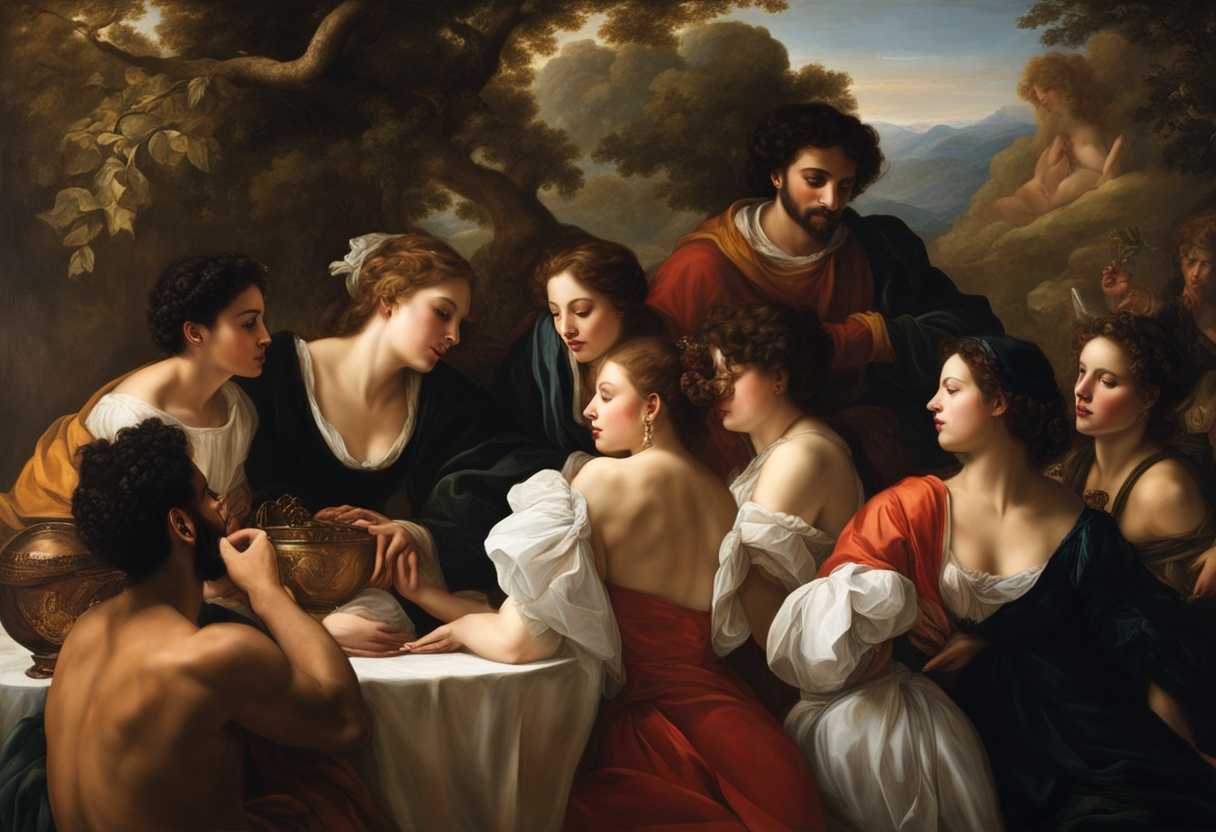
Setting the Scene for Deuteronomy 23:1-2
In the scene described in Deuteronomy 23:1-2, we find the Israelites gathered at the entrance of the tabernacle in the wilderness. The leaders of the tribes, including Moses and Aaron, are present, along with a group of individuals who have come seeking guidance and judgment. The sun beats down on the sandy ground, casting long shadows as the people wait in anticipation.
The group has assembled to address a delicate matter concerning those who are excluded from the assembly of the Lord. The discussion revolves around who is permitted to enter the assembly and who is to be kept outside due to certain conditions or circumstances. The atmosphere is tense as the leaders deliberate on the criteria for inclusion and exclusion, knowing that their decisions will impact the community’s cohesion and adherence to the laws of God.
As the wind picks up, carrying the scent of the nearby desert plants, Moses stands tall, his face etched with wisdom and authority. The people look to him for guidance, knowing that his words are guided by the Lord. The scene is a poignant reminder of the importance of upholding the laws and standards set by God for the well-being and sanctity of the community.
What is Deuteronomy 23:1-2 about?
This verse highlights the exclusion of certain individuals from the assembly of the Lord. This exclusion is based on specific conditions or situations that may make them unworthy or impure to participate in the sacred gathering. We, as teachers, must explain to our students that being part of the assembly of the Lord signifies being part of a religious community bound by shared beliefs and practices. Therefore, exclusion from this assembly can be seen as a serious reflection of a person’s moral or spiritual state.
We can ask ourselves, what conditions or behaviors might warrant someone to be excluded from such a sacred assembly? What values or principles could be so important that they would justify this exclusion? We can delve deeper into the significance of upholding spiritual purity and integrity within a community dedicated to serving and worshipping the Lord by pondering on these questions. We, as teachers, can guide our students to reflect on the importance of maintaining a virtuous and righteous lifestyle in order to be in the presence of the Lord and partake in sacred gatherings with reverence and sincerity.
Understanding what Deuteronomy 23:1-2 really means
Deuteronomy 23:1-2, nestled within the laws and regulations for the Israelite community, addresses who may be excluded from the assembly of the Lord. This exclusion was a reflection of the cultural norms and practices of that time. However, when we look at related passages like Isaiah 56:3-5, Acts 8:26-40, and Galatians 3:28, we see a beautiful narrative of inclusivity unfolding in the Bible. These verses challenge us to reflect on our own communities and consider who might feel excluded, prompting us to strive for greater inclusivity and grace.
In Isaiah 56:3-5, we witness a shift towards inclusivity as eunuchs and foreigners are welcomed into God’s house. Acts 8:26-40 further exemplifies this inclusivity through the encounter between Philip and the Ethiopian eunuch, breaking down barriers and showcasing the Gospel’s universal reach. Galatians 3:28, as emphasized by Paul, underscores the unity in Christ that transcends societal divisions, urging us to embrace diversity and unity in our communities.
The relevance of these verses to people today is profound. They serve as a reminder of the historical context of exclusion and the evolving understanding of God’s inclusivity. Just as the Bible moves from exclusion to inclusion, we are called to examine our own communities and ensure that all feel welcomed and valued. This shift not only reflects God’s love for all but also fosters a more loving and supportive environment for everyone involved.
Consider a church that once upheld strict membership rules, excluding individuals based on their past or differences. Inspired by the Gospel’s inclusive message, the church leadership decided to embrace everyone, leading to growth and a more loving community. This transformation mirrors the biblical journey from exclusion to inclusion, illustrating the transformative power of God’s inclusive love.
Terms like “Assembly of the Lord” signify belonging and spiritual fellowship, while phrases like “Shall not enter” highlight the seriousness of exclusion. The mention of “Even to the tenth generation” underscores the lasting impact of exclusion, emphasizing the importance of community and legacy. By understanding these verses in their historical context and witnessing the Bible’s trajectory towards inclusivity, we are encouraged to create communities that mirror God’s love and acceptance for all.
How can we show love and acceptance to eunuchs?
We can show love and acceptance to eunuchs by recognizing their inherent dignity and worth as individuals created by God. Eunuchs deserve the same respect and compassion as every person fearfully and wonderfully made in the image of God. We demonstrate our commitment to embracing the diversity of God’s creation and honoring the humanity of all people, regardless of their circumstances or identity, by treating eunuchs with kindness, understanding, and inclusivity.
It is important to remember that Jesus showed love and compassion to those who were marginalized or considered outcasts by society, including eunuchs. We can extend grace and acceptance to eunuchs, affirming their value and worth in God’s eyes by following His example. Our actions and words can reflect the love of Christ by creating a welcoming and supportive community where eunuchs are embraced and included as cherished members of the body of Christ.
Application
Think of Deuteronomy 23:1-2 as a call to action in your busy work and family life. Show kindness and empathy to those facing exclusion, just like you would support a colleague or a loved one. Don’t judge or push people away; instead, welcome them with the same love you hope to receive. Create a space where everyone feels valued and accepted. How will you show this kind of love and inclusion today?

Reverend Michael Johnson is an experienced Church Minister with a profound expertise in spirituality and guidance. With a serene presence and a compassionate heart, he has faithfully served his congregation for over 20 years, leading them on a spiritual journey towards inner peace and enlightenment. Reverend Johnson’s extensive knowledge of religious philosophies and profound understanding of human nature have made him a trusted confidant and mentor to many, as he seamlessly weaves his profound wisdom into life teachings. Reverend Johnson’s calming demeanor and empathetic nature continue to uplift and heal souls, nurturing a sense of unity and tranquility within his community.