
Deuteronomy 23:1-8 is about setting boundaries and guidelines for the assembly of God’s people, emphasizing the importance of purity, holiness, and inclusion within the community of believers.
1 “No one whose testicles are crushed or whose male organ is cut off shall enter the assembly of the Lord.
2 No one born of a forbidden union may enter the assembly of the Lord; even to the tenth generation none of his descendants may enter the assembly of the Lord.
3 No Ammonite or Moabite may enter the assembly of the Lord. Even to the tenth generation, none of them may enter the assembly of the Lord forever,
4 because they did not meet you with bread and with water on the way, when you came out of Egypt, and because they hired against you Balaam the son of Beor from Pethor of Mesopotamia, to curse you.
5 But the Lord your God would not listen to Balaam; instead the Lord your God turned the curse into a blessing for you, because the Lord your God loved you.
6 You shall not seek their peace or their prosperity all your days forever.
7 “You shall not abhor an Edomite, for he is your brother. You shall not abhor an Egyptian, because you were a sojourner in his land.
8 You shall not abhor an Edomite, for he is your brother. You shall not abhor an Egyptian, because you were a sojourner in his land.
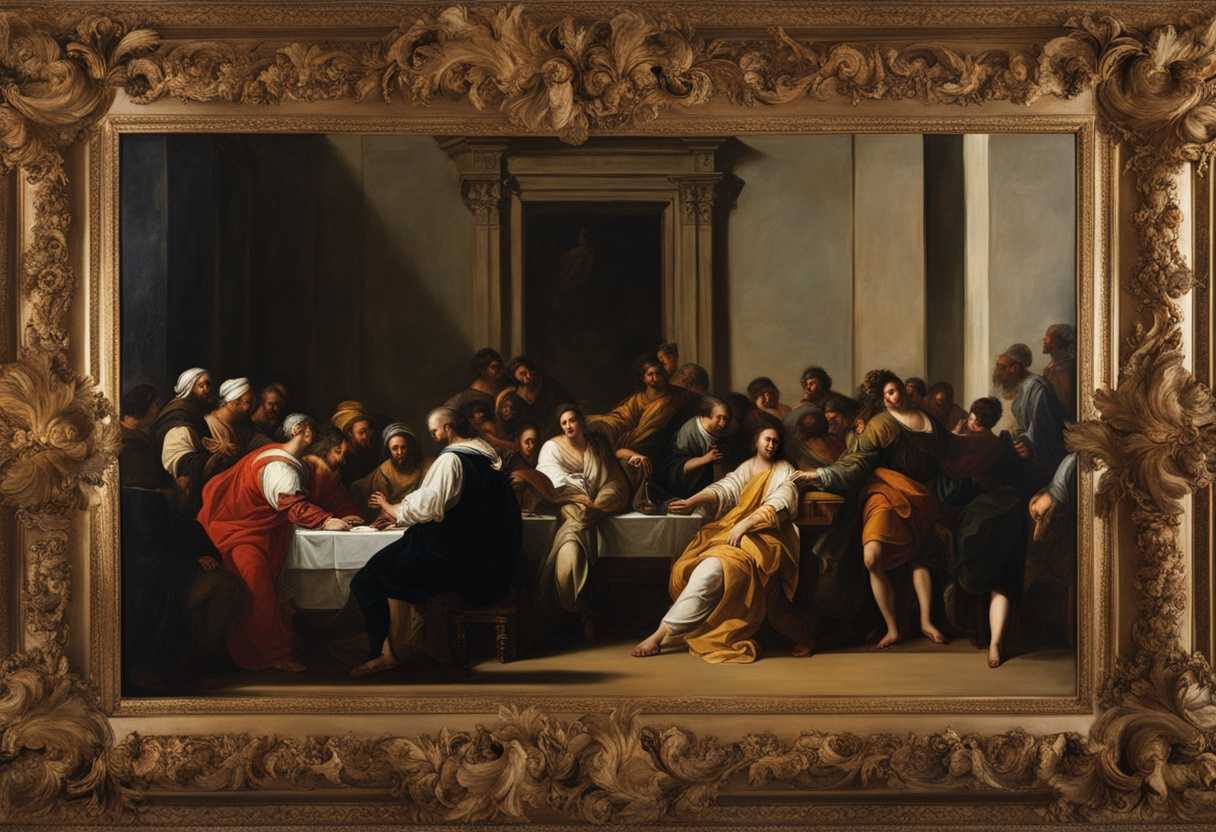
Setting the Scene for Deuteronomy 23:1-8
In the scene described in Deuteronomy 23:1-8, we find the Israelites encamped at the foot of Mount Sinai, following their exodus from Egypt. The community is gathered around Moses, who is seated on a large rock, serving as the judge and mediator for the people. The atmosphere is tense as various individuals approach Moses with their grievances and disputes, seeking his wisdom and judgment according to the laws given by God.
Among those present are the leaders of the tribes, including Aaron, Miriam, and Joshua, who stand by Moses’ side, offering support and assistance in maintaining order among the people. The surroundings are stark and desert-like, with the majestic Mount Sinai looming in the background, a constant reminder of the covenant made between God and His chosen people.
As Moses listens attentively to each case presented before him, he upholds the laws outlined in Deuteronomy 23, which establish guidelines for the assembly’s purity and integrity. Through his leadership and adherence to God’s commandments, Moses ensures that justice is served and that the community remains faithful to their divine calling as the chosen people of God.
What is Deuteronomy 23:1-8 about?
This verse speaks to the idea that not everyone is automatically included in the community of believers. It highlights the importance of lineage and individual actions in determining one’s place within the assembly of the Lord. It challenges us to think about the qualities that make someone worthy of being part of a religious community by emphasizing that certain individuals may be excluded based on their background or behaviors.
What does it mean to be part of the assembly of the Lord? How do lineage and actions play a role in determining who is included in this community? These are important questions to consider as we reflect on the meaning of this verse. It reminds us that inclusion in a religious community is not automatic and requires a deeper understanding of one’s background and behavior. This verse ultimately encourages us to think critically about the values and beliefs that govern our religious communities. It serves as a reminder that our actions and lineage can impact our standing within these groups. We must also be mindful of the criteria by which we include or exclude individuals from the assembly of the Lord as we seek to create inclusive and welcoming spaces for all believers.
Understanding what Deuteronomy 23:1-8 really means
In Deuteronomy 23:1-8, we delve into a segment of the Mosaic Law, a set of guidelines given to the Israelites to govern their lives and worship. These verses outline specific exclusions and inclusions within the community, shedding light on the cultural and religious significance of purity, loyalty, and historical relationships in ancient Israelite society.
In verses 1-2, individuals with physical imperfections such as crushed testicles or severed hands are deemed unfit to enter the assembly of the Lord. This emphasis on physical wholeness echoes similar sentiments in Leviticus 21:17-23, underlining the importance of presenting one’s best before God. The requirement for purity and wholeness in worship reflects the reverence and respect the Israelites were expected to demonstrate in their approach to God.
Moving on to verses 3-6, we encounter the exclusion of the Ammonites and Moabites from the assembly due to their historical enmity towards Israel. Referencing the narrative of Balaam in Numbers 22-24, we see the consequences of attempting to curse God’s people. These verses highlight the significance of loyalty and the repercussions of standing against God’s chosen community, emphasizing the importance of unity and faithfulness.
Conversely, verses 7-8 offer a more inclusive stance towards the Edomites and Egyptians, citing historical ties and kinship as reasons for their acceptance. Drawing from the accounts of Jacob and Esau in Genesis 25:24-26 and the mixed multitude leaving Egypt in Exodus 12:37-38, we see how shared ancestry and past relationships influenced the treatment of these nations. This serves as a reminder of the complexities of historical connections and the nuanced approach to inclusion and exclusion.
While the specifics of these exclusions and inclusions may not directly apply to contemporary society, the underlying principles of purity, loyalty, and historical relationships remain relevant. Just as the Israelites were called to uphold community standards and honor their heritage, we are challenged to consider how we navigate relationships, loyalty, and inclusivity in our own communities today. Galatians 3:28 reminds us of the inclusivity of the New Covenant in Christ, emphasizing unity in diversity and the importance of community cohesion.
Reflecting on these ancient principles, we are prompted to consider how we approach membership and inclusion in our communities. Balancing justice, mercy, and community integrity is a delicate task, requiring discernment and wisdom. As we navigate the complexities of relationships and boundaries, may we strive to embody the values of purity, loyalty, and kinship in our interactions with others, fostering a community built on respect, unity, and love.
How can we show kindness and respect to outsiders?
Deuteronomy 23:1-8 emphasizes kindness and respect towards outsiders. One way to show kindness and respect to outsiders is by not treating them with disdain or discrimination. It calls for inclusivity and a sense of fairness when dealing with those who may be different from us in beliefs, traditions, or background. We demonstrate empathy and understanding, fostering a sense of unity and acceptance by extending a hand of kindness and respect to outsiders.
Another way to show kindness and respect to outsiders is by being open-minded and willing to listen to their perspectives. We validate their worth and dignity as fellow human beings by showing genuine interest in their stories and experiences. This can create a space for mutual respect and dialogue, building bridges across cultural, religious, or social divides.
Additionally, showing kindness and respect to outsiders involves treating them with compassion and generosity. This may mean offering assistance or support to those in need, regardless of their status or background. Practicing acts of kindness towards outsiders exemplifies the values of empathy and compassion and contributes to creating a more inclusive and harmonious community.
Application
Think of your life as a workplace or a family gathering. Imagine striving for a team where every voice is heard and respected. God champions inclusivity and justice. As Christ’s followers, it’s our mission to welcome all, breaking down barriers. How will you reach out and include those who feel left out in our shared spaces?

Reverend Michael Johnson is an experienced Church Minister with a profound expertise in spirituality and guidance. With a serene presence and a compassionate heart, he has faithfully served his congregation for over 20 years, leading them on a spiritual journey towards inner peace and enlightenment. Reverend Johnson’s extensive knowledge of religious philosophies and profound understanding of human nature have made him a trusted confidant and mentor to many, as he seamlessly weaves his profound wisdom into life teachings. Reverend Johnson’s calming demeanor and empathetic nature continue to uplift and heal souls, nurturing a sense of unity and tranquility within his community.